

Every year, thousands of people have gastric bypass surgery to lose weight. But, not many know about the risks. One big risk is getting a kink in the bowel, which can cause a blockage. Guide to the urgent steps needed for blockage after gastric bypass.
If a blockage happens, it can turn from a minor problem to a serious emergency fast. At Liv Hospital, we think it’s key for patients to know how to spot and handle this issue. This ensures they stay safe and recover well.
We’ll show you the causes, signs, diagnosis, treatment, and ways to avoid blockage after gastric bypass. We aim to give you all the info you need to deal with this serious problem.
Key Takeaways
- Understanding the risks of bowel blockage after gastric bypass surgery is key for safety.
- Spotting the signs of blockage can stop serious problems.
- There are good ways to manage and prevent bowel blockage.
- Liv Hospital offers full care and support for international patients having gastric bypass surgery.
- Knowing how to spot and deal with a kink in the bowel can save lives.
Understanding Post-Gastric Bypass Bowel Obstruction

After gastric bypass surgery, patients face a risk of bowel obstruction. This condition can greatly affect their recovery and life quality. It happens when something blocks the small or large intestine, stopping normal flow.
Definition and Incidence Rates
Bowel obstruction is a serious issue after gastric bypass surgery. It affects 0.4% to 7.45% of patients, depending on the surgery type and hospital volume. This shows how different practices and patients can change the risk.
Many things can influence the risk of bowel obstruction. These include the surgery type, the surgeon’s skill, and the patient’s health.
Impact on Patient Recovery and Quality of Life
Bowel obstruction can really hurt a patient’s recovery and life quality. Symptoms can be mild or severe, like pain, nausea, and vomiting. These can lead to dehydration and imbalances if not treated quickly.
This condition can make recovery harder. It might mean longer hospital stays and more surgeries. This can also affect a patient’s mental health and ability to follow diet rules.
Risk Factors for Developing Blockages
There are several risk factors for bowel obstruction after gastric bypass surgery. These include:
- Previous abdominal surgeries
- Internal hernias
- Adhesive bands
- Kinking or twisting of the intestine
- Narrowing at the jejunojejunostomy anastomosis
Knowing these risk factors is key for surgeons and patients. It helps them watch for problems and take steps to prevent them.
Types of Blockage After Gastric Bypass
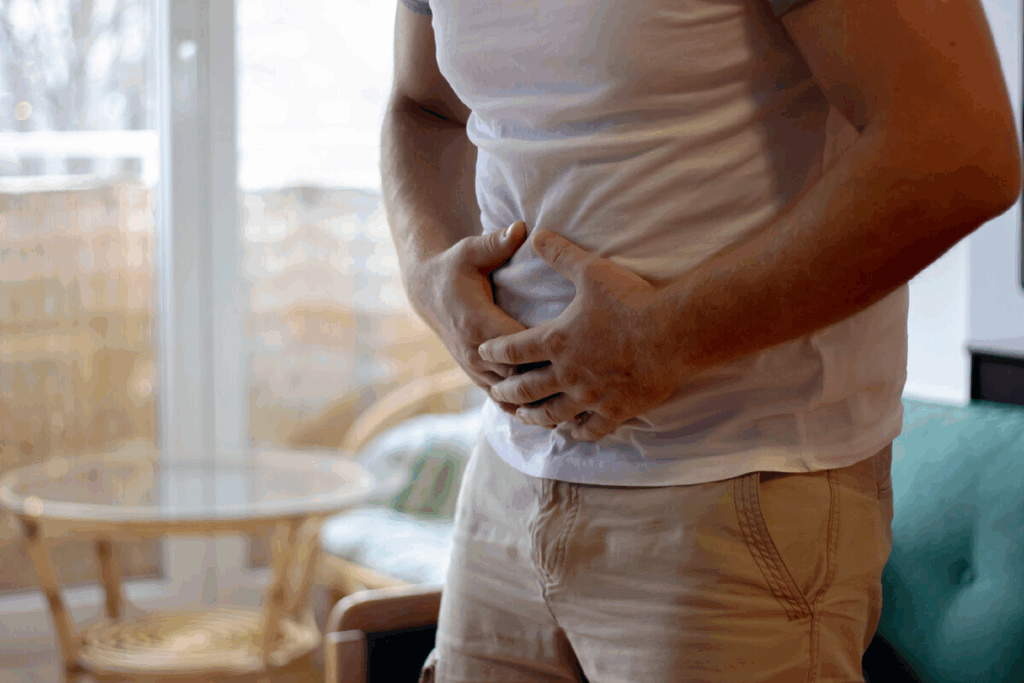
It’s important to know about the different blockages that can happen after gastric bypass surgery. These blockages can occur at any time after surgery. They can be classified based on when they happen and how severe they are.
Early Postoperative Blockages
Early blockages happen in the first three weeks after surgery. They often come from problems with the Roux limb, like a kink or narrowing. Early detection is critical because these blockages usually need surgery or bowel resection to fix.
Late Obstructions and Their Characteristics
Late obstructions happen after the first three weeks. They are more likely to be caused by adhesions or internal hernias. These can make the intestine kink or twist, causing a blockage. Late obstructions can be more challenging to diagnose because they can show up months or years after surgery.
Partial vs. Complete Blockages
Blockages can be partial or complete. Partial blockages let some food and fluids pass through. Complete blockages block the intestine completely. Knowing the difference is important because it affects how the blockage is treated and how quickly it needs to be fixed.
The types of blockages after gastric bypass surgery can be summarized as follows:
- Early postoperative blockages: Often due to technical issues with the Roux limb.
- Late obstructions: Typically result from adhesions or internal hernias.
- Partial blockages: Allow some passage of food and fluids.
- Complete blockages: Totally obstruct the intestine, requiring immediate attention.
It’s key for healthcare providers to recognize these different blockages. It helps them give the right care. It also helps patients understand their condition and what treatment they need.
Common Causes of Intestinal Obstruction
It’s important to know why intestinal obstruction happens after gastric bypass surgery. This problem can come from the surgery itself or how the body reacts to it. Knowing the causes helps in managing and preventing it.
Adhesive Bands
Adhesive bands are the main reason for intestinal obstruction after gastric bypass. They make up about 73% of cases. These bands are made of fibrous tissue that can form between intestine loops or with other parts of the abdomen.
They happen because of the body’s healing process after surgery. This process sometimes leads to these adhesions.
We know that adhesive bands are common. But, we can reduce their formation with careful surgery and post-op care.
Kink in Bowel Complications
Kinking of the bowel is another big cause of obstruction. It happens when a part of the intestine twists or bends, blocking its flow. This can be due to the surgery’s changes to the intestine or adhesions.
The risk of kinking depends on the surgery type. Laparoscopic surgeries might have different risks than open ones.
Narrowing at the Jejunojejunostomy Anastomosis
Narrowing at the jejunojejunostomy anastomosis is also a cause of obstruction. This happens when scar tissue or technical issues during surgery cause a blockage. The jejunojejunostomy is a key part of gastric bypass surgery.
Any narrowing here can make eating and digesting hard. We stress the need for precise surgery and follow-up care to avoid this.
Internal Hernias
Internal hernias are a big risk, more so in laparoscopic gastric bypass surgery. They happen in about 3% of laparoscopic cases versus 0.5% in open surgery. An internal hernia is when intestine bulges through a defect in the mesentery, causing obstruction.
The risk is higher in laparoscopic surgery because of how it’s done. This can leave spaces for hernias. Knowing these risks is key for surgeons and patients to manage expectations and prevent them.
Recognizing the Warning Signs of Blockage
Knowing the signs of bowel obstruction early can greatly help gastric bypass patients. It’s key to watch out for possible problems after surgery.
Abdominal Pain Patterns
Abdominal pain is a major warning sign of blockage. The pain’s intensity can change and may stay the same or come and go. It’s important to notice where and how bad the pain is, as it could mean a blockage.
Nausea and Vomiting
Nausea and vomiting are also signs of blockage. These can cause dehydration and imbalances in electrolytes if not treated quickly. We tell patients to get medical help if they keep feeling sick or throwing up.
Other Symptoms to Monitor
There are other symptoms to watch for, too:
- Bloating and feeling like your belly is too big
- Constipation or trouble passing gas
- Unusual sounds from your bowel
When to Seek Emergency Medical Care
If you have severe abdominal pain, keep throwing up, or notice other serious symptoms, get emergency medical care right away. Quick action can stop serious problems and help you get better.
Diagnostic Procedures for Identifying Blockages
To find bowel obstructions after gastric bypass, we use both clinical checks and advanced tools. We have many ways to find and treat blockages. This ensures the best care for our patients.
Imaging Studies
Imaging is key in spotting blockages after gastric bypass. We use different imaging methods to see the gut and find obstructions.
- CT Scans: CT scans are great at finding blockages, hernias, and other issues. They give us clear pictures of the belly, showing where and why the blockage is.
- X-rays: X-rays can show signs of blockage, like swollen bowel and air-fluid levels. They’re not as detailed as CT scans but are quick and easy to get.
- Ultrasound: Ultrasound is used when CT scans can’t be done. It helps spot obstructions and other belly problems.
Laboratory Tests and Markers
We also use lab tests to check on patients with suspected blockages. These tests help us see how bad the blockage is and the patient’s health.
- Complete Blood Count (CBC): A CBC checks for infection or inflammation signs, like high white blood cell counts.
- Electrolyte Panel: Checking electrolyte levels is important. Blockages can mess with these levels because of vomiting or fluid changes.
- Lactate Levels: High lactate levels mean the bowel might not be getting enough blood, a serious problem.
Clinical Evaluation Techniques
Our clinical checks are also vital in finding bowel obstructions. We use many methods to check patients and get info for more tests and treatment.
- History and Physical Examination: A detailed medical history and physical check are key. They help spot symptoms like belly pain, nausea, vomiting, and swelling.
- Symptom Assessment: Looking at the patient’s symptoms helps us understand the blockage better.
Emergency Management of Acute Blockage
Acute blockage after gastric bypass surgery is a serious issue. It needs quick action to avoid bigger problems. We will explain the important steps to handle this emergency.
Initial Stabilization Protocols
When acute blockage is found, we start to make the patient safe. We watch their vital signs and give them pain relief.
Key components of initial stabilization include:
- Checking the patient’s overall health
- Giving intravenous fluids to prevent dehydration
- Looking for signs of bowel problems or perforation
Decompression Techniques
Decompression is key in treating acute blockage. We use nasogastric suction to ease pressure and lower risk of more issues.
Fluid and Electrolyte Management
Managing fluids and electrolytes is vital in treating acute blockage. We work to fix any imbalances from vomiting, dehydration, or blockage.
Electrolyte | Normal Range | Management Strategy |
Potassium | 3.5-5.0 mmol/L | Supplementation as needed |
Sodium | 135-145 mmol/L | Adjustment based on serum levels |
Chloride | 96-106 mmol/L | Replacement as necessary |
Preparing for Possible Surgical Intervention
If other treatments don’t work, surgery might be needed. We get patients ready for surgery by improving their health and talking about the surgery’s risks and benefits.
Preparation steps include:
- Looking over the patient’s medical history
- Doing preoperative tests
- Talking with a team of experts
Surgical Approaches to Resolving Blockage After Gastric Bypass
Surgery is key in fixing blockages after gastric bypass. It helps patients feel better and recover well. When other treatments don’t work, surgery is needed to find and fix the blockage’s cause.
Laparoscopic vs. Open Surgical Techniques
Choosing between laparoscopic and open surgery depends on several things. These include how bad the blockage is, the patient’s health, and the surgeon’s skills. Laparoscopic surgery is less invasive, leading to quicker recovery and less pain. But, open surgery might be needed for more serious cases or when laparoscopic tools aren’t available.
Laparoscopic surgery has gotten better, helping patients recover faster and with fewer problems. Its precision and less damage to tissues are big advantages.
Bowel Resection Procedures
When the bowel is badly damaged or not working, bowel resection might be needed. This surgery removes the bad part and connects the good parts back together. It’s a bigger surgery but often necessary to avoid more issues.
Revision of Jejunojejunostomy
Revision of the jejunojejunostomy is used for blockages at the anastomotic site. This surgery fixes the connection between the jejunum segments. It helps restore normal flow and stops future blockages.
Managing Internal Hernias
Internal hernias, a common problem after gastric bypass, can block the bowel. Surgical management fixes the hernia and any mesentery defects. Sometimes, stitches or mesh are used to stop it from coming back.
Every patient’s surgery plan is unique. It’s based on the blockage’s cause, the patient’s health, and the risks and benefits of each surgery.
Non-Surgical Management Options
There are non-surgical ways to deal with blockages after gastric bypass surgery. These methods are good for mild cases or when surgery isn’t needed right away. We’ll look at how these non-surgical options can help with blockage symptoms and aid in recovery.
Conservative Treatment Approaches
Conservative treatment includes bowel rest, intravenous fluids, and nasogastric decompression. It’s often enough for mild to moderate blockages. By resting the bowel, we let the blockage clear up naturally, lowering the chance of serious problems.
Medication Management
Medicines are key in managing blockage symptoms like nausea, vomiting, and pain. Anti-emetic drugs help with nausea and vomiting, while painkillers manage pain. We pick medicines carefully to make sure they’re safe and work well for gastric bypass patients.
Nutritional Support During Recovery
Nutritional support is critical during recovery. Patients might need intravenous nutrition or a special diet to get the nutrients they need. We team up with experts to create a nutrition plan that helps the patient recover and stay healthy.
Monitoring for Improvement or Deterioration
It’s important to watch closely to see if the patient is getting better or worse. We do regular checks like clinical exams, lab tests, and imaging studies. This helps us adjust the treatment plan and act fast if there are any problems.
Here’s a quick look at the non-surgical management options and what they include:
Management Approach | Key Components | Benefits |
Conservative Treatment | Bowel rest, IV fluids, nasogastric decompression | Effective for mild to moderate blockages, reduces risk of complications |
Medication Management | Anti-emetics, analgesics | Controls symptoms, improves patient comfort |
Nutritional Support | IV nutrition, specialized diet | Ensures patient receives necessary nutrients, supports recovery |
Preventing Blockage After Gastric Bypass
To prevent blockage after gastric bypass, you need to make dietary changes, stay active, and keep an eye on your health. These steps help lower the risk of problems and make recovery better.
Dietary Guidelines to Reduce Risk
Following certain dietary rules is key to avoiding blockage after gastric bypass. Start with liquids and move to solids slowly. Make sure to chew well and avoid hard-to-digest foods.
- Eat small, frequent meals to manage food intake effectively.
- Avoid high-risk foods such as nuts, seeds, and tough meats.
- Stay hydrated by drinking plenty of fluids between meals.
Medical Expert, a top bariatric surgeon, says, “A well-planned diet is the cornerstone of preventing complications after gastric bypass surgery.”
“Dietary adherence is key to avoiding mechanical obstructions and ensuring the long-term success of the procedure.”
Dietary Recommendations | Foods to Avoid |
Lean proteins, cooked vegetables, and soft fruits | Nuts, seeds, tough meats, and dry bread |
Gradual introduction of new foods | Carbonated drinks and high-sugar foods |
Physical Activity Recommendations
Regular exercise is also vital in preventing blockage after gastric bypass. Start with gentle activities like walking and stretching. These help move food through your system and improve blood flow.
Recommended Activities:
- Short walks after meals
- Light stretching exercises
- Gradually increasing intensity and duration over time
Long-term Monitoring Strategies
Keeping an eye on your health long-term is important. Regular check-ups with your doctor help catch any issues early. This way, you can make any needed changes to your care plan.
Importance of Regular Follow-up Care
Regular visits with your healthcare team are essential. They help track your recovery and address any concerns quickly. It’s a chance for your doctor to guide you on keeping a healthy lifestyle and managing surgery’s long-term effects.
By sticking to a healthy diet, staying active, and monitoring your health, you can lower your risk of blockage after gastric bypass. This leads to a healthier, happier life.
Recovery Timeline Following Blockage Treatment
Understanding the recovery timeline is key after treating a blockage after gastric bypass surgery. The outcome depends on the blockage’s cause, how severe it is, and when treatment starts.
Hospital Stay Expectations
The time spent in the hospital varies. It depends on the blockage’s severity and the treatment needed. Minor cases might be discharged in a few days. But, more serious cases or those needing surgery could take longer.
Resuming Normal Activities
Getting back to normal after treatment takes time. Patients are told to avoid heavy lifting and hard activities for weeks. The exact time to return to normal depends on the patient’s health and treatment details.
Dietary Progression After Treatment
Dietary progression is a big part of recovery. Patients start with a liquid diet and move to solid foods as they heal. Following the diet advice from doctors is important to avoid problems.
Physical Rehabilitation Considerations
Physical rehab is important for recovery. It helps patients get their strength and mobility back. A rehab plan made by doctors can greatly improve recovery. Patients should talk to their healthcare team about their rehab needs for a full recovery.
Managing Risk of Recurrent Blockages
It’s important to manage the risk of blockages after gastric bypass surgery. Patients can face problems like internal hernias or strictures. So, it’s key to keep seeing healthcare providers regularly.
Follow-up Care Protocol
Having a clear follow-up plan is vital. It helps keep an eye on how you’re doing and fixes any problems early. This includes:
- Regular check-ups with the healthcare provider
- Imaging studies as recommended by the healthcare team
- Laboratory tests to monitor nutritional and metabolic status
Following this care plan helps avoid serious problems and improves your long-term health.
Warning Signs of Recurrence
It’s important to know the signs of a possible blockage. These include:
- Abdominal pain or cramping
- Nausea and vomiting
- Constipation or inability to pass gas
- Abdominal distension
Spotting these signs early and getting medical help fast can stop serious issues.
Lifestyle Adjustments for Long-term Success
Changing your lifestyle can help prevent blockages. These changes include:
- Dietary modifications to reduce the risk of bowel obstruction
- Regular physical activity to promote gastrointestinal motility
- Avoiding heavy lifting or strenuous activities that may increase abdominal pressure
By making these lifestyle changes, you can lower your risk of blockages. This way, you can enjoy a better life after gastric bypass surgery.
Conclusion
We’ve looked into the challenges of blockage after gastric bypass surgery. This issue can really affect how well a patient recovers and their overall quality of life. It’s important to know the different types, causes, and signs of bowel obstruction to get the right treatment quickly.
Tests like imaging and lab work are key in finding blockages. Sometimes, surgery is needed to fix blockages right away. But, there are also ways to manage without surgery and prevent problems from happening.
Things like a kink in the bowel or a narrowing at the jejunojejunostomy anastomosis can cause blockages. Knowing about these can help both patients and doctors prevent and handle blockages after gastric bypass.
Success in the long run comes from good follow-up care, making lifestyle changes, and learning about health. By understanding the risks and taking action, people who have had gastric bypass surgery can lower their chance of bowel obstruction. This helps them stay healthy and well.
FAQ
What is bowel obstruction after gastric bypass surgery?
Bowel obstruction after gastric bypass surgery is a blockage in the small intestine. It can be caused by several factors. These include adhesive bands, kinking, narrowing at the jejunojejunostomy anastomosis, and internal hernias.
What are the symptoms of blockage after gastric bypass surgery?
Symptoms of blockage after gastric bypass surgery include abdominal pain and nausea. You may also experience vomiting, constipation, bloating, and trouble passing gas or stool.
How is bowel obstruction diagnosed after gastric bypass surgery?
Imaging studies like CT scans, X-rays, and ultrasound are used to diagnose bowel obstruction. Laboratory tests and clinical evaluation techniques also play a role.
What are the treatment options for bowel obstruction after gastric bypass?
Treatment options include emergency management and decompression techniques. Fluid and electrolyte management are also key. Surgical approaches like laparoscopic and open surgery, bowel resection, and revision of jejunojejunostomy are considered.
Can bowel obstruction after gastric bypass be prevented?
While prevention is not always possible, some measures can help. Following dietary guidelines and staying active are important. Long-term monitoring is also essential.
What is the recovery timeline following blockage treatment?
Recovery time varies. It includes a hospital stay, resuming normal activities, and dietary progression. Physical rehabilitation is also a part of the recovery process.
How can the risk of recurrent blockages be managed?
Managing the risk involves follow-up care and recognizing warning signs. Making lifestyle adjustments is key to long-term success.
What is the role of kink in bowel complications after gastric bypass surgery?
Kinking in the bowel can cause bowel obstruction after gastric bypass surgery. Surgical approaches are used to manage kinking and restore normal bowel function.
References
National Center for Biotechnology Information. Evidence-Based Medical Guidance. Retrieved from https://pubmed.ncbi.nlm.nih.gov/15931476/