Arm thrombosis, or deep vein thrombosis in the arm (DVT arm), is a serious condition. It happens when a clot forms in the deep veins of the arm. This can be caused by repetitive arm motions, vein trauma, surgery, or clotting disorders.
Knowing the signs and causes of a blood clot in the armpit or arm is key. It helps in getting timely treatment and avoiding serious problems like pulmonary embolism. Liv Hospital focuses on patient care and uses the latest methods to manage arm thrombosis effectively.
Key Takeaways
- Arm thrombosis is a serious condition requiring prompt treatment.
- Repetitive arm motions, vein trauma, and underlying disorders can cause DVT arm.
- Understanding signs and causes is vital for effective management.
- Liv Hospital follows the latest protocols for managing arm thrombosis.
- Prompt treatment can prevent complications like pulmonary embolism.
Understanding Arm Thrombosis: Medical Overview

It’s important to know about arm thrombosis to spot its signs early. This condition, also known as Deep Vein Thrombosis (DVT) in the arm, happens when a blood clot forms in the deep veins. If not treated quickly, it can cause serious problems.
What is Deep Vein Thrombosis (DVT) in the Arm?
Deep Vein Thrombosis in the arm is when a blood clot forms in the deep veins of the upper arm or forearm. It’s less common than DVT in the legs but just as dangerous. Common signs include swelling, pain, and warmth in the affected limb. Also, up to 60 percent of cases may not show symptoms, making it hard to diagnose just by looking.
Prevalence and Risk Factors
DVT can happen in any deep vein, but it’s most common in the pelvis, calf, or thigh. Arm DVT is less common but can be serious. Several factors increase the risk of arm DVT, including:
- Physical trauma or injury to the arm
- Repetitive arm movements, common in athletes or individuals with certain occupations
- Medical procedures such as surgery or the use of central venous catheters
- Underlying clotting disorders or health conditions
Knowing these risk factors helps in early detection and treatment of arm thrombosis.
Identifying a Blood Clot Armpit and Upper Arm Region
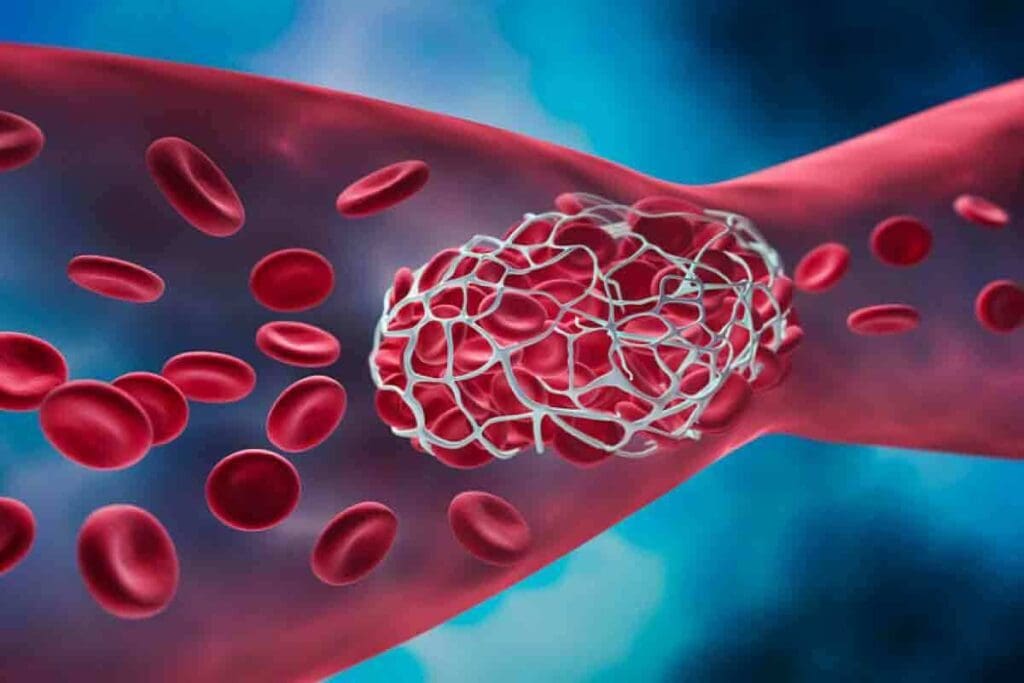
Knowing the signs of a blood clot in the upper arm and armpit can prevent serious problems. It’s important to spot the symptoms of arm thrombosis, mainly in the armpit, for the right treatment.
Common Symptoms in the Armpit Area
A blood clot in the armpit or upper arm shows several signs. These include:
- Swelling: You might notice swelling in the armpit or upper arm.
- Pain or Tenderness: The area can hurt or feel tender, from mild to severe.
- Discoloration: The skin might turn red or change color because of the clot.
- Warmth: The area might feel warmer than the rest of your skin.
Paget-Schroetter syndrome is a condition linked to athletes or people with repetitive arm use. It affects the armpit and upper arm. Spotting these signs early is key.
Distinguishing from Other Armpit Conditions
It’s important to tell apart blood clot symptoms from other issues in the armpit. These can include:
- Enlarged lymph nodes: Swollen lymph nodes can cause discomfort and swelling.
- Cysts or abscesses: These can cause pain and swelling, like a blood clot.
- Muscle strain: Overusing or straining muscles in the armpit or upper arm can hurt.
Getting a detailed medical check-up is needed to figure out what’s causing symptoms in the armpit and upper arm. If symptoms last or are severe, seeing a doctor is vital.
Signs and Symptoms of Arm Blood Clots
Knowing the signs of arm thrombosis is key to avoiding serious issues. Blood clots in the arm, or deep vein thrombosis (DVT), show up in different ways. It’s important to recognize the signs and symptoms.
Classic Symptoms: Swelling, Pain, and Discoloration
A blood clot in the arm can cause swelling, pain, and discoloration. These are the first signs of DVT. The arm might swell because of fluid buildup, and the skin could turn red or discolored. Pain can feel like a dull ache or be very severe.
Silent Clots: When 60% Show No Obvious Symptoms
It’s important to know that up to 60% of arm blood clots don’t show symptoms. These are called “silent clots.” They can be dangerous because they might not be noticed until it’s too late, like when a pulmonary embolism happens.
Warning Signs That Require Immediate Attention
Some signs mean you need to see a doctor right away. These include:
- Severe pain or swelling in the affected arm
- Discoloration or redness of the skin
- Warmth or tenderness to the touch
- Visible veins or a palpable cord-like structure
- Shortness of breath or chest pain, which could indicate a pulmonary embolism
If you or someone you know has these symptoms, get medical help fast.
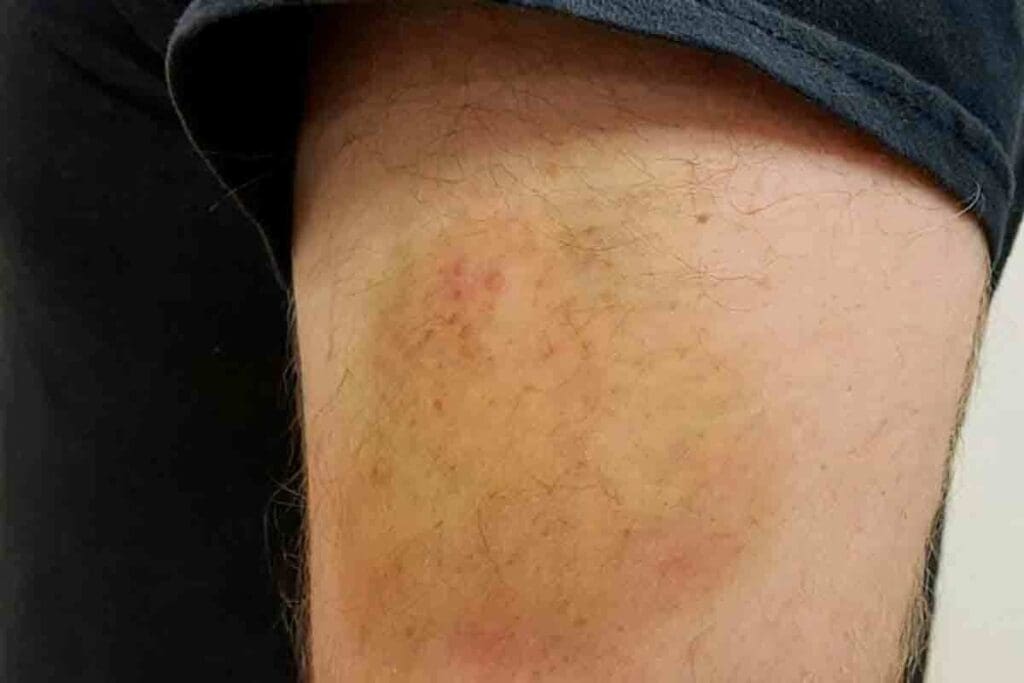
What Do Blood Clots in the Arm Look Like?
Blood clots in the arm can look different based on where they are and how big they are. It’s important to know what they look like to catch them early and treat them right.
Visual Identification and Physical Changes
A blood clot in the arm can make the arm look different. Doctors say that “Vein thrombosis in the forearm or elbow can cause visible vein enlargement” as noted in a study on deep vein. This means the veins can get bigger, and you might see swelling, pain, and color changes.
Common visual signs include:
- Swelling in the arm, which can range from mild to severe
- Redness or discoloration around the affected vein
- Warmth or tenderness to the touch
- Visible enlargement of the veins, mainly in the forearm or elbow
Differences in Appearance Based on Location
The spot where the blood clot is can change how it looks. Clots in surface veins are easier to see than those deeper. Doctors say the look and symptoms of a clot depend on its depth and where it is.
Key differences in appearance based on location:
| Location | Typical Appearance |
| Superficial Veins | More visible, with noticeable swelling and redness |
| Deep Veins | Less visible, but may cause significant swelling and pain |
| Forearm or Elbow | Visible vein enlargement, potentially with swelling |
Knowing these differences is key for doctors to diagnose and treat right. “Early recognition of the signs and symptoms of arm thrombosis can significantly impact patient outcomes” as highlighted in medical research.
Common Causes of Arm Thrombosis
It’s important to know why arm thrombosis happens. This condition, also known as deep vein thrombosis (DVT) in the arm, can be caused by many things. These include physical injuries and clotting disorders.
Physical Trauma and Repetitive Arm Movements
Getting hurt in the arm, like breaking a bone or getting bad bruises, can harm veins. This can cause clots to form. Also, doing the same arm movements over and over, like in sports or jobs, can strain veins. This strain can raise the chance of getting a blood clot.
Doing activities that make you throw, lift, or move your arm a lot can cause Paget-Schroetter syndrome. This is also known as effort thrombosis.
Medical Procedures: Surgery and Central Venous Catheters
Medical procedures, like surgery or putting in central venous catheters, can increase the risk of arm thrombosis. Surgery can hurt veins directly. Central venous catheters can irritate vein walls, causing clots.
People having big surgeries, and those who can’t move much after, are at higher risk.
Underlying Clotting Disorders and Health Conditions
Some clotting disorders, like factor V Leiden or antiphospholipid syndrome, make blood clotting more likely. Health issues, such as cancer, heart failure, and being overweight, also raise the risk of blood clots in the arm. These conditions can change blood chemistry, making it more likely to clot.
In summary, arm thrombosis can come from physical injuries, medical procedures, and health problems. Knowing these causes is key to catching it early and treating it well.
Paget-Schroetter Syndrome: The Athlete’s Thrombosis
Repetitive strain on the arm can lead to Paget-Schroetter syndrome. This is a specific type of DVT that affects athletes and active individuals. It’s characterized by blood clots in the deep veins of the arm, often due to strenuous and repetitive activities.
Clotting Due to Repeated Arm Activity
Repeated arm activity can cause micro-trauma to the veins. This leads to inflammation and clot formation. It’s common in those who do activities that involve heavy lifting, throwing, or repetitive arm movements.
Mechanism of Clot Formation: Damage to the intimal layer of the vein starts the coagulation cascade. This leads to clot formation.
High-Risk Sports and Occupations
Athletes in sports like baseball, swimming, and weightlifting face a higher risk. Those in jobs that require repetitive arm movements or heavy lifting are also at risk.
| Sport/Occupation | Risk Level | Common Activities |
| Baseball | High | Pitching, throwing |
| Weightlifting | High | Heavy lifting |
| Construction Work | Moderate to High | Heavy lifting, repetitive movements |
Prevention Strategies for Athletes
Athletes can lower their risk by taking preventive steps. This includes proper warm-up and cool-down exercises. It also means avoiding overtraining and maintaining good technique during activities.
By understanding the risks and taking proactive steps, athletes can reduce their chance of getting this condition. This helps them maintain optimal performance.
Deep Vein Thrombosis in Forearm and Elbow
A blood clot in the deep veins of the forearm or elbow is serious. It’s called Deep Vein Thrombosis (DVT). This blockage can stop normal blood flow, causing symptoms and complications.
Specific Symptoms and Vein Enlargement
DVT in these areas can cause pain, swelling, and warmth. A swollen and tender vein is a clear sign.
Symptoms can get worse over time. Some people feel a heavy or aching arm.
Potential Complications Including Pulmonary Embolism
Untreated DVT can cause serious problems. A big risk is pulmonary embolism. This happens when a clot goes to the lungs and blocks an artery.
Pulmonary embolism is a medical emergency. Other risks include chronic pain and swelling, and DVT coming back.
| Complication | Description | Risk Factors |
| Pulmonary Embolism | Blockage of an artery in the lungs by a blood clot | Untreated DVT, large clot size |
| Post-Thrombotic Syndrome | Chronic pain and swelling after DVT | Inadequate treatment, recurrent DVT |
| Recurrent DVT | Reoccurrence of DVT in the same or different location | Underlying clotting disorders, inadequate anticoagulation |
Diagnostic Challenges in Forearm DVT
Diagnosing DVT in the forearm and elbow is hard. Symptoms vary, and other conditions can look like DVT. Tests like ultrasound and D-dimer blood tests help confirm a clot.
Doctors also look at the patient’s history and physical exam. They use this information to make a correct diagnosis.
Immediate Treatment Steps for Arm Blood Clots
Arm blood clots need quick medical help to avoid serious problems. It’s important to act fast to prevent serious issues.
First Aid and Home Management
First steps in treating an arm blood clot include first aid and home care. Elevating the arm above the heart helps reduce swelling and pain. Drinking plenty of water and avoiding hard activities are also key.
Key first aid steps include:
- Elevating the arm to reduce swelling
- Applying a warm compress to ease pain
- Monitoring symptoms closely
Proper Limb Elevation Techniques
Proper limb elevation is a simple yet effective way to manage arm blood clots. Elevating the limb above the heart reduces blood flow, which can help decrease the clot size and ease symptoms.
To elevate your arm correctly:
- Lie down on a flat surface
- Place pillows under your arm to support it above heart level
- Stay in this position for 15-30 minutes, several times a day
When to Seek Emergency Medical Care
While some arm blood clots can be treated at home, others need immediate medical help. If you have severe pain, trouble breathing, or if your arm looks cold, pale, or blue, get emergency care.
| Symptom | Action |
| Severe pain or swelling | Seek immediate medical care |
| Difficulty breathing or chest pain | Call emergency services |
| Cold, pale, or blue arm | Seek emergency medical care |
In conclusion, treating a blood clot in the arm requires first aid, proper limb elevation, and knowing when to seek emergency care. Understanding these steps helps manage the condition and lowers the risk of complications.
Medical Treatment Approaches
Managing arm thrombosis requires different medical steps. These steps include medicines, physical actions, and sometimes surgery.
Anticoagulant Medications: Types and Duration
Anticoagulants are key in treating arm DVT. They stop the clot from getting bigger and prevent new ones. Common ones are:
- Heparin: Given through an IV or injection, heparin works fast to stop clot growth.
- Warfarin: Taken by mouth, warfarin takes a few days to start working and is used for a long time.
- Direct Oral Anticoagulants (DOACs): Drugs like rivaroxaban and apixaban are used because they are easy to take and have fewer food restrictions.
How long you take these medicines depends on your risk and health. Usually, treatment lasts 3 to 6 months.
Thrombolytic (Clot-Busting) Therapy Options
Thrombolytic therapy is for severe arm DVT. It’s for those with bad symptoms or at risk of losing a limb. This treatment uses drugs to break down the clot.
| Therapy Type | Drug Used | Administration Method |
| Catheter-Directed Thrombolysis | Alteplase or Tenecteplase | Directly into the clot via a catheter |
| Systemic Thrombolysis | Streptokinase or Urokinase | Intravenously |
Graduated Compression Sleeves and Their Proper Use
Graduated compression sleeves are important in treating arm DVT. They help reduce swelling and improve blood flow. Here’s how to use them right:
- Wear the sleeve as your doctor says, usually during the day and sometimes at night.
- Make sure it fits well to avoid discomfort or bad blood flow.
- Use the sleeve with elevation and exercise as your doctor suggests.
In severe cases of arm DVT, or when other treatments don’t work, surgery might be needed. Surgical options include:
- Thrombectomy: Surgery to remove the clot.
- Vascular Repair: Fixing damaged veins or removing blockages.
Liv Hospital treats arm DVT with top-notch care. They work together as a team and keep improving to give patients the best treatment.
Recovery and Long-Term Management
Managing arm DVT long-term needs a mix of new medical methods and care plans made just for you. It’s not just about treating the clot. It’s also about finding and fixing the reasons and risks behind it.
Multidisciplinary Treatment Approaches
For arm DVT, a team of experts is key. This team includes vascular specialists, hematologists, and rehab experts. Liv Hospital’s care paths show how to work together for the best care.
“The secret to getting better is teamwork,” says a top vascular specialist. “By mixing medical treatments with teaching and support, we can make a big difference.”
Activity Modifications During Recovery
When you’re getting better, it’s important to change how you move. Stay away from heavy lifting and avoid too much arm use. Start doing exercises that help blood flow and build strength.
- Gentle arm exercises to keep flexibility
- Slowly going back to normal activities
- Don’t stay in one place for too long
Monitoring and Follow-up Care
Keeping an eye on things is key to avoid problems and make sure the clot is going away. Regular visits with your doctor help tweak your treatment plan as needed.
Liv Hospital’s Integrated Care Pathways
Liv Hospital’s way of handling arm DVT focuses on you. It includes:
| Care Component | Description |
| Personalized Treatment Plans | Plans made just for you and your situation |
| Multidisciplinary Team | Experts working together for full care |
| Ongoing Monitoring | Regular checks and changes to your plan as needed |
By using a whole-person and team-based method for recovery and care, people with arm DVT can do better and lower their chance of future problems.
Conclusion: Prevention and Living with Risk Factors
Knowing the risk factors for Deep Vein Thrombosis (DVT) in the arm is key. It helps in preventing and managing it. By recognizing the signs and symptoms, people can take steps to lower their risk.
Preventing DVT requires making lifestyle changes and being aware of health conditions. Those with clotting disorders or at risk due to medical procedures need to be extra careful. Managing DVT risk factors is ongoing to avoid serious problems.
Preventive actions like regular exercise and avoiding long periods of sitting can help. It’s also important to manage any health issues. Working with healthcare providers to create a plan is essential.
Being aware and proactive can greatly reduce the risk of arm DVT. This improves health outcomes overall.
FAQ
What are the common symptoms of a blood clot in the arm?
Symptoms include swelling and pain in the arm. You might also see discoloration and feel warmth. Some people feel a heavy or aching sensation.
How is deep vein thrombosis (DVT) in the arm diagnosed?
Doctors use a physical exam, medical history, and imaging tests. Tests like ultrasound or venography are common.
What are the risk factors for developing DVT in the arm?
Risk factors include physical trauma and repetitive arm movements. Medical procedures and clotting disorders also increase risk. Certain health conditions play a role too.
Can DVT in the arm cause a pulmonary embolism?
Yes, DVT in the arm can lead to a pulmonary embolism. This happens if the clot breaks loose and goes to the lungs.
What is Paget-Schroetter syndrome, and how is it related to arm DVT?
Paget-Schroetter syndrome is caused by repeated arm activity. It leads to clotting in the arm’s veins. It often affects athletes or those with certain jobs.
How is arm DVT treated?
Treatment includes anticoagulant medications and thrombolytic therapy. Graduated compression sleeves are also used. In severe cases, surgery might be needed.
What are the immediate steps to take if you suspect a blood clot in the arm?
If you think you have a blood clot, elevate the limb. Seek emergency care for severe symptoms or trouble breathing.
Can arm DVT be prevented?
Yes, prevention is possible. Avoid repetitive strain and stay hydrated. Manage health conditions. Athletes should take precautions to reduce risk.
What are the long-term management strategies for arm DVT?
Long-term care includes monitoring and follow-up. Modify activities and may need ongoing anticoagulant therapy to prevent recurrence.
Are there any specific activities that should be avoided after experiencing arm DVT?
Yes, avoid heavy lifting, bending, or repetitive strain on the arm. Modify these activities to prevent further injury or clotting.
References
- National Center for Biotechnology Information. (2025, July 7). Upper Extremity Deep Venous Thrombosis – StatPearls. Retrieved from https://www.ncbi.nlm.nih.gov/books/NBK482420/