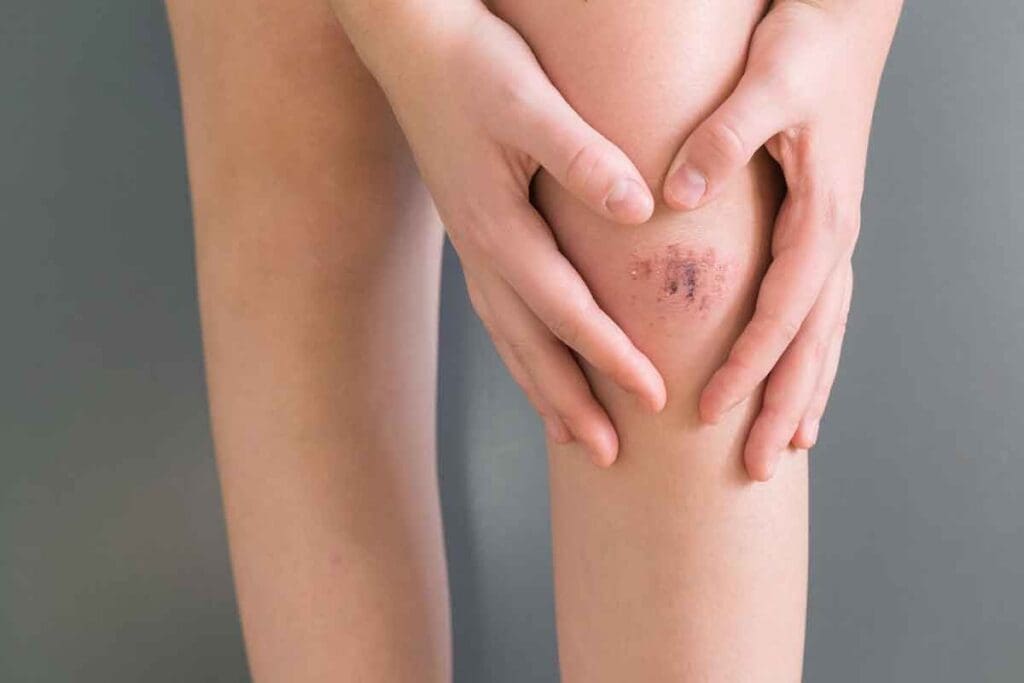
Are you worried about a bruise on your leg? Many people think a bruise is just a simple injury. But it could be a sign of a blood clot, which is more serious. Learn blood clot in leg bruise differences and warning signs to act early.
Telling a bruise from a blood clot is key. Both can look like dark spots under the skin. But their causes and warning signs are very different.
Key Takeaways
- Understand the differences between a blood clot and a bruise.
- Learn how to identify the warning signs of a blood clot.
- Discover the importance of distinguishing between a bruise and a blood clot.
- Find out when to seek medical attention for a leg injury.
Understanding Bruises and Blood Clots
It’s important to know the difference between a bruise and a blood clot. Both can happen in the leg and share similar signs. So, it’s key to understand what causes them and how they differ.
What Causes a Bruise?
A bruise, or contusion, happens when small blood vessels under the skin are damaged. This damage usually comes from a blow or trauma. It makes the blood vessels break and bleed.
The leaked blood then gathers in the soft tissues. This is why bruises turn the skin blue or purple.
What Is a Blood Clot?
A blood clot is a thick, gel-like mass made of blood cells and proteins. It forms in the bloodstream. Clots can happen in veins or arteries as a natural way to stop bleeding.
But if a clot forms without reason or breaks loose, it can be very dangerous. Deep Vein Thrombosis (DVT) is a type of blood clot in the deep veins, often in the legs.
Why People Confuse Them
Many people mix up bruises with blood clots because they both can cause swelling, pain, and color changes. Both can also come from injuries. But their causes and risks are different.
A bruise is usually harmless and heals by itself. But a blood clot is serious and needs quick treatment.
Their similar signs can confuse. This shows why it’s vital to understand each condition well. This ensures the right medical care is given.
The Appearance of a Typical Bruise
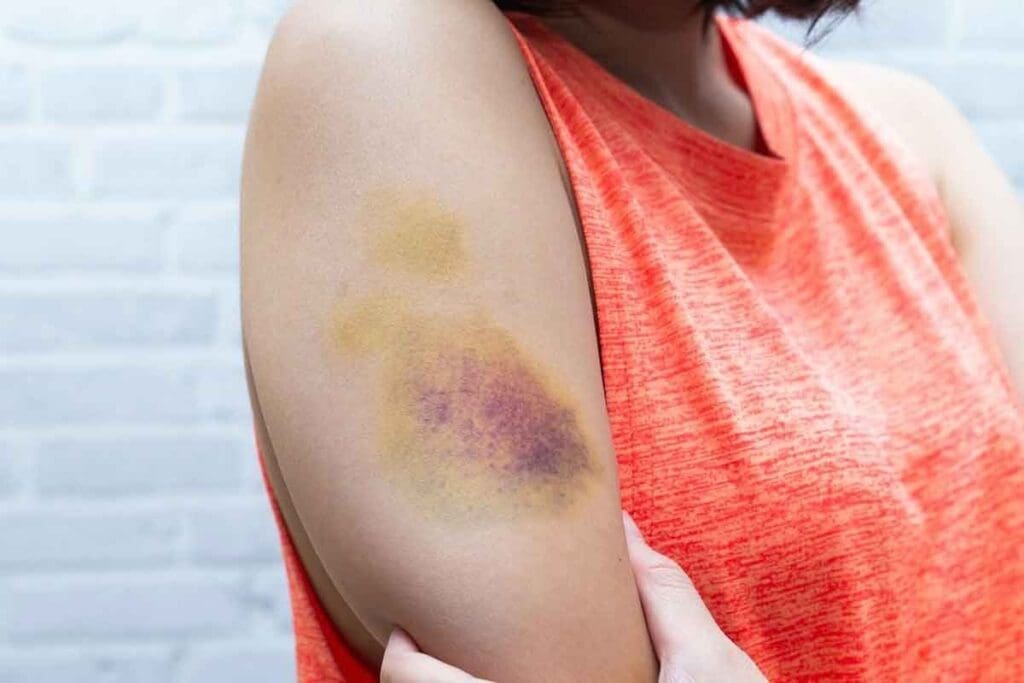
Bruises can look scary, but knowing what they usually look like can help. They happen when blood leaks from damaged vessels into the tissue around them. This causes the discoloration we see.
Normal Color Progression
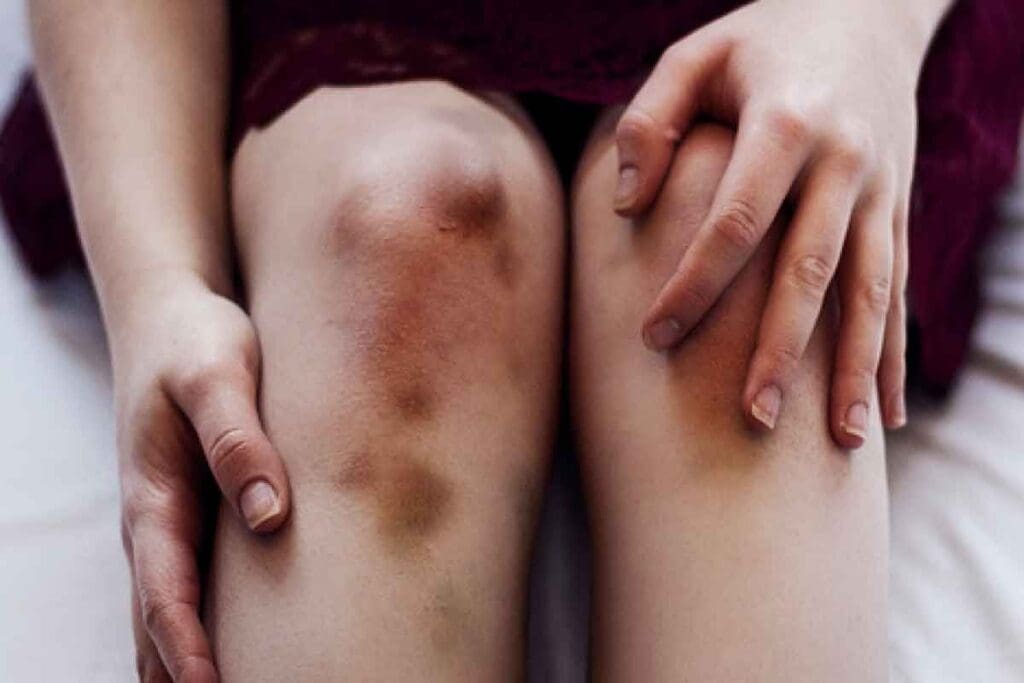
A bruise changes color as it heals. At first, it might look red or purple because of fresh blood. Then, as the body breaks down the blood, it turns green or yellow before fading away.
- Red or purple: Initial stage due to fresh blood
- Blue or black: As blood becomes deoxygenated
- Green or yellow: As hemoglobin breaks down
- Brown or tan: As the bruise fades
Common Locations and Patterns
Bruises can happen anywhere, but they’re more common in injury-prone areas like the legs, arms, and face. The bruise’s pattern can hint at how the injury happened. For example, a bruise with a clear pattern might show the shape or object that caused it.
Some places bruises often show up include:
- Legs: Often due to bumps or trauma
- Arms: Common in individuals with fragile skin or those who engage in activities that increase the risk of injury
- Face: Can result from falls, accidents, or other facial trauma
Typical Healing Timeline
Most bruises heal in a couple of weeks without issues. The healing time can vary based on the bruise’s severity and the person’s health. Usually, a bruise changes color most during the first week and fades over the next weeks.
Knowing how a bruise looks and changes can help figure out if it’s just a bruise or something more serious, like a blood clot.
Types of Blood Clots That Can Occur in the Leg
It’s important to know about the different blood clots in the leg. This knowledge helps in getting the right treatment. Blood clots in the leg can be dangerous and even life-threatening if not treated quickly.
Deep Vein Thrombosis
Deep Vein Thrombosis (DVT) is a serious condition. It happens when a blood clot forms in a deep vein, usually in the legs. DVT can cause a lot of pain and swelling. It’s a medical emergency because it can lead to pulmonary embolism if the clot breaks loose.
Key characteristics of DVT include:
- Clot formation in deep veins
- Often occurs in the legs
- It can cause pain, swelling, and warmth in the affected area
- Risk of pulmonary embolism if not treated
Superficial Thrombophlebitis
Superficial thrombophlebitis is when a clot forms in the veins close to the skin’s surface. It’s less dangerous than DVT but can cause discomfort. It can also lead to more serious conditions.
Characteristics of superficial thrombophlebitis include:
- Clot formation in superficial veins
- Often associated with inflammation
- Can cause pain, redness, and swelling
- May be related to varicose veins or recent intravenous catheter use
Post-Traumatic Blood Clots
Post-traumatic blood clots happen after an injury. They can form in both deep and superficial veins. The risk of getting these clots goes up with the injury’s severity.
Factors influencing post-traumatic blood clots include:
- Severity of the injury
- Immobilization after trauma
- Presence of other risk factors for clotting
Knowing the different types of blood clots in the leg is key to getting the right medical care. If you think you have a blood clot, seeing a healthcare professional is vital. They can give you the right diagnosis and treatment.
Recognizing a Blood Clot in a Leg Bruise
Telling a bruise apart from a blood clot in the leg is key to the right treatment. Both can come from injury, but they affect health differently.
Visual Characteristics of DVT
Deep Vein Thrombosis (DVT) shows clear signs that set it apart from bruises. Look out for:
- Swelling in the leg, which is big and not common in bruises
- Redness or color changes that don’t follow a bruise’s usual pattern
- Warmth when you touch the clot area
Symptoms That Distinguish Clots from Bruises
Some symptoms tell a blood clot from a bruise:
| Symptom | Blood Clot (DVT) | Bruise |
| Pain | Often severe and gets worse over time | Usually gets better as it heals |
| Swelling | Common and can be big | Usually small to moderate |
| Redness/Warmth | Present and can be strong | Usually not there or mild |
How Blood Clots Feel Compared to Bruises
A blood clot feels different from a bruise. The area with DVT might be sore and warm. Bruises are sore but not warm. Clot pain is often severe and feels like a constant ache or cramp.
Knowing these differences is vital for spotting if a leg bruise is actually a blood clot. This ensures you get medical help if needed.
Key Differences: Is It a Blood Clot or a Bruise?
Telling a blood clot from a bruise can be tricky. But knowing the differences is key to the right treatment. Both can come from injury, but they have different causes and signs.
Pain Characteristics
The pain from a bruise is usually tender but gets better as it heals. A blood clot, like Deep Vein Thrombosis (DVT), causes pain that doesn’t get better. This pain is often sharp or sore in the leg.
Swelling Patterns
Swelling can also tell you what you’re dealing with. Bruises swell a bit, but the swelling goes down as they heal. Blood clots, though, make the limb swell a lot. This swelling doesn’t go away without help.
Temperature Changes
The skin over a blood clot feels warmer because of inflammation. A bruise’s skin feels normal or a bit cooler. This temperature change can help figure out if it’s a bruise or a clot.
Duration of Symptoms
How long symptoms last is another clue. Bruises heal in a couple of weeks, fading as they do. Blood clots, though, can keep causing problems if not treated. If pain, swelling, or warmth don’t get better or get worse, it might be a clot.
In summary, bruises and blood clots both come from injuries, but they’re different. Knowing the pain, swelling, temperature, and how long symptoms last can tell you if it’s a bruise or something more serious. It’s important to understand these differences to get the right medical help.
Understanding Bruise Clots vs. Dangerous Blood Clots
Knowing the difference between bruise clots and dangerous blood clots is key to avoiding serious health issues. Both are linked to bleeding but happen in different ways and have different health impacts.
What Happens Under the Skin During Bruising
When you bruise, you’ve hurt the blood vessels under your skin. This causes blood to leak into the tissue around it. The blood pools, making the skin turn color.
The body naturally clots the blood to stop the bleeding and start healing. Bruise clots are usually not harmful and get absorbed by the body over time. But a bruise can look scary, and it’s hard to tell if it’s just a bruise or something more serious.
How Vascular Blood Clots Form
Vascular blood clots form inside blood vessels. They can happen in veins or arteries. They’re caused by the body’s clotting system going off too soon.
This can happen from injury, being stuck in one place for too long, or other things that mess with blood flow or the blood vessel walls.
“Blood clots can form in any part of the body, but when they occur in the deep veins of the legs, they are very dangerous because of the risk of pulmonary embolism.”
Creating a vascular blood clot is a complex process. It involves platelets, clotting factors, and other blood parts. Unlike bruise clots, vascular blood clots can block blood flow. This can lead to serious health problems if not treated quickly.
Why Location Matters
Where a clot forms is very important for its risk level. Clots in veins close to the skin are less risky than those in deeper veins. Deep Vein Thrombosis (DVT) is when a clot forms in deep veins, usually in the legs.
DVT is dangerous because the clot can break loose and go to the lungs. This can cause a pulmonary embolism.
| Clot Type | Location | Risk Level |
| Bruise Clot | Under the skin | Low |
| Vascular Blood Clot | Within blood vessels | High |
| DVT | Deep veins | High |
Understanding the differences and where clots form can help spot health risks early.
Special Cases: Vein Bruises and Superficial Clots
Vein bruises can be scary because they might look like or actually be blood clots. It’s important to know the difference between a simple bruise and a serious blood clot.
Bruise on Wrist Over Vein
A bruise on the wrist over a vein is alarming because it’s visible and could be serious. The wrist has many veins close to the surface, making bruises here common. Watch for swelling, redness, or warmth, which could mean something serious.
The wrist is fragile, and bruises here might not always be a big deal. But it’s always good to keep an eye on it.
Vein Bruises vs. Superficial Thrombophlebitis
Vein bruises and superficial thrombophlebitis can look similar, with both causing pain and swelling. But superficial thrombophlebitis is more serious because it’s a blood clot in a vein. It’s important to tell them apart for the right treatment.
- Vein bruises are usually from injury and don’t involve the vein directly.
- Superficial thrombophlebitis has a clot in the vein and comes with redness, warmth, and tenderness.
Blood Clot Bruise on Thigh
A blood clot bruise on the thigh might mean deep vein thrombosis (DVT), a serious issue. Unlike regular bruises, DVT causes swelling, pain, and warmth in the leg.
If you have these symptoms, get medical help right away:
- Swelling in the leg or along a vein
- Pain or tenderness not from injury
- Warmth or redness of the skin
Knowing the difference between a bruise and a blood clot is key to your health. If unsure, always talk to a doctor.
Visual Identification Guide
Knowing how to tell the difference between bruises and blood clots is important. This knowledge helps you decide if you need to see a doctor.
What Normal Bruises Look Like
Normal bruises start red, then turn purple, blue, green, and yellow before fading. They are tender and may swell a bit. But the swelling is usually not too bad.
These bruises come from minor injuries and heal in a couple of weeks. The color change happens as the blood breaks down.
Visual Signs of Potential Blood Clots
Blood clots show different signs. The area might feel warm, look red, and swell up. Unlike bruises, the redness of a blood clot doesn’t change color.
The skin around a blood clot might look pale or blue. This is because the clot blocks blood flow.
Understanding Blood Clot Bruise in Leg Pictures
Looking at pictures of leg bruises, watch for swelling, warmth, or pain. These signs could mean deep vein thrombosis (DVT) or other serious issues.
| Characteristics | Normal Bruise | Potential Blood Clot |
| Color | Changes from red to purple, blue, green, and yellow | Remains red or discolored |
| Swelling | Mild swelling | Significant swelling |
| Temperature | Normal skin temperature | Warm to the touch |
If you’re not sure about a bruise or think it might be a blood clot, see a doctor.
“The key to managing blood clots is early detection and treatment. If you’re experiencing symptoms that could indicate a blood clot, don’t hesitate to seek medical help.”
Risk Factors for Developing Blood Clots
Blood clots can be caused by many things. These include medical conditions, lifestyle choices, and the environment. Knowing what increases the risk is key to preventing and catching blood clots early.
Medical Conditions That Increase Risk
Some medical conditions raise the risk of blood clots. Clotting disorders like factor V Leiden, thrombophilia, and antiphospholipid syndrome make blood clot more easily. Conditions like cancer and heart disease also increase the risk because they cause inflammation and change blood flow.
- Cancer
- Heart Disease
- Clotting Disorders
Lifestyle Factors and Behaviors
Lifestyle choices also play a big part in blood clot risk. Smoking damages blood vessel linings, making clots more likely. Being obese and not being active also raises the risk because it puts more pressure on the veins and reduces blood flow.
| Lifestyle Factor | Risk Level | Prevention Strategy |
| Smoking | High | Quit Smoking |
| Obesity | Moderate to High | Weight Management |
| Sedentary Lifestyle | Moderate | Regular Exercise |
Recent Injuries or Surgeries
Recent injuries or surgeries can also up the risk of blood clots, especially if you’re stuck in one place for too long. This is because immobility causes blood to pool in your legs, raising clot risk. Surgical procedures, like those on the hips, knees, or abdomen, are more likely to lead to deep vein thrombosis (DVT).
Knowing these risk factors helps you take steps to prevent blood clots. Stay active, manage chronic conditions, and follow your doctor’s advice after surgery.
When to Be Concerned About a Leg Bruise or Blood Clot
It’s important to know the difference between a simple bruise and a blood clot in your leg. Most bruises are not serious. But a blood clot can be dangerous if not treated quickly.
Warning Signs That Require Medical Attention
Some signs with a leg bruise might mean you have a blood clot. Look out for:
- Persistent swelling that doesn’t get better
- Pain or tenderness in the leg, worse when standing or walking
- Warmth or redness in the bruised area
- Discoloration or skin color change around the bruise
If you notice these signs, see a doctor right away.
Emergency Symptoms
A blood clot can move to the lungs and cause a pulmonary embolism. This is very serious and needs quick medical help. Signs of a pulmonary embolism include:
- Difficulty breathing or feeling short of breath
- Chest pain that gets worse with deep breaths
- Rapid heart rate or feeling like your heart is skipping beats
- Coughing up blood
If you or someone else has these symptoms, call emergency services fast.
Can Blood Clots Look Like Bruises?
Yes, blood clots can look like bruises because they can cause similar color changes and swelling. But blood clots usually have other signs like warmth, pain, or tenderness.
It’s key to know the difference between a bruise and a blood clot to get the right treatment. If you’re not sure about a leg bruise, always check with a doctor.
Diagnostic and Treatment Approaches
Getting a blood clot diagnosis right and treating it well is key to better health. When someone shows signs of a blood clot, doctors use a detailed method to figure it out.
How Doctors Diagnose Blood Clots
Doctors use a mix of checks and scans to spot blood clots. Ultrasound is a top choice. It shows the blood vessels and finds clots.
Diagnostic Tests for Blood Clots:
| Test | Description | Usefulness |
| Ultrasound | Uses sound waves to create images of blood vessels | Highly effective for detecting clots in deep veins |
| D-dimer Blood Test | Measures the level of D-dimer, a protein fragment produced when a blood clot dissolves | Helpful in ruling out blood clots when the result is negative |
| Venography | Involves injecting contrast material into the veins to visualize clots | Useful for confirming diagnosis when ultrasound is inconclusive |
Treatment Options for Blood Clots
Treatment for blood clots aims to stop the clot from getting bigger. It also stops it from breaking loose and causing harm. This helps avoid long-term problems.
Common Treatment Approaches:
- Anticoagulant medications to prevent further clotting
- Thrombolytic therapy to dissolve the clot
- Use of compression stockings to reduce swelling
Managing Simple Bruises at Home
Simple bruises don’t need a doctor but can be treated at home. The RICE method is a good guide:
- Rest the affected area
- Ice the bruise to reduce pain and swelling
- Compress the area gently with a bandage
- Elevate the affected limb above the level of the heart
By using these steps, you can help your bruise heal faster.
Conclusion
It’s very important to tell the difference between a bruise and a blood clot. This is because knowing the difference can help avoid serious health problems. A quick summary of key points shows why it’s so critical.
Blood clots, like deep vein thrombosis (DVT), can be very dangerous if not treated right away. Knowing who’s at risk, like older people or those who don’t move much, is key.
Understanding the difference between a bruise and a blood clot is essential. Early treatment can greatly improve health outcomes for those with DVT or pulmonary embolism (PE).
FAQ
Is it a blood clot or a bruise?
A bruise happens when an injury breaks blood vessels, causing bleeding into the tissue. A blood clot forms inside blood vessels. Both can look dark, but their causes and signs are different.
What are the symptoms of a blood clot in the leg?
A blood clot in the leg, like Deep Vein Thrombosis (DVT), shows as swelling, warmth, tenderness, and pain. These signs are not like a bruise.
Can a bruise on the wrist over a vein be a sign of a blood clot?
A bruise on the wrist over a vein might mean superficial thrombophlebitis, a blood clot in a surface vein. It’s key to tell if it’s just a bruise or something more serious.
How can I tell if a leg bruise is a blood clot?
To check if a leg bruise is a blood clot, look for swelling, warmth, and tenderness. If you see these, it might be a clot. Always get a doctor’s opinion.
What are the risk factors for developing blood clots?
Some medical conditions, lifestyle choices, and recent injuries or surgeries increase blood clot risk. Knowing these can help prevent them.
Can blood clots look like bruises?
Yes, blood clots can look like bruises because they appear similar. But, clots usually have swelling, warmth, and tenderness too.
How are blood clots diagnosed?
Doctors use ultrasound and other tests to find blood clots. They’ll check your symptoms and do tests to confirm a clot.
What are the treatment options for blood clots?
Treatment for blood clots includes anticoagulant therapy to stop the clot from growing. Sometimes, more serious treatments are needed.
How can I manage simple bruises at home?
For simple bruises, use ice, elevate the area, and wear compression bandages. But if your bruise is severe or has concerning symptoms, see a doctor.
What is the difference between a bruise clot and a dangerous blood clot?
A bruise clot is a normal injury response. But a dangerous blood clot forms in the veins or arteries and can be deadly. The clot’s location shows its risk.
Can bruises cause clots?
Bruises can lead to clots under the skin, but these are usually not dangerous. Yet, a bruise might signal a more serious injury that could cause a blood clot.
References
- McIntyre, L., et al. (2023). A guide for patients with newly diagnosed deep vein thrombosis. Canadian Journal of Cardiology, 39(7), 816-821. https://www.ncbi.nlm.nih.gov/pmc/articles/PMC10559639/