
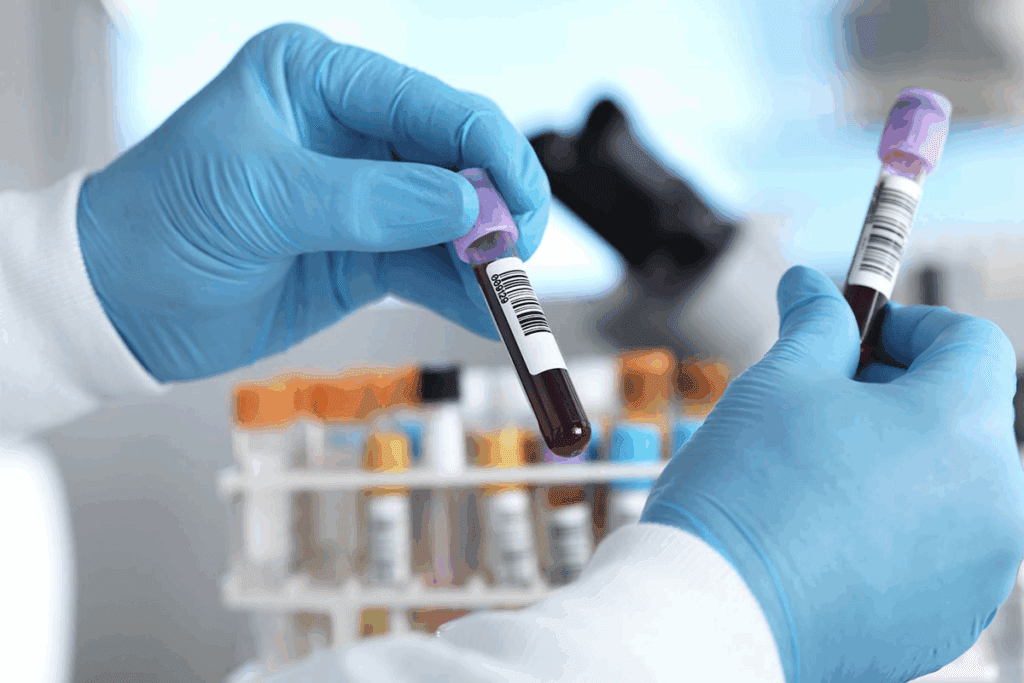
A staggering number of people are diagnosed with cancer every year. Early detection is key to effective treatment. Did you know a simple blood test can spot some cancers? The Complete Blood Count (CBC) checks different parts of the blood, like red and white blood cells, platelets, and hemoglobin.
The CBC test is a useful blood test for cancer and helps find many conditions, including cancer. Doctors look at CBC results to spot unusual signs that might suggest cancer is present. Though it’s not the only test for cancer, a CBC can guide further testing and help determine the underlying problem.
Key Takeaways
- A Complete Blood Count (CBC) is a key tool for finding different cancers.
- CBC looks at the blood’s parts, like red and white blood cells, platelets, and hemoglobin.
- Odd CBC results can show cancer might be there.
- Finding cancer early with CBC can lead to better treatment and results.
- A CBC isn’t the only test for cancer, but it helps guide more tests.
Understanding Complete Blood Count (CBC) Tests

The Complete Blood Count (CBC) test checks many parts of the blood to see how well you’re doing. Doctors use it to find and keep track of many health problems. This includes things like anemia, infections, leukemia, and cancers.
What Is a Complete Blood Count?
A CBC is a blood test that looks at different parts of the blood. It checks red blood cells, white blood cells, and platelets. This test helps doctors see if your body is carrying oxygen, fighting off infections, and clotting blood well. It’s often used for routine check-ups or to monitor health conditions.
Components of a CBC Test
The CBC test looks at several important parts of the blood:
- Red Blood Cells (RBCs): Carry oxygen throughout the body.
- White Blood Cells (WBCs): Play a key role in fighting infections.
- Platelets: Important for blood clotting and stopping too much bleeding.
- Hemoglobin (Hb): A protein in RBCs that carries oxygen.
- Hematocrit (Hct): The amount of RBCs in the blood.
Each part gives clues about different health areas. If their levels are off, it can mean different health issues.
Normal Range Values and Variations
Normal CBC values can change a bit between labs. But for adults, they usually are:
- RBC count: 4.32-5.72 million cells per microliter for men, and 3.90-5.03 million cells per microliter for women.
- WBC count: 3,500-10,500 cells per microliter.
- Platelet count: 150,000-450,000 platelets per microliter.
If your values are not in these ranges, it might mean you have a health problem. For example, low RBCs could mean anemia. High WBCs might show an infection or inflammation. Knowing these changes helps doctors diagnose and treat health issues better.
The Relationship Between Blood Tests and Cancer Detection

It’s important to know how blood tests can help find cancer. These tests can show if there are any signs of cancer in the blood.
How Cancer Affects Blood Composition
Cancer can change the blood in many ways. It can make some blood cells more or less common. It can also change the levels of proteins or add abnormal cells.
Leukemia is a cancer that makes too many abnormal white blood cells. A Complete Blood Count (CBC) test can find this. Other cancers might change the number of platelets or hemoglobin.
Limitations of Blood Tests in Cancer Diagnosis
Blood tests are good for finding cancer, but they have limits. Not every cancer shows up in blood tests. Some non-cancer conditions can look like cancer in these tests.
So, doctors use blood tests along with other tools like imaging and biopsies. This helps make sure the diagnosis is right.
| Limitation | Description |
| Lack of Specificity | Some blood test issues can be from non-cancer conditions. |
| Lack of Sensitivity | Not all cancers show up in blood tests. |
| Need for Additional Testing | Blood tests often need more tests to confirm. |
When Blood Tests Are Most Useful for Cancer Detection
Blood tests are most helpful in certain situations. They’re great for watching people at high risk of cancer. They also help track cancer in those getting treatment.
In these cases, blood tests give important info. They help doctors make treatment plans. They also help spot cancer coming back early.
Blood Test for Cancer: Types and Purposes
Blood tests play a key role in finding cancer. They help screen, diagnose, and keep track of the disease. These tests are vital for spotting cancer at various stages and for different cancers.
Screening vs. Diagnostic Blood Tests
Blood tests for cancer fall into two main categories: screening and diagnostic. Screening tests look for cancer in people without symptoms. Diagnostic tests confirm cancer in those with symptoms.
Screening tests aim to find people at risk early. This allows for quicker action. Diagnostic tests, on the other hand, find the cause of symptoms and track the disease’s growth.
Tumor Markers in Blood
Tumor markers are substances found in higher amounts in some cancer patients. They help track cancer’s growth and treatment success.
“Tumor markers are not used for screening or diagnosis but can provide valuable information about the disease’s progression and response to treatment.”
Examples include prostate-specific antigen (PSA) for prostate cancer and CA-125 for ovarian cancer.
Genetic Testing Through Blood Samples
Genetic testing looks at DNA from blood to find cancer risks. It’s great for those with a family history of cancer.
It can spot mutations in genes like BRCA1 and BRCA2. These are linked to higher breast and ovarian cancer risks.
Comprehensive Blood Panels for Cancer Evaluation
Comprehensive blood panels check overall health and find various conditions, including cancer. They include a complete blood count (CBC), blood chemistry tests, and tumor marker tests.
| Test Type | Purpose | Examples |
| Screening Tests | Detect cancer in asymptomatic individuals | CBC, PSA test |
| Diagnostic Tests | Confirm the presence of cancer in symptomatic individuals | Biopsy, tumor marker tests |
| Genetic Testing | Identify genetic mutations predisposing to cancer | BRCA1 and BRCA2 testing |
| Comprehensive Blood Panels | Evaluate overall health and detect cancer | CBC, blood chemistry tests, tumor marker tests |
Leukemia and Blood Tests
Blood tests are key in finding leukemia, a cancer that messes with blood cell production. It affects the blood and bone marrow, causing too many white blood cells. These cells help fight off infections.
Abnormalities in CBC Results Indicative of Leukemia
A Complete Blood Count (CBC) test is often the first step in finding leukemia. It checks the blood’s white, red, and platelet counts. In leukemia, the CBC might show abnormal white blood cell counts.
It might also show fewer red blood cells or platelets. This means the bone marrow isn’t working right.
Specific Blood Markers for Leukemia Types
Each type of leukemia has its own blood markers. For example, Chronic Lymphocytic Leukemia (CLL) shows more mature lymphocytes in the blood. Acute Lymphoblastic Leukemia (ALL) and Acute Myeloid Leukemia (AML) are found by looking for blast cells in the blood or bone marrow.
These markers help doctors figure out what type of leukemia you have. They also help decide the best treatment.
Does Leukemia Always Show Up in Blood Work?
While blood tests are vital for finding leukemia, not all cases show up in blood work. Some people might have normal blood counts early on or between flare-ups. But most leukemia cases do show up in blood tests.
So, regular blood tests are important for catching and managing the disease.
Lymphoma Detection Through Blood Work
Lymphoma is a cancer that affects the immune system. It can sometimes be found through blood tests. Doctors use blood tests, imaging, and biopsies to confirm the diagnosis.
Blood Indicators for Hodgkin vs. Non-Hodgkin Lymphoma
Hodgkin and non-Hodgkin lymphoma are two different cancers. They have different signs in blood tests. Hodgkin lymphoma might show Reed-Sternberg cells, but these are not always in the blood.
Non-Hodgkin lymphoma shows abnormal lymphocytes in the blood. These cells suggest lymphoma, but more tests are needed to confirm.
Can a Blood Test Show Lymphoma Cancer?
A blood test alone can’t confirm lymphoma. But it can hint at cancer’s presence. For example, a Complete Blood Count (CBC) might show abnormal white or red blood cells.
Some blood tests look for proteins or markers linked to lymphoma. The erythrocyte sedimentation rate (ESR) test, for instance, measures inflammation, which is often high in lymphoma patients.
When Additional Testing Is Necessary
While blood tests are key for screening, they’re not enough to confirm lymphoma. If blood work suggests lymphoma, more tests are needed. This includes:
- Imaging tests like CT scans or PET scans are used to see how far the disease has spread.
- A biopsy to check tissue or lymph nodes for cancer cells.
- Bone marrow aspiration or biopsy to see if the lymphoma has reached the bone marrow.
These tests help doctors confirm the diagnosis and plan the right treatment.
Multiple Myeloma and Blood Test Indicators
Blood tests are key in finding multiple myeloma, a cancer that affects plasma cells in the bone marrow. They show signs that point to this disease.
Protein Abnormalities in Blood
Abnormal proteins in the blood are a big sign of multiple myeloma. These proteins, called monoclonal proteins or M proteins, come from cancerous plasma cells. Tests like serum protein electrophoresis (SPEP) or urine protein electrophoresis (UPEP) find these proteins.
These proteins can lead to problems like:
- Kidney damage from M proteins
- Bone lesions from myeloma cells and bone marrow
- High calcium levels from bone destruction
Complete Blood Count Changes in Multiple Myeloma
A Complete Blood Count (CBC) test shows changes linked to multiple myeloma. These include:
- Anemia, shown by low hemoglobin or hematocrit
- Thrombocytopenia, or low platelet count
- Leukopenia, or low white blood cell count
Myeloma cells in the bone marrow can stop normal blood cells from being made.
Specialized Tests for Multiple Myeloma Diagnosis
Other tests help diagnose multiple myeloma, too. These include:
- Fluorescence In Situ Hybridization (FISH) for genetic changes
- Bone marrow biopsy to see how many myeloma cells there are
- Imaging studies like PET/CT scans for bone lesions
These tests, along with a doctor’s evaluation and medical history, help find multiple myeloma. They help doctors plan the right treatment.
Can Solid Tumors Be Detected by Blood Tests?
Blood tests can give us important clues, but they can’t always find solid tumors. These tumors, like those in the breast, lung, and colon, are hard to spot with blood tests alone.
Limitations of CBC for Solid Tumor Detection
A Complete Blood Count (CBC) checks different parts of the blood. It looks at red and white blood cells, hemoglobin, and platelets. But it can’t directly find solid tumors.
For example, a study in the Journal of Clinical Oncology showed CBCs can hint at cancer. Yet, they’re not good for diagnosing solid tumors. This shows we need better tests.
Complementary Tests for Solid Tumor Diagnosis
Other tests help find solid tumors. These include blood tests for tumor markers, imaging like CT scans and MRIs, and biopsies. Tumor markers are substances in the blood or tissues of some cancer patients.
| Tumor Type | Common Tumor Markers | Diagnostic Use |
| Breast Cancer | CA 15-3, CA 27.29 | Monitoring disease progression and treatment response |
| Colorectal Cancer | CEA (Carcinoembryonic Antigen) | Monitoring recurrence and treatment response |
| Lung Cancer | CYFRA 21-1 | Aiding in diagnosis and monitoring treatment response |
An oncologist says tumor markers are useful but not definitive. They help track treatment success or cancer recurrence. This shows we must look at all diagnostic results together.
Circulating Tumor Cells and Their Significance
Circulating tumor cells (CTCs) are cancer cells in the blood. Finding CTCs can show cancer has spread. Research shows CTCs can predict how well a patient will do and how treatment is working.
“The enumeration of CTCs has been shown to have prognostic value in patients with metastatic breast, colorectal, and prostate cancer,” according to a study published in the Journal of Clinical Oncology.
Studying CTCs is a promising area. It could lead to better, more tailored cancer treatments.
Breast Cancer and Blood Work: What Shows Up?
It’s important to know how breast cancer can be detected through blood tests. These tests aren’t the main way to find breast cancer. But they can show signs of the disease.
Would Breast Cancer Show Up in Blood Work?
Breast cancer itself might not show up in blood tests. But some markers and changes in blood can hint at its presence. For example, high levels of certain proteins in the blood might mean breast cancer.
Tumor markers are substances found in more than usual amounts in some cancers. They’re not a sure sign on their own. But they can help when used with other tests.
Tumor Markers Specific to Breast Cancer
There are several tumor markers linked to breast cancer. These include:
- CA 15-3
- CA 27.29
- CEA (Carcinoembryonic antigen)
These markers aren’t only found in breast cancer. They can also be high in other conditions. Yet, watching their levels can help see if treatment is working and if cancer might come back.
Blood Test for Breast Cancer Detection: Current Status
Research on blood tests for breast cancer is moving forward. These tests are not a full replacement for mammograms yet. But they can help alongside other tests.
New technology and research are making blood tests more useful in finding breast cancer. As we learn more about tumor markers and other signs, we can detect cancer earlier and more accurately.
Lung Cancer Detection Through Blood Tests
Lung cancer is a common and deadly cancer. Blood tests can help detect it, making diagnosis less invasive. The link between lung cancer and blood tests is complex, involving biomarkers and diagnostic methods.
Do Blood Tests Detect Lung Cancer?
Blood tests are used to find lung cancer, among other cancers. They’re not perfect alone but offer key information. This info, when combined with other tests, aids in early detection. Studies show that blood biomarkers can signal lung cancer presence.
Specific Markers for Lung Cancer
Several biomarkers are linked to lung cancer. These include:
- CEA (Carcinoembryonic Antigen): High levels can point to lung cancer among other cancers.
- CYFRA 21-1: This marker is key for non-small cell lung cancer.
- ProGRP (Pro-Gastrin-Releasing Peptide): Often linked to small-cell lung cancer.
These markers aren’t just for lung cancer. They can also be high in other conditions, making diagnosis tricky.
When to Suspect Lung Cancer from Blood Work
From blood work, suspecting lung cancer means looking at biomarker levels and other blood components. High levels of certain markers can lead to more tests. But, it’s important to consider the patient’s health and other test results too.
Complementary Diagnostic Methods
Blood tests are just one tool for lung cancer diagnosis. They’re often paired with other methods. These include:
- Imaging Tests: Like CT scans and PET scans, which show tumor locations.
- Biopsy: The best way to confirm cancer is by examining tumor samples.
- Genetic Testing: To find genetic mutations that help choose treatments.
Using these methods together improves diagnosis accuracy. It also helps create a better treatment plan.
Other Common Cancers and Blood Test Indicators
Blood tests help find more than just common cancers. They also spot bone cancer and brain tumors. These tests are not always perfect, but they give important hints for more tests.
Does Melanoma Show Up in Blood Tests?
Melanoma, a serious skin cancer, can show up in blood tests. Lactate dehydrogenase (LDH) is a marker that might be high in advanced melanoma. A high LDH level means more tests are needed.
Can a Blood Test Detect Bone Cancer?
Blood tests can hint at bone cancer, like osteosarcoma. They look for high levels of alkaline phosphatase, an enzyme in bone growth. Alkaline phosphatase levels can be high for many reasons, so more tests are needed.
Brain Tumors and Blood Work Findings
Standard blood tests can’t find brain tumors. But some blood tests and markers might help in certain cases. For example, circulating tumor DNA in the blood can hint at brain tumors. This is mostly in research settings.
Gastrointestinal Cancer Markers in Blood
Blood tests can hint at gastrointestinal cancers, like colorectal and pancreatic cancer. For example, carcinoembryonic antigen (CEA) levels might be high in colorectal cancer. These markers help in a full diagnostic plan.
Can Routine Blood Tests Detect Cancer?
Routine blood tests are not made for finding cancer, but they can hint at it. They help diagnose and keep track of many health problems. Sometimes, they show signs that might mean cancer.
What Will Routine Blood Work Show?
Routine blood tests check many things, like red and white blood cells, and hemoglobin. These tests are not just for cancer. They can show problems that might mean cancer or other diseases.
For example, a CBC can show changes that might mean leukemia or lymphoma. Some cancers also change blood chemistry, like raising certain enzyme levels.
Subtle Signs of Cancer in Standard Blood Panels
Routine blood tests can sometimes show early signs of cancer. These signs include:
- Unexplained changes in blood cell counts
- Abnormal levels of certain proteins or enzymes
- Alterations in blood chemistry
For instance, a high white blood cell count might mean infection or leukemia. Abnormal liver function tests could suggest liver metastasis.
“While routine blood tests are not diagnostic tools for cancer, they can sometimes provide the first hints that something is amiss, prompting further investigation.”
Why Some Cancers Are Missed in Routine Testing
Even though routine blood tests can hint at cancer, many cancers are missed. This is because many cancers don’t change blood counts or chemistry until they’re advanced.
| Cancer Type | Likelihood of Detection by Routine Blood Tests |
| Leukemia | High |
| Lymphoma | Moderate |
| Solid Tumors (e.g., Breast, Lung) | Low |
When to Request Additional Testing
If blood tests show something odd that might be cancer, more tests are needed. This could be imaging, biopsies, or blood tests for tumor markers.
Talking to your doctor about your health risks and worries is key. They’ll decide what tests you need based on your situation.
Knowing how routine blood tests work in finding cancer helps patients understand their health better. It shows why more tests might be needed.
Abnormal Blood Test Results: Cancer vs. Other Conditions
Abnormal blood test results can come from many health issues, not just cancer. It’s important to know these causes.
Getting abnormal blood test results can worry you about cancer. But many health problems can also cause these results. These problems are not always cancer.
Common Non-Cancer Causes of Abnormal Blood Tests
Many non-cancer conditions can lead to abnormal blood test results. For example, infections and inflammatory conditions can change blood cell counts. Liver or kidney disease can also affect blood levels.
Other common reasons include anemia, diabetes, and thyroid disorders. Even some medicines and supplements can change blood test results. Always tell your doctor about any drugs you’re taking.
When to Be Concerned About Cancer
While most abnormal blood test results aren’t cancer, some patterns might worry you. For instance, unexplained changes in blood cell counts or elevated levels of certain tumor markers could suggest cancer.
Talking to your healthcare provider about your risk factors and concerns is key. They can decide if more tests are needed to check for cancer or other health issues.
Follow-Up Testing After Abnormal Results
If your blood test results are abnormal, your doctor might suggest additional testing. This could be repeated blood tests, imaging studies like X-rays or CT scans, or biopsies to look at tissue samples.
Follow-up testing is vital to find out why your blood test results are abnormal. It helps doctors monitor changes over time and check if treatments are working.
When to Discuss Cancer Testing with Your Doctor
Talking to your doctor about cancer testing at the right time is key to your health. Cancer screening helps find cancer early. Knowing when to talk about it with your doctor is important.
Risk Factors That Warrant Testing
Some risk factors mean you should talk to your doctor about cancer testing. These include a family history of cancer, genetic predispositions, and exposure to harmful substances. For example, if your family has had breast or ovarian cancer, you might need to get screened more often.
Key risk factors to consider:
- Family history of cancer
- Genetic mutations (e.g., BRCA1 and BRCA2 for breast cancer)
- Exposure to carcinogens (e.g., asbestos, tobacco smoke)
- Age, as the risk of many cancers increases with age
Symptoms That Should Not Be Ignored
It’s important to watch for changes in your body and tell your doctor about them. Symptoms like unexplained weight loss, persistent pain, or changes in bowel habits could mean cancer. They need to be checked out.
Common symptoms that should prompt a discussion about cancer testing include:
- Unexplained weight loss
- Persistent pain or fatigue
- Changes in skin, such as new moles or lesions
- Changes in bowel or bladder habits
Questions to Ask About Cancer Screening
When you talk to your doctor about cancer testing, have questions ready. Knowing the benefits and risks of screening tests helps you make good choices for your health.
Consider asking the following questions:
- What cancer screening tests are recommended for my age and risk factors?
- How often should I undergo cancer screening?
- What are the possible risks or side effects of the screening tests?
- How will the results of the screening tests be shared with me?
Being proactive and informed helps you and your doctor create a cancer screening plan that fits you.
Conclusion: The Role of Blood Tests in Cancer Detection and Management
Blood tests are key in finding and managing cancer. They give doctors important clues for early diagnosis and treatment. By looking at blood, doctors can spot signs that might mean cancer is present.
The Complete Blood Count (CBC) test is a big help in finding cancers like leukemia and lymphoma. Even though blood tests have their limits, they’re often used with other tests to get a full picture of a patient’s health.
Getting cancer right means finding it early and treating it well. Blood tests, like tumor marker tests and genetic tests, help find specific cancers and see how treatments are working. Knowing how blood tests help in finding and managing cancer helps patients understand their options better.
FAQ
What does a CBC blood test indicate about cancer?
A CBC test can show if you have certain cancers. This includes leukemia. It looks at red and white blood cells and platelets.
Can a blood test detect cancer?
Yes, some blood tests can find cancer. They look for tumor markers and do genetic tests. They also check blood panels.
What blood test shows cancer?
Many tests can show cancer signs. These include CBC tests and tests for tumor markers. Genetic tests also help.
Can tumors be detected by a blood test?
Not all tumors show up in blood tests. But some tests can find tumor markers. They can also find cancer cells in the blood.
Will routine blood tests detect cancer?
Routine tests like CBC can sometimes find cancer. But, they’re not perfect. They might miss some cancers.
Does lung cancer show up in blood work?
Lung cancer might show up in blood tests. Tests for tumor markers can help. But these tests aren’t always sure.
Can leukemia be detected in a blood test?
Yes, leukemia often shows up in CBC tests. These tests count different blood cells.
Does breast cancer show up in blood work?
Some blood tests can hint at breast cancer. They look for specific tumor markers. But, they’re not the main way to diagnose it.
Can a blood test show lymphoma?
Lymphoma might show up in blood tests. But you usually need more tests, like biopsies, to be sure.
What are the signs of cancer in blood work?
Abnormal blood counts can mean cancer. This includes red and white blood cells and platelets. Tumor markers can also show up.
Can you have normal blood work and yet have cancer?
Yes, you can have normal blood tests and have cancer. Some cancers don’t change blood tests much.
When should I be concerned about cancer from blood test results?
If your blood tests show big changes, talk to your doctor. Also, if you have risk factors or symptoms, get checked.
What are the risk factors that warrant cancer testing?
Some risk factors need cancer tests. These include family history, age, and certain exposures. Lifestyle also matters.
What symptoms should not be ignored that might indicate cancer?
Don’t ignore symptoms like unexplained weight loss or pain. Also, changes in bowel or bladder habits and unusual bleeding are signs.
What questions should I ask about cancer screening?
Ask about the right tests for you. Find out how often you need them. And what the results mean.
References
- Abide, C. Y., Ergen, E. B., Cogendez, E., et al. (2018). Evaluation of complete blood count parameters to predict endometrial cancer. Journal of Clinical Laboratory Analysis, 32(3), e22438. https://pmc.ncbi.nlm.nih.gov/articles/PMC6817014/