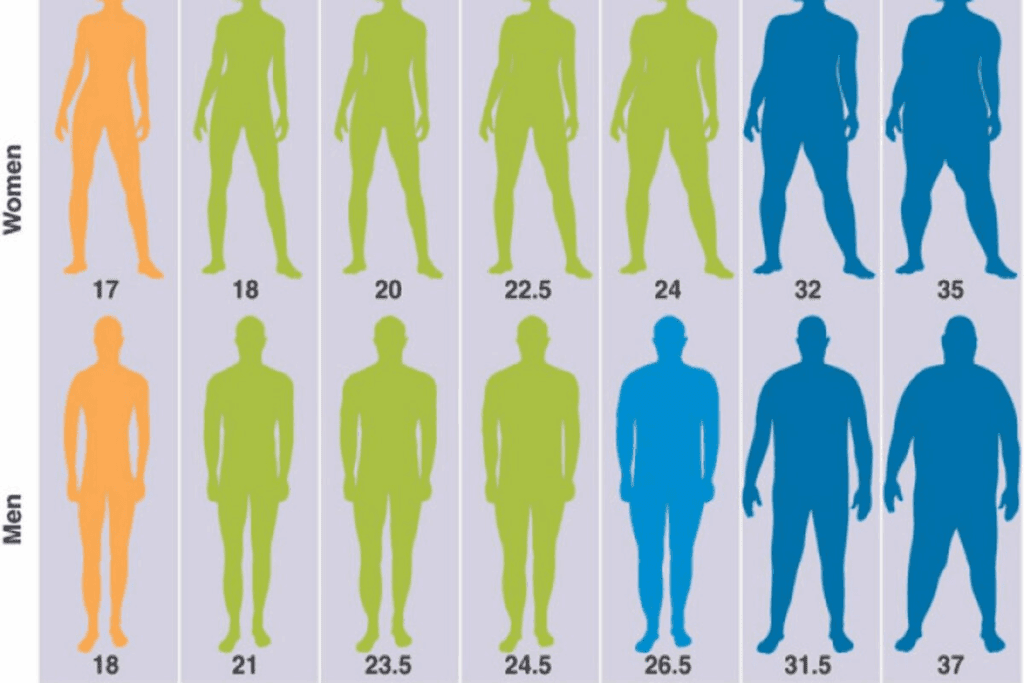
Knowing your Body Mass Index (BMI) is the first step to better health. BMI is a key tool for checking weight status and health risks in adults.A ‘body mass index of 32’ is considered obese. Our simple guide explains the serious health risks and the best, proven next steps.
BMI is found by dividing your weight in kilograms by your height in meters squared. It shows your weight status, from underweight to obese.
At Liv Hospital, we offer trusted medical advice on BMI and its health effects. We help you understand your BMI and what it means for your health. Whether you’re at a healthy weight or need to make changes, we support you in making good health choices.
Key Takeaways
- Understanding BMI is key for checking weight status and health issues.
- BMI charts for women and men show different weight status categories.
- Finding your healthy BMI range is important for better health.
- Liv Hospital offers trusted medical advice on BMI and health.
- BMI is a basic tool for checking weight status and health risks.
What is Body Mass Index (BMI)?

BMI, or Body Mass Index, is a simple tool used by doctors to check weight status and health risks. It’s found by dividing weight in kilograms by height in meters squared (kg/m). This gives a basic idea if a person’s weight is healthy for their height.
Definition and Basic Concept
BMI is a simple calculation that puts people into weight categories. These include underweight, normal weight, overweight, and obese. It’s a first step to spot health risks linked to weight.
A BMI of 36 means a person is obese, which raises risks for diseases like diabetes and heart problems. A BMI of 32 also means obesity and serious health risks.
Historical Development of BMI
The idea of BMI started with Adolphe Quetelet in the 1800s. But it was named “Body Mass Index” in 1972 by Ancel Keys and others. Today, BMI is widely used for health checks.
“The simplicity of BMI makes it a valuable tool for public health and clinical practice, allowing for the identification of individuals at risk for weight-related health issues.”
Why BMI Matters for Health Assessment
BMI is important because it quickly shows weight status and health risks. It helps spot people at risk for obesity-related diseases like heart disease and diabetes.
For example, a BMI of 42 or higher means a high risk for these diseases. This shows the need for weight management to lower health risks.
BMI Range | Category | Health Risk |
Below 18.5 | Underweight | Low |
18.5 – 24.9 | Normal Weight | Average |
25 – 29.9 | Overweight | Increased |
30 and above | Obese | High |
Visual aids like BMI charts help understand BMI distribution in different groups.
How to Calculate Your BMI

To find your BMI, you need to use a simple formula. It involves your weight and height. This formula helps figure out your weight status and health risks.
The Standard BMI Formula
The BMI formula is BMI = kg/m. For example, if you weigh 70 kilograms and are 1.75 meters tall, your BMI is 70 / (1.75) = 22.9.
Using the metric system makes the calculation easier. But, if you prefer imperial measurements, we can adjust the formula for you.
Imperial vs. Metric Calculations
If you use pounds and inches, you can calculate your BMI. The formula is BMI = (lb/in) * 703. For instance, if you weigh 154 pounds and are 68 inches tall, your BMI is (154 / (68)) * 703 = 23.4.
Using the imperial system requires a conversion factor (703). But, the result is just as accurate as the metric system. BMI charts show that a healthy BMI is between 18.5 and 24.9 for both men and women.
Online BMI Calculators and Tools
Manual calculations are easy, but online BMI calculators make it even simpler. These tools automatically calculate your BMI, giving you instant results without any mistakes.
Online tools let you quickly check your BMI and understand your weight status. Whether you use a BMI chart in pounds or metric measurements, these tools help you make informed health decisions.
For both men and women, knowing your BMI is key. By looking at a BMI male female chart, you can understand your health better and take action if needed.
The 7 Key BMI Ranges Explained
There are seven key BMI categories that show health risks tied to weight levels. Knowing these categories helps figure out if a person’s weight is healthy for their height.
Severely Underweight: BMI Below 16.5
A BMI under 16.5 means a person is severely underweight. This is risky for health, leading to malnutrition, osteoporosis, and a weak immune system. Those in this range might need medical help to safely gain weight.
Underweight: BMI 16.5 to 18.4
Having a BMI between 16.5 and 18.4 also risks health. People here might feel tired, lose hair, and heal wounds poorly. It’s key for them to eat nutrient-rich foods to reach a healthy weight.
Normal Weight: BMI 18.5 to 24.9
A BMI of 18.5 to 24.9 is seen as normal weight. This range has a lower risk of health problems. For instance, a BMI of 20.4 or a BMI index of 22 is in this range, showing a healthy weight for height. Staying in this range can lower the risk of diseases like diabetes and heart disease.
Overweight: BMI 25.0 to 29.9
Being overweight, with a BMI of 25.0 to 29.9, increases health risks. This includes high blood pressure and some cancers. Those in this range should aim for a healthier lifestyle, like a balanced diet and exercise, to manage their weight.
Understanding these BMI categories helps people assess their health and work on a healthy weight. A healthy BMI table can show a person’s BMI category and the health risks it carries.
Body Mass Index of 32: Health Implications and Management
Knowing the health effects of a BMI of 32 is key to staying healthy. A BMI of 32 puts you in the Class I Obesity category, which raises health risks. We’ll look at what this BMI means for your health, common risks, and how to manage your weight.
What a BMI of 32 Indicates About Your Health
A BMI of 32 means you’re in Class I Obesity. This means your weight is higher than what’s healthy for your height. Class I Obesity is defined by a BMI of 30 to 34.9. At this level, you face a higher risk of health problems.
Having a BMI of 32 suggests you might have more body fat. This can lead to diabetes, high blood pressure, and heart disease. Remember, BMI isn’t a direct measure of body fat. But it’s a good indicator of health risks linked to weight.
Common Health Risks Associated with Class I Obesity
People with a BMI of 32 face higher risks for several health issues. Some common risks include:
- Type 2 Diabetes: Too much body fat can cause insulin resistance, leading to diabetes.
- Cardiovascular Disease: High blood pressure and cholesterol levels increase heart disease risk.
- Certain Cancers: Obesity raises the risk of cancers like breast, colon, and kidney cancer.
- Joint Problems: Extra weight strains joints, leading to osteoarthritis.
Practical Steps to Manage a BMI of 32
Managing a BMI of 32 needs a full plan. This includes changing your diet, exercising more, and possibly other steps. Here are some steps to take:
- Dietary Changes: Eat a balanced diet with fruits, veggies, whole grains, and lean proteins. Cutting calories is key.
- Regular Exercise: Aim for 150 minutes of moderate exercise or 75 minutes of vigorous exercise weekly.
- Behavioral Changes: Keeping a food diary, setting realistic goals, and getting support from health experts helps.
- Medical Interventions: Sometimes, medical treatments or weight loss surgery are options. Talk to a healthcare provider about these.
By understanding the health effects of a BMI of 32 and taking action, you can work towards a healthier weight. This reduces the risk of health problems.
Understanding BMI 35-39: Class II Obesity Range
People with a BMI of 35 to 39.9 are in Class II Obesity. This is a serious health risk. It means they are at a higher chance of getting very sick.
Health Implications of BMI 35.1
A BMI of 35.1 starts Class II Obesity. At this point, health problems like type 2 diabetes and high blood pressure are more likely. Excess weight can also hurt your joints and make moving hard.
Specific Concerns with BMI 36 and BMI 38
As BMI goes up in Class II Obesity, so do health risks. A BMI of 36 or 38 increases the chance of sleep apnea and some cancers. It’s very important for people in this range to manage their weight well.
BMI 39: At the Threshold of Class III Obesity
A BMI of 39 is close to Class III Obesity. People at this BMI face very serious health dangers. They need quick medical help and a special weight loss plan.
Medical Recommendations for Class II Obesity
Doctors often suggest a detailed plan for weight loss for people with a BMI of 35 to 39.9. This might include eating better, moving more, therapy, or even surgery. Working with a doctor is key to a good plan.
Key Recommendations:
- See a doctor to make a weight loss plan just for you.
- Eat a balanced diet that helps you lose weight and stay healthy.
- Do regular exercise that fits your health.
- Think about therapy to help with eating and lifestyle habits.
Severe Obesity: BMI 40-45 and Beyond
Severe obesity, with a BMI of 40 or higher, is very dangerous. People in this range face serious health risks. They need urgent care.
BMI 40: Defining Class III Obesity
A BMI of 40 or more means you have Class III Obesity. This condition comes with many severe health risks. The risk of life-threatening conditions goes up a lot.
Health Concerns with BMI 42 and BMI 44
Health problems get worse as BMI goes up in Class III Obesity. For example, a BMI of 42 or 44 raises the risk of heart disease, type 2 diabetes, and some cancers.
BMI 45: Increased Risk Factors and Medical Interventions
At a BMI of 45, health risks are even higher. This calls for detailed medical help. Treatments can range from changing your lifestyle to surgery.
Extreme BMI Values: Understanding BMI of 100
A BMI of 100 is an extreme case with serious risks. It needs special care from a team of doctors.
Dealing with severe obesity is complex. It needs a caring and detailed approach. By facing these risks and getting the right help, people can improve their health.
The Healthy BMI Range: BMI 18.5-24.9
Keeping a BMI between 18.5 and 24.9 can greatly improve your life and how long you live. We’ll look at the good things about this BMI range. It’s seen as the best for many adults.
Benefits of Maintaining a Healthy BMI
Having a healthy BMI can stop many health issues. These include diabetes, heart disease, and some cancers. A healthy BMI also means better mental health and overall happiness.
It also makes moving around easier. This makes daily tasks simpler and helps you stay independent as you get older. We’ll talk about why keeping a healthy weight is important. We’ll also give tips on how to do it.
Focus on BMI 20.4: An Example of Healthy Weight
A BMI of 20.4 is in the healthy range. It’s often seen as a good weight. At this BMI, you’re less likely to get sick and feel better overall. To keep a BMI around 20.4, eat well and stay active.
BMI Index 22: The Optimal Range for Many Adults
For many adults, a BMI of 22 is the best. It means you’re at a healthy weight and less likely to get chronic diseases. Having a BMI of 22 balances your physical health with your overall well-being. We’ll talk about the benefits of a BMI around 22. We’ll also share tips on how to get and keep this healthy weight.
Healthy BMI and Longevity
Studies show that a healthy BMI can lead to a longer life. By keeping your BMI in the healthy range, you might live longer and healthier. A healthy lifestyle, with a balanced diet and exercise, is key to a healthy BMI.
We’ll look into how a healthy BMI relates to living longer. We’ll also stress the importance of keeping a healthy weight all your life.
Comprehensive BMI Charts for Women and Men
Understanding BMI charts is key for checking weight status and health risks for both women and men. These charts show underweight, overweight, and obesity ranges. They help healthcare professionals and individuals alike.
Reading and Interpreting BMI Charts
To use a BMI chart well, you need to know how to read it. The chart plots BMI against height and weight. It has a grid that shows different weight statuses. Accurate interpretation means finding your height and weight on the chart to see your BMI category.
A BMI chart can show if you’re underweight. Knowing these categories is important for understanding health risks tied to weight.
BMI Chart in Pounds and Inches for Americans
In the U.S., a BMI chart in pounds and inches is handy. It lets Americans find their BMI easily, without metric conversions. The chart lists various heights and weights, making it easy to use.
BMI Graph for Women: Visual Representation
A BMI graph for women shows BMI categories across different heights and weights. This visual tool helps women see how their BMI affects their health risks. By marking their height and weight on the graph, women can find their BMI category quickly.
“BMI charts are essential tools for healthcare providers to communicate health risks to patients effectively.” – Medical Expert, Obesity Specialist
BMI Tables for Females and Males by Age
BMI tables that consider age and gender offer a detailed look at weight status. They account for how body composition changes with age and varies between genders. These tables help healthcare providers give more specific advice on healthy weights.
For example, older adults might have a different healthy BMI range than younger people. Knowing these differences is key for giving the right health advice.
Gender Differences in BMI Interpretation
BMI means different things for men and women because of body composition differences. BMI is useful for health risk assessment but needs a nuanced approach for gender differences.
Why Women and Men Differ in Body Composition
Women usually have more body fat than men at the same BMI. This is important because fat and muscle distribution vary by gender. Women have more fat, while men have more muscle. This affects how BMI is used for health risks.
For example, a BMI of 25 might mean more muscle in a man and more fat in a woman. This doesn’t mean one is healthier than the other. It shows the need for gender-specific health assessments.
Comparing Male-Female BMI Charts
BMI charts categorize weight but don’t consider gender differences. A more detailed approach would account for these differences. For instance, a BMI chart for women might need to consider higher body fat percentages.
When looking at male-female BMI charts, remember that the same BMI can mean different health risks. Research shows women might face health risks at lower BMIs than men.
39 BMI Female vs. Male: Different Health Implications
A BMI of 39 is considered Class II obesity for both genders. But, health risks can differ due to body composition and fat distribution differences. For women, a BMI of 39 may indicate a higher risk of osteoporosis due to lower bone density.
Men with a BMI of 39 might face higher risks of heart diseases. Healthcare providers need to understand these differences for targeted interventions.
44 BMI Weight: Gender Variations in Health Risks
At a BMI of 44, both men and women are in Class III obesity, with significant health risks. But, the risks can differ by gender. Women with a BMI of 44 may face more severe metabolic changes and higher risks of gestational diabetes.
Men with a BMI of 44 also face severe health risks, including heart disease and certain cancers. Recognizing these gender-specific risks is key to managing them through lifestyle changes and medical interventions.
Limitations and Alternatives to BMI Assessment
BMI is widely used but has its limits. It doesn’t tell the difference between muscle and fat. This can lead to wrong health assessments for some people.
When BMI May Be Misleading
BMI might not show the real body composition, like for athletes or bodybuilders. They can have a high BMI without being too fat. We should think about these issues when using BMI.
Athletes and Muscular Individuals
Athletes and those with lots of muscle often have a high BMI. This is because of their muscle, not fat. For example, a bodybuilder might be seen as overweight or obese, even if they’re healthy.
Ethnic and Racial Variations in BMI Interpretation
How BMI is seen can change with different ethnic and racial groups. For example, people of Asian descent might have a different body fat percentage at the same BMI as Europeans. We must take these differences into account when looking at health risks.
Alternative Measurements: Waist Circumference and Body Fat Percentage
Waist circumference and body fat percentage can give a better look at health risks. Waist circumference shows visceral fat, which is linked to health problems. Body fat percentage directly measures fat, giving a clearer picture of health.
Measurement | Description | Health Implication |
BMI | Body Mass Index | General health assessment |
Waist Circumference | Measure of visceral fat | Increased risk of chronic diseases |
Body Fat Percentage | Direct measure of body fat | Accurate assessment of health status |
Knowing BMI’s limits and using other measures helps give a better health picture. This way, we can offer more tailored and accurate health checks.
Conclusion: Using BMI as a Tool for Better Health
Knowing about Body Mass Index (BMI) is key to understanding your weight status and health risks. By looking at a BMI chart for women and men, you can see where you stand. This helps you take action to manage your weight.
A BMI of 32 means you’re at a higher risk for health issues like diabetes and heart disease. Looking at a healthy BMI table can show you the ideal weight for your height.
Keeping a healthy BMI is vital for your overall health. By watching your BMI and making lifestyle changes, you can lower your risk of chronic diseases. This improves your quality of life.
Healthcare professionals use BMI charts to give personalized advice on managing weight and health risks. This advice is based on different BMI categories.
FAQ
What is Body Mass Index (BMI) and how is it calculated?
Body Mass Index (BMI) is a simple way to check your weight status and health risks. It’s found by dividing your weight in kilograms by your height in meters squared. You can use the BMI formula or online calculators to find your BMI easily.
What are the different BMI ranges and their associated health risks?
BMI ranges from severely underweight to overweight, with seven categories. A healthy BMI is between 18.5 and 24.9. Staying within this range can lower health risks. We also talk about Class I, II, and III Obesity and their health risks.
How does BMI vary between women and men, and what are the implications?
BMI is the same for both men and women, but health risks can differ. We compare BMI charts for men and women. We also discuss the health implications for each sex, focusing on certain BMI ranges.
What are the limitations of using BMI as a health assessment tool?
BMI isn’t perfect, as it can be misleading for athletes or those with more muscle. It also varies by ethnicity and race. We look at waist circumference and body fat percentage as better health measures.
What are the health implications of having a high BMI, such as 32, 35, or 40?
High BMI is linked to health issues like diabetes, heart disease, and some cancers. We talk about the risks and how to manage them for BMIs of 32, 35-39, and 40 and above.
How can I maintain a healthy BMI and reduce health risks?
A healthy BMI comes from a balanced diet, regular exercise, and lifestyle changes. We offer steps to manage weight and lower health risks, focusing on high BMI individuals.
What is considered a healthy BMI range, and what are its benefits?
A healthy BMI is 18.5 to 24.9. It lowers health risks and increases life expectancy. We discuss the benefits, like less chronic disease risk and better well-being.
How do I read and interpret BMI charts, and what do they indicate?
BMI charts show BMI categories and help assess weight status and health risks. We explain how to use them, including for women and men. We also provide examples of BMI graphs and tables.
References
World Health Organization. Evidence-Based Medical Guidance. Retrieved from https://www.who.int/nutrition/publications/obesity/WHO_TRS_894/en/