
Seeing a lump or Bulge Below Sternum: The Dangerous Hernia Truth can worry you. At Liv Hospital, our team focuses on you. We use the latest methods to find and fix epigastric hernias. This ensures your safety and comfort.
An epigastric hernia happens in the front of your belly, between your chest and belly button. It’s when tissue bulges through a weak spot in your abdominal wall. You might feel a lump or a dull ache.
It’s important to know the risks of epigastric hernias. Even if they don’t always show symptoms, it’s key to be aware of possible problems.
Key Takeaways
- An epigastric hernia is a condition where tissue protrudes through a weak spot in the abdominal wall.
- Common symptoms include a lump above the belly button and abdominal pain.
- Epigastric hernias occur between the breastbone and the belly button.
- Understanding the risks is key for the right diagnosis and treatment.
- Liv Hospital offers patient-centered care for diagnosing and treating epigastric hernias.
What Is an Epigastric Hernia?

An epigastric hernia happens when tissue or intestine bulges through a weak spot in the belly. This usually occurs between the belly button and the sternum. It happens when the abdominal wall has a breach, letting internal tissue push out.
Definition and Anatomy
An epigastric hernia is when the belly’s contents bulge through a weak spot in the wall. The abdominal wall has layers of muscle and tissue around the belly. A weak area lets the contents bulge out, causing a hernia.
These hernias are usually found just above the navel and below the sternum. Not all lumps in this area are hernias. Some might be fatty hernias, which are filled with fat, not intestine.
Common Causes and Risk Factors
Several things can lead to epigastric hernias. These include:
- Weak spots in the abdominal wall, often present at birth
- Increased pressure in the belly from being overweight, lifting heavy, or coughing
- Previous surgeries in the belly
- Family history of hernias
These risk factors show why keeping a healthy weight and avoiding straining the belly is important.
| Risk Factor | Description |
| Congenital Weakness | Weak spots in the abdominal wall present at birth |
| Increased Abdominal Pressure | Conditions or activities that increase pressure within the abdominal cavity |
| Previous Abdominal Surgery | Surgical interventions that may weaken the abdominal wall |
Knowing these causes and risk factors is key to preventing and managing epigastric hernias.
Identifying a Bulge Below Sternum

Seeing a lump between your rib cage and stomach can be scary. But, it’s key to figure out where it comes from. A bulge in this spot might mean you have an epigastric hernia. This is when something bulges out through the belly wall, between your navel and sternum.
Typical Appearance and Location of Epigastric Hernias
Epigastric hernias look like a lump or bulge above your belly button and below your sternum. They can grow in size and get more obvious when you cough, strain, or stand up. They usually show up right in the middle of your belly, between the lowest part of your sternum and your navel.
These hernias happen because of a weak spot in your belly wall. This lets your insides bulge out. While some people are born with them, most develop later in life. This is often because of increased pressure in the belly.
Differentiating from Other Abdominal Bulges
It’s important to tell an epigastric hernia apart from other bulges in your belly. Other things that might look like hernias include:
- Diastasis recti: This is when your belly muscles separate, causing a bulge.
- Lipomas: These are harmless fatty tumors that can look like lumps under your skin.
- Other types of hernias: Like umbilical hernias, which happen around your navel.
Getting a correct diagnosis from a doctor is vital. They can tell you what’s causing the bulge and suggest the right treatment.
Common Symptoms of Epigastric Hernias
Knowing the symptoms of epigastric hernias is key for early treatment. These hernias happen in the belly area between the navel and the sternum. They can show up as a small, painless bulge or a more serious, painful issue.
Visual Signs: Lump Above Belly Button
A common sign of an epigastric hernia is a bulge above the belly button. This bulge might be small and not hurt. But, it can grow and become more noticeable, like when you cough or strain.
The bulge’s look can change; it might feel soft or hard. Its size and visibility depend on your body and the hernia’s size.
Physical Symptoms: Pain and Discomfort
Epigastric hernias also cause physical symptoms like pain and discomfort. The pain can feel like a dull ache or a sharp stab, usually near the hernia.
Activities that put pressure on your belly, like lifting heavy things or bending, can make the pain worse. This discomfort can affect your daily life. So, if the pain doesn’t go away or gets worse, you should see a doctor.
Watching for any changes in symptoms is important. If the pain gets really bad or you have other symptoms like nausea, vomiting, or fever, get help right away. These could mean serious problems like the hernia getting trapped or cut off.
Spotting these symptoms early can help you get the right treatment sooner. This can prevent bigger problems and help you feel better faster.
The Exact Location of Epigastric Hernia
Epigastric hernias are found between the navel and the sternum. This spot is key for spotting and diagnosing these hernias.
Anatomical Positioning Between Navel and Sternum
The area between the navel and the sternum is where epigastric hernias happen. It’s part of the belly, just below the rib cage. You might see a lump or bulge there, near the sternum or above the belly button.
Understanding the anatomy of this area is important. The belly wall in this spot has muscles and fascia. Weak spots here can cause hernias.
How to Self-Examine for a Hernia at the Sternum
To check for an epigastric hernia, look for a lump or bulge in the epigastric area. Lie down and lift your head or cough to see if a bulge shows up between your navel and sternum. Gentle palpation of this area can also help find any tenderness or oddities.
If you think you have an epigastric hernia, see a healthcare professional. They can do a detailed check and suggest the right treatment.
Types of Epigastric Hernias
It’s important to know about the different types of epigastric hernias. These hernias happen between the navel and the sternum. They can be quite different from one another.
Small vs. Large Epigastric Hernias
Epigastric hernias come in sizes. Small epigastric hernias are under 1 cm and might not show symptoms. On the other hand, large epigastric hernias are bigger and can cause pain and other issues.
The size of the hernia helps decide how to treat it. Small ones might just be watched or treated lightly. But big ones usually need surgery.
What Is a Fatty Hernia?
A fatty hernia, or preperitoneal fat hernia, happens when fat bulges through a weak spot in the belly. It’s different from hernias with intestines because it only has fat.
Fatty hernias might not show symptoms or might be found by chance during a check-up or scan.
Hernias Containing Intestinal Tissue
Some epigastric hernias have intestines in them. These are more serious than fatty hernias. They can lead to serious problems like the intestine getting cut off.
These hernias need quick medical help. They often need surgery to avoid serious problems.
In summary, knowing about the different types of epigastric hernias is key. Whether it’s small or big, with fat or intestines, each one needs a special plan for treatment.
Diagnosing an Abdominal Hernia Above Navel
To diagnose an epigastric hernia, doctors use a physical exam and sometimes imaging tests. This method ensures they get an accurate diagnosis. Knowing the exact diagnosis is key to choosing the right treatment.
Physical Examination Techniques
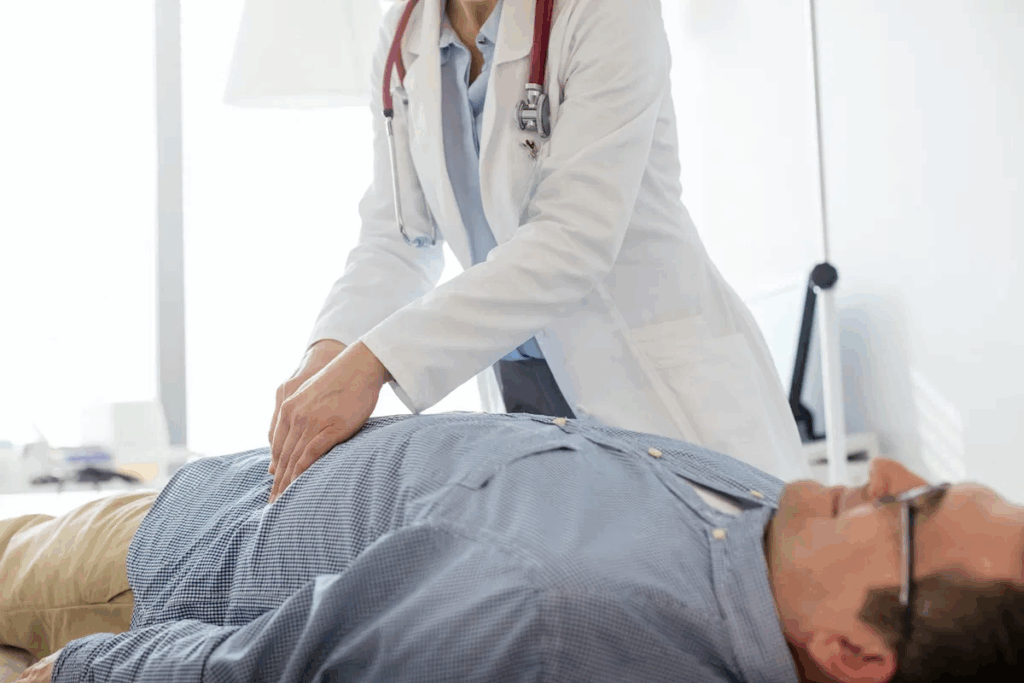
The first step in diagnosing an epigastric hernia is a physical exam. Doctors will check the abdominal area for any bulges or abnormalities. They might ask the patient to cough or strain to see if a hernia appears.
Key aspects of the physical examination include:
- Visual inspection of the abdominal area to identify any bulges or swelling.
- Palpation (feeling with the hands) to detect tenderness or abnormalities.
- Assessing the size and location of the suspected hernia.
Imaging Tests and Confirmation
Even with a physical exam, imaging tests are often needed to confirm an epigastric hernia. They help doctors understand the hernia’s size, location, and complexity. Common tests include:
- Ultrasound: Useful for visualizing the hernia and its contents.
- Computed Tomography (CT) scan: Provides detailed images of the abdominal wall and the hernia.
- Magnetic Resonance Imaging (MRI): Can be used in certain cases to evaluate the hernia and surrounding tissues.
These tests are vital for planning the right treatment for the hernia.
Is Epigastric Hernia Dangerous? Possible Complications
It’s important to know the risks of epigastric hernias to get help quickly. These hernias might seem harmless but can cause serious problems. These can range from mild discomfort to life-threatening issues.
Minor Complications: Discomfort and Painful Knot Above Belly Button
Discomfort or pain in the upper belly is a common issue with epigastric hernias. This pain can feel like a painful knot above the belly button. It might get worse with activities like lifting heavy things or straining.
People often feel a dull ache or sharp pain. This pain can get worse with movements that put more pressure on the belly. Sometimes, the pain is always there, and other times it comes and goes.
Serious Risks: Incarceration and Strangulation
More serious problems with epigastric hernias include incarceration and strangulation. Incarceration happens when the hernia gets stuck and can’t go back inside. Strangulation is even worse because it cuts off blood to the herniated tissue, causing it to die.
“A strangulated hernia is a medical emergency that requires immediate treatment,” as it can lead to severe consequences, including bowel obstruction and gangrene.
Symptoms of incarceration or strangulation include severe pain, nausea, vomiting, and fever. If you have these symptoms, you need to get medical help right away.
When to Seek Emergency Medical Attention
Knowing when to get emergency care for an epigastric hernia is key. Look out for these signs:
- Severe pain that doesn’t subside
- Nausea and vomiting
- Fever
- A tender, red, or discolored hernia
- Inability to push the hernia back into the abdomen
If you or someone else has any of these symptoms, seek emergency medical attention immediately. Quick action can prevent serious problems and improve health outcomes.
Treatment Options for Hernias Below the Sternum
It’s important for patients to know about treatment options for epigastric hernias. The choice depends on the hernia’s size, symptoms, and the patient’s health.
Conservative Management Approaches
For small, symptom-free epigastric hernias, a watchful waiting approach might be suggested. This means keeping an eye on the hernia for any changes or symptoms. Watchful waiting helps manage discomfort or pain through lifestyle changes and medication.
A medical expert notes, “Watchful waiting is safe and effective for small, symptom-free hernias. It avoids surgery’s risks.” This method is good for those at high risk for surgery complications or with mild symptoms.
When Surgery Is Recommended
Surgery is often needed for large, symptomatic, or risky hernias. A healthcare provider will decide based on the patient’s health and preferences.
Surgery prevents complications and relieves pain and discomfort. Options include open repair and minimally invasive laparoscopic surgery. Laparoscopic surgery is quicker and has less pain after.
Types of Surgical Procedures
Several techniques are used to fix epigastric hernias:
- Open hernia repair: An incision in the abdomen is made to repair the hernia.
- Laparoscopic hernia repair: A minimally invasive method using a laparoscope through small incisions.
- Robotic hernia repair: A laparoscopic surgery with a robotic system for better precision.
| Surgical Technique | Description | Recovery Time |
| Open Hernia Repair | An incision is made to access and repair the hernia. | Typically 4-6 weeks |
| Laparoscopic Hernia Repair | Uses small incisions and a laparoscope for repair. | Usually 1-3 weeks |
| Robotic Hernia Repair | Uses a robotic system for precise repair through small incisions. | Generally 1-3 weeks |
The table shows that the recovery time varies with the surgical technique. Laparoscopic and robotic repairs are quicker than open repair.
Every patient’s treatment for epigastric hernias is unique. Understanding the options helps patients make informed decisions with their healthcare provider.
Epigastric Hernia Surgery: What to Expect
If you’re facing epigastric hernia surgery, knowing what to expect can ease your worries. This surgery fixes the hernia, relieves symptoms, and stops future problems.
Preparing for Your Epigastric Hernia Operation
Getting ready for surgery is important for a good outcome. Your doctor will tell you how to prepare. This might include:
- Fasting before surgery to make sure your stomach is empty.
- Medications to stop or change before surgery, like blood thinners.
- Pre-operative testing, like blood work and imaging studies.
Talking to your surgeon about your surgery and recovery is also key. Ask about the surgery type and what to expect after.
The Surgical Procedure
There are different ways to fix an epigastric hernia, like open repair or minimally invasive surgery. The choice depends on the hernia size, complexity, and your health.
Open Repair: This involves making a big incision near the hernia to fix it.
Minimally Invasive Surgery: This uses small incisions, a camera, and special tools. It can lead to quicker recovery and less scarring.
Epigastric Hernia Scar and Cosmetic Outcomes
Scarring is a big worry for many. The size of the scar depends on the surgery type. Minimally invasive surgeries usually have smaller scars, while open repair scars are bigger.
Your surgeon can tell you about scarring and how to make scars less noticeable. Taking good care of your wound and following up with your doctor is key for healing and looking good.
Knowing what to expect from epigastric hernia surgery helps patients prepare for a smooth recovery and a better life.
Recovery After Epigastric Hernia Repair
Epigastric hernia repair surgery starts a healing journey. It involves several key steps to help you heal and avoid future problems. A good recovery plan is key to getting back to normal life.
Immediate Post-Operative Care
Right after surgery, rest and avoid hard work. Watch for any signs of trouble, like infection or a lot of pain. You might feel sore, swollen, or bruised where you were operated on. Use pain meds and cold packs to help.
It’s important to follow your doctor’s advice on wound care and meds. Many people can go home the same day. They’re told to slowly get back to their usual activities over a few weeks.
Long-Term Recovery and Preventing Recurrence
Long-term, keep a healthy lifestyle to avoid future problems. This means staying at a healthy weight, not lifting heavy, and exercising to make your belly muscles strong.
- Start to move more as your doctor says it’s okay.
- Don’t smoke and eat well to help your body heal.
- Keep an eye on the surgery area for any signs of trouble or coming back.
By following these tips and going to your follow-up visits, you can lower the chance of problems and make sure your surgery works well.
Conclusion
Epigastric hernias show up as a bulge below the sternum. They need quick action because they can lead to serious problems. Knowing the risks and treatment options helps patients make smart choices about their health.
Regular health checks are key to catching these hernias early. This boosts the chances of a good outcome. By watching for symptoms and getting help when needed, people can lower the risks of epigastric hernias.
The surgical outcomes for fixing epigastric hernias are usually good. Most people feel better and face fewer complications. It’s important for those with an epigastric hernia to talk to a doctor to find the best treatment.
By staying informed and getting the right medical care, people can handle epigastric hernias well. This improves their overall life quality.
FAQ
What is an epigastric hernia?
An epigastric hernia is a bulge in the mid-abdomen, between the navel and the sternum. It can be painful, mainly when you cough, strain, or lift heavy things.
What causes an epigastric hernia?
These hernias happen due to a weak spot in the abdominal wall. This can be from birth or develop over time. Factors like obesity, aging, or muscle strain can contribute to this.
Is an epigastric hernia dangerous?
Epigastric hernias are usually not life-threatening. But, they can cause discomfort. They might also lead to serious issues like incarceration or strangulation, which need quick medical help.
What are the symptoms of an epigastric hernia?
You might notice a visible lump or bulge above the belly button. Pain or discomfort when coughing, straining, or lifting is common. The area around the hernia can also feel tender.
How is an epigastric hernia diagnosed?
A healthcare provider will do a physical exam to diagnose it. They might also use imaging tests like an ultrasound or CT scan to confirm the hernia’s presence and severity.
Can I self-examine for a hernia at the sternum?
Yes, you can check for a lump or bulge in the mid-abdomen, between your navel and sternum. But, a healthcare professional should confirm the diagnosis.
What are the treatment options for epigastric hernias?
Treatment can range from watching it and making lifestyle changes to surgery. Surgery is often suggested for larger or painful hernias.
What is the recovery process like after epigastric hernia repair?
Recovery starts with post-operative care, like managing pain and resting. Long-term, you’ll need to avoid heavy lifting and keep a healthy weight to prevent recurrence.
Can epigastric hernias recur after surgery?
Surgery is usually effective, but there’s a chance of recurrence. Following post-operative instructions and staying healthy can help lower this risk.
What is a fatty hernia?
A fatty hernia, or preperitoneal fat hernia, is when fatty tissue bulges through a weak spot in the abdominal wall. It often feels soft and painless.
When should I seek emergency medical attention for an epigastric hernia?
Get emergency help if you have severe pain, vomiting, or if the hernia becomes incarcerated or strangulated. These are serious complications.
Reference
https://www.ncbi.nlm.nih.gov/books/NBK395554



 Departments
 Related Videos
 Our Doctors
 News
News