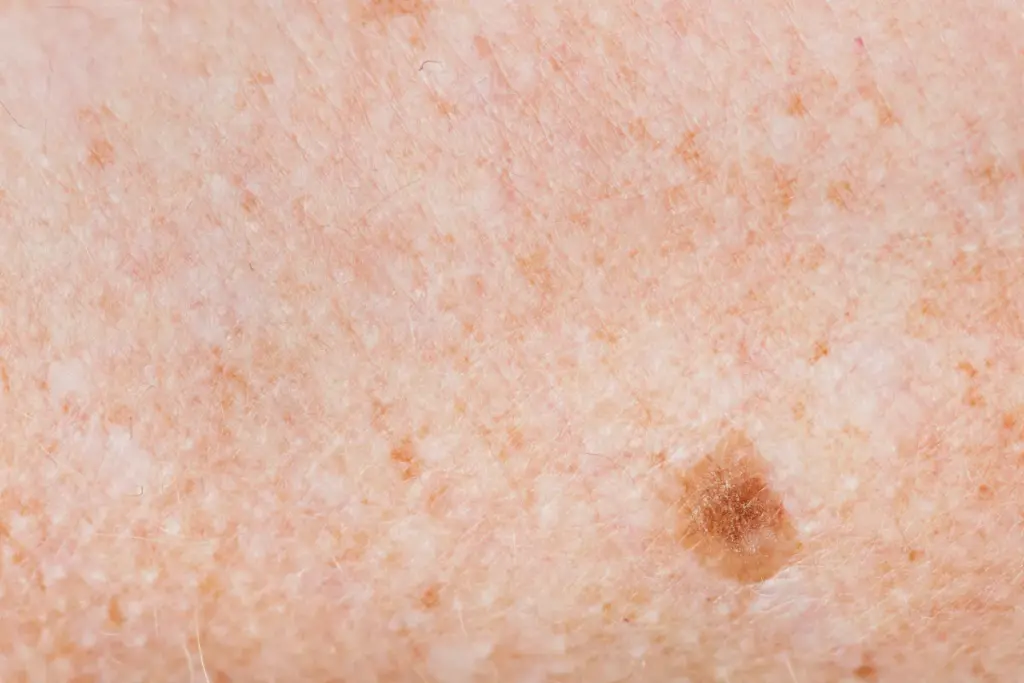
Many people notice small brown spots after being in the sun. Seeing new marks on your body can worry you about your health. These spots are your body’s way of protecting itself from harmful rays by making extra melanin.
These spots are common in people with fair skin. They show your body is sensitive to light. Understanding how your body reacts to the sun is key to staying healthy.
We want to explain the difference between freckle and skin cancer to keep you safe. Learning to spot changes early is important for your health. Our team is here to help you understand your risks.
Key Takeaways
- Most sun spots are benign and result from natural UV protection.
- Fairer body types often have a higher sensitivity to solar radiation.
- Regular checks help distinguish harmless marks from serious lesions.
- Any change in shape or color requires a professional medical review.
- Protecting yourself from the sun reduces overall dermal health risks.
- Knowing your body well allows for the early detection of any issues.
Understanding Freckles and Your Skin Cancer Risk
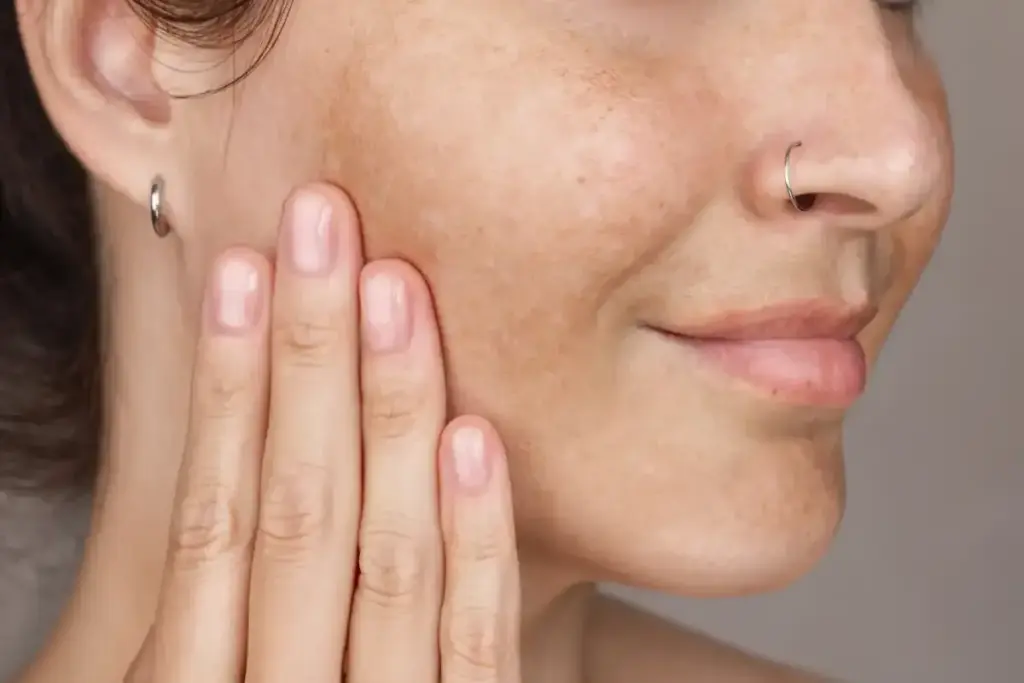
Freckles can be both a natural part of your skin and a risk for skin cancer. We see freckles every day, but their impact on skin health is not always clear.
Freckles are small, flat spots that are usually tan, brown, or black. They show up on sun-exposed areas of the body. They happen because of too much melanin, the skin’s pigment, from sun exposure. People with lighter skin have more freckles because their skin has less melanin.
What Are Freckles and Why Do They Form?
Freckles form from ultraviolet (UV) rays from the sun or tanning beds. UV rays make the skin produce more melanin, causing freckles. Fair skin is more likely to get freckles because it has less melanin.
Freckles can get darker in summer and lighter in winter. They are usually harmless but show how sensitive the skin is to UV rays.
The Connection Between Fair Skin, Freckles, and UV Sensitivity
People with fair skin and many freckles might face a higher risk of skin cancer. This is because their skin is very sensitive to UV rays. The same UV rays that cause freckles can also damage the skin and lead to cancer.
To show how skin type, freckles, and UV sensitivity are linked, look at this table:
| Skin Type | Freckles Presence | UV Sensitivity | Skin Cancer Risk |
| Fair | Many | High | Higher |
| Medium | Some | Moderate | Moderate |
| Darker | Few | Low | Lower |
It’s important to understand how freckles, skin type, and UV sensitivity affect skin cancer risk. Knowing this helps people protect their skin from harmful UV rays.
Can Freckles Turn Into Skin Cancer?
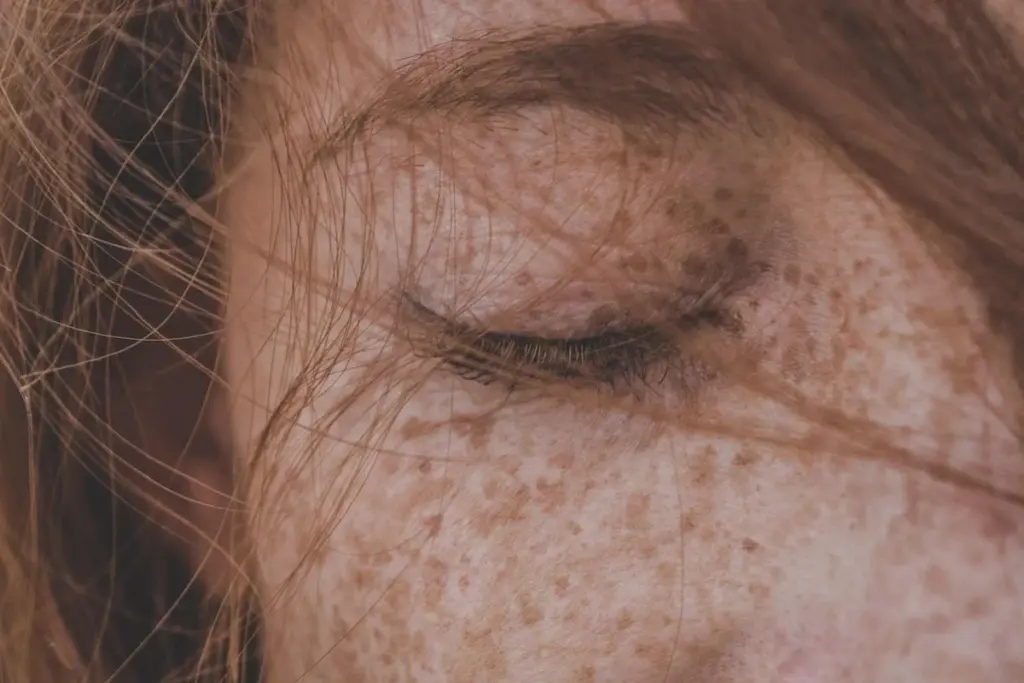
Many people wonder if freckles can turn into skin cancer. This is a question that needs a clear answer. We aim to provide you with the facts and help you understand the link between freckles and skin cancer risk.
Freckles are harmless spots on the skin caused by sunlight or genetics. They show that your skin is more sensitive to UV rays. This sensitivity is a big risk factor for skin cancer.
The Truth About Freckles and Cancer Transformation
Freckles themselves do not turn into cancer. But, the skin traits linked to freckles, like fair skin and UV sensitivity, raise your skin cancer risk. It’s important to remember that freckles are a sign to protect your skin from cancer. Wear sunscreen and avoid too much sun.
Why Freckles Signal Increased Melanoma Risk
People with freckles often have fair skin, which is more vulnerable to UV damage. This makes them more likely to get melanoma and other skin cancers. The main reasons for this higher risk are:
- A history of sunburns
- Prolonged exposure to UV radiation
- Family history of skin cancer
- Presence of multiple freckles or atypical moles
Knowing these factors can help you protect your skin and lower your skin cancer risk.
Regular skin checks and visits to a dermatologist are key for early detection and prevention of skin cancer. Stay alert to any skin changes and get professional advice if you notice unusual spots or changes in freckles.
Skin Cancer Freckle: How to Spot the Difference
Freckles are usually harmless, but some can signal skin cancer. It’s key to tell the difference. Knowing how to spot the difference between harmless freckles and possible cancer is important.
The ABCDE Rule for Identifying Suspicious Lesions
The ABCDE rule helps check moles and skin spots. It stands for Asymmetry, Border irregularity, Color variation, Diameter, and Evolving size or shape.
- Asymmetry: If a spot is not symmetrical, it might be a sign.
- Border irregularity: Spots with odd, notched, or scalloped edges could be cancerous.
- Color variation: Spots with many colors or uneven color might be cancerous.
- Diameter: Spots bigger than 6mm could be cancerous.
- Evolving: Changes in size, shape, or color over time are a big worry.
Key Visual Differences Between Freckles and Skin Cancer
Freckles are usually the same color and have a clear edge. Skin cancer spots often show signs in the ABCDE rule.
Freckles are often:
- Uniform in color
- Small in size
- Symmetrical
Skin cancer lesions might be:
- Multicolored
- Larger in size
- Asymmetrical
Types of Skin Cancer That Resemble Freckles
Some skin cancers, like melanoma, look like freckles. Melanoma is the most dangerous skin cancer. It can look like a new mole or freckle, or a change in an old one.
Knowing about different skin cancers and their looks helps spot problems early.
When to See a Doctor About Your Freckles
Knowing when to see a doctor about freckles is important for your skin health. Many freckles are harmless, but some changes can mean you need a doctor’s check-up. Always watch your skin and get medical help if you notice anything odd.
Warning Signs That Require Professional Evaluation
Changes in size, shape, or color of a freckle might mean trouble. Also, if a freckle itches or bleeds, it’s a sign to see a dermatologist. Keep an eye on your freckles and note any changes.
Key warning signs include:
- Asymmetry or irregular borders
- Changes in color or uneven color distribution
- Diameter increase or growth
- Evolving size, shape, or color over time
- Itching, tenderness, or pain
- Bleeding or oozing
If you see any of these signs, seeing a healthcare professional is a must.
The Importance of Regular Skin Checks and Advanced Diagnostic Care
Regular skin checks are key to staying healthy. They help catch problems early, when they’re easier to treat. Tools like dermoscopy help find skin cancers early.
| Diagnostic Tool | Description | Benefit |
| Dermoscopy | A non-invasive technique using a specialized microscope to examine skin lesions | Enhances the detection of skin cancers at an early stage |
| Digital Skin Imaging | A method that captures and stores images of skin lesions for monitoring changes over time | Allows for precise tracking of changes in skin lesions |
| Biopsy | A procedure involving the removal of a sample of skin tissue for pathological examination | Provides a definitive diagnosis of skin lesions |
By doing self-exams and getting professional checks, you can catch skin problems early. This means better treatment chances.
Conclusion
It’s important to know if freckles can be a sign of skin cancer. We’ve looked into how freckles might relate to skin cancer risk. We also talked about how to tell if a freckle is harmless or might be cancerous.
Freckles are usually not harmful but can show you’re more sensitive to UV rays. This sensitivity is a big risk for skin cancer. So, the question “are freckles cancer” comes up a lot. While most freckles are not cancer, watching them for any changes is key.
Finding skin cancer early is very important for treatment success. It’s vital to check your skin often and know about any changes. We suggest you check your skin regularly and see a doctor if you notice anything odd.
Telling a freckle from skin cancer can be hard. But, knowing the ABCDE rule and the visual differences can help. If you’re not sure about your freckles, it’s best to talk to a doctor.
Being informed and careful can lower your risk of skin cancer. We aim to provide top-notch healthcare, including for international patients. We stress the need for regular skin checks and advanced tests to catch skin cancer early.
FAQ
Can freckles be skin cancer?
Freckles themselves are usually harmless spots caused by increased skin pigment. However, some skin cancers can resemble freckles and should be checked if they change.
What is the main difference between freckle and skin cancer?
Freckles are small, flat, and usually uniform in color and shape. Skin cancer spots may change over time and show irregular borders, multiple colors, or growth.
Can a freckle be cancerous or turn into a tumor?
A typical freckle does not usually turn into cancer. However, a spot that looks like a freckle could actually be an early skin cancer and should be evaluated.
Does skin cancer look like freckles to the untrained eye?
Yes, early skin cancer can sometimes resemble freckles or small dark spots. Changes in size, shape, or color are warning signs that require medical attention.
When should I begin to worry about a freckle?
You should be concerned if a freckle grows, changes color, develops irregular borders, or starts bleeding or itching. These changes should be examined by a doctor.
Are freckles cancer or a sign of skin damage?
Freckles are not cancer but often appear due to sun exposure and genetic factors. They can indicate that the skin has been exposed to ultraviolet radiation.
How can I tell the difference between freckle vs skin cancer at home?
You can use the ABCDE rule by checking for asymmetry, irregular borders, color changes, larger diameter, and evolving appearance. Any suspicious changes should be evaluated by a dermatologist.
Is it possible for a freckle to be cancerous if it has been there all my life?
A freckle present since childhood is usually harmless. However, if it changes in size, shape, or color later in life, it should be checked by a healthcare professional.
References
National Center for Biotechnology Information. Evidence-Based Medical Insight. Retrieved from https://pmc.ncbi.nlm.nih.gov/articles/PMC8465972/



 Departments
 Related Videos
 Our Doctors
 News
News