
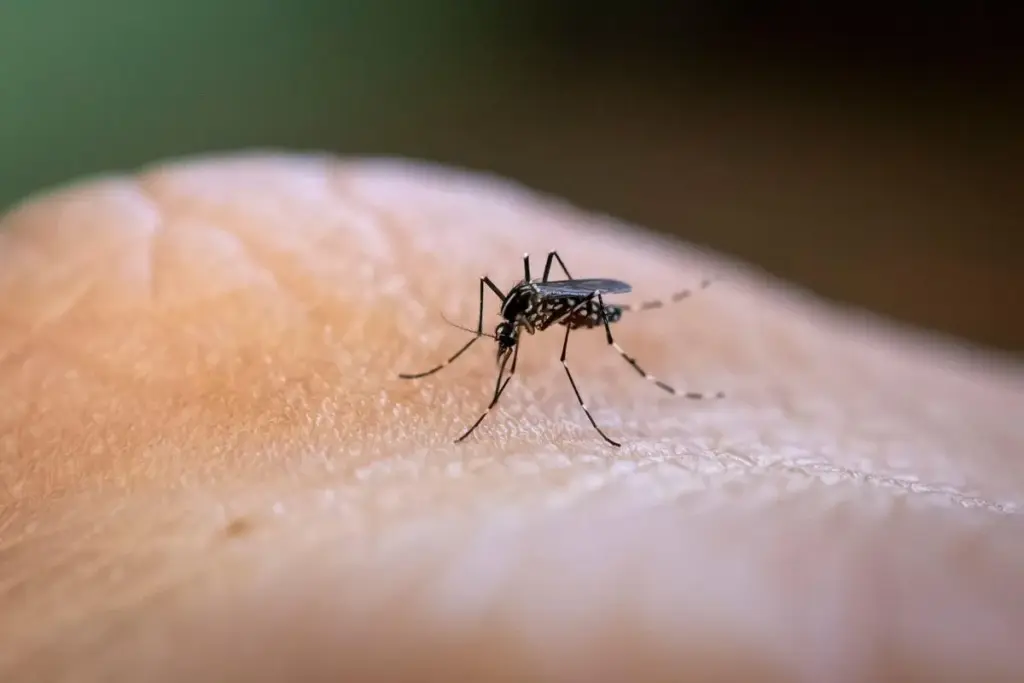
Lyme disease is caused by the bacterium Borrelia burgdorferi sensu lato. It’s the most common vector-borne disease in the Northern Hemisphere. It’s mainly spread by Ixodes ticks, not mosquitoes. Recent science shows that mosquitoes cannot transmit Lyme disease.
Research in Parasites and Vectors proves mosquitoes are not Lyme disease vectors. Knowing who really spreads Lyme disease helps you prevent it. It also helps you find reliable healthcare.
Key Takeaways
- Lyme disease is mainly spread by Ixodes ticks.
- Mosquitoes are not vectors for Lyme disease transmission.
- Recent research confirms that mosquitoes cannot carry or transmit Lyme disease.
- Understanding the true vectors of Lyme disease is key for prevention.
- By knowing the main spreaders, you can take better prevention steps.
Understanding Lyme Disease: Causes and Prevalence

Lyme disease is a big problem in the Northern Hemisphere. It’s the most common disease spread by ticks. We’ll look at why it happens, how common it is, and its effects on people.
What is Borrelia burgdorferi and How It Causes Lyme Disease
Lyme disease comes from the bacterium Borrelia burgdorferi sensu lato. It’s mainly spread by infected Ixodes ticks. These ticks can carry different strains of the bacteria, leading to various symptoms.
When an infected tick bites a person, it can pass the bacteria into their blood. This leads to Lyme disease. It’s important to know that mosquitoes don’t spread Lyme disease. Ixodes ticks are the main carriers of Borrelia burgdorferi.
For more details on how Lyme disease is spread, check out our article on Lyme disease transmission.
Lyme Disease in the Northern Hemisphere: Statistics and Impact
Lyme disease is a big worry in the Northern Hemisphere. Every year, thousands of people get it. It’s most common in places with lots of ticks, like woods and grassy areas.
- The Centers for Disease Control and Prevention (CDC) says there are about 30,000 Lyme disease cases in the U.S. each year.
- But, many cases might not be reported or diagnosed correctly.
- Lyme disease is found in many countries in the Northern Hemisphere, including the U.S., Canada, and parts of Europe.
Knowing how Lyme disease spreads and how common it is helps us fight it. By understanding the role of Ixodes ticks, we can protect ourselves and our communities.
Can Mosquitoes Carry Lyme Disease? The Scientific Evidence
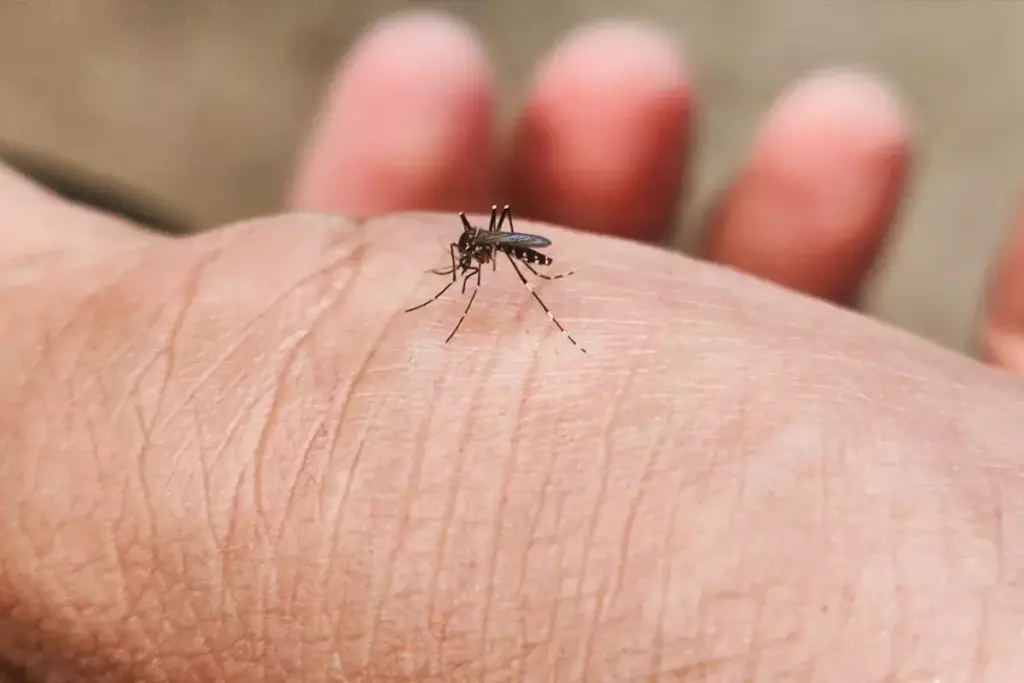
Many think mosquitoes can spread Lyme disease. But, recent studies have shown this is not true. We will look at the facts about mosquitoes and Lyme disease.
Common Misconceptions About Mosquito Transmission
Some believe mosquitoes can carry Lyme disease. This might be because both mosquitoes and ticks spread diseases. But, Lyme disease is caused by the bacterium Borrelia burgdorferi sensu lato, mainly spread by ticks, not mosquitoes.
Why mosquitoes can’t spread Lyme disease is clear when we understand the disease’s biology. Borrelia burgdorferi is made for ticks, like the black-legged tick (Ixodes scapularis). It gets into humans through the tick’s saliva while it feeds.
2025 Research Findings in Parasites and Vectors Journal
A 2025 study in the Parasites and Vectors Journal proves mosquitoes can’t carry Lyme disease. The study fed mosquitoes on mice with Lyme disease. It found mosquitoes can’t get or keep Borrelia burgdorferi sensu lato.
This study is key because it shows mosquitoes’ role in disease spread. The study says, “mosquitoes fed on Borrelia-infected mice did not acquire the bacteria in a way that allowed for subsequent transmission” as reported in the study. So, do mosquitoes transmit lyme disease? – no.
In summary, mosquitoes are not vectors for Lyme disease. The 2025 study in Parasites and Vectors Journal proves mosquitoes can’t get or spread Borrelia burgdorferi. So, we know for sure mosquitoes don’t spread Lyme disease.
The True Vectors of Lyme Disease: Tick Biology and Transmission
Ticks, not mosquitoes, spread Lyme disease. Their biology is key to understanding how it happens. Lyme disease comes from the bacterium Borrelia burgdorferi. It’s passed on through the bite of infected ticks. Knowing about ticks is important to stop Lyme disease.
Black-Legged Ticks (Ixodes) as Primary Carriers
Black-legged ticks, or deer ticks, carry Lyme disease. They live mainly in the northeastern and midwestern United States. These ticks can pass Borrelia burgdorferi to humans when they feed.
Characteristics of Black-Legged Ticks:
- Small in size, often mistaken for a freckle or a small insect
- Feed on the blood of mammals, birds, and reptiles
- Have a complex life cycle involving three stages: larva, nymph, and adult
Why Ticks Can Transmit Lyme While Mosquitoes Cannot
Ticks can spread Lyme disease because of how they feed. They take blood slowly over days, getting Borrelia burgdorferi. Mosquitoes feed fast and have an enzyme that kills the bacteria.
The Nymph Stage: When Ticks Are Most Dangerous
Nymph ticks are dangerous because they are small and hard to see. They are often infected with Borrelia burgdorferi. This stage is when they most likely bite humans, raising the risk of getting sick.
Nymph Stage Characteristics:
| Stage | Size | Feeding Duration | Infection Risk |
| Larva | Very small | Short | Low |
| Nymph | Small, about 1-2 mm | Several days | High |
| Adult | Larger, about 3-4 mm | Several days | Moderate |
Understanding ticks, mainly during their nymph stage, is key to avoiding Lyme disease. Knowing when and where ticks are active helps people avoid getting bitten.
Conclusion: Protecting Yourself from Tick-Borne Lyme Disease
Ticks, not mosquitoes, spread Lyme disease. So, it’s key to avoid tick bites to prevent the illness. You can’t catch Lyme from mosquitoes because they don’t carry the Borrelia burgdorferi bacteria. The answer to “can lyme be transmitted by mosquitoes?” is a clear no.
To stay safe from ticks, wear protective clothes, use insect repellents, and check for ticks often. It’s also important to focus on Ixodes ticks in disease prevention. Mosquitoes don’t carry Lyme disease, so they’re not a risk.
It’s important to trust reliable sources to clear up myths, like mosquitoes spreading Lyme disease. Knowing the truth and using the right prevention can help lower Lyme disease cases. So, the answer to “do mosquitoes carry lyme disease” or “do mosquitoes carry lymes disease” is a firm no.
FAQ
Do mosquitoes transmit Lyme disease?
No, mosquitoes do not transmit Lyme disease. Lyme disease is caused by the bacterium Borrelia burgdorferi sensu lato. It is mainly spread by Ixodes ticks, not mosquitoes.
Can you get Lyme disease from a mosquito?
No, you cannot get Lyme disease from a mosquito. Recent research in Parasites and Vectors shows that mosquitoes can’t carry or spread Borrelia burgdorferi.
What is the primary vector of Lyme disease?
The primary vector of Lyme disease is the black-legged tick (Ixodes). These ticks carry Borrelia burgdorferi, the bacterium that causes Lyme disease.
Why can’t mosquitoes transmit Lyme disease?
Mosquitoes can’t transmit Lyme disease because they can’t carry Borrelia burgdorferi. Their biology and the bacterium’s characteristics make it impossible for them to spread the disease.
Can mosquitoes carry Lyme disease?
No, mosquitoes cannot carry Lyme disease. Lyme disease is caused by Borrelia burgdorferi, which is spread by Ixodes ticks, not mosquitoes.
Are mosquitoes a risk factor for Lyme disease?
No, mosquitoes are not a risk factor for Lyme disease. The main risk comes from tick bites, mainly from black-legged ticks.
Can you get Lyme disease from a tick bite?
Yes, you can get Lyme disease from a tick bite. Lyme disease is spread by the bite of infected Ixodes ticks, mostly during the nymph stage.
How can I protect myself from Lyme disease?
To protect yourself from Lyme disease, avoid tick bites. Use insect repellents, wear protective clothing, and check for ticks after being outdoors in tick-prone areas.
What is Borrelia burgdorferi?
Borrelia burgdorferi is the bacterium that causes Lyme disease. It is spread to humans through the bite of infected Ixodes ticks.
Can mosquitoes spread Lyme disease?
No, mosquitoes cannot spread Lyme disease. Lyme disease transmission is attributed to Ixodes ticks, not mosquitoes.
Can mosquitoes transmit Lyme disease to humans?
No, mosquitoes cannot transmit Lyme disease to humans. Scientific consensus and research confirm that mosquitoes are not vectors of Lyme disease.
Lyme disease. In StatPearls [Internet]. StatPearls Publishing. https://www.ncbi.nlm.nih.gov/books/NBK431066/