At Liv Hospital, we know how key good nutrition is in healthcare. A registered dietitian or registered dietitian nutritionist (RD or RDN) is a healthcare pro who makes meal plans for better health.clinical dieticianPediatric Rehabilitation Nurse Responsibilities
Clinical dietitians are not just any nutritionists. They are experts in medical nutrition therapy. They have a master’s degree and finish an accredited dietetic internship.
They pass the Commission on Dietetic Registration (CDR) exam. This shows they know a lot about medical nutrition. This makes them stand out from other nutrition experts.
Key Takeaways
- Clinical dietitians are licensed healthcare professionals with advanced qualifications.
- They specialize in medical nutrition therapy within hospital and clinical settings.
- Their expertise extends beyond general meal planning to evidence-based nutrition therapy.
- Clinical dietitians must complete rigorous academic and professional training.
- They are credentialed by passing the Commission on Dietetic Registration (CDR) examination.
The Role of Clinical Dietitians in Healthcare
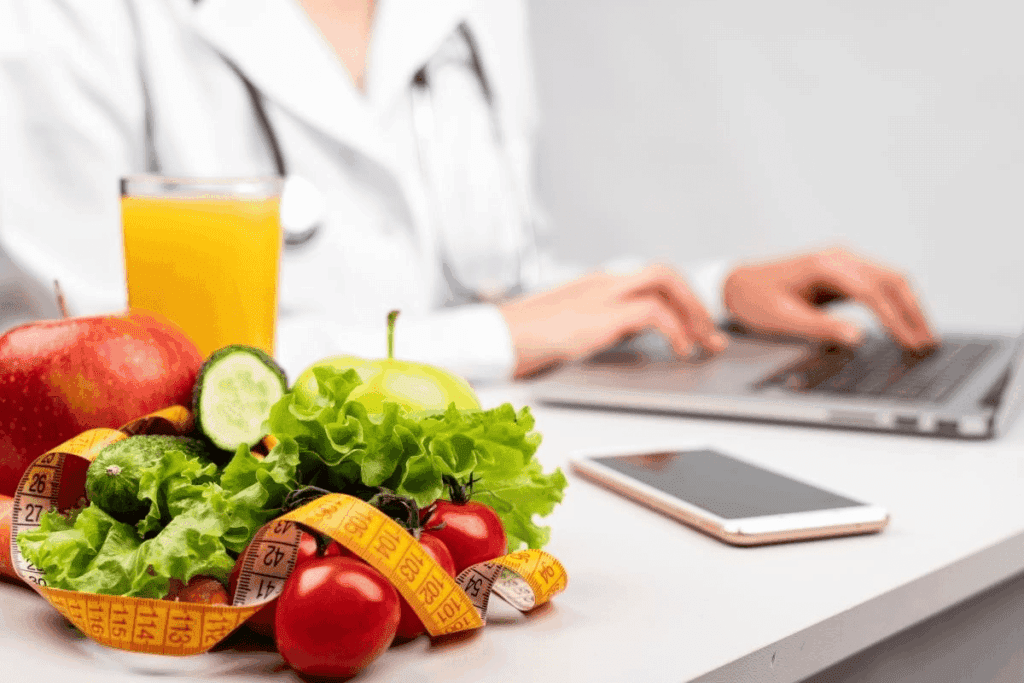
Clinical dietitians are key members of healthcare teams. They provide medical nutrition therapy tailored to each patient’s needs. Their work involves direct patient care and teamwork with other healthcare professionals.
Core Responsibilities in Medical Settings
In medical settings, clinical dietitians have several key roles. They interpret laboratory values to understand a patient’s nutritional status. This helps them identify any nutritional deficiencies or concerns.
They also calculate nutrient requirements for critically ill patients. They consider factors like age, weight, and activity level. This helps determine the right amount of nutrition for recovery.
Another important task is managing tube feedings and parenteral nutrition. Clinical dietitians make sure patients get the nutrients they need. They monitor how well the patient is doing and adjust the nutrition plan as needed.
Patient-Centered Nutrition Care
At the core of a clinical dietitian’s job is patient-centered nutrition care. This means understanding each patient’s unique needs, preferences, and lifestyle. They use this information to give personalized dietary advice.
Clinical dietitians work with patients to create nutrition plans that work for them. They offer counseling for behavior change. This helps patients see the importance of nutrition and adopt healthier eating habits.
By combining technical knowledge with empathy, clinical dietitians are essential for better patient outcomes. They improve the quality of care in healthcare settings.
What is a Clinical Dietitian? Definition and Professional Scope

Clinical dietitians are registered dietitian nutritionists (RDNs) with advanced skills in medical nutrition therapy. They help manage nutrition-related health issues. They are key players in healthcare teams.
Medical Nutrition Therapy Specialists
Clinical dietitians create nutrition plans for each patient. They work with healthcare providers for a complete care plan. They assess nutritional needs, make diet plans, and track patient progress.
They handle complex cases, like critical illnesses or chronic conditions. They know how to manage various health issues, like diabetes and heart disease.
Legal Recognition and Professional Standing
The title “Registered Dietitian” is legally protected. Clinical dietitians, being RDNs, meet these high standards. They have a bachelor’s degree, completed an internship, and passed the CDR exam.
Being legally recognized shows their trustworthiness in nutrition care. This is vital for their role in healthcare, where they work with others to ensure quality care.
Credential | Description | Requirement |
Registered Dietitian (RD) | Legally protected designation for dietitians who have met specific education and credentialing standards. | Bachelor’s degree, supervised practice, and passing the CDR examination. |
Clinical Dietitian | Specialized role focusing on medical nutrition therapy. | Advanced credentials and experience in clinical settings. |
Understanding clinical dietitians’ role in healthcare is important. Their skills and legal recognition make them essential in healthcare teams.
Educational Requirements and Credentials for Clinical Dietitians
Clinical dietitians need a lot of education and training to do well. They learn a lot about nutrition and how to work with patients.
Academic Pathway: Bachelor’s and Master’s Degrees
To start, you need a bachelor’s degree in nutrition, dietetics, or a science field. By 2024, you’ll also need a master’s degree. This extra education helps them know more about nutrition therapy.
They study many subjects, like:
- Nutrition science
- Biochemistry
- Physiology
- Food science
- Public health nutrition
Dietetic Internships and Supervised Practice
After school, they do a dietetic internship. This is a hands-on experience in hospitals and clinics. It’s important for learning on the job.
Internships cover:
- Working in clinical nutrition
- Projects in community nutrition
- Managing food services
This training is key for becoming a good clinical dietitian.
Commission on Dietetic Registration (CDR) Examination
After finishing their training, they take the CDR exam. This exam makes them registered dietitians (RDs) or registered dietitian nutritionists (RDNs).
The exam checks their skills in:
- Assessing and diagnosing nutrition problems
- Creating nutrition plans
- Checking how well the plans work
Passing the CDR exam shows they’re experts in nutrition. It’s a big step in their career.
Nutritionists vs. Clinical Dietitians: Understanding the Distinction
Nutritionists and clinical dietitians have different training, legal status, and services. Both give nutrition advice, but their qualifications and authority vary a lot.
Regulatory Differences and Title Protection
The main difference is in title protection. “Registered Dietitian” (RD) or “Registered Dietitian Nutritionist” (RDN) has legal backing. But “nutritionist” is not regulated in many places, so anyone can use it.
Title protection means clinical dietitians must meet strict standards. They need education, practice, and pass a national exam. This keeps nutrition services in healthcare high quality.
Variations in Education and Training
Clinical dietitians usually have a bachelor’s degree in nutrition or a related field. They also do an internship and might get advanced degrees. Nutritionists’ education can range from certificates to advanced degrees.
Specialized training in medical nutrition therapy is key for clinical dietitians. It lets them give evidence-based nutrition care in hospitals.
Clinical Authority and Practice Limitations
Clinical dietitians can give medical nutrition therapy. This includes checking nutritional needs, diagnosing problems, and making nutrition plans. Nutritionists’ authority and scope can vary based on where they work and their credentials.
In healthcare, clinical dietitians are very important. They work with teams to make sure nutrition is part of patient care. Their knowledge is essential for managing chronic diseases where nutrition is key.
Advanced Clinical Skills in Medical Nutrition
Clinical dietitians need advanced skills to give top-notch care in medical settings. They can spot what patients need and make plans just for them.
Laboratory Value Interpretation and Nutritional Assessment
Clinical dietitians learn to read lab results to check a patient’s nutrition. They look at things like albumin levels and electrolyte balances. This helps them find what’s missing or too much.
For example, if a patient’s albumin is low, they might need more protein. This nuanced understanding helps them make accurate plans for nutrition.
Managing Tube Feedings and Parenteral Nutrition
They also handle tube feedings and parenteral nutrition. Tube feedings go straight into the stomach, and parenteral nutrition goes through an IV. Both need careful planning to avoid problems.
They figure out the right amount of formula for tube feedings based on the patient’s needs. They watch for any signs of trouble and adjust as needed. For IV nutrition, they work with the healthcare team to make sure it’s right.
Calculating Nutrient Requirements for Critically Ill Patients
Critically ill patients need special nutrition to get better. Dietitians use formulas and their knowledge to figure out what they need. They think about the patient’s metabolism, activity, and health issues.
For instance, a sick patient might need more protein to heal and fight off infections. By getting this right, dietitians help patients recover better and avoid more problems.
Therapeutic Counseling and Behavior Change Strategies
Effective therapeutic counseling by clinical dietitians involves understanding patient needs. It also fosters a supportive environment for change. We know that each patient’s journey towards healthier habits is unique. This requires personalized approaches to nutrition care.
Patient Education Methodologies
Clinical dietitians use various patient education methodologies. They ensure individuals have the knowledge and skills for sustainable dietary changes. These include:
- Tailoring nutrition advice to meet individual patient needs
- Using clear, accessible language to explain complex nutritional concepts
- Encouraging active participation and engagement from patients
By adopting these approaches, we empower patients to make informed decisions about their health.
Motivational Interviewing and Counseling Techniques
Motivational interviewing is a key technique used by clinical dietitians to facilitate behavior change. This approach focuses on:
- Exploring and resolving ambivalence towards change
- Enhancing patient motivation through empathy and support
- Developing a collaborative plan for achieving health goals
Through motivational interviewing and counseling, we help patients overcome barriers to change. This leads to lasting health outcomes.
By integrating therapeutic counseling with behavior change strategies, clinical dietitians provide complete care. Our approach empowers individuals to take control of their nutritional well-being. This leads to improved health and quality of life.
Work Settings and Practice Environments
Clinical dietitians work in many places, from hospitals to clinics. This shows how important they are in healthcare.
Hospital-Based Clinical Practice
In hospitals, dietitians are key team members. They help patients with diseases like diabetes and heart issues. They make nutrition plans to help patients get better.
Dietitians in hospitals work with doctors and nurses. They check what patients need, make nutrition plans, and watch how patients do.
Long-Term Care and Rehabilitation Facilities
In long-term care and rehab places, dietitians keep residents healthy. They make sure residents get the right food to stay well and recover.
They also manage food services. They make sure meals are good for residents. They teach healthy eating to residents and staff too.
Outpatient Clinics and Private Practice
In clinics and private practice, dietitians give one-on-one advice. They help patients eat better and manage health issues with food.
They help patients with special diets, like those with allergies. They also help with weight and nutrition.
Dietitians in these places show their skill and importance in many healthcare settings.
Specialized Areas Within Clinical Nutrition
Clinical nutrition covers many specialized areas. Each one needs its own set of skills and knowledge. Healthcare professionals know how important it is to give personalized nutrition in different settings.
Critical Care and Intensive Care Nutrition
Critical care and intensive care nutrition help save lives. Dietitians in this field manage complex nutrition needs. They work with the healthcare team to help patients recover.
Some key tasks for dietitians in critical care include:
- Creating nutrition plans tailored to each patient
- Managing tube feedings and parenteral nutrition
- Keeping track of patient progress and adjusting plans as needed
Oncology and Cancer Care Nutrition
Oncology and cancer care nutrition is very important. Dietitians help patients with cancer by managing symptoms and improving quality of life. They create nutrition plans that support treatment.
Key aspects of oncology nutrition include:
- Helping patients manage treatment side effects
- Creating meal plans that meet nutritional needs
- Working with the oncology team to improve patient care
Renal Nutrition for Kidney Disease
Renal nutrition focuses on patients with kidney disease. Dietitians in this field create nutrition plans to slow disease progression and improve health. They manage protein and electrolyte intake and fluid balance.
Some key considerations in renal nutrition include:
- Controlling protein and electrolyte intake
- Adjusting nutrition plans based on fluid balance
- Working with nephrologists to improve patient care
Pediatric Clinical Nutrition
Pediatric clinical nutrition deals with the nutritional needs of children. Dietitians in this area assess and manage nutrition for kids from infants to teens. They are skilled in managing feeding issues and nutritional deficiencies.
Key aspects of pediatric clinical nutrition include:
- Creating nutrition plans tailored to each child
- Managing feeding issues and nutritional deficiencies
- Collaborating with pediatric healthcare teams
In conclusion, clinical dietitians can specialize in many areas. These include critical care, oncology, renal nutrition, and pediatric clinical nutrition. Each area requires unique skills and knowledge. Dietitians play a vital role in providing effective nutritional care to patients with complex needs.
Conclusion: The Essential Role of Clinical Dietitians in Modern Healthcare
Clinical dietitians are key to delivering top-notch patient care. They are vital members of healthcare teams. Registered dietitians (RDs) offer medical nutrition therapy to manage nutrition-related health issues.
This therapy improves patient outcomes and boosts quality of life. Clinical dietitians have advanced training and expertise. They interpret lab values, manage tube feedings, and give personalized dietary advice.
Their work is critical in modern healthcare. They address complex medical needs and support the well-being of people with different health conditions. By using their knowledge and skills in care plans, clinical dietitians are essential to the healthcare system.
We count on their expertise for patient-centered nutrition care. This shows their vital role in our healthcare teams.
FAQ
What is a clinical dietitian?
A clinical dietitian is a registered dietitian nutritionist (RDN) with special training. They have advanced credentials, like a master’s degree and a dietetic internship.
What is the difference between a clinical dietitian and a nutritionist?
Clinical dietitians are RDNs with advanced skills. Nutritionists may have less education and training. The term “nutritionist” is not regulated in many places.
What do clinical dietitians do?
They offer medical nutrition therapy for health issues. They look at lab results, plan diets, and manage feeding tubes. They focus on patient care.
What are the educational requirements to become a clinical dietitian?
You need a bachelor’s and master’s degree in a related field. You must also complete a dietetic internship and pass the CDR exam.
What is medical nutrition therapy?
It’s a special area of practice. It involves giving personalized diet advice to patients with health issues. The goal is to improve health and quality of life.
Can clinical dietitians work in different healthcare settings?
Yes, they work in hospitals, long-term care, clinics, and private practice. Each setting has its own challenges and opportunities.
What are some specialized areas within clinical nutrition?
They can specialize in critical care, oncology, renal nutrition, and pediatric nutrition. Each area requires specific knowledge and skills.
How do clinical dietitians help patients achieve their health goals?
They use counseling and behavior change strategies. They educate patients and help them make lasting lifestyle changes.
Are clinical dietitians recognized as experts in their field?
Yes, they have advanced credentials and are legally recognized. They are seen as experts in medical nutrition therapy.
What is the role of clinical dietitians in patient care?
They play a key role in improving patient outcomes. They provide personalized care and dietary advice to enhance quality of life.
National Center for Biotechnology Information. Evidence-Based Medical Guidance. Retrieved from https://www.ncbi.nlm.nih.gov/books/NBK499877/