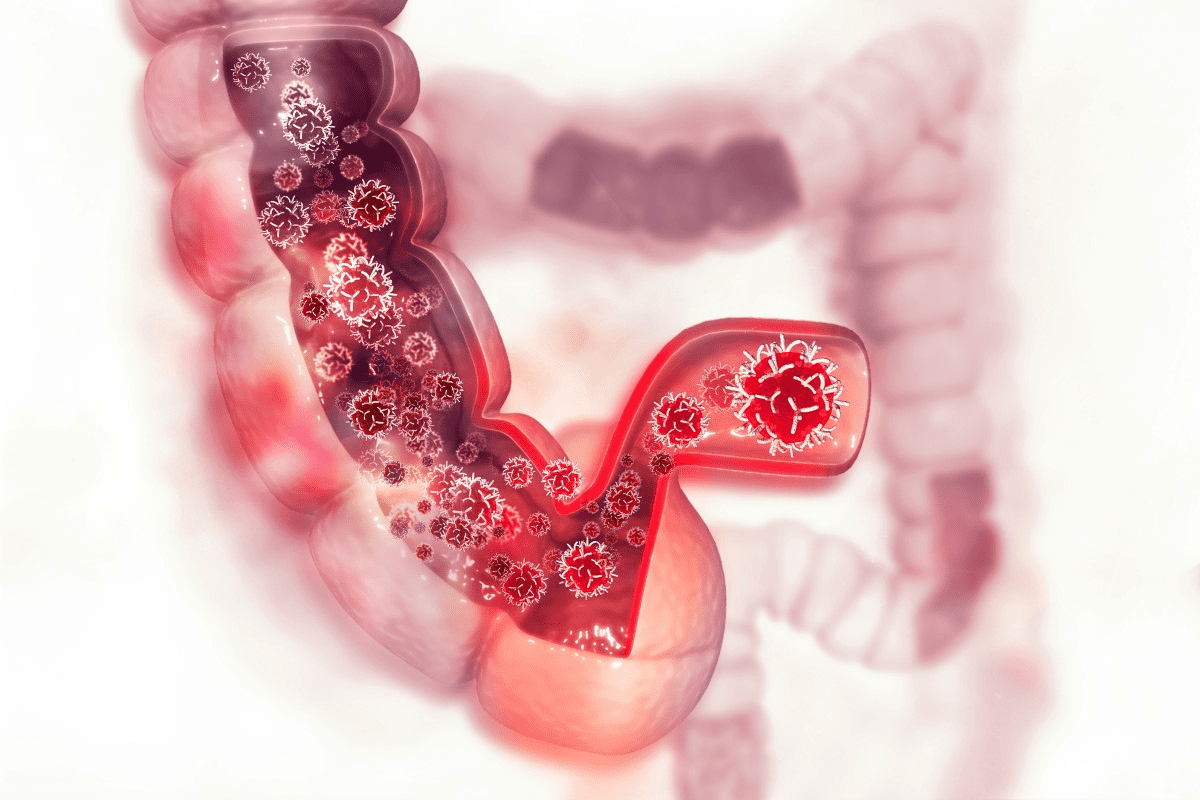
Colon cancer is a big health worry for women. About 1 in 23 to 1 in 26 women get it in their lifetime. It’s key for women to know the early signs because colon cancer often doesn’t show symptoms early on.
At Liv Hospital, we stress the need to know and catch it early. Colon cancer, or colorectal cancer, is cancer that grows in polyps on the colon’s lining. Knowing the risk and acting early can greatly help your health.
Key Takeaways
- Approximately 1 in 23 to 1 in 26 women develop colon cancer in their lifetime.
- Early-stage colon cancer often has no obvious symptoms.
- Awareness and early detection are key for better health.
- Liv Hospital’s patient-centered approach helps women take charge of their health.
- Our medical protocols are top-notch, ensuring you get the best care.
Understanding Colon and Rectal Cancer

It’s important to understand colorectal cancer to catch it early and treat it well. This cancer affects both the colon and rectum. It’s a big health issue worldwide.
What is Colorectal Cancer?
Colorectal cancer is any cancer in the colon or rectum. It starts with small cell clumps called polyps in the colon. These polyps can turn cancerous over time. Knowing how they grow helps prevent and detect cancer early.
Key Facts About Colorectal Cancer:
- Affects both men and women, with a higher prevalence in older adults
- Often begins as benign polyps that can become malignant
- Can be asymptomatic in its early stages, making screening critical
How Colon Cancer Develops
Colon cancer develops through genetic changes and environmental factors. It starts with polyps, which can be harmless or precancerous. If not removed, these polyps can turn into cancerous tumors.
As Medical Expert, a renowned oncologist, notes, “The change from a benign polyp to colorectal cancer takes years. This gives us a chance to catch it early and act fast.”
The Progression of the Disease
Colorectal cancer goes through stages, from being local to spreading to other parts of the body. Knowing these stages helps doctors choose the right treatment.
Stages of Colorectal Cancer:
- Stage I: Cancer is limited to the colon or rectum
- Stage II: Cancer has grown through the wall of the colon or rectum
- Stage III: Cancer has spread to nearby lymph nodes
- Stage IV: Cancer has spread to distant organs or tissues
Early detection is key because survival rates are much higher. We’ll look at warning signs and symptoms next.
Colorectal Cancer Statistics in Women

Colorectal cancer statistics show a worrying trend for women. It’s clear that this disease is a big health problem worldwide. We need to spread awareness and take steps to prevent it.
Prevalence and Mortality Rates
Rectal cancer is the third most common cancer in women. The high number of cases shows how important it is to understand this disease. Younger people are getting colon cancer more often, which is a big worry.
Key statistics include:
- Increasing incidence rates among younger women
- Higher mortality rates when diagnosis is delayed
- Significant impact on quality of life due to the disease and its treatment
Lifetime Risk for Women
Knowing the lifetime risk for women is key. Women face special challenges because symptoms can be mistaken for menstrual or gynecological issues. This can lead to a late diagnosis.
The lifetime risk for women is influenced by:
- Family history of colorectal cancer
- Genetic predispositions
- Lifestyle factors
Age-Related Risk Factors
Age is a big risk factor for colorectal cancer. While it can happen at any age, the risk grows a lot after 50. But, there’s a rise in cases among the young, making awareness for all ages important.
Age-related statistics highlight:
- A significant increase in risk after age 50
- A growing number of cases in individuals under 50
- The importance of screening and early detection
Why Early Detection is Critical
Early detection is vital for treating colon cancer effectively. It greatly improves survival rates. We stress the need to grasp how the disease progresses and its impact on survival.
Survival Rates by Stage
Colon cancer survival rates change a lot depending on when it’s found. Early-stage colon cancer has a much higher survival rate compared to advanced stages. The five-year survival rate for colon cancer is about 90% if caught early. But, this rate falls sharply as the cancer advances.
The American Cancer Society points out that the cancer’s stage at diagnosis is key. Knowing the survival rates for each stage helps patients and doctors make better treatment choices.
The Challenge of Asymptomatic Early Stages
One big challenge in catching colon cancer early is that it often doesn’t show symptoms at first. Many people with colon cancer don’t notice anything wrong until it’s too late. Symptoms appear when the cancer grows or moves to different parts of the large intestine.
This lack of symptoms in early stages highlights the need for screening and awareness. Regular screenings can find colon cancer before symptoms show, leading to better treatment results.
The 70% Without Early Symptoms
About 70% of people with colon cancer don’t show symptoms early. This makes it essential for people at risk or over 45 to talk to their doctors about screenings.
Being aware and educated is key to catching colon cancer early. By knowing the risks and staying on top of screenings, people can greatly boost their chances of successful treatment.
Colon Cancer Symptoms in Women: The 7 Warning Signs
Knowing the signs of colon cancer can help women get better treatment sooner. Colon cancer often shows up with small symptoms that are easy to miss. It’s important to know these signs to catch it early.
Overview of Key Symptoms
The seven main signs of colon cancer include changes in bowel habits and rectal bleeding. Other signs are unexplained weight loss, persistent pain, iron deficiency anemia, chronic fatigue, and weakness. These symptoms can be vague, so it’s key to understand them.
Changes in bowel habits might mean you’re always constipated or have diarrhea. Or, your stool might look different. Seeing blood in your stool is a big warning sign that can’t be ignored.
Why Symptoms May Be Overlooked
These symptoms can be mistaken for other, less serious issues. For example, bowel changes might seem like a diet problem or stress. Rectal bleeding could be thought of as hemorrhoids.
Some symptoms, like feeling tired all the time or weak, can mean many things. This makes it hard to know if it’s colon cancer without a doctor’s check-up.
The Importance of Body Awareness
Knowing your body and noticing changes is key. Women should watch their health closely and tell their doctor about any odd or lasting symptoms.
Early detection is key to successful treatment. So, it’s vital to know and spot the warning signs of colon cancer to keep your colon healthy.
Warning Sign #1: Changes in Bowel Habits
We often overlook changes in our bowel habits, but they can be a critical indicator of colon cancer. Changes in bowel habits are a common symptom that can be mistaken for other gastrointestinal issues. It’s important to understand when these changes might signal something more serious.
Persistent Diarrhea or Constipation
Experiencing persistent diarrhea or constipation can be a sign that something is amiss in your digestive system. A sudden onset of looser stools that lasts several weeks or new difficulty passing stools without an identifiable cause may signal that a mass is obstructing or interfering with normal bowel function. It’s essential to note that these symptoms can be indicative of colon cancer, if they persist or are accompanied by other discomforts.
Key factors to watch for include:
- Duration: Symptoms lasting more than a few weeks.
- Severity: Changes that are significant and not typical for your normal bowel habits.
- Associated symptoms: Presence of blood, pain, or other unusual characteristics.
Changes in Stool Shape and Consistency
Alterations in the shape and consistency of stool can also be a warning sign. Colon cancer can cause a narrowing of the colon, leading to stools that are thinner or more pencil-like than usual. If you notice that your stools have become consistently narrower or have changed in texture, it’s worth discussing with your healthcare provider.
When Normal Becomes Abnormal
Understanding what constitutes normal bowel habits is key. Normal bowel movements can vary significantly from person to person, ranging from three times a day to three times a week. The key is to recognize changes in your own bowel habits. If you notice a persistent change that doesn’t resolve on its own, it’s a good idea to consult with a healthcare professional.
Being aware of your body’s normal functions and recognizing when something changes is vital for early detection. While changes in bowel habits can be due to many causes, persistent or significant alterations warrant medical evaluation to rule out colon cancer.
Warning Sign #2: Rectal Bleeding
Blood in the stool is a serious warning sign that should not be ignored. Seeing blood in your stool can be scary. It often makes people worry about colon cancer.
Identifying Blood in Stool
Blood in the stool can show up in different ways. It might look like bright red streaks or dark maroon clots. Sometimes, the blood is hidden and only found through a fecal occult blood test (FOBT).
Key characteristics to look out for include:
- Blood on the surface of the stool or toilet paper
- Blood mixed with the stool
- Dark or black stools, which can indicate bleeding higher up in the colon
Color Variations and What They Mean
The color of the blood can tell you where it’s coming from. Bright red blood usually means it’s from the lower colon or rectum. Darker blood or black stools might mean it’s from higher up in the colon or even the stomach or small intestine.
Blood Color | Possible Source |
Bright Red | Lower colon or rectum |
Dark Maroon | Upper colon or small intestine |
Black/Tarry | Stomach or upper gastrointestinal tract |
Common Misattributions
Rectal bleeding is often thought to be from hemorrhoids or menstruation. But, it’s important not to ignore it without a doctor’s check-up. Colon cancer can also cause similar symptoms, and only a doctor can tell you what’s really going on.
It’s vital to know your body’s changes and see a doctor if you notice anything unusual, like rectal bleeding. Catching colon cancer early is key to treating it effectively.
Warning Sign #3: Unexplained Weight Loss
Unexplained weight loss is a big warning sign for colon cancer. It means losing a lot of weight without trying. This can be scary because it might mean your body is not working right.
Metabolic Changes Due to Cancer
Colon tumors can change how your body uses energy. They can make you burn calories faster, cause inflammation, and mess with digestion. This can lead to losing weight too quickly.
Distinguishing Unexplained Weight Loss
It’s important to know the difference between losing weight on purpose and losing it without trying. Losing weight on purpose usually comes from diet, exercise, and doctor’s help. But losing weight without trying can mean there’s a health problem. If you’re losing weight without trying, see a doctor to find out why.
Associated Symptoms to Watch For
Weight loss from colon cancer might come with other signs. Look out for changes in bowel habits, bleeding, belly pain, and feeling very tired. Spotting these symptoms early can help catch cancer sooner. If you’re losing weight and notice these signs, get checked by a doctor.
Warning Sign #4: Persistent Abdominal Discomfort
Persistent abdominal discomfort is a warning sign that needs attention. Abdominal pain or cramping that lasts can be a sign of colon cancer. It’s often mistaken for other stomach issues or menstrual cramps in women.
Characteristics of Cancer-Related Pain
Cancer-related abdominal pain is different from other types. It’s often constant and can be with bloating or changes in bowel habits. “The pain associated with colon cancer can be a dull ache or a sharp pain, and it may be constant or come and go,” says Medical Expert, a gastroenterologist.
Differentiating from Menstrual Cramping
It’s hard to tell if abdominal pain is from cancer or menstrual cramps in women. Menstrual cramps usually follow a cycle, but cancer pain is constant. We need to know this to not confuse the two.
Location and Pattern of Discomfort
The location and pattern of pain can give clues. Colon cancer pain is often in the lower abdomen, on the left side. But it can also be more widespread. It might come with constipation or diarrhea. Knowing where and how the pain moves can help figure out the cause.
Warning Signs #5, #6, and #7: Anemia, Fatigue, and Weakness
We’re looking at three key symptoms of colon cancer in women: anemia, fatigue, and weakness. These signs often go together and can show that colon cancer is getting worse.
The Connection Between Bleeding and Anemia
Colon cancer can lead to chronic bleeding inside the body. This bleeding takes away iron, causing iron deficiency anemia. Anemia happens when the body doesn’t have enough iron to make hemoglobin, a key protein in red blood cells.
The American Cancer Society says anemia is common in colon cancer patients because of this bleeding.
“Anemia is a condition where the body has a lower than normal number of red blood cells or the red blood cells do not have enough hemoglobin,”
Medical Expert, an oncologist, explains.
Symptom | Description | Relation to Colon Cancer |
Anemia | Low red blood cell count or hemoglobin level | Caused by chronic internal bleeding |
Fatigue | Persistent feeling of tiredness or exhaustion | Result of anemia and cancer progression |
Weakness | Loss of muscle strength | Associated with anemia and overall health decline |
Recognizing Unusual Fatigue
Fatigue from anemia is a common early sign of colon cancer. Unlike regular tiredness, chronic fatigue lasts a long time and makes daily tasks hard. It’s important to know the difference between fatigue from anemia and other kinds.
How Weakness Manifests
Weakness is another symptom of colon cancer. It’s linked to anemia and a decline in health. Weakness can happen anywhere in the body and might come with other symptoms like shortness of breath or dizziness.
Spotting these symptoms early can greatly help in treating colon cancer. If you or someone you know is showing these signs, seeing a healthcare professional is key for the right care.
Unique Diagnostic Challenges for Women
Diagnosing colon cancer in women is tricky because symptoms can be mistaken for other common health issues. It’s key to grasp these challenges to better detect and treat the disease early.
Symptom Overlap with Gynecological Conditions
Colon cancer symptoms like bowel changes and belly pain are often linked to issues like irritable bowel syndrome (IBS) or endometriosis. This mix-up can cause a delay in finding the right diagnosis.
A study showed women are more likely than men to be first told they have IBS before being diagnosed with colon cancer. It’s important to think of colon cancer when women show these symptoms.
Hormonal Influences on Symptoms
Hormonal changes during the menstrual cycle or menopause add to the diagnostic puzzle. Symptoms like bloating and cramps are seen in both colon cancer and hormonal issues. This makes it hard to pinpoint the cause.
“The complexity of female reproductive health can sometimes mask the symptoms of colon cancer, leading to delayed diagnosis and treatment.”
Addressing Gender Bias in Diagnosis
There’s a growing worry about gender bias in medical diagnosis, including colon cancer. Historically, colon cancer was seen as a male disease. This might make doctors less likely to suspect it in women.
Diagnostic Challenge | Impact on Women |
Symptom Overlap | Delayed diagnosis due to attribution to gynecological conditions |
Hormonal Influences | Complicates diagnosis due to similar symptoms |
Gender Bias | Potential for lower suspicion and delayed diagnosis |
We need to be aware of these unique challenges to improve colon cancer detection in women. By understanding symptom overlap, hormonal effects, and gender bias, we can aim for more accurate and timely diagnoses.
Conclusion: Proactive Steps for Colorectal Health
Colon cancer is a big health worry for women. Some symptoms can be early signs. To fight colon cancer, we must focus on colorectal health.
Regular screenings, like colonoscopies, are key for catching cancer early. Women should tell their doctors about any lasting symptoms. This includes changes in bowel habits or bleeding. By knowing the signs and acting early, women can lower their cancer risk.
Let’s all work on preventing colon cancer and keeping our colons healthy. Stay informed, watch for signs, and take care of your health.
FAQ
What are the common symptoms of colon cancer in women?
Symptoms include changes in bowel habits and rectal bleeding. Unexplained weight loss and persistent abdominal discomfort are also signs. Anemia, fatigue, and weakness are common too.
How does colon cancer develop?
It starts with polyps in the colon. These can turn cancerous over time.
What is the lifetime risk of colon cancer for women?
Women have a 1 in 23 to 1 in 26 chance of getting colon cancer in their lifetime.
Why is early detection of colon cancer critical?
Early detection is key because it boosts survival chances. Colon cancer in its early stages often shows no symptoms. This makes screening and awareness vital.
What are the challenges in diagnosing colon cancer in women?
Diagnosing colon cancer in women is tough. Symptoms can be similar to gynecological issues. Hormones also play a role in symptoms.
How can women reduce their risk of colon cancer?
Women can lower their risk by knowing the warning signs. Regular screenings are also important.
What is the difference between colon cancer and rectal cancer?
Both are types of colorectal cancer. Colon cancer happens in the colon. Rectal cancer occurs in the rectum.
Can colon cancer cause anemia?
Yes, it can cause anemia due to bleeding inside the body.
How does colon cancer affect metabolism?
It can disrupt metabolism, leading to unexplained weight loss.
What are the survival rates for colon cancer by stage?
Survival rates vary by stage. Early detection is key to better survival chances.
References
World Health Organization. Colon Cancer Symptoms in Women: Early Detection Importance. Retrieved from https://www.who.int/news-room/fact-sheets/detail/colorectal-cancer



 Departments
 Related Videos
 Our Doctors
 News
News