

Colon cancer is no longer just a disease of older adults. Recent studies show a steady rise in early-onset colorectal cancer rates. This is true for millennials and Gen Z, who now have twice the risk compared to those born in the 1950s.
Alarmingly, young adults in their 20s, 30s, and even teens are being diagnosed at an increasing rate. This shift in demographics highlights the importance of awareness and early recognition of warning signs.
Typically, colon cancer begins as small clumps of cells called polyps that form inside the colon. While polyps are generally not cancerous, some can turn into cancer over time. Understanding the risks and being vigilant about colon cancer symptoms in young adults is key.
Key Takeaways
- Colon cancer rates are rising in young adults.
- Early-onset colorectal cancer risk is higher in millennials and Gen Z.
- Polyps in the colon can potentially turn into cancer.
- Awareness and early recognition of symptoms are critical.
- Young adults should be vigilant about symptoms.
The Rising Trend of Colon Cancer in Young Adults

Young adults are getting colon cancer more often. This is both surprising and worrying. It’s making healthcare experts and researchers very concerned.
The American Cancer Society says colorectal cancer in people under 50 is rising fast. From 2012 to 2021, it went up more than 2% each year. This shows we need to be more aware and catch it early, mainly in young people who don’t usually get checked.
Alarming Statistics on Early-Onset Colorectal Cancer
Early-onset colorectal cancer is when it’s found in people under 50. It’s getting more common in young men and women. Colon cancer symptoms in young men and women can be hard to spot because they’re often mistaken for other, less serious issues.
Millennials and Gen Z are more likely to get colon cancer than older generations were at the same age. This problem isn’t just in the U.S.; many countries are seeing more cases of early-onset colorectal cancer, too.
Why Millennials and Gen Z Face Twice the Risk
Experts are trying to figure out why young adults are getting colon cancer more often. But they think lifestyle and genetics are key. Eating too much red and processed meat, not being active, and being overweight might all play a part.
Early signs of colon cancer in young men and women include changes in bowel habits, blood in the stool, and ongoing belly pain. Spotting these symptoms early is key to getting the right treatment.
Young adults need to know the signs of colon cancer in young men and women. And doctors need to be quick to diagnose and treat it in younger patients.
Understanding Colorectal Cancer Development
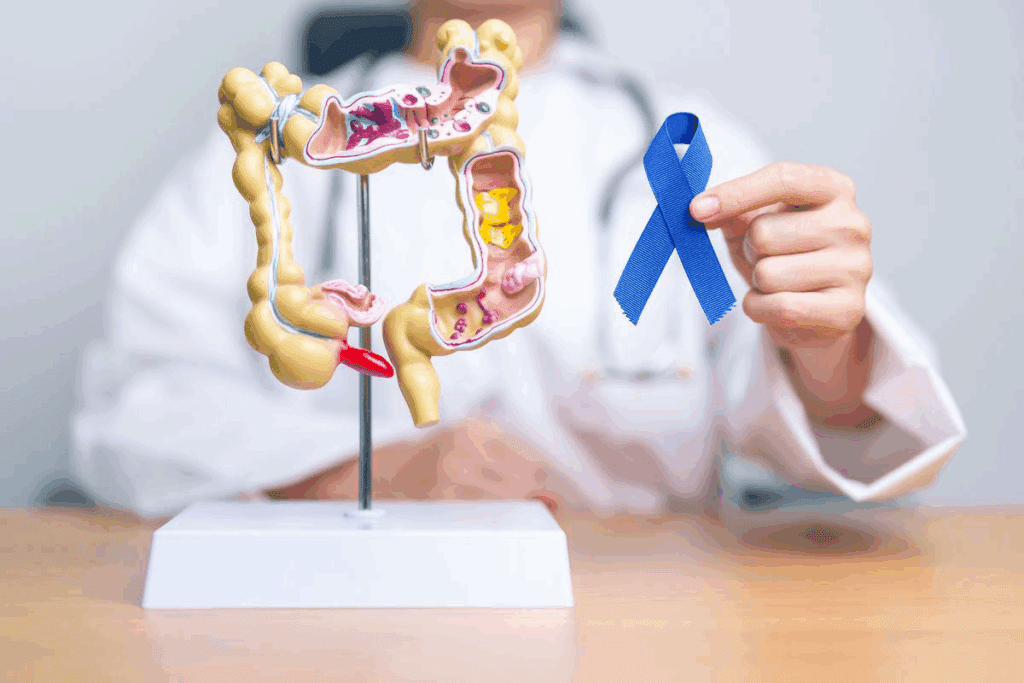
It’s important to know how colorectal cancer starts so catch it can be caught early. It usually begins with small cell clumps called polyps in the colon or rectum. These polyps might not be harmful at first, but some can turn into cancer over time.
How Cancer Forms in the Colon and Rectum
Colorectal cancer develops through genetic changes in the colon or rectum. These changes can come from genes or the environment. As more changes happen, cells start growing out of control, forming polyps or tumors.
The colon and rectum are part of the large intestine. Their lining has different cell types. When these cells change, they can grow into polyps. It’s key to find these polyps early because removing them can stop cancer from forming.
The Progression from Polyps to Cancer
Not every polyp turns into cancer, but some types, like adenomatous polyps, have a higher risk. The change from a harmless polyp to cancer can take years. This gives doctors a chance to catch it early and act.
Things like family history, lifestyle, and certain diseases can affect polyp risk and cancer risk. Spotting early signs and symptoms, like changes in bowel habits or rectal bleeding, is critical for quick medical checks.
Risk Factors for Colon Cancer in Young People
It’s important to know the risk factors for colon cancer in young people. This knowledge helps in early detection and prevention. Colon cancer is more common in older adults, but it’s also rising in young adults.
Family History and Genetic Predisposition
A family history of colon cancer is a big risk factor. If you have a first-degree relative with colon cancer, you’re at higher risk. Certain genetic syndromes like Lynch syndrome and familial adenomatous polyposis (FAP) also increase your risk.
Genetic testing can identify these syndromes. This allows for early intervention.
Lifestyle Factors Affecting Young Adults
Lifestyle choices play a big role in colon cancer in young adults. Eating a lot of processed meat and not enough fiber, not being active, and being overweight are all risks. Smoking and heavy drinking also raise your risk.
Inflammatory Bowel Diseases
Inflammatory bowel diseases (IBD) like Crohn’s disease and ulcerative colitis raise your risk. Chronic inflammation in the colon can lead to cancer over time. Regular monitoring and management of IBD are key to preventing colon cancer.
| Risk Factor | Description | Prevention/Monitoring |
| Family History | Having a first-degree relative with colon cancer | Genetic testing, regular screening |
| Lifestyle Factors | Adopting a healthy diet, regular exercise, and maintaining a healthy weight | Adopting a healthy diet, regular exercise, maintaining a healthy weight |
| Inflammatory Bowel Diseases | Chronic inflammation due to Crohn’s disease or ulcerative colitis | Regular monitoring, management of IBD |
Having these risk factors doesn’t mean you’ll definitely get colon cancer. Symptoms can be similar to less serious conditions. But the more risk factors you have, the higher your chance of getting colon cancer early.
Understanding and addressing these risk factors is key to preventing and detecting colon cancer in young adults.
Warning Sign #1: Persistent Abdominal Pain
Colon cancer often starts with small symptoms, like persistent abdominal pain. This pain is often ignored. It’s key to spot these signs early for better health.
Characteristics of Cancer-Related Abdominal Pain
Abdominal pain from colon cancer can feel different. It might be cramping, aching, or just uncomfortable. This pain doesn’t usually go away like normal stomach issues do.
Key characteristics include:
- Persistence over time
- Lack of relief from typical remedies for digestive discomfort
- Possible localization to a specific area of the abdomen
Differences Between Digestive Discomfort and Warning Signs
Telling apart normal stomach issues from colon cancer symptoms can be hard. But some gns are clearer. For example, if you have pain and other symptoms like changes in bowel habits or weight loss, see a doctor.
“The presence of persistent abdominal pain, when combined with other gastrointestinal symptoms, should prompt a thorough medical evaluation to rule out colon cancer.”
| Symptom | Common Digestive Discomfort | Possible Colon Cancer |
| Abdominal Pain | Intermittent, related to meals or bowel movements | Persistent, not necessarily related to eating or bowel movements |
| Bowel Habits | May change temporarily | May change persistently (diarrhea, constipation, or narrow stools) |
| Weight Loss | Uncommon | Possible unexplained weight loss |
Gender Differences in Pain Presentation
Studies show gender differences in colon cancer pain. Women often feel abdominal pain first. Men might notice rectal bleeding more.
Knowing these differences helps both patients and doctors spot colon cancer signs.
Being aware of persistent abdominal pain can lead to early medical checks. This could improve treatment outcomes for young adults.
Warning Sign #2: Rectal Bleeding and Blood in Stool
Rectal bleeding or blood in stool is a key warning sign of colon cancer. It’s very important for young adults to watch out for this symptom. It can be an early sign of the disease.
What Bleeding Looks Like and What It Means
Rectal bleeding can show up in different ways. It might look like bright red blood on toilet paper or in the toilet bowl. Sometimes, it can mix with stool.
The blood might also be darker, turning the blood maroon or black. This usually means the bleeding is coming from higher up in the digestive tract.
Blood in stool can be a sign of colon cancer. Tumors can bleed because of their fragile blood vessels. But it’s important to remember that bleeding isn’t always due to colon cancer. Always get it checked by a doctor.
Common Misconceptions About Rectal Bleeding
Many young adults think rectal bleeding is just a minor issue. They might think it’s from hemorrhoids or anal fissures. But it’s important not to assume without a doctor’s check-up.
Some people believe colon cancer only affects older adults. But many young adults are being diagnosed with it. It’s key for this age group to know the warning signs.
| Symptom | Possible Causes | Action Required |
| Bright red blood on toilet paper | Hemorrhoids, anal fissures, or colon cancer | Consult a doctor for a proper diagnosis |
| Dark or black stool | Bleeding from higher up in the digestive tract, possibly colon cancer | Seek immediate medical attention |
| Blood mixed with stool | Colon cancer or other gastrointestinal issues | Schedule a medical check-up |
Spotting colon cancer early can greatly improve treatment chances. Young adults should keep an eye on their health. If they notice any unusual symptoms, like rectal bleeding, they should see a doctor right away.
Warning Sign #3: Changes in Bowel Habits
One of the key warning signs of colon cancer is a change in bowel habits. These changes can be ongoing and really affect your loyalty.
Persistent Diarrhea or Constipation
Colon cancer can lead to either persistent diarrhea or constipation. Diarrhea means having loose, watery stools or feeling urgent to go. Constipation is when it’s hard to pass stools or you don’t go as often. Both can be signs of a tumor in the colon.
At first, these changes might be small and not seem related to colon cancer. But if your bowel habits change for more than a few days, see a doctor.
Changes in Stool Shape, Size, and Consistency
Colon cancer can also change the shape, size, and consistency of your stools. Stools might become narrower or thinner. This happens because a tumor can block the colon, making it hard for stool to pass.
Watching your bowel movements and any changes can help when talking to your doctor. This info can help figure out what’s causing your symptoms.
The “Pencil Stool” Warning Sign
A specific stool shape change linked to colon cancer is the “pencil stool.” This is when stools are very narrow, like a pencil. A tumor in the colon can cause this by blocking the passage.
If your stools are always narrow or pencil-like, it’s a sign to see a doctor. While it doesn’t mean you definitely have colon cancer, it’s a change that needs to be checked by a healthcare professional.
Warning Sign #4: Unexplained Weight Loss
Colon cancer can show up as unexpected weight loss. This symptom needs quick medical care. It’s important to know why this happens.
How Cancer Affects Metabolism and Appetite
Cancer can change how our body works and how hungry we feel. “Tumors can make our body burn energy faster, causing weight loss even if we eat the same amount.” Colon cancer can also mess with how we digest food, making it hard to keep weight on.
Distinguishing Between Intentional and Cancer-Related Weight Loss
It’s key to tell the difference between losing weight on purpose and losing it without trying.
“Unexplained weight loss is a red flag that should prompt further investigation into possible causes, like cancer.”
On purpose, we lose weight by changing our diet and exercise. But cancer makes us lose weight without trying.
When Weight Loss Combined with Other Symptoms Requires Attention
When weight loss happens with other signs like belly pain, blood in the stool, or changes in bowel movements, it’s time to see a doctor. Young adults with these symptoms should get help right away. Early diagnosis is key to fighting colon cancer.
Key Takeaways:
- Unexplained weight loss can be a sign of colon cancer.
- Cancer can mess with how we burn energy and absorb nutrients.
- Telling intentional from unintentional weight loss is important.
- Weight loss with other symptoms means it’s time to see a doctor.
Warning Sign #5: Persistent Fatigue and Weakness
Feeling extremely tired or weak is not just normal for young people. It can be a sign of something serious, like colon cancer. While many young adults feel tired, persistent weakness is a warning sign that needs attention.
Beyond Normal Tiredness: Cancer-Related Fatigue
Cancer-related fatigue is different from regular tiredness. It’s a deep, lasting exhaustion that doesn’t get better with rest. In colon cancer cases, this fatigue comes from fighting the disease and anemia from blood loss.
Key characteristics of cancer-related fatigue include:
- Persistent tiredness that doesn’t go away with rest
- Significant impact on daily activities and quality of life
- Often accompanied by other symptoms like weakness or shortness of breath
How Young Adults Often Dismiss This Critical Symptom
Young adults often think persistent fatigue is just from being busy or stressed. But when it lasts or comes with other signs, it might be a health issue like colon cancer.
| Common Causes of Fatigue | Potential Red Flags for Colon Cancer |
| Lack of sleep, stress, busy lifestyle | Persistence despite adequate rest |
| Poor diet, dehydration | Accompanied by other symptoms like weight loss or abdominal pain |
| Anemia due to nutritional deficiencies | Unexplained anemia not responding to dietary changes |
The Connection Between Fatigue and Blood Loss
Colon cancer can cause fatigue through blood loss. As a tumor grows, it can bleed, leading to anemia. Anemia makes it hard for the body to carry oxygen, causing weakness and fatigue.
It’s essential for young adults experiencing persistent fatigue, along with other symptoms like abdominal pain or unexplained weight loss, to see a healthcare professional for a thorough check-up.
Warning Sign #6: Iron Deficiency Anemia
Colon cancer can cause iron deficiency anemia because of chronic blood loss. This is a key warning sign. Anemia happens when the body loses more iron than it gets, leading to fewer red blood cells. In colon cancer, anemia is caused by the tumor bleeding, either openly or secretly.
Why Colon Cancer Causes Anemia
Colon cancer can lead to anemia because the tumor causes bleeding in the gut. This bleeding can be seen, or it can be hidden. Either way, it depletes the body’s iron, causing anemia.
A study in the Journal of Clinical Oncology found that anemia is common in colon cancer patients, even in young adults.
“Iron deficiency anemia is a frequent finding in patients with colorectal cancer and should prompt further investigation.”
Symptoms That May Indicate Anemia
The signs of iron deficiency anemia can be subtle but include:
- Persistent fatigue and weakness
- Shortness of breath
- Dizziness or lightheadedness
- Pale skin
These symptoms can really affect someone’s quality. They shouldn’t be ignored as just being tired.
| Symptom | Description |
| Fatigue | Persistent feeling of tiredness or lack of energy |
| Shortness of Breath | Difficulty breathing or feeling winded even at rest |
| Dizziness | Feeling lightheaded or as if one might pass out |
Why Doctors Should Investigate Unexplained Anemia in Young Adults
Anemia in young adults should lead to a detailed check for colon cancer and other causes. Doctors should think of colon cancer as a possible cause of unexplained anemia if other risk factors are there.
Key factors to consider include:
- Family history of colon cancer
- Presence of other gastrointestinal symptoms
- Unexplained weight loss
In conclusion, iron deficiency anemia is a critical warning sign, more so in young adults. Recognizing its symptoms and the link to colon cancer can lead to early diagnosis and life-saving treatments.
Warning Sign #7: Feeling of Incomplete Bowel Emptying
A less commonly discussed symptom of colon cancer is the feeling of incomplete bowel emptying. This sensation occurs when a person feels that their bowel doesn’t empty, causing a bowel movement. It’s a symptom that can be easily attributed to other causes, but when persistent, it warrants further investigation.
Understanding This Sensation
The feeling of incomplete bowel emptying is when you feel your bowel isn’t fully emptied after you go. It can be uncomfortable and may make you try to go more often. It’s essential to differentiate this symptom from other gastrointestinal issues.
How Tumors Create This Symptom
Tumors in the colon or rectum can block the normal flow of feces. This leads to a feeling of incomplete emptying. As a tumor grows, it can block the bowel, making it hard for stool to pass through completely. This obstruction can cause the sensation of incomplete bowel emptying, among other symptoms like constipation or changes in stool caliber.
Distinguishing from IBS and Other Conditions
Irritable Bowel Syndrome (IBS) can cause similar symptoms, like changes in bowel habits and discomfort. But a tumor can cause more persistent and severe symptoms. Healthcare providers need to evaluate symptoms carefully to distinguish between IBS and colon cancer, especially in young adults presenting with new or worsening symptoms.
Medical professionals say, “A thorough diagnostic workup is necessary to determine the cause of symptoms like incomplete bowel emptying. This may include colonoscopy, imaging studies, and other tests to rule out colon cancer or other serious conditions.”
“The key to managing colon cancer is early detection. Recognizing symptoms like the feeling of incomplete bowel emptying and seeking medical attention promptly can significantly impact treatment outcomes.”
Colon Cancer Symptoms in Young Adults: Seeking Medical Help
Young adults need to be proactive about colon cancer symptoms. Knowing these signs is key to early detection and better treatment. Experts say young adults should get screened for colorectal cancer, even without symptoms or a family history.
Overcoming Stigma and Embarrassment
Many young adults are hesitant to talk about bowel issues and rectal bleeding. But it’s important to get over this fear and see a doctor if symptoms don’t go away. Early detection is key to effective treatment, and waiting can lead to worse outcomes.
Talking openly with a doctor can lead to a quick diagnosis. Remember, doctors are trained to handle these topics with care and privacy.
What to Expect During the Diagnostic Process
When you see a doctor about colon cancer symptoms, expect a detailed check-up. This might include a physical exam, looking at your medical history, and possibly tests like a colonoscopy. Understanding the diagnostic process can help alleviate anxiety and prepare you for what’s to come.
- A detailed medical history to identify risk factors and symptoms.
- A physical examination to check for any abnormalities.
- Diagnostic tests to confirm the presence of colon cancer or rule out other conditions.
Advocating for Yourself When Symptoms Are Dismissed
If a healthcare provider doesn’t take your concerns seriously, you need to speak up. Persistence is key in getting the care you need. If you feel your symptoms are ignored, ask for a second opinion or see a specialist.
Knowing about your symptoms and the risk of colon cancer can help you ask for the medical attention you deserve. Don’t be afraid to push for more tests if you think something is off.
Conclusion: Taking Action for Early Detection
Young adults need to know the signs of colon cancer. Symptoms like persistent pain, rectal bleeding, and changes in bowel habits are key. Don’t ignore signs like unexplained weight loss, fatigue, iron deficiency anemia, or feeling like you can’t fully empty your bowels.
Colon cancer symptoms in young people, including women and men, can be hard to spot. But knowing these signs can help catch the disease early. This can lead to better treatment outcomes.
Doctors say colon cancer can be treated well if found early. Regular check-ups and knowing the warning signs are vital. If you’re young and have a family history or other risk factors, take extra care of your health.
By knowing the risks and watching for symptoms, young adults can protect their health. Early detection and quick medical action are key to better survival rates.
FAQ
What are the common symptoms of colon cancer in young adults?
Symptoms include persistent abdominal pain and rectal bleeding. Changes in bowel habits and unexplained weight loss are also common. Fatigue, iron deficiency anemia, and feeling like you can’t empty your bowels are signs too.
Are there specific risk factors that contribute to colon cancer in young adults?
Yes, risk factors include family history and genetic predisposition. Lifestyle factors and inflammatory bowel diseases also play a role.
How does colon cancer develop?
Colon cancer starts from polyps in the colon or rectum. These can turn into cancer over time if not removed.
What is the significance of rectal bleeding in colon cancer?
Rectal bleeding is a sign of colon cancer. It’s important to see a doctor if you have it. It could mean the cancer is advanced.
Can changes in bowel habits be a sign of colon cancer?
Yes, changes like diarrhea or constipation are warning signs. So are changes in stool characteristics.
Why is unexplained weight loss a concern for colon cancer?
Unexplained weight loss can be a symptom. The cancer can affect your metabolism and appetite, leading to weight loss.
How does colon cancer cause fatigue?
Fatigue can come from blood loss, leading to anemia. Or it can be the body’s response to the cancer.
What is the connection between iron deficiency anemia and colon cancer?
Colon cancer can cause iron deficiency anemia. This is due to chronic blood loss, reducing red blood cells and hemoglobin.
Can a feeling of incomplete bowel emptying be a sign of colon cancer?
Yes, it can be a symptom. Tumors can cause this feeling.
What should I do if I’m experiencing symptoms of colon cancer?
If you have symptoms, see a doctor right away. Early detection ikey to effective treatment.
Are there any specific screening recommendations for young adults?
Screening depends on risk factors. Adults with a family history or other risk factors should start screening around age 40. Or as advised by a healthcare provider.
How can I overcome stigma and embarrassment when discussing colon cancer symptoms with my doctor?
Be open and honest with your doctor. Remember, talking about your health is normal for your well-being.
What can I expect during the diagnostic process for colon cancer?
Expect a physical exam, medical history, and tests. These include colonoscopy, imaging tests, or blood tests.
Can colon cancer be prevented or detected early?
Yes, through screening and a healthy lifestyle. Being aware of symptoms is also important.
What are the symptoms of colon cancer in men under 40?
Symptoms include persistent abdominal pain and rectal bleeding. Changes in bowel habits and unexplained weight loss are also signs.
Are there any differences in colon cancer symptoms between men and women?
Symptoms are similar, but some studies suggest differences. Women might experience more abdominal pain. Men might have more rectal bleeding.
References
Centers for Disease Control and Prevention (CDC). (2023). Colorectal cancer statistics.
Available at: https://www.cdc.gov/cancer/colorectal/statistics/index.htm