
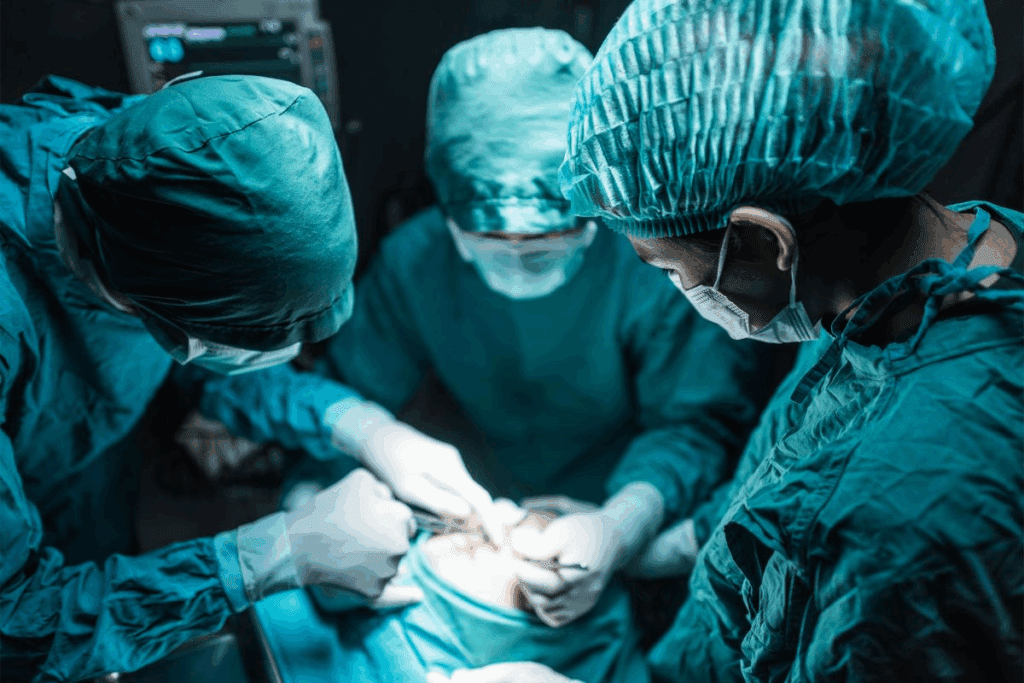
Colostomy surgery, also known as colestomy, is a procedure that creates an opening between the intestine and the abdominal wall. This opening allows stool to exit into a colostomy bag when normal passage is not possible.
This surgery is a big change. It involves creating a stoma, or an opening, in the abdominal wall. This is done to divert the normal flow of stool. It’s often needed for medical conditions like colorectal cancer, diverticulitis, or traumatic bowel injuries.
It’s important to understand the causes, types, and what it means to live with a stoma. The procedure brings a part of the colon to the surface of the abdomen. It secures it to create a stoma and attaches a colostomy bag to collect stool.
Key Takeaways
- Colostomy surgery creates an opening in the abdominal wall to divert stool flow.
- The procedure is often necessary due to conditions like colorectal cancer or diverticulitis.
- Living with a stoma requires understanding its causes, types, and implications.
- A colostomy bag is attached to the stoma to collect stool.
- The surgery can be temporary or permanent, depending on the underlying condition.
Understanding Colostomy Surgery
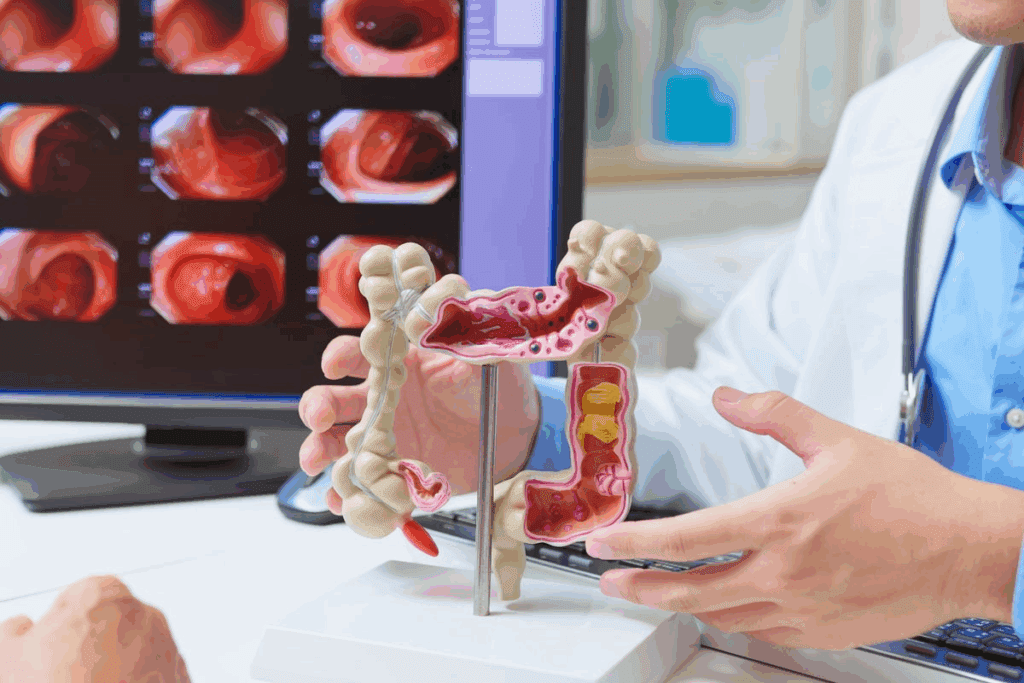
A high-resolution, detailed medical illustration depicting a colostomy surgery procedure. The foreground shows the surgical field, with the abdominal wall incision exposing the colon, which has been exteriorized and attached to the skin to create a stoma. The middle ground features the surgeon’s hands performing the suturing and connection of the colon to the abdominal wall, with medical instruments visible. The background is a clean, sterile operating room environment with bright, directional lighting casting soft shadows. The overall tone is clinical, precise, and informative, suitable for an educational medical article.
Colostomy surgery creates a stoma to divert stool when the normal passage is blocked. This is often needed due to injury or a medical condition. It prevents the colon from working right.
Definition and Purpose
A colostomy is a surgery that makes an opening in the abdomen, called a stoma. The colon is attached to this opening. The main goal is to give stool a new way out when the anus is blocked or damaged.
The main reasons for a colostomy include colorectal cancer, diverticulitis, traumatic injury, bowel obstruction, and congenital abnormalities. If the colon is damaged or blocked, a colostomy is needed. This ensures stool can exit the body safely.
- Colorectal cancer
- Diverticulitis
- Traumatic bowel injuries
- Bowel obstruction
Doctors say a colostomy is needed if injury or a medical condition stops the colon from working right. This highlights the importance of colostomy surgery in managing severe intestinal issues.
Historical Development of Colostomy Procedures
Colostomy surgery has a long history, starting in the 18th century. At first, it was risky and seen as a last option. But, with better surgical tools and technology, it’s now a common treatment.
The history of colostomy surgery is filled with important milestones. Advances in tools and care have greatly improved patient outcomes. These changes have made life with a stoma better for many.
“The historical development of colostomy procedures has led to significant advancements in surgical techniques, patient care, and quality of life for individuals with a stoma.”
Today, colostomy surgery is a lifesaver for many. It helps people manage their intestinal conditions well. As technology keeps improving, colostomy procedures will likely get even better, helping more patients.
Common Causes of Colostomy Surgery
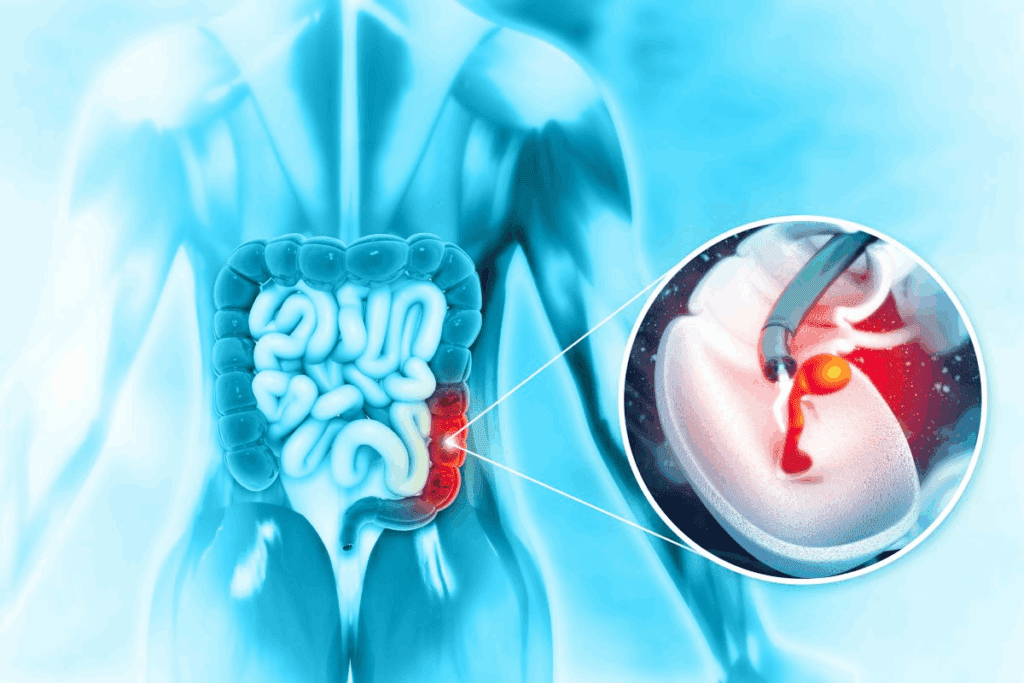
A detailed close-up view of the human digestive system, highlighting the colon and sections where a colostomy may be performed. The image should convey the medical nature of the topic, with precise anatomical illustrations rendered in a realistic, detailed style using warm lighting and a neutral color palette. The focus should be on the specific regions and conditions that commonly necessitate colostomy surgery, such as colon cancer, diverticulitis, or inflammatory bowel disease. The composition should emphasize the relevant anatomical features while maintaining a sense of clinical objectivity, suitable for inclusion in a medical educational article.
Health issues like cancer, diverticulitis, and bowel obstruction often lead to colostomy surgery. These problems affect the colon or rectum, making a colostomy necessary.
Colorectal Cancer
Colorectal cancer is a top reason for colostomy surgery. If cancer hits the colon or rectum, removing the affected part might be needed. This creates a stoma to divert waste and let the area heal.
Diverticulitis
Diverticulitis is when the colon wall’s pouches get inflamed. It can lead to serious issues like abscesses or perforations. In severe cases, a colostomy is needed to manage these problems.
Traumatic Bowel Injuries
Trauma to the bowel, from accidents or violence, might require a colostomy. The injury’s severity might mean a stoma is needed for healing and to avoid further issues.
Bowel Obstruction
Bowel obstruction, caused by cancer, scar tissue, or other issues, is another reason for colostomy. It stops normal bowel movements. A colostomy helps relieve this blockage.
| Cause | Description | Common Indications for Colostomy |
| Colorectal Cancer | Cancer affecting the colon or rectum | Removal of affected portion, creation of stoma |
| Diverticulitis | Inflammation of diverticula in the colon | Complications like abscesses, perforations, or obstruction |
| Traumatic Bowel Injuries | Injuries to the bowel from trauma | Severe injury requiring stoma creation for healing |
| Bowel Obstruction | Blockage preventing normal bowel movements | Relief of obstruction through colostomy |
The stoma, also known as a colostomy hole or sigmoid stoma, can be temporary or permanent. It depends on the person’s condition and the surgeon’s advice.
Types of Colostomy Surgery
It’s important for patients to know about the different colostomy surgeries. The type of colostomy depends on the part of the colon used for the stoma. For example, a colostomy in the sigmoid colon is called a sigmoid colostomy.
Sigmoid Colostomy
A sigmoid colostomy creates a stoma from the sigmoid colon. This is the last part of the colon before the rectum. It’s a common type of colostomy, often used when the sigmoid colon is affected by disease or injury.
Transverse Colostomy
Transverse colostomy uses the transverse colon, which crosses the upper abdomen. This procedure is chosen when fecal matter needs to be diverted from a diseased or damaged lower colon part.
Ascending Colostomy
Ascending colostomy is less common and involves the ascending colon on the right side. It’s considered when the pathology requires this approach for the patient’s condition.
Descending Colostomy
Descending colostomy uses the descending colon on the left side. Surgeons might choose this type based on the patient’s needs and the condition’s nature.
Each colostomy type has its own indications and care implications. Knowing these differences is key for healthcare providers and patients to manage care well and improve outcomes.
Temporary vs. Permanent Colostomies
It’s important to know the difference between temporary and permanent colostomies. The type of colostomy depends on the reason for the surgery. This can be due to injury, disease, or other health issues.
Indications for Temporary Colostomy
A temporary colostomy helps a part of the bowel heal. It’s used after surgery, injury, or disease. Once the bowel heals, the colostomy can be closed, and normal bowel function returns.
Here are some reasons for a temporary colostomy:
- Traumatic bowel injuries: Severe injuries to the bowel may require a temporary colostomy to allow the bowel to heal.
- Bowel obstruction: A temporary colostomy can relieve obstruction and allow the bowel to recover.
- Inflammatory bowel disease: Conditions like Crohn’s disease or ulcerative colitis may necessitate a temporary colostomy to manage symptoms and allow the bowel to heal.
Conditions Requiring Permanent Colostomy
A permanent colostomy is needed when the colon or anus is severely damaged or removed. This is often due to cancer, trauma, or other diseases. In these cases, the colostomy cannot be reversed, and patients must adapt to living with a permanent stoma.
Here are some conditions that may require a permanent colostomy:
- Colorectal cancer: Advanced colorectal cancer may necessitate the removal of the colon or rectum, resulting in a permanent colostomy.
- Severe bowel disease: Certain conditions, such as familial adenomatous polyposis (FAP), may require a permanent colostomy.
The choice between a temporary or permanent colostomy depends on the patient’s health and the condition. Understanding the type of colostomy is key for patient care and management.
| Characteristics | Temporary Colostomy | Permanent Colostomy |
| Purpose | Allows bowel to heal | Required due to severe damage or removal of colon/rectum |
| Reversibility | Reversible | Not reversible |
| Causes | Trauma, obstruction, inflammatory bowel disease | Colorectal cancer, severe bowel disease |
The Colostomy Procedure: What to Expect
For those facing colostomy surgery, understanding the process is key for a smooth recovery. The steps include preparation before surgery and the surgery itself.
Pre-Surgical Preparation
Before surgery, patients meet with their surgeon for a detailed assessment. The surgeon marks the best spot for the stoma. This is important for the patient’s comfort and care after surgery.
Patients also learn about dietary restrictions and other preparations. A healthcare team member teaches them about their future ostomy. This includes how to care for it and manage the colostomy bag.
Surgical Techniques
The surgery can be done using open or minimally invasive methods. The choice depends on the patient’s condition and the surgeon’s skill.
Surgical Techniques Comparison
| Surgical Technique | Recovery Time | Scarring |
| Open Surgery | Longer | More noticeable |
| Minimally Invasive | Shorter | Less noticeable |
Stoma Creation Process
The stoma is created by bringing the colon to the abdomen’s surface. It is secured in place. This is a key part of the surgery, as it affects the colostomy’s function.
After surgery, a colostomy bag is attached to the stoma. The patient learns how to empty and change it. This is part of their care after surgery.
Understanding Your Stoma
The stoma is a key part of colostomy surgery. It needs attention and understanding. With the right knowledge, managing it becomes easier.
What Is a Stoma?
A stoma is a surgically made opening in the abdomen. It connects to the intestine. It’s a new way for waste to leave the body when the usual way is blocked.
The stoma is usually round, about an inch to two inches wide. It’s pink or red because of its blood supply. The skin around it might be sensitive, so it needs care to avoid irritation.
Stoma Appearance and Function
The stoma looks different for everyone, but it’s often pink or red. It’s rich in blood. Its job is to let waste out into a bag or other device.
Knowing what a healthy stoma looks and acts like is important. Changes in color, swelling, or bleeding mean you need to see a doctor.
Colostomy Tube Placement and Management
A colostomy tube might be used if the stoma is not fully grown or if there are blockages. A healthcare professional places it carefully. This ensures it works right and stays in place.
Looking after the tube means keeping it clean and secure. This stops leaks or it moving. Always follow your doctor’s advice on how to care for it.
Key aspects of stoma care include:
- Keeping the stoma and surrounding skin clean
- Monitoring for signs of complications
- Properly managing the colostomy bag or tube
- Maintaining a healthy diet to support overall well-being
Understanding and managing your stoma well lets you live a full and happy life.
Colostomy Care and Management
Colostomy care has improved a lot, making life easier for patients. It’s key to keep the patient comfortable and avoid problems.
Colostomy Bags and Appliances
Choosing the right colostomy bag is very important. A healthcare expert can help pick the best pouching system for you. This system has a pouch for stool and a wafer to stick it to your skin.
- There are many types of colostomy bags, like drainable and closed ones.
- The right choice depends on how much stool you have and what you prefer.
- Today’s bags are made to be easy to use and not show.
Changing and Emptying the Colostomy Bag
Knowing how to change and empty your bag is very important. How often you need to change it depends on your bag and how much you have.
- Change the bag when it’s about a third to half full to avoid leaks.
- Wash the stoma and skin around it with mild soap and water.
- Make sure the new bag fits well to avoid skin problems.
Skin Care Around the Stoma
Taking care of the skin around the stoma is very important. Gentle skin care practices can make you feel better.
- Use mild soap and water for cleaning.
- Avoid harsh products that can irritate the skin.
- Watch for signs of irritation or infection.
Managing Odor and Gas
Dealing with odor and gas is a big issue for people with a colostomy. What you eat can affect how you smell and how much gas you have.
- Changing your diet can help reduce odor.
- Using deodorants or filters in your bag can also help.
- Drinking plenty of water can make waste less concentrated.
By following these tips and working with healthcare experts, people with a colostomy can live full and happy lives.
Living with a Colostomy
A colostomy can change daily life, but with the right steps, people can do well. Adjustments in lifestyle are needed, but many can go back to their usual activities. This includes travel, swimming, and being intimate, with some changes.
Diet and Nutrition
Eating right is key to managing stool and smell. A balanced diet with lots of foods is important. Increasing fiber helps with bowel movements, and avoiding foods that cause gas or smell improves comfort.
Some foods might need to be skipped to avoid blockages or diarrhea. Drinking lots of water is also key. Talking to a healthcare provider or dietitian can help make a good eating plan.
Physical Activity and Exercise
Most people can keep exercising after a colostomy, with some tweaks. Exercise is good for health and stress relief. It’s important to pick activities that feel right and are safe.
Doing pelvic floor exercises can strengthen muscles around the stoma. But, heavy lifting or bending should be avoided to protect the stoma. A healthcare provider can help find the best exercise routine.
Clothing Considerations
Clothing choices might change with a colostomy bag. Many prefer looser clothes for comfort. Special underwear or swimsuits made for colostomies can also be helpful.
Wearing clothes with stretchy waistbands or adjustable styles can be easier. Trying different clothes can help find the best fit.
Intimacy and Relationships
Intimacy and relationships can stay strong after a colostomy. Talking openly with partners helps with any issues. It’s important to discuss any concerns with a healthcare provider.
Adjustments might be needed during intimate times to fit the colostomy bag. Using special colostomy covers or supports can help. Emotional support from loved ones is key to a healthy relationship.
Advances in Colostomy Care and Research
Colostomy care has seen big changes, making life better for those with a stoma. New research and products keep improving things.
Current Statistics and Prevalence
Colostomy surgery is common for many reasons like cancer or injuries. In the U.S., thousands get a colostomy every year. This shows how important it is to keep improving care.
| Cause | Number of Cases | Percentage |
| Colorectal Cancer | 40,000 | 60% |
| Diverticulitis | 10,000 | 15% |
| Traumatic Bowel Injuries | 5,000 | 7% |
| Other Causes | 12,000 | 18% |
Innovative Stoma Management Products
New stoma products have made life easier for patients. Modern bags are better at keeping things in and smelling nice. Skin care products also help avoid irritation.
Key Features of Modern Colostomy Bags:
- Improved adhesion to prevent leakage
- Odor-neutralizing filters
- Discreet design for enhanced confidence
Quality of Life Improvements
Improving life with a colostomy is a big goal. New materials and tech are being explored. Education and support groups also help patients adjust.
“The advancements in colostomy care have been life-changing. I feel more confident and comfortable managing my stoma than ever before.” –
A colostomy patient
As research goes on and new products come out, things look up for those with a colostomy. The goal is to make life better, more comfortable, and full of confidence.
Conclusion
It’s key to understand colostomy surgery, its reasons, and types. This knowledge helps patients and their caregivers face the challenges of this condition. With the right care, people with a colostomy can live full and happy lives.
New advancements in stoma care are making a big difference. They help patients manage their condition better. Learning about colostomy care and living with it lets patients take back control of their lives.
As research and new ideas in colostomy surgery and care grow, life for those with a colostomy will get even better. This shows why it’s vital to keep up with the latest in colostomy care and management.
FAQ
What is a colostomy?
A colostomy is a surgery that makes a hole in the intestine and the belly wall. This hole lets stool go into a bag.
What are the common causes of colostomy surgery?
Colostomy surgery is often needed for colorectal cancer, diverticulitis, bowel injuries, and blockages.
What are the different types of colostomy surgery?
There are several types, like sigmoid, transverse, ascending, and descending colostomies. Each targets a different part of the colon.
Is a colostomy bag permanent?
A colostomy can be either short-term or long-term. It depends on the health issue and the patient’s overall health. Short-term colostomies are often reversed once the bowel heals.
How is a stoma created during colostomy surgery?
In surgery, a part of the colon is moved to the belly’s surface. It’s then secured to make a stoma. A bag is attached to the stoma to catch stool.
How do I care for my stoma and colostomy bag?
You need to pick the right bag and appliances. Learn to change and empty it. Also, take care of the skin around the stoma and manage any odor or gas.
Can I resume normal activities with a colostomy?
Yes, many people with a colostomy can do normal things. This includes exercising and staying active, with some diet and clothing changes.
What dietary changes are necessary after a colostomy?
You might need to change your diet to manage stool and odor. This could mean avoiding some foods and drinking more water.
How do I manage intimacy and relationships with a colostomy?
You can keep intimacy and relationships strong by talking openly with your partner. You might need to make some lifestyle changes.
What advancements have been made in colostomy care?
New products and techniques have made life with a colostomy better. They help people feel more comfortable and confident, leading active lives.
What is a sigmoid stoma?
A sigmoid stoma comes from the sigmoid colon, near the rectum. It’s one of the types of colostomy surgeries.
Are there different types of colostomy bags available?
Yes, there are many colostomy bags and appliances. They vary in size, material, and features to meet different needs and preferences.
References
- Khalil, H. M., et al. (2021). Biliary leakage following cholecystectomy: A prospective population study. Journal of Research in Medical and Dental Science, 9(5), 289-296. Retrieved from https://www.jrmds.in/articles/biliary-leakage-following-cholecystectomy-a-prospective-population-study-84919.html



 Departments
 Related Videos
 Our Doctors
 News
News