
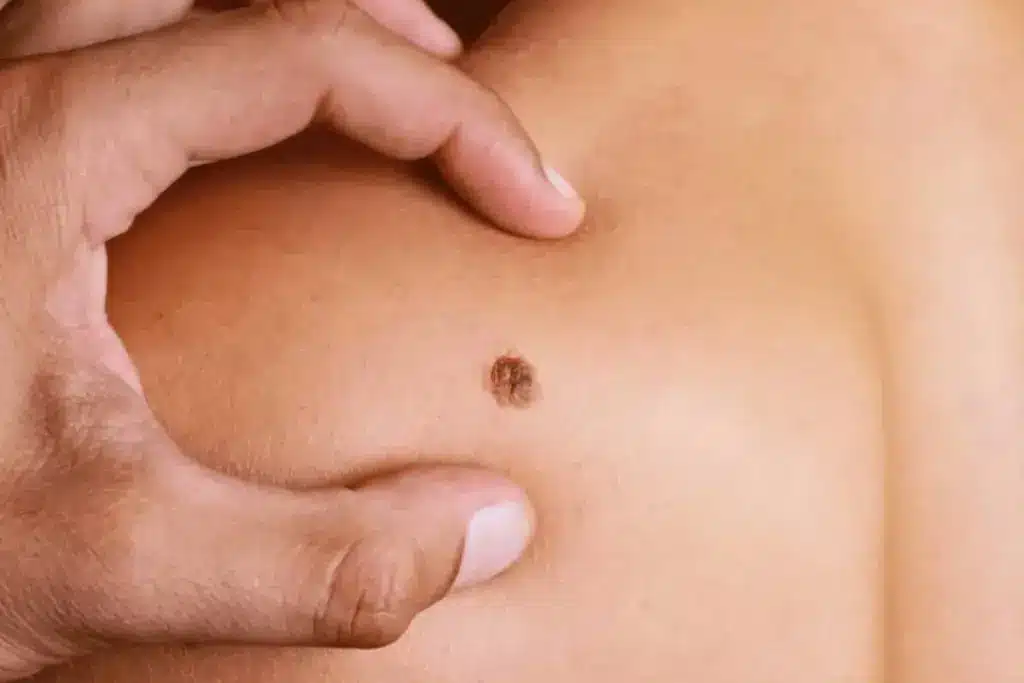
Jess Hurrell’s fight against melanoma shows how important it is to know the signs of skin cancer. People with melanoma often wonder if a cancerous mole hurts what is inside moles.
Melanoma is a serious skin cancer that can be deadly if caught late. Some may feel pain, while others might not notice anything. Jess Hurrell’s story is a powerful reminder to stay alert and know the signs of melanoma.
Key Takeaways
- Melanoma is a life-threatening form of skin cancer.
- A cancerous mole may or may not cause pain.
- Early detection is key for effective treatment.
- Understanding melanoma symptoms is vital.
- Regular check-ups can spot skin cancer early.
The Nature of Moles and Skin Cancer
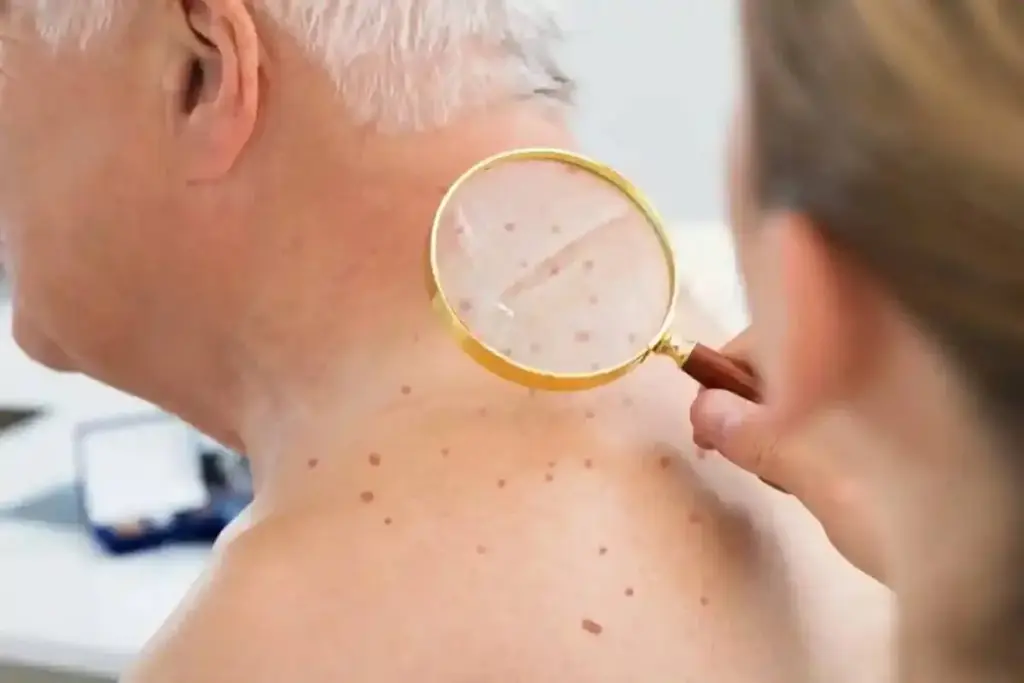
Moles and skin cancer have a complex relationship. It’s important to know the difference between benign and malignant lesions. Moles are common skin growths that can appear anywhere on the body. While most are harmless, some can turn into skin cancer.
Normal Mole Development and Appearance
Normal moles, or benign nevi, are usually symmetrical and have a uniform color. They can be flat or raised and are usually less than 6mm in diameter. Moles form when melanocytes, the cells that produce skin pigment, cluster together.
The look of a mole can change over time, thanks to sun exposure. It’s key to watch moles for any changes in size, shape, or color.
Distinguishing Between Benign and Malignant Lesions
It’s vital to tell apart benign and malignant lesions to catch skin cancer early. Malignant melanoma, a type of skin cancer, often starts as a new mole or changes in an existing one. The ABCDE rule helps spot potentially cancerous moles:
- A: Asymmetry – One half of the mole doesn’t match the other.
- B: Border – The edges are irregular, ragged, or blurred.
- C: Color – The color is not uniform and may include shades of brown, black, or even patches of red, white, or blue.
- D: Diameter – The mole is larger than 6mm (about the size of a pencil eraser).
- E: Evolving – The mole is changing in size, shape, or color.
Some moles may hurt or become irritated. This can happen for many reasons, like trauma or inflammation. Knowing about moles and any changes, including pain, is key to keeping your skin healthy.
What Is Inside Moles: Cellular Composition and Structure
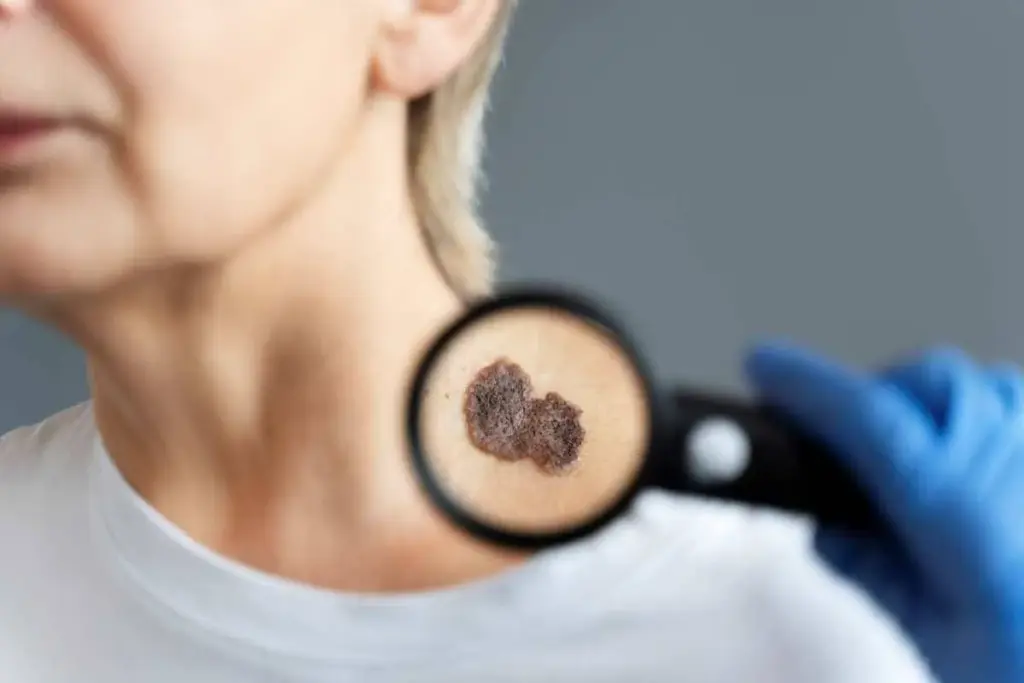
Knowing what makes up a mole is key to spotting skin problems early. Moles form when melanocytes, cells that make melanin, cluster together. This melanin is what gives skin its color.
Moles are made up of many cell types. Melanocytes are the main cells that color moles. How these cells work with other skin cells shapes the mole’s look.
Melanocytes and Pigmentation
Melanocytes are the main cells that color moles. They make melanin, which can change the mole’s color. How many and how active these cells are can tell if a mole is normal or not.
The way melanin moves from melanocytes to other skin cells, called keratinocytes, is important. This process can be changed by genetics and UV radiation.
Structural Differences Between Normal and Atypical Moles
Normal moles look symmetrical and have the same color all over. But atypical moles are different. They can be irregular in shape, color, and size. These differences help doctors check if a mole might be cancerous.
The main reason for these differences is how melanocytes are spread out and work. Atypical moles might have more melanocytes or have them work differently. This can be a sign of cancer.
It’s important to know these differences to catch skin cancer early. People with atypical moles or a history of skin cancer should see a dermatologist often.
Does Melanoma Hurt? Pain as a Symptom
People often worry about pain when they find out they have melanoma. This serious skin cancer can show up in many ways. Pain is not always a clear sign of melanoma.
Jess Hurrell’s story shows how different melanoma symptoms can be. It’s important to understand if melanoma hurts. This depends on the stage of the disease.
Early-Stage Melanoma and Pain Perception
In the early stages, melanoma usually doesn’t hurt. Many people with it don’t feel any pain. It’s important to check your skin regularly to catch it early.
Pain perception varies from person to person. The location of the melanoma and how sensitive you are to pain matter.
Advanced Melanoma and Pain Development
When melanoma gets worse, pain can become more common. The tumor growing can hurt nearby tissues and nerves. This can cause discomfort or pain.
Pain management is key for those with advanced melanoma. They need full medical support to manage their pain.
In summary, early melanoma usually doesn’t hurt, but advanced stages can. It’s vital to watch for changes in your skin and get medical help if you notice anything new or different.
Common Symptoms of Cancerous Moles Beyond Pain
Knowing the signs of melanoma can help a lot. Pain is a sign of advanced melanoma, but there are other important signs too.
The ABCDE Rule for Melanoma Detection
The ABCDE rule helps spot cancerous moles. It stands for Asymmetry, Border, Color, Diameter, and Evolving.
- Asymmetry: If a mole is not symmetrical, it could be a warning sign.
- Border: A mole with a notched, ragged, or irregular border may indicate melanoma.
- Color: Moles with multiple colors or uneven color distribution are suspect.
- Diameter: Melanomas are often larger in diameter than benign moles.
- Evolving: Changes in size, shape, or color over time are a key indicator.
Medical Expert, a dermatologist, says, “The ABCDE rule is simple yet effective. If you notice any of these, see a dermatologist right away.”
“Early detection is key to surviving melanoma. Being aware of the ABCDE rule can save lives.”
Additional Warning Signs That Require Attention
There are other symptoms that may mean a mole is cancerous. These include:
- Itching or tenderness around the mole
- Redness or swelling around the mole
- Sores or bleeding from the mole
A mole that itches or is tender may mean abnormal cell growth. Watch for any changes and see a doctor if you notice anything odd.
By watching for these signs and knowing the ABCDE rule, people can catch melanoma early. This can lead to better treatment and survival chances.
Why Do Some Spots Hurt? Understanding Skin Sensitivity
Sensitivity in skin spots can cause pain, leading to questions about its causes. The skin has many nerve endings, making it sensitive. Factors like inflammation and nerve response play a big role.
Inflammation and Nerve Response in Skin Lesions
Inflammation is the body’s natural response to injury or infection. When a mole or skin lesion gets inflamed, it can hurt. This is because of increased blood flow and chemical mediators.
These chemicals can wake up nerve endings, causing pain. The nerve response in skin lesions is key to feeling pain. Nerve endings in the skin can sense heat, cold, and pressure. When a lesion is irritated, these nerve endings send pain signals to the brain.
Differentiating Between Normal and Abnormal Pain
Not all pain from skin spots is a worry. But, it’s important to tell normal pain from abnormal pain. Normal pain might be from minor irritation or inflammation that goes away by itself. Abnormal pain could mean a serious issue, like infection or cancer.
Characteristics of abnormal pain include:
- Persistence or worsening over time
- Severe intensity
- Association with other symptoms like bleeding or discharge
Knowing the type of pain in skin lesions is key to what to do next. If you have ongoing or severe pain from a skin spot, see a doctor. They can check it out and give the right treatment.
Moles That Are Painful: Causes and Concerns
Moles that hurt can be alarming. It’s important to find out why. Most moles are harmless, but a painful mole might signal a problem.
Trauma and Irritation to Existing Moles
One reason for a painful mole is trauma or irritation. Moles in areas like the waistband or scalp can get irritated. This irritation can make the mole hurt.
Common sources of irritation include:
- Friction from clothing
- Shaving or hair removal
- Accidental bumps or hits
Infection as a Source of Mole Pain
Infection can also cause mole pain. An infected mole may be red, swollen, and painful. This happens when bacteria get into the mole through a cut or scratch.
Signs of an infected mole may include:
- Increased redness around the mole
- Pus or discharge
- Swollen lymph nodes
When Pain May Indicate Malignancy
Pain can sometimes mean a mole is changing in a bad way. Melanoma, a skin cancer, might cause pain. But this is not usually the first sign.
|
Cause |
Characteristics |
Action |
|---|---|---|
|
Trauma/Irritation |
Pain due to friction or rubbing |
Avoid further irritation, consider removal if persistent |
|
Infection |
Redness, swelling, pus |
Seek medical attention, possible antibiotics |
|
Malignancy |
Changes in mole appearance, pain |
Immediate medical evaluation, possible biopsy |
It’s key to watch moles for any changes, like pain. If you’re worried, see a doctor. Early check-ups can figure out why a mole hurts and what to do next.
Does Skin Cancer Ache? Pain Patterns in Different Types
It’s important to know about the pain linked to skin cancer for early treatment. Skin cancer includes basal cell carcinoma, squamous cell carcinoma, and melanoma. Each type has its own pain signs.
Basal Cell Carcinoma and Pain Characteristics
Basal cell carcinoma (BCC) is the most common skin cancer. It grows slowly. Celebrity chef Gordon Ramsay shared his BCC diagnosis to raise awareness.
BCC usually doesn’t hurt at first. It looks like a small, shiny bump on the skin. But, as it grows, some people might feel pain or discomfort.
Key pain characteristics associated with BCC include:
- Pain upon touching or applying pressure to the lesion
- Discomfort due to ulceration or infection
- Itching or tenderness around the affected area
Squamous Cell Carcinoma and Pain Symptoms
Squamous cell carcinoma (SCC) is another common skin cancer. It can hurt, mainly in its later stages. SCC looks like a firm, red nodule or a scaly, crusted lesion.
SCC pain can feel like a constant ache or sharp pain when touched. It can also spread to nearby tissues and nerves, causing more pain.
Melanoma and Its Pain Profile
Melanoma is the most aggressive skin cancer but less common. Its pain can vary, with some people feeling no pain at first.
As melanoma grows, it can hurt due to its deep invasion into the skin and nerves. The pain can be a dull ache or sharp stabbing, depending on the tumor’s location and depth.
“The pain from melanoma can be quite varied, ranging from a mild discomfort to severe pain, depending on the cancer’s spread,” said a dermatology specialist.
In summary, knowing the pain patterns of different skin cancers is key for early detection and treatment. Basal cell carcinoma is usually painless at first. But, squamous cell carcinoma and melanoma can cause a lot of pain as they grow.
Do Tumors Hurt to Touch? Tactile Sensitivity in Skin Cancer
Knowing if tumors hurt to touch is key for catching skin cancer early. How a lesion feels when touched can tell us a lot about it.
Lesions can feel different when touched, depending on if they’re benign or malignant. Benign ones usually don’t hurt, but malignant ones might be tender or painful. But, not all malignant tumors hurt when touched.
Pressure Sensitivity in Benign Versus Malignant Lesions
Benign lesions, like moles, don’t usually hurt when touched. But, malignant ones, like melanomas, might be tender or painful. This is more likely if they’re irritated or inflamed.
|
Characteristics |
Benign Lesions |
Malignant Lesions |
|---|---|---|
|
Pressure Sensitivity |
Generally Not Sensitive |
Can Be Sensitive or Painful |
|
Texture |
Usually Smooth |
Can Be Irregular |
When Touch-Related Pain Warrants Medical Evaluation
Not all painful lesions are cancerous, but new or changing pain is a red flag. It’s important to watch any skin lesion for changes in how it feels, looks, or grows.
Key signs that need a doctor’s check-up include:
- Persistent pain or tenderness in a lesion
- Changes in the size or shape of a lesion
- Irregularities in the texture or color of a lesion
Spotting skin cancer early can greatly improve treatment success. So, it’s vital to keep an eye on any changes in your skin, including how sensitive it is to touch.
How Are Moles Formed? Biological Mechanisms
To understand mole formation, we need to look at genetics and environment. Moles grow due to many factors working together.
Genetic Predispositions in Mole Development
Genetics are key in mole formation. If your family has many moles, you might get them too. Genetic changes can affect how moles grow.
“Atypical moles can signal a higher risk of melanoma,” says dermatology research. This is true for those with a family history of the disease.
Environmental Influences on Mole Formation
UV light from the sun or tanning beds also plays a big role. It makes melanocytes grow, leading to moles. Long-term UV exposure can lead to more moles, mainly in people with light skin.
- UV radiation exposure
- Fair skin type
- History of sunburns
Using sunscreen and wearing protective clothes can lower the risk of new moles and skin cancer.
Why Are Moles Formed? Evolutionary and Protective Functions
Moles are not just random growths on our skin. They have important roles shaped by evolution. These roles help protect us in many ways.
Moles are linked to how our body handles UV radiation. They play a key role in UV protection and melanin production. Melanin is what gives our skin color and protects it from UV rays.
UV Protection and Melanin Production
When our skin gets UV rays, it makes more melanin. This is a natural defense. Moles are areas with lots of melanin, helping protect our skin.
Melanin production in moles can change, making them different colors. This change is not just for looks. It shows how moles help shield our skin from UV damage. Studies suggest melanin can block UV rays, lowering the risk of skin damage and cancer.
Mole Development Throughout Life Stages
Moles can show up at any age, from kids to adults. Their growth is influenced by genes and the environment, like UV rays. Knowing how moles grow helps us understand their protective and evolutionary roles.
In kids and teens, moles are part of normal skin growth. Some may fade or stay as we get older. Hormonal changes and UV exposure can affect mole presence and look over time.
Studying moles helps us learn about skin health and diseases. By looking into moles’ roles, we appreciate how our skin interacts with the world around us.
Infected Mole: Symptoms, Causes, and Treatment
An infected mole needs attention because it can show different symptoms. Knowing these signs, what causes them, and how to treat them is key for healthy skin.
Recognizing Signs of Mole Infection
An infected mole might show redness, swelling, more sensitivity, and sometimes pus. Watching moles for these signs is important. They can mean an infection is present.
- Redness and Swelling: These are common signs of inflammation, which can be associated with infection.
- Increased Sensitivity: A mole that becomes painful or itchy may be infected.
- Pus or Discharge: The presence of pus is a clear indicator of infection.
Common Pathogens Affecting Moles
Moles can get infected by different pathogens, like bacteria and viruses. Staphylococcus aureus and Streptococcus species are common bacteria. The human papillomavirus (HPV) can also change moles.
Medical Interventions for Infected Moles
Treatment for an infected mole depends on the cause and how bad the infection is. It might include topical or oral antibiotics for bacteria or antiviral meds for viruses. Sometimes, removing the mole surgically is needed.
- Antibiotics: For bacterial infections, antibiotics can help clear the infection.
- Antiviral Medications: If the infection is caused by a virus, antiviral drugs may be prescribed.
- Surgical Removal: In cases where the infection is severe or the mole is potentially cancerous, surgical removal may be necessary.
Seeing a healthcare professional for a correct diagnosis and treatment plan is vital. Early action can stop problems and lead to better results.
Mole With Zit: Understanding Pimples in Moles
Seeing a zit on a mole can be scary, but knowing why it happens can ease your mind. Moles are common skin growths. Sometimes, they can have acne or pimples too.
A mole with a zit or pimple might worry you because it could look like a serious skin problem. But, most of the time, these pimples are harmless. They can be taken care of with the right steps.
Why Acne Can Develop On or Near Moles
Acne can pop up on or near moles for a few reasons. One reason is how moles are built. They can trap dead skin cells and oil, causing clogged pores. Also, moles can get irritated easily, which can lead to acne.
- Clogged Pores: Moles have more melanocytes, which can clog pores more easily.
- Irritation: Moles that get irritated or rubbed a lot can get inflamed. This makes them more likely to get acne.
- Skin Conditions: Some skin conditions, like acne vulgaris, can hit moles, causing pimples or zits.
Safe Management and When to Seek Medical Advice
Dealing with a pimple on a mole needs careful steps to avoid making it worse or causing scars. It’s important to use gentle skincare and not pick or squeeze the pimple.
- Keep the Area Clean: Wash the area gently with a mild cleanser to stop oil buildup.
- Avoid Irritation: Don’t rub or touch the mole too much.
- Topical Treatments: Try over-the-counter acne treatments, but be careful not to irritate the mole.
If the pimple hurts, gets infected, or doesn’t go away, see a dermatologist. They can check the mole and tell you the best thing to do.
Mole That Itches: Causes and Warning Signs
Itchiness in moles is common and can have different reasons. It can be a sign of harmless or serious issues. Knowing the causes is important.
Benign Causes of Itchy Moles
Many harmless things can make moles itch. These include:
- Dry skin around the mole, leading to irritation
- Friction from clothing or jewelry
- Skin conditions like eczema or dermatitis
- Insect bites or stings near the mole
Table: Common Benign Causes of Itchy Moles
|
Cause |
Description |
Typical Symptoms |
|---|---|---|
|
Dry Skin |
Dryness around the mole |
Itchiness, flakiness |
|
Friction |
Irritation from clothing or jewelry |
Redness, itchiness |
|
Skin Conditions |
Eczema, dermatitis, etc. |
Itchiness, rash, redness |
When Itching May Signal Malignancy
Itchiness can sometimes mean something serious. Look out for changes in the mole. These include irregular shapes, color changes, or size increases. Seeing a doctor is important.
Proper Evaluation of Itchy Moles
Watch an itchy mole for any changes. A dermatologist can check it visually and might do a biopsy. Catching problems early is vital.
Knowing why moles itch and when to see a doctor helps keep your skin healthy. It also helps address any issues quickly.
Conclusion: Monitoring Your Moles for Health and Safety
It’s important to know about moles and their link to skin cancer for your health. We’ve talked about the types of moles, signs of skin cancer, and why watching your skin is key.
Checking your moles often and noticing any changes is vital. The ABCDE rule helps spot moles that might be cancerous. It looks at Asymmetry, Border, Color, Diameter, and Evolving shape.
Being informed and proactive about your skin can lower skin cancer risks. Make it a routine to check your moles and see a dermatologist if you see anything odd. Your health and safety are at stake.
FAQ
Does a cancerous mole hurt?
Not always. But, some people might feel pain or discomfort from a cancerous mole, like melanoma.
Why do some spots hurt?
Spots can hurt for many reasons. This includes inflammation, nerve response, trauma, irritation, or infection. Sometimes, pain can be linked to cancer.
Does melanoma hurt?
Melanoma might not hurt at first, even in its early stages. But, as it grows, some people might start to feel pain or discomfort.
Why do moles itch?
Moles itch for many reasons, like dry skin or irritation. But, itching can also mean something serious, like cancer. It’s important to see a doctor if you notice itching.
How are moles formed?
Moles come from a mix of genetics and the environment. UV exposure can make melanocytes more active, leading to moles.
Why are moles formed?
Moles are a natural part of skin growth. They help protect the skin from UV radiation.
Can a pimple develop on a mole?
Yes, pimples can appear on or near moles. This happens when pores get clogged. It’s important to handle them safely and get medical advice if needed.
What are the symptoms of an infected mole?
Signs of an infected mole include redness, swelling, more pain, or pus. If you think your mole is infected, see a doctor right away.
Do tumors hurt to touch?
Some tumors, like skin cancer, might be sensitive to touch or pressure. But, not all tumors hurt. The sensitivity can vary.
Does skin cancer ache?
Skin cancer types like basal cell carcinoma, squamous cell carcinoma, and melanoma can have different pain levels. Some might cause discomfort or pain, while others might not.
What is the ABCDE rule for melanoma detection?
The ABCDE rule helps spot melanoma symptoms. Look for Asymmetry, Border irregularity, Color variation, Diameter, and Evolving size or shape.
References
Complete Does A Cancerous Mole Hurt: What Is Inside Moles?
https://pmc.ncbi.nlm.nih.gov/articles/PMC2939514/



 Departments
 Related Videos
 Our Doctors
 News
News