

Gallstones, or cholelithiasis, are hard deposits in the gallbladder. They are made of cholesterol, bilirubin, and bile. These stones are a big problem in the U.S. and around the world.
It’s very important to find gallstones correctly to treat them well. CT scans, ultrasound, and X-ray help a lot. Liv Hospital uses the latest tech and expert doctors to help patients with gallstones.
Key Takeaways
- Understanding gallstones and their composition is essential for diagnosis.
- Imaging techniques are critical for identifying gallstones accurately.
- Liv Hospital combines advanced technology with clinical expertise.
- Accurate diagnosis is key to effective gallstone management.
- CT scans, ultrasound, and X-ray are vital imaging modalities.
Understanding Gallstones: Composition and Formation

It’s important to know how gallstones form and what they’re made of to treat cholelithiasis well. Gallstones are hard deposits in the gallbladder. Their makeup can differ a lot.
Pathophysiology of Cholelithiasis
Cholelithiasis happens when bile’s balance is off. Bile is a mix of cholesterol, bilirubin, bile salts, and more. An imbalance can cause solid particles to form into gallstones.
The process starts with bile being too rich in cholesterol or bilirubin. Then, these substances clump together. The size of these clumps can grow, depending on how the gallbladder moves and what’s in it.
Types of Gallstones: Cholesterol, Bilirubin, and Mixed
Gallstones are mainly three types: cholesterol, bilirubin, and mixed. Cholesterol stones are yellowish and common in the West. They happen when bile has too much cholesterol.
Bilirubin stones are black or dark brown. They’re linked to hemolytic disorders or infections. Mixed stones have cholesterol, bilirubin, and other stuff. They show a mix of how the other two types form.
Risk Factors and Epidemiology
Many factors can raise your chance of getting gallstones. These include age, gender, and ethnicity. Lifestyle and metabolic factors like obesity, diet, and diabetes also play a part. Knowing these helps find who’s at higher risk and how to prevent it.
Studies show gallstones are more common in some groups, like Native Americans. They also get more common with age. Knowing this helps focus on who to screen and prevent gallstones in.
The Role of Imaging in Gallstone Diagnosis
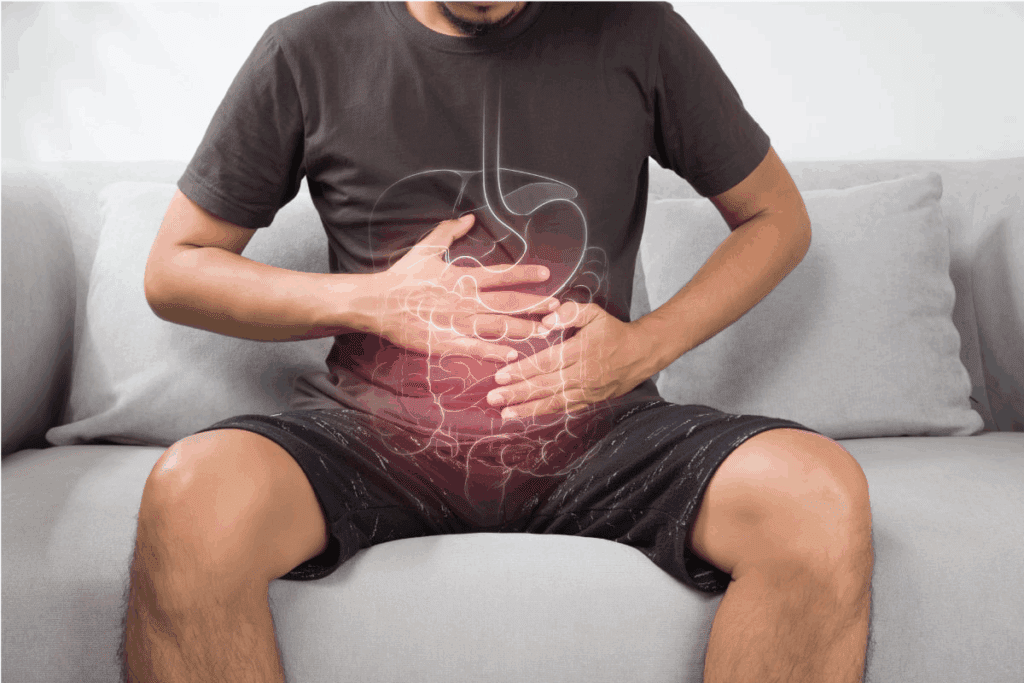
In the world of gallstone diagnosis, imaging is key. It gives insights that help doctors make decisions and care for patients. Finding and understanding gallstones is vital for theright treatment.
Clinical Presentation and When to Image
People with gallstones often have pain in the right upper abdomen, nausea, and vomiting. Imaging is suggested when symptoms point to gallstones or when complications might be present. The choice of imaging depends on the patient’s health, what imaging is available, and the doctor’s suspicion of complications.
Imaging Strategy and Modality Selection
Picking the right imaging modality is important for a correct diagnosis. Ultrasound is often the first choice because it’s very sensitive, doesn’t use radiation, and is affordable. CT and MRI might be used in certain cases, like when complications are thought of or ultrasound results are unclear.
Diagnostic Accuracy Considerations
Diagnostic accuracy is critical in treating gallstones. Accuracy depends on the imaging method, the operator’s skill, and the patient’s condition. Knowing the strengths and weaknesses of each imaging method is key to better diagnosis and care.
Using the right imaging modalities and strategies helps doctors better diagnose gallstones. This leads to better care and outcomes for patients.
CT Gallstones: Appearance and Diagnostic Value
Knowing how gallstones show up on CT scans is key for correct diagnosis and treatment. CT scans give a detailed look at the gallbladder and its contents. This helps doctors spot gallstones and understand their type.
Attenuation Characteristics of Different Stone Types
Gallstones can look very different on CT scans, based on what they’re made of. Calcified stones are very bright because they have a lot of calcium. This makes them stand out on CT images. On the other hand, cholesterol stones are less bright because they have less calcium.
Here’s a quick summary of how gallstones look on CT scans:
- Calcified stones: Hyperdense (high attenuation)
- Cholesterol stones: Hypodense or isodense (low or similar attenuation)
- Mixed stones: Variable attenuation depending on their composition
Calcified vs. Non-calcified Stone Visualization
Only calcified (radiopaque) gallstones show up clearly on CT scans because they’re very bright. Non-calcified stones, like cholesterol stones, are harder to see. This is important when doctors look at CT scans for gallstone disease.
Studies show that CT scans aren’t as good at finding gallstones as ultrasound. This means choosing the right imaging test is very important. It depends on the situation and what the doctor thinks the stones might be like.
Technical Parameters for Optimal Gallstone Detection
To get the best results from CT scans for gallstones, certain settings are important. These include:
- Using thin-section collimation to improve resolution
- Adjusting window settings to enhance contrast between stones and surrounding tissue
- Employing appropriate reconstruction algorithms to reduce noise and improve image quality
By knowing these settings and how different gallstones look, doctors can make CT scans more accurate for diagnosing gallstone disease.
7 Key Imaging Features of Gallstones on CT
CT scans are key in finding gallstones. They show important details that help doctors diagnose and plan treatment. These details help understand the type and complications of gallstones.
1. Hyperattenuating Foci Within the Gallbladder Lumen
One main sign of gallstones on CT is hyperattenuating foci in the gallbladder. These bright spots are calcified stones. They are denser than bile, making them stand out.
2. Hypoattenuating or Isodense Cholesterol Stones
Not all gallstones are bright. Cholesterol stones can look less dense than bile. Their visibility on CT depends on their calcification or cholesterol content.
3. Gallbladder Wall Thickening and Enhancement
Gallbladder wall thickening is a big clue. It might mean inflammation or other issues linked to gallstones. The wall’s reaction to contrast can give more clues about the problem.
4. Pericholecystic Fluid and Inflammatory Changes
Pericholecystic fluid and inflammation around the gallbladder are signs of serious gallstone disease. These signs are easy to spot on CT scans.
The last three features include gallstones in unusual places, signs of blockage, and secondary signs like pancreatitis or bowel obstruction.
Ultrasound Evaluation of Gallstones
Ultrasound is key in finding gallstones. It’s the top choice for spotting gallstones, catching over 90 percent of cases. It does this by looking for certain signs like echogenic foci and posterior acoustic shadowing.
Echogenic Foci with Posterior Acoustic Shadowing
Echogenic foci in the gallbladder, with posterior acoustic shadowing, point to gallstones. This look happens because the stone reflects sound waves well. This reflection blocks sound waves, making a shadow behind the stone.
The Mercedes-Benz Sign and Wall Echo Shadow Sign
Ultrasound can show specific signs of gallstones. The Mercedes-Benz sign shows the cracks in cholesterol stones. The Wall Echo Shadow (WES) sign shows a strong echo from the gallbladder wall, then from the stone, and a shadow after. These signs help doctors be more sure of their diagnosis.
Gravity-Dependent Movement of Stones
Gallstones move with the body’s position because of gravity. This can be seen during an ultrasound. This gravity-dependent movement helps tell stones apart from other gallbladder issues or fake images.
Detection of Small Stones and Technical Considerations
Finding small stones needs careful technique and the right patient setup. Things like bowel gas, body shape, and other gallbladder problems can make ultrasound harder. Using high-frequency probes and adjusting the focus can help spot small stones better.
| Ultrasound Feature | Description | Diagnostic Significance |
| Echogenic Foci | Bright spots within the gallbladder | Indicative of gallstones |
| Posterior Acoustic Shadowing | Dark area behind the echogenic foci | Confirms the presence of a highly reflective surface, such as a gallstone |
| Gravity-Dependent Movement | Movement of stones with changes in patient position | Helps differentiate stones from other lesions |
“Ultrasound is the imaging modality of choice for the diagnosis of gallbladder disease, showing high sensitivity and specificity for finding gallstones.”
— Source: American College of Radiology
X-Ray Findings in Gallstone Disease
The visibility of gallstones on X-ray depends on their calcium content. Only 10-20% of gallstones are visible because they have calcium. This makes X-ray not very useful for finding gallstones.
Radiopaque vs. Radiolucent Gallstones
Gallstones are divided into two types: radiopaque and radiolucent. Radiopaque gallstones show up on X-rays because they have a lot of calcium. On the other hand, radiolucent gallstones are made of cholesterol or other materials and don’t show up.
Knowing the difference between these types helps us understand what X-rays can and can’t do in diagnosing gallstones.
Calcium Content and Visibility Correlation
The amount of calcium in gallstones affects how visible they are on X-rays. Stones with more calcium are more likely to be seen on X-rays. This is important for doctors to know when they think someone might have gallstones.
| Gallstone Type | Calcium Content | X-Ray Visibility |
| Radiopaque | High | Visible |
| Radiolucent | Low | Not Visible |
Plain Film Limitations and Diagnostic Yield
X-rays are not very good at finding gallstones because most are not visible. This means X-rays are not the best choice for diagnosing gallstone disease. But, they might be used in some cases or when other tests are not available.
Porcelain Gallbladder Appearance
A porcelain gallbladder happens when the gallbladder wall gets calcified. This makes it look different on X-rays. It’s often linked to long-term gallbladder problems and can be spotted by its unique X-ray look.
Seeing a porcelain gallbladder on X-ray is important because it means there’s a higher chance of gallbladder cancer.
Advanced Imaging: MRI and MRCP for Gallstone Evaluation
MRI and MRCP give us detailed views of gallstone disease. They help us see the biliary tract clearly. This makes diagnosis more accurate and helps decide on treatments.
Signal Characteristics of Gallstones on Different Sequences
Gallstones show different signals on MRI images. On T1-weighted images, they look darker. On T2-weighted images, they appear as dark spots. This helps us figure out what the stones are made of.
Key signal characteristics include:
- Hypointensity on T1-weighted images
- Signal voids on T2-weighted images
- Variable signal intensity on T1 and T2-weighted images depending on stone composition
MRCP Technique and Optimization
MRCP is a special MRI for the biliary and pancreatic ducts. It uses thick-slab and thin-slab sequences. Thick slabs give a big picture, while thin slabs show details.
The process involves:
- Patient preparation, including fasting to reduce gastrointestinal secretions
- Use of a torso phased-array coil for signal reception
- Acquisition of both thick-slab and thin-slab sequences
Advantages in Biliary Tract Visualization
MRI and MRCP have big advantages for seeing the biliary tract. They give high-resolution images of the bile ducts and gallbladder. This helps spot gallstones and other issues accurately.
Emerging MRI Techniques for Gallstone Characterization
New MRI methods, like diffusion-weighted imaging and quantitative MRI, are being studied. They might tell us more about gallstones. This could help make treatment plans better.
The future of MRI in gallstone evaluation is bright. Ongoing research aims to make these imaging tools even better.
Comparative Analysis of Imaging Modalities for Gallstones
Diagnosing gallstones depends on imaging methods, each with its own benefits and drawbacks. Doctors must pick the best imaging method for each patient. They consider how accurate it is, its cost, how easy it is to get, and how safe it is for the patient.
Sensitivity and Specificity Across Modalities
Each imaging method has different levels of sensitivity and specificity for finding gallstones. Ultrasound is often the first choice because it’s very good at spotting gallstones. It works well for finding stones in the gallbladder.
Cost-Effectiveness and Availability Considerations
The cost and availability of imaging methods are also important. Ultrasound is both affordable and easy to find, making it a great first option. On the other hand, MRI and MRCP are pricier and harder to get, but they show more detail of the biliary tract.
Radiation Exposure and Safety Profiles
How much radiation a method uses is a big deal, mainly for those needing many scans. CT scans use a lot of radiation, while ultrasound and MRI don’t. This makes ultrasound and MRI better for long-term monitoring or for patients at risk from radiation.
Evidence-Based Imaging Algorithm
The best way to image gallstones starts with ultrasound. If there’s a need for more detail or if complications are suspected, CT or MRI/MRCP might be used next. This approach aims to find the right balance between getting accurate results, keeping costs down, and ensuring safety.
Gallstone Complications and Their Imaging Features
Gallstones can lead to serious problems. Imaging is key in spotting these issues early. This helps in managing them before they get worse.
Acute Cholecystitis: Imaging Hallmarks
Acute cholecystitis happens when a stone blocks the cystic duct. Signs include:
- Gallbladder distension
- Wall thickening and enhancement
- Pericholecystic fluid
- Presence of gallstones
Ultrasound is often the first choice. It shows the gallbladder’s swelling, wall thickening, and pericholecystic fluid. CT scans can check how bad the inflammation is and if there are serious issues like gangrene or perforation.
Choledocholithiasis and Biliary Obstruction
Choledocholithiasis happens when a stone blocks the common bile duct. Signs include:
- Dilation of the common bile duct
- Visualization of the obstructing stone
- Potential upstream biliary dilatation
MRCP is great for spotting choledocholithiasis. It gives clear pictures of the biliary tree and the stone.
Gallstone Pancreatitis: Cause and Effect
Gallstone pancreatitis happens when a stone blocks the pancreatic duct. This leads to pancreatitis. Imaging is vital in finding both the pancreatitis and the gallstone disease.
CT scans are used to see how severe the pancreatitis is. Ultrasound and MRCP help find gallstones and blockages.
Gallstone Ileus and Bouveret Syndrome
Gallstone ileus is a rare but serious issue. A large stone erodes into the intestine, causing a blockage. Bouveret syndrome is when a stone blocks the duodenum.
CT scans are used to diagnose these. They show the stone and where it’s blocking. Prompt diagnosis is key to avoid serious problems like bowel ischemia.
Conclusion
Getting gallstones diagnosed and treated right is key to avoiding serious problems. Imaging tests are very important in finding and managing gallstones. Techniques like CT, ultrasound, X-ray, MRI, and MRCP help spot and understand gallstones better.
Choosing the right imaging test depends on several things. These include how the patient feels, what’s available, and what it costs. Knowing what each test can do helps doctors give the best care. This way, they can find and treat gallstones quickly and correctly, lowering the chance of serious issues.
In short, finding gallstones relies a lot on imaging tests. Using each test’s strengths, doctors can help patients get better and manage gallstone disease well.
FAQ
What is the best imaging modality for diagnosing gallstones?
Ultrasound is the top choice for finding gallstones. It’s very accurate and doesn’t use radiation. Plus, it’s easy and doesn’t hurt.
Can gallstones be seen on a CT scan?
Yes, CT scans can spot gallstones, but only certain types. Calcified stones show up well, but cholesterol stones might be harder to see.
What are the characteristic features of gallstones on ultrasound?
Ultrasound makes gallstones look like bright spots in the gallbladder. They also cast shadows and move with gravity.
Are all gallstones visible on X-ray?
No, not all gallstones show up on X-rays. Only calcium stones are visible. The others are invisible.
What is the role of MRI in evaluating gallstones?
MRI, like MRCP, is great for looking at gallstones. It’s good for spotting stones in the bile ducts and checking for blockages.
How do different types of gallstones appear on CT scans?
CT scans show gallstones differently based on their makeup. Calcium stones are bright, while cholesterol stones might look the same as bile.
Can CT scans detect complications associated with gallstones?
Yes, CT scans can find problems like inflammation and blockages. They help doctors see what’s going on inside.
What are the advantages of using ultrasound over CT for gallstone diagnosis?
Ultrasound is better for many reasons. It’s cheaper, doesn’t use radiation, and shows things in real-time. It’s also very good at finding gallstones.
Can MRI detect small gallstones that are not visible on other imaging modalities?
Yes, MRI, like MRCP, is good at finding small gallstones. It can spot stones in the bile ducts that other tests miss.
Reference
Muleta, J., et al. (2024). A rare case of bile leak due to type 2 duct of Luschka injury: Diagnosis and intervention. Journal of Surgical Case Reports. Retrieved from https://academic.oup.com/jscr/article/2024/3/rjae179/7632948