
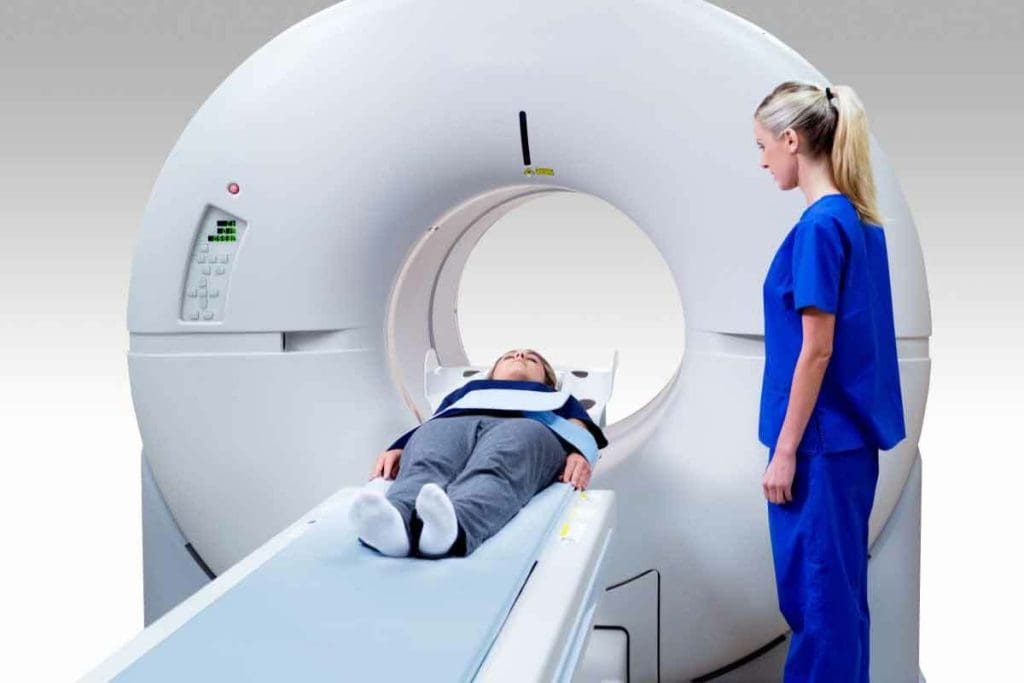
If you’ve been told to get a CT scan neck, you might wonder how long it lasts and what to expect. At Liv Hospital, we always put our patients first, ensuring your test is both comfortable and accurate.
A CT scan neck uses special X-rays to create detailed images of the neck area. This non-invasive test helps doctors check the cervical spine, thyroid gland, lymph nodes, and nearby tissues. It’s often used to detect issues like infections, tumors, or injuries.
We understand that getting a CT scan neck can feel stressful, so our expert team provides top-quality care and full support for all patients, including those traveling from abroad.
Key Takeaways
- Understand the purpose and benefits of a CT scan of the neck.
- Learn how to prepare for the procedure.
- Discover what to expect during the CT scan.
- Find out how long the test typically takes.
- Get insights into the diagnostic results and next steps.
Understanding CT Scan of the Neck
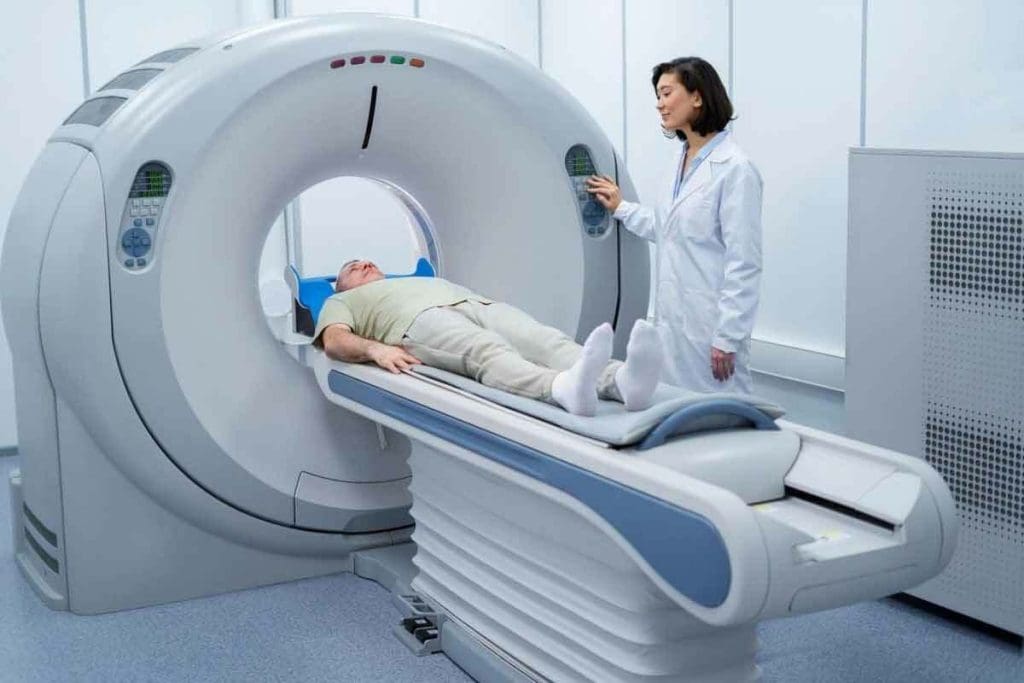
A CT scan of the neck is a high-tech tool that shows detailed images of the neck. It’s great for checking on tumors, infections, and blood vessel problems.
What is a CT Scan Neck?
A CT scan of the neck uses computers and X-rays to make detailed pictures. It’s key for finding issues in the neck, spine, lymph nodes, throat, and blood vessels. CT scans are special because they show bones, soft tissues, and blood vessels clearly.
When you get a CT scan of the neck, you lie on a table that moves into a big, doughnut-shaped machine. The machine takes X-rays from many angles. Then, it makes detailed pictures of your neck.
How CT Scans Differ from Other Imaging Tests
CT scans are different from MRI or ultrasound. MRI is great for soft tissues, but CT scans are better for bones and calcifications. Ultrasound uses sound waves and is good for looking at the thyroid or other surface areas in the neck.
Which imaging test you get depends on what’s being checked. For example, a CT scan with contrast for neck imaging shows blood vessels and some lesions better than a non-contrast CT scan.
| Imaging Test | Best for Imaging | Use Cases |
| CT Scan | Bones, calcifications, and detailed vascular structures with contrast | Diagnosing tumors, infections, vascular diseases, and assessing injuries |
| MRI | Soft tissues, including nerves and organs | Evaluating soft tissue injuries, tumors, and certain neurological conditions |
| Ultrasound | Superficial structures like thyroid nodules | Assessing thyroid conditions, guiding needle biopsies |
Knowing what each imaging test is good for helps doctors pick the right one. A CT scan of the throat or neck is great for detailed neck images.
The CT Scan Neck Procedure: Overview and Technology
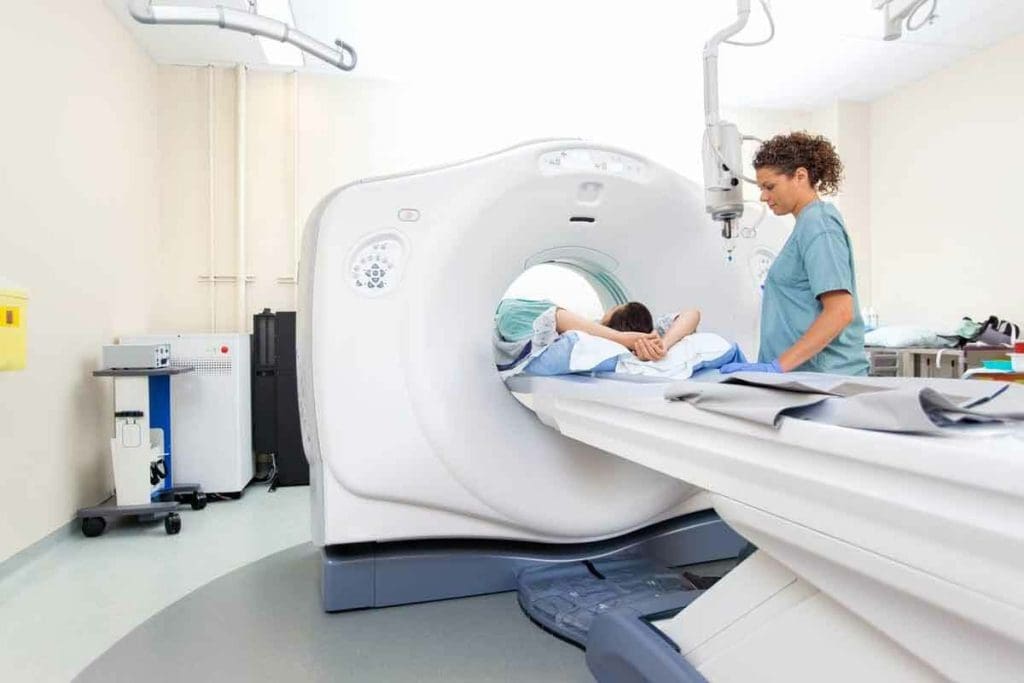
Understanding CT scans is key to their role in medical diagnostics, like neck imaging. We use top-notch CT imaging tech to get clear images. These images help us spot different health issues.
How CT Imaging Technology Works
CT imaging tech uses X-rays to show the body’s inside parts. It takes many images from different angles. Then, it makes cross-sectional images.
This tech lets us see the neck’s bones, blood vessels, and soft tissues.
Types of CT Scanners Used for Neck Imaging
There are many CT scanners for neck imaging, from old to new models. The latest scanners, like multi-detector CT (MDCT) scanners, give clearer images faster. They’re great for detailed neck scans.
Radiation Exposure Considerations
CT scans involve X-rays, but the benefits often outweigh the risks. We aim to use the least amount of radiation needed. This way, we get good images without too much exposure.
| CT Scanner Type | Resolution | Scanning Time | Radiation Dose |
| Traditional CT | Standard | Moderate | Moderate |
| Multi-Detector CT (MDCT) | High | Fast | Variable |
| High-Resolution CT | Very High | Fast | Higher |
The Duration of a CT Scan Neck Procedure
A CT scan of the neck is quick. But, several things can change how long it takes. Knowing what to expect can help you feel less anxious and make the process smoother.
Typical Timeframes for Standard Neck CT Scans
The scan time for a standard neck CT scan is usually 5 to 20 minutes. This can change a bit based on the technology and the imaging center’s rules. You’ll lie on a table that moves into the CT scanner. You must stay very quiet to get clear pictures.
Factors That May Extend Scan Duration
Several things can make your visit longer. These include:
- The need for contrast agents, which may require extra time to prepare and give.
- The scan’s complexity, like needing more sequences or checking a bigger area.
- Preparation time, like getting ready, changing clothes, and getting instructions.
Even though the scan itself is short, you might spend more time at the imaging center. Plan for at least 30 to 60 minutes for everything. This includes getting ready and the actual scan.
CT Scan With Contrast for Neck: Benefits and Considerations
When you get a neck CT scan with contrast, it makes some tissues and blood vessels show up better. Contrast agents are special substances that make things stand out more in medical images. They’re key for spotting important details in CT scans.
Understanding Contrast Agents in Neck Imaging
Contrast agents are vital for better CT scan results. They help doctors see different tissues and problems clearly. In neck scans, they make blood vessels, tumors, and other issues easier to see.
Iodine-based agents are the top choice for CT scans. They’re given through an IV before the scan. Whether or not to use contrast depends on what the scan needs to find.
When Contrast is Necessary for Neck CT Scans
Not every neck CT scan needs contrast. It depends on what the doctor wants to find. Contrast is usually needed for tumors, abscesses, or blood vessel problems. It helps doctors see how far a disease has spread and plan treatments.
How Contrast Affects Procedure Duration and Results
Adding contrast makes the scan a bit longer because of the agent’s preparation time. But the actual scan time stays about the same. The benefits of contrast far outweigh the extra time, making the scan more accurate.
Scans with contrast give doctors more detailed and useful information. This helps them make better diagnoses and treatment plans. We make sure contrast is used wisely to get the most benefits with the least risks.
Preparing for Your CT Scan of the Neck
Before getting a CT scan of the neck, knowing what to do first is key. Getting ready right helps make sure the scan works well. This is important for finding out what’s wrong and planning how to fix it.
Pre-Scan Instructions and Requirements
To get ready for your neck CT scan, your doctor will tell you what to do. You might need to arrive early to fill out forms. Also, take off any jewelry or metal things that could mess with the scan. And, wear clothes that are easy to move in.
Doctors say, “Getting ready right is important for a good scan.” By following these steps, your CT of neck will go smoothly.
Dietary Restrictions Before a Neck CT
If your CT neck scan uses contrast dye, you might need to not eat for a few hours. This is to keep the dye working right. Your doctor will tell you what to eat or drink, so listen carefully.
- Don’t eat or drink anything except water for the time before the scan.
- Tell your doctor about any food allergies or special diets you follow.
Medication Considerations and Allergies
Tell your doctor about all the medicines you’re taking. Also, share any allergies you have, like to contrast dye or iodine. Some medicines might need to be changed or stopped before the scan.
“It’s always better to err on the side of caution when it comes to disclosing medical information before a procedure.”
By telling your doctor about your health and following their instructions, you help make the CT scan of the neck safe and effective.
What to Expect During a CT Scan of Neck
Knowing what happens during a CT scan of the neck can ease your worries. We’ll explain the process from start to finish. This way, you’ll feel comfortable and know what’s happening.
Before Entering the Scanning Room
Before starting the CT scan on neck, you’ll need to remove jewelry, glasses, and other items. You might also have to wear a hospital gown. Our team will help you get ready to make sure you’re safe and comfortable.
Positioning and Equipment Setup
In the scanning room, you’ll lie on a table that slides into the CT scanner. The technologist will help you get into position, usually on your back. They might use straps or pillows to keep you steady.
The CT scanner is a big, doughnut-shaped machine. It moves around you, taking pictures of your neck from different angles.
Physical Sensations During the Procedure
During the CT scan neck with or without contrast, you might feel the table move into the scanner. You’ll hear sounds as the machine works. The scan itself is painless, but you might feel cool if dye is used.
We’ll talk to you through an intercom to keep you comfortable.
Communication with Technologists During the Scan
Throughout the CT scan on the neck process, you’ll talk to the technologist. They’ll tell you when to hold your breath or stay very quiet. If you’re uncomfortable, let them know. They’ll adjust things to make you more comfortable.
Understanding the CT scan neck scan process helps you prepare. It makes the experience smoother and less stressful.
After Your CT Scan Neck: Recovery and Results
After your CT scan of the neck, you can usually go back to your normal activities right away. This is unless you had sedation. If you did, you might need someone to help you get home and watch over you while you recover.
Immediate Post-Scan Experience
Right after your CT scan with contrast of the neck, you can start your day again. You might feel a metallic taste or warmth from the contrast dye. These feelings are short-lived and will go away by themselves.
If you had a neck CT scan without contrast, you can go back to your day without any limits. Our medical team will give you specific instructions based on your needs and the scan type.
When and How You’ll Receive Results
The images from your CT scan, neck contrast or non-contrast CT scan will be checked by a radiologist. Your healthcare provider will then talk to you about the results. How long it takes to get your results depends on how urgent your case is and your healthcare facility’s policies.
Usually, you’ll get your results a few hours to a few days after your scan. If it’s an urgent case, you might get your results faster.
| Result Timeline | Description |
| Urgent Cases | Results available within a few hours |
| Non-Urgent Cases | Results available within a few days |
Follow-up Recommendations
After your ct scan of throat or neck, your healthcare provider will tell you what to do next. This could be more tests, seeing specialists, or treatments.
It’s important to follow your healthcare provider’s advice. This ensures you get the right care and address any health issues found during your CT scan.
We know getting a CT scan can be stressful. We’re here to support you every step of the way. If you have questions or worries about your results or what to do next, talk to your healthcare provider.
Medical Conditions Diagnosed with CT Scan of the Throat and Neck
A CT scan of the neck is a key tool for finding medical issues in the neck area. It helps us see tumors, infections, or injuries. This information is vital for treating these problems.
Tumors and Abnormal Growths
CT scans are great for spotting tumors and growths in the neck. They show us the size, location, and how far these growths have spread. This helps our team decide the best treatment.
Infections and Inflammatory Conditions
CT scans also find infections and inflammation in the neck, like abscesses or cellulitis. They help us see how big these problems are. This lets us create a treatment plan that fits the patient’s needs.
Trauma and Injuries
When the neck is injured, a CT scan shows us how bad it is. It helps us see fractures, dislocations, or injuries to soft tissues. This info is key for emergency care and future treatment.
Using CT scans of the neck, we can accurately find and treat many neck problems. This leads to better health outcomes for our patients.
FAQ
How long does a CT scan of the neck typically take?
A CT scan of the neck usually takes 5 to 20 minutes. But, you might spend more time at the imaging center. This is because of preparation and other factors.
What is the difference between a CT scan with contrast and without contrast for neck imaging?
A CT scan with contrast uses a special agent to make certain areas clearer. Without contrast, the scan doesn’t use this agent. The choice depends on what the scan needs to see.
How should I prepare for a CT scan of the neck?
Before a CT scan, you might need to follow a special diet or avoid certain medicines. Tell your doctor about any allergies. We’ll give you all the details you need to prepare safely and get the best images.
Will I experience any physical sensations during the CT scan?
During the scan, you might feel like you’re lying there for a while or hear the scanner. If contrast is used, you might feel warm or taste something metallic. Our team will help you feel as comfortable as possible.
Can I resume my normal activities after the CT scan?
Yes, you can usually go back to your normal routine right after the scan. Unless your doctor tells you differently, there’s no special recovery needed.
How will I receive the results of my CT scan?
The radiologist will review your scan images. Then, your doctor will talk to you about the results. How long it takes to get your results depends on how urgent your case is and your doctor’s policies.
What medical conditions can be diagnosed using a CT scan of the neck and throat?
CT scans can spot tumors, infections, and injuries in the neck and throat. They give doctors clear images to diagnose these conditions accurately.
Is there any radiation exposure during a CT scan of the neck?
Yes, CT scans use X-rays, which are a type of radiation. But, the dose is controlled to keep you safe while getting good images.
How do CT scans differ from other imaging tests like MRI or ultrasound?
CT scans are great for seeing bones, blood vessels, and soft tissues in the neck. They offer detailed images that MRI or ultrasound can’t match. This makes them useful for diagnosing many neck conditions.
References
- Fedorov, A., et al. (2019). Neck CT Imaging: Protocols and Clinical Applications. Radiology Assistant.https://radiologyassistant.nl/chest/neck-ct-scan
- Mayo-Smith, W. W., & Hara, A. K. (2010). Technical considerations and radiation dose in neck CT scanning. Journal of the American College of Radiology, 7(7), 509-515.https://www.ncbi.nlm.nih.gov/pmc/articles/PMC2921722/