
Finding brain tumors early is key to good treatment. When symptoms show up, imaging tests are very important. Two main tests are Computed Tomography (CT) scans and Magnetic Resonance Imaging (MRI).
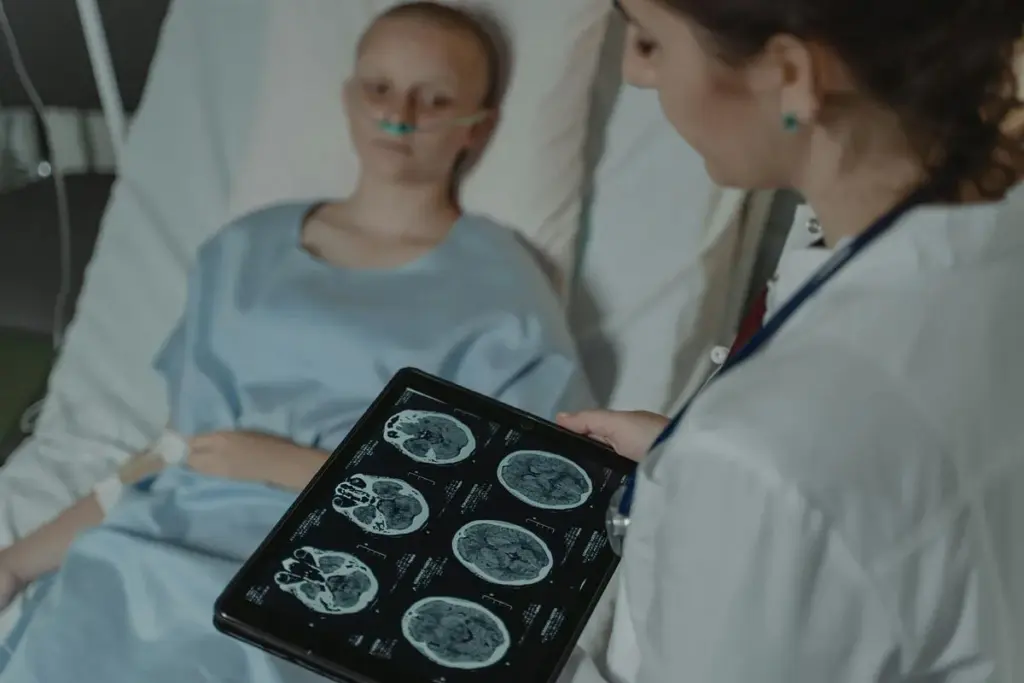
A CT scan uses X-rays to show detailed brain images. It helps spot tumors and other issues. In contrast, MRI uses magnetic fields and radio waves for high-quality images. Each method has its own strengths and is used in different situations.
This article will look at how CT scans find brain tumors. We’ll compare them with MRI. We’ll also talk about why picking the right test is important.
Key Takeaways
- CT scans use X-rays to detect brain tumors and abnormalities.
- MRI provides high-resolution images using magnetic fields and radio waves.
- The choice between CT scan and MRI depends on the specific diagnostic needs.
- Early detection of brain tumors is critical for effective treatment.
- Imaging techniques play a vital role in diagnosing brain tumors.
What Are Brain Tumors and Why Early Detection Matters
Early detection of brain tumors can greatly improve treatment outcomes. Brain tumors can be benign or malignant, posing a significant challenge in diagnosis and treatment. Understanding these tumors is key to better patient care and survival rates.
Types of Brain Tumors
Brain tumors are divided into primary and secondary types. Primary tumors start in the brain, while secondary tumors spread from other parts of the body. Gliomas, meningiomas, and acoustic neuromas are common primary brain tumors.
|
Type of Tumor |
Origin |
Malignancy |
|---|---|---|
|
Gliomas |
Glial cells |
Can be benign or malignant |
|
Meningiomas |
Meninges |
Usually benign |
|
Acoustic Neuroma |
Acoustic nerve |
Benign |
Signs and Symptoms That Prompt Brain Imaging
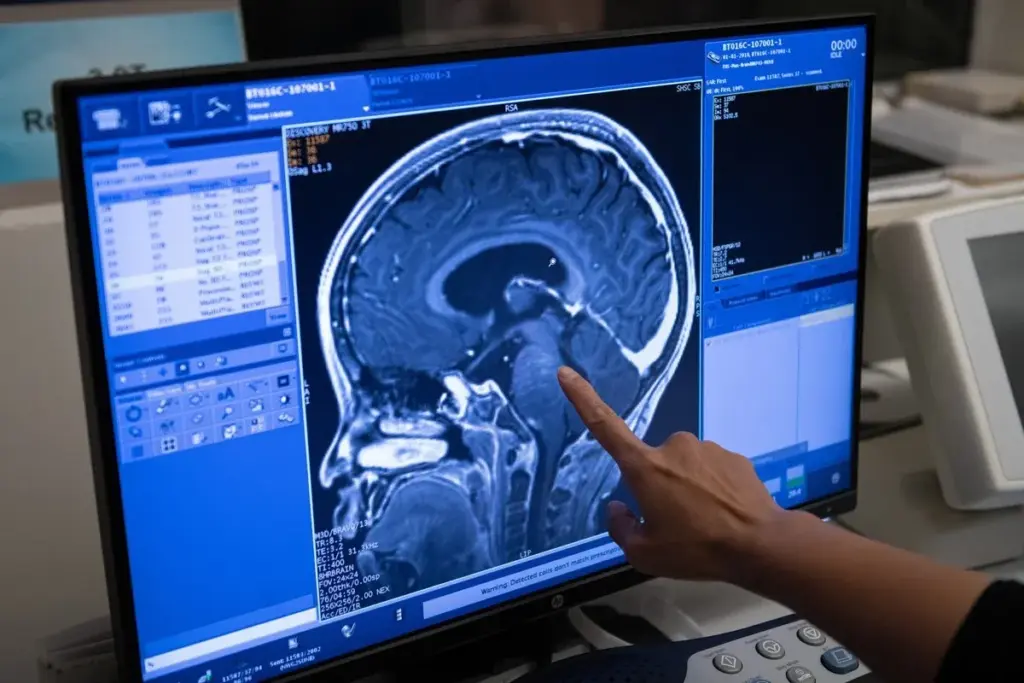
Symptoms of brain tumors vary based on the tumor’s location, size, and type. Common symptoms include headaches, seizures, blurred vision, and difficulty with speech or balance. Doctors often recommend brain imaging tests, like CT scans or MRI, when these symptoms appear.
“The earlier we detect brain tumors, the better our chances of effective treatment and improved patient outcomes.” – A Neurologist
The Critical Role of Timely Diagnosis
Timely diagnosis of brain tumors is essential. It allows for the start of effective treatment plans, improving patient outcomes. Early detection also reduces complications and enhances patient quality of life. A CT scan can detect various abnormalities, including tumors, guiding further diagnostic procedures.
Understanding what a CT scan can detect is vital for patients and healthcare providers. A CT scan is useful in emergencies, providing quick and accurate information about tumors or brain abnormalities. Knowing what a CT scan will show helps in planning the next steps in diagnosis and treatment.
How CT Scans Work in Brain Imaging
Understanding CT scans is key to seeing their value in brain imaging. They use X-rays to make detailed images of the brain. This helps doctors diagnose many brain conditions.
The Science Behind Computed Tomography
CT scans work by using X-rays from different angles around the body. The scanner then turns these X-rays into images. This lets doctors see inside without surgery.
Key parts of a CT scanner include the gantry and the table. The gantry has the X-ray tube and detectors. The table moves through the gantry. X-rays pass through the brain, and detectors capture what’s left, showing the brain’s inside.
CT Scan Procedure for Brain Examination
The CT scan process for the brain is simple. Patients lie on a table that slides into the scanner. The scanner takes X-ray images from many angles. It’s quick, usually just a few minutes.
During the scan, patients must stay very quiet. This helps get clear images. Sometimes, a contrast agent is used to make certain brain areas clearer.
Evolution of CT Technology for Neuroimaging
CT technology has grown a lot over time. Today’s scanners make clearer images faster. New technologies like spiral CT and multi-detector CT have made CT scans better for brain imaging.
CT technology keeps getting better. The goal is to use less radiation and make images even clearer. These changes help doctors diagnose better and keep patients safer.
Can a CT Scan Detect a Brain Tumor?
Using CT scans to find brain tumors is a detailed process. It involves knowing what CT scans can and can’t do. CT scans use X-rays to show detailed images of the brain. This helps spot tumors.
Detection Capabilities and Accuracy Rates
CT scans can spot many brain tumors. But, how well they do it depends on the tumor’s size, where it is, and what kind it is. Big tumors are easier to see than small or low-grade ones. The success rate of CT scans in finding tumors varies, with some studies showing high success for certain tumors.
The tech used also plays a role. Newer CT scanners with better software and hardware can show smaller tumors more clearly.
Types of Brain Tumors Visible on CT Scans
CT scans can show different types of brain tumors, like meningiomas, gliomas, and metastatic tumors. How well they show these tumors depends on how different they are from the brain tissue around them. Tumors that are much denser or less dense than the brain are easier to spot.
- Meningiomas are often seen because of their unique density and how they react to contrast.
- Gliomas can be spotted, mainly if they are high-grade or have dead areas.
- Metastatic tumors are usually seen, mainly if they are big or there are many of them.
Limitations in Brain Tumor Detection
Even though CT scans are helpful, they have their limits. Small or low-grade tumors might not show up, and this is true for tumors in hard-to-image areas like the posterior fossa. Also, CT scans might not give enough detail to tell different tumors apart or to see how they relate to nearby structures.
Using contrast agents can help make some tumors more visible. But, even with contrast, some tumors might not be seen well or might be hard to tell apart.
CT Scan vs MRI for Brain Tumor Imaging
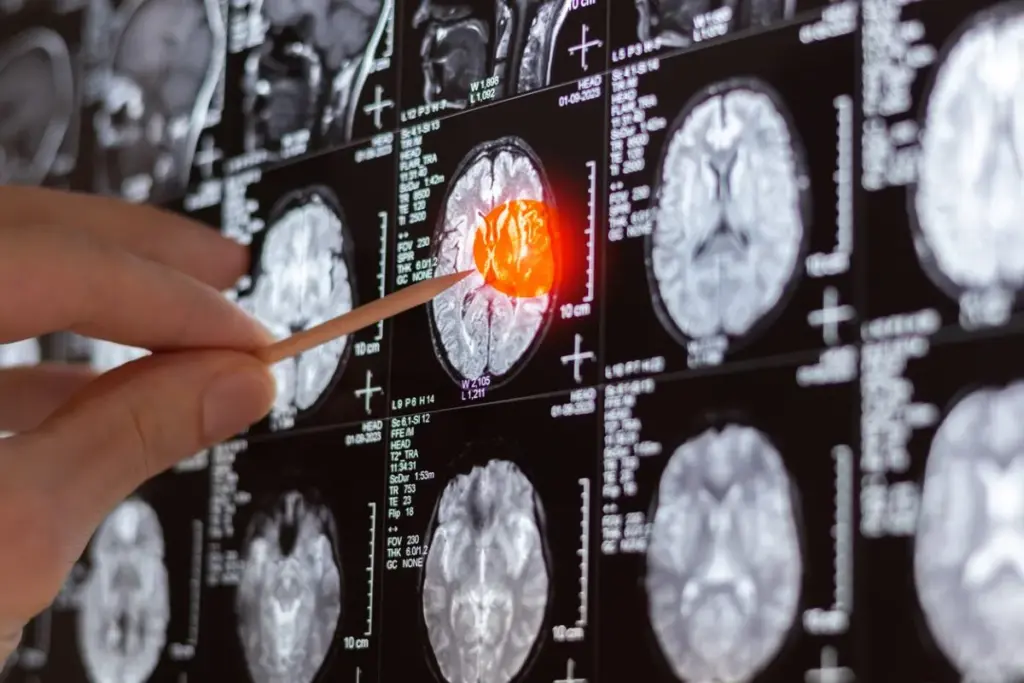
Choosing between a CT scan and an MRI for brain tumor imaging depends on their tech and how well they diagnose. Each has its own strengths and weaknesses. These are key in picking the best tool for the patient’s needs and the situation.
Fundamental Technological Differences
CT scans and MRI work in different ways. CT scans use X-rays to show brain details. MRI uses a strong magnetic field and radio waves for its images. This difference affects how well they spot brain tumors.
Key differences include:
- Imaging Principle: CT scans use X-ray blocking, while MRI uses tissue magnetic properties.
- Contrast Agents: CT scans use iodinated contrast, MRI uses gadolinium-based agents.
- Image Resolution: MRI shows soft tissues better than CT scans.
Comparative Diagnostic Accuracy
MRI is usually better at finding brain tumors because it shows soft tissues well. But, CT scans are good in emergencies because they’re fast.
Diagnostic accuracy considerations:
- Tumor Detection: MRI finds some brain tumors better, like those in the posterior fossa.
- Tumor Characterization: MRI can tell more about tumor types and where they are because of its soft tissue contrast.
- Emergency Situations: CT scans are faster and more available in urgent cases.
Sensitivity and Specificity Comparisons
When we talk about how well CT scans and MRI work, MRI usually wins. It’s better at finding and telling apart brain tumors, thanks to its soft tissue detail.
Key considerations include:
- Sensitivity: MRI is better at spotting soft tissue issues.
- Specificity: MRI can tell more about brain tumors because of its different sequences.
Clinical Decision-Making Between Modalities
Choosing between CT scans and MRI for brain tumors depends on the patient’s health, the tumor type, and if it’s an emergency.
Clinical decision-making factors:
|
Clinical Scenario |
Preferred Modality |
Rationale |
|---|---|---|
|
Emergency/Acute Setting |
CT Scan |
Rapid, widely available |
|
Soft Tissue Tumor |
MRI |
Best soft tissue contrast |
|
Initial Screening |
CT Scan or MRI |
Depends on the situation and patient |
Advantages of CT Scans for Brain Imaging
CT scans are great for brain imaging, mainly in emergencies. They are quick and effective for diagnosing brain issues.
Speed and Accessibility Benefits
CT scans are fast, taking just a few minutes. This is perfect for urgent cases where quick diagnosis is key. They are also common in hospitals and clinics, making them easy to get.
Quick turnaround times help doctors make fast decisions. This is very important in emergency situations where every second counts.
Cost-Effectiveness Analysis
CT scans are cheaper than MRI scans. This makes them a good choice for both patients and healthcare providers. They are accurate for many brain imaging needs without being too expensive.
A study showed CT scans are much cheaper than MRI scans. This makes them more available for more people.
Suitability for Emergency Situations
In emergencies, CT scans are very helpful. They quickly check for serious injuries like brain bleeding or skull fractures. This quick access to images helps doctors make quick, informed decisions.
“CT scans are very useful in trauma cases where every minute counts. They provide critical information that guides immediate treatment decisions.”
Patient Comfort Considerations
CT scans involve some radiation but are usually comfortable for patients. They are non-invasive and don’t keep patients in a small space for long. This is unlike some other imaging methods.
For those who might feel claustrophobic or uncomfortable during long tests, CT scans are a better option. They are shorter, making them more comfortable.
Limitations of CT Scans in Brain Tumor Diagnosis
CT scans are useful in medical imaging but have limits in diagnosing brain tumors. It’s important for doctors and patients to know these limits. This helps in making the right choices for tests.
Soft Tissue Contrast Challenges
CT scans can’t show soft tissues clearly. Brain tumors, being soft tissue, are hard to see on CT scans. This soft tissue contrast challenge makes it tough to tell if a tumor is there or how big it is.
Radiation Exposure Concerns
CT scans use X-rays, which means they expose patients to ionizing radiation. This is a worry, mainly for those needing many scans. The risk of harm from radiation is low but is something to think about when choosing between CT and MRI.
Small Tumor Detection Difficulties
CT scans might miss small brain tumors or those in hard-to-image spots. The resolution limits of CT tech make spotting small tumors hard. This could lead to a late diagnosis.
Posterior Fossa Imaging Limitations
The posterior fossa, at the brain’s base, is hard to image with CT scans. The bone around it causes artifacts, leading to poor image quality. This makes it hard to accurately diagnose tumors in this area.
In summary, CT scans are good but have big limits in finding brain tumors. These include problems with soft tissue, radiation risks, finding small tumors, and imaging the posterior fossa. Knowing these limits helps pick the best test for each patient.
MRI Technology for Brain Tumor Detection
MRI technology is key in finding and understanding brain tumors. It gives detailed pictures that help doctors make decisions. MRI is better than CT scans because it shows soft tissues clearly. This is important for seeing the brain’s details and finding tumors.
How Magnetic Resonance Imaging Works
MRI uses a strong magnetic field and radio waves to create brain images. It aligns hydrogen nuclei in the body with the magnetic field. Then, radio waves disturb these nuclei, creating signals for detailed images.
MRI is great at showing different soft tissues. This makes it perfect for finding and understanding brain tumors. Its high sensitivity and specificity help doctors know the tumor’s size, location, and type.
Types of MRI Sequences for Brain Tumors
There are several MRI sequences for brain tumor imaging. Each one gives unique information. These include:
- T1-weighted images, which show detailed anatomy and are useful after contrast.
- T2-weighted images, which are good for seeing changes in tissue water, like edema and tumor.
- FLAIR sequences, which help spot lesions near CSF spaces by suppressing fluid signals.
- Diffusion-weighted imaging, which can find acute ischemia and tell about tumor cellularity.
Advanced MRI techniques also help a lot. These include:
Advanced MRI Techniques
- Perfusion-weighted imaging, which looks at tumor vascularity and blood flow.
- Magnetic Resonance Spectroscopy (MRS), which gives metabolic info about the tumor.
- Functional MRI (fMRI), which maps brain function and is key for surgery planning.
- Diffusion Tensor Imaging (DTI), which shows white matter tracts and their relation to the tumor.
These advanced methods improve tumor detection and help in treatment planning. MRI technology helps doctors give accurate diagnoses and create targeted treatments for brain tumor patients.
MRI Advantages Over CT in Brain Tumor Diagnosis
MRI is better than CT scans for brain tumor diagnosis. It gives more detailed and accurate information.
Superior Soft Tissue Contrast
MRI beats CT scans in showing soft tissues clearly. This is key for accurate diagnosis and treatment planning.
MRI can tell apart different soft tissues because of its sensitivity. It shows high-quality images. These images help identify the tumor’s size, location, and how it affects the brain.
Multiplanar Imaging Capabilities
MRI can image in multiple planes. This is great for complex structures and tumor locations. The multiplanar capability improves diagnosis by giving a full view of the tumor and brain structures.
|
Imaging Modality |
Soft Tissue Contrast |
Multiplanar Imaging |
Radiation Exposure |
|---|---|---|---|
|
MRI |
Excellent |
Yes |
No |
|
CT Scan |
Limited |
Limited |
Yes |
Absence of Radiation Exposure
MRI doesn’t use ionizing radiation like CT scans do. This makes it safer, which is great for patients needing many scans. The absence of radiation is a big plus, mainly for young patients or those already exposed to radiation.
Tumor Characterization Abilities
MRI can also better understand brain tumors. It uses different sequences to see the tumor’s nature, like its grade and type. This info is vital for treatment planning.
In summary, MRI has many benefits over CT scans for brain tumor diagnosis. It offers better soft tissue contrast, multiplanar imaging, no radiation, and better tumor understanding.
When Doctors Choose CT Over MRI for Brain Imaging
While MRI is very sensitive, doctors often pick CT scans for their quickness and ease of use in urgent cases. This choice is based on several important factors that doctors consider when deciding on imaging tests.
Emergency and Acute Situations
In emergency cases like brain injuries or strokes, CT scans are usually the first choice. They are fast and easy to get, which is key in urgent situations. CT scans can quickly give vital information that helps doctors make quick treatment plans.
“In acute stroke cases, every minute counts, and CT scans help us make timely decisions about administering clot-busting treatments,” says A neurologist at a leading medical center.
Patient-Specific Contraindications for MRI
Some patients can’t have MRI because of metal implants, pacemakers, or severe fear of being in a small space. For these patients, CT scans are a good alternative for brain imaging. CT scans can be very helpful for those who can’t have MRI.
Initial Screening Protocols
At the start, CT scans are often used because they can quickly spot big problems like bleeding or tumors. This first check can then lead to more detailed tests, like MRI, for a closer look.
Follow-up Imaging Strategies
CT scans might also be used for follow-ups, like checking after surgery or tracking certain conditions. But, whether to use CT or MRI for follow-ups depends on the patient’s situation and what’s needed for the check-up.
Choosing CT over MRI for brain imaging involves looking at how urgent the situation is, the patient’s safety, and what’s needed for diagnosis. By understanding these points, doctors can make the best choices for their patients.
The Brain Scan Process: Patient Experience
Learning about the brain scan process can help reduce anxiety for those going through it. A brain scan is a key tool for doctors to check brain health and find problems early.
Preparation for Brain Imaging
Before a brain scan, patients get instructions on how to prepare. They might need to remove metal items and wear a hospital gown. It’s also important to tell the doctor about any health issues or allergies. Getting ready properly is important for a smooth scan.
At times, a contrast agent is used to make the scan clearer. If this is needed, patients will be told and given instructions. This might include fasting or avoiding certain medicines.
During the Procedure: What to Expect
During the scan, patients lie on a table that moves into the machine. The scan is usually painless, but some might feel claustrophobic. Technicians are there to help and answer questions.
The scan takes 15 to 30 minutes, depending on the type and purpose. Patients can talk to the technician through an intercom, making sure they’re comfortable.
Post-Scan Follow-up and Results Timeline
After the scan, patients can usually go back to their normal activities. The images are then checked by a radiologist. They give the results to the patient’s doctor.
How long it takes to get the results varies. But patients are usually told within a few days. Sometimes, results come faster, like in emergencies. It’s important to talk to your doctor about the results and what comes next.
Interpreting Brain Scan Results
Radiologists are key in checking brain scans for tumors and other issues. They are experts in finding out if there’s a tumor, how big it is, and where it is.
How Radiologists Analyze Brain Images
Radiologists use top-notch imaging methods to study brain scans. They look for any oddities, like tumors, and study their details.
- They search for any changes in brain structure or tissue density.
- Contrast agents help make certain areas more visible.
- Radiologists compare images from different angles and sequences.
Common Findings and Their Clinical Significance
Brain scans often show tumors, cysts, and vascular issues. The importance of these findings depends on their type and how they affect the brain.
Clinical significance depends on the size, location, and type of the abnormality.
The Role of Contrast Agents in Tumor Detection
Contrast agents are used to make body structures or fluids more visible in medical imaging. In brain tumor detection, they help tumors show up better by contrasting them with the surrounding tissue.
Multidisciplinary Approach to Interpretation
Interpreting brain scan results requires a team effort. This team includes radiologists, neurologists, neurosurgeons, and other healthcare experts. They work together to offer complete care.
The team goes over the imaging results, talks about the findings, and decides on the best treatment. They consider the patient’s overall health and medical history.
Complementary Diagnostic Techniques
Techniques like PET scans, functional MRI, and biopsy give key details for diagnosing and treating brain tumors. They work with CT and MRI scans to better spot and understand brain tumors.
PET Scans and Nuclear Medicine
PET scans are key in studying brain tumors. They show how active the tumor is by using special tracers. This helps tell if a tumor is coming back or if it’s just damaged from treatment.
“PET scans have revolutionized the field of neuro-oncology by providing metabolic information that complements anatomical data from CT and MRI scans.”
18F-FDG is a common tracer for brain tumor imaging. It finds areas with high glucose, which is often in cancer cells. Other tracers like 11C-methionine and 18F-FET help see how big the tumor is and plan treatments.
|
PET Tracer |
Application |
|---|---|
|
18F-FDG |
Assessing glucose metabolism in tumors |
|
11C-methionine |
Evaluating tumor extent and protein synthesis |
|
18F-FET |
Detecting tumor recurrence and assessing tumor metabolism |
Functional MRI Applications
Functional MRI (fMRI) is a non-invasive way to see brain activity. It’s great for planning surgery by showing where important brain areas are.
fMRI helps find out which brain parts are key for things like talking, moving, and feeling. This info helps doctors avoid harming these areas during surgery.
Biopsy: The Definitive Diagnosis
Even with new imaging, biopsy is the best way to know what a brain tumor is. It takes a small piece of tumor tissue for a detailed look.
Knowing the tumor’s type and how aggressive it is helps decide the best treatment. Stereotactic biopsy makes this process safer and more accurate.
Integrated Diagnostic Approaches
Today, diagnosing brain tumors often uses a mix of imaging and tests. This approach makes diagnosis more accurate and helps tailor treatments.
Using CT, MRI, PET scans, fMRI, and biopsy together gives a full picture of the tumor. This helps doctors plan the best treatment for each patient.
Future Developments in Brain Tumor Imaging
New technologies are changing brain tumor imaging. These advancements aim to make diagnosis more accurate and efficient. They also focus on tailoring treatments to each patient.
Artificial Intelligence in Image Analysis
Artificial Intelligence (AI) is transforming medical imaging, including brain tumor diagnosis. AI quickly and accurately analyzes complex data. This helps doctors spot tumors early.
Machine learning techniques help find small changes in brain images. This boosts the accuracy of diagnoses.
AI also helps in understanding tumor types and grades. This information is key for planning treatments.
Hybrid Imaging Technologies
Hybrid imaging combines different methods to give detailed tumor information. Techniques like PET-CT and PET-MRI are vital in neuro-oncology. They offer both structure and function details.
Hybrid imaging is great for checking tumor metabolism and viability. This is essential for planning and monitoring treatments.
Molecular and Metabolic Imaging Advances
New molecular and metabolic imaging techniques offer deeper insights into brain tumors. Functional MRI and magnetic resonance spectroscopy help assess tumor metabolism and treatment response.
These advancements lead to more personalized care. Doctors can now tailor treatments to fit each patient’s needs.
Personalized Imaging Protocols
The future of brain tumor imaging is in personalized medicine. New imaging technologies make personalized imaging protocols possible. These protocols are tailored to each patient’s needs.
Personalized imaging improves diagnosis and patient outcomes. It ensures the right imaging techniques are used for each case.
Insurance Coverage and Cost Considerations for Brain Scans
Understanding the costs of brain imaging tests is key in the diagnostic process. Patients worried about a brain tumor diagnosis often worry about the expenses of CT and MRI scans.
Typical Costs of CT vs MRI Brain Scans
The prices of CT and MRI scans vary a lot. This depends on where you are, the facility, and your insurance. Generally, CT scans are cheaper than MRI scans.
A study in the Journal of the American College of Radiology found that CT scans cost between $200 and $1,000. MRI scans can cost from $400 to $3,500.
“The cost difference between CT and MRI scans is big. Knowing these costs helps patients make smart choices about their care,” says A radiologist at a top medical center.
Insurance Coverage Patterns in the United States
Insurance for brain scans varies a lot. Most plans cover CT and MRI scans when they’re needed. But, how much you pay out of pocket can change a lot.
- Medicare and Medicaid often help pay for brain scans.
- Private insurance can cover differently and might need prior approval.
- Some plans might charge more for MRI scans than CT scans.
Patient Advocacy and Financial Assistance Resources
Patients struggling with brain scan costs can find help. Many groups and non-profits offer advice on insurance and financial aid.
Key resources include:
- National Brain Tumor Society: Helps patients with brain tumors.
- American Cancer Society: Offers financial help and resources for cancer patients, including those with brain tumors.
- Local non-profits: Many offer financial aid for diagnostic tests.
Navigating Prior Authorization Requirements
Prior approval is often needed for insurance to cover tests like CT and MRI scans. Patients and doctors must work together to send the right documents to the insurance.
Tips for navigating prior authorization:
- Know your insurance policy’s prior approval rules.
- Work with your doctor to get the needed documents.
- Check with your insurance to make sure your request is processed on time.
By understanding brain scan costs and using available resources, patients can better handle the diagnostic process. This way, they can focus on getting the care they need.
Conclusion
In conclusion, finding out if someone has a brain tumor often uses imaging like CT scans and MRI. Which one to use depends on how fast you need the scan, the patient’s health, and what the tumor looks like.
CT scans are quick and easy to get, but MRI shows more detail and is better for soft tissues. Knowing what each can do is key to making the right diagnosis.
Choosing between CT scan or MRI should be based on what’s best for the patient. This means looking at the patient’s needs and what the tumor might be. Using the right imaging helps doctors make better diagnoses and plans for treatment.
FAQ
What is the difference between a CT scan and an MRI for brain tumor detection?
A CT scan uses X-rays to show the brain’s images. An MRI uses a strong magnetic field and radio waves. MRI is better for soft tissue, like tumors, but CT scans are quicker and easier to get.
Can a CT scan detect a brain tumor?
Yes, CT scans can find brain tumors. But, it depends on the tumor’s size, location, and type. Larger tumors are easier to spot, while smaller ones might be missed.
What are the advantages of using a CT scan over an MRI for brain imaging?
CT scans are faster, more common, and cheaper than MRI. They’re good for emergencies and people with metal implants or claustrophobia.
What are the limitations of CT scans in detecting brain tumors?
CT scans can miss small tumors or those in hard-to-reach areas. They also use radiation.
How does MRI compare to CT scans in terms of diagnostic accuracy for brain tumors?
MRI is more accurate than CT scans for soft tissue tumors. MRI shows better contrast between tissues.
What types of brain tumors can be detected using a CT scan?
CT scans can find many brain tumors, like meningiomas and gliomas. They work best for large tumors or those with calcifications.
Are there any risks associated with CT scans for brain tumor detection?
Yes, CT scans use radiation, which slightly increases cancer risk. But, the benefits often outweigh the risks, like in emergencies.
How do doctors decide between CT scans and MRI for brain tumor diagnosis?
The choice between CT scans and MRI depends on the situation and the tumor type. MRI is often chosen for its sensitivity and detail.
Can a CT scan be used as a follow-up imaging technique for brain tumors?
Yes, CT scans are good for follow-ups, when MRI isn’t possible or to check treatment progress.
What is the role of contrast agents in CT scans and MRI for brain tumor detection?
Contrast agents make tumors stand out by showing blood-brain barrier changes or tumor blood flow. They help in both CT scans and MRI.
How do complementary diagnostic techniques aid in brain tumor diagnosis?
Techniques like PET scans and biopsy give more info on tumor function and type. They help in planning treatment.
What are the future developments in brain tumor imaging?
Future advances include AI, hybrid imaging, and personalized medicine. These will lead to better diagnosis and treatment plans.
national institute of health (nih) https://pmc.ncbi.nlm.nih.gov/articles/PMC11579544/