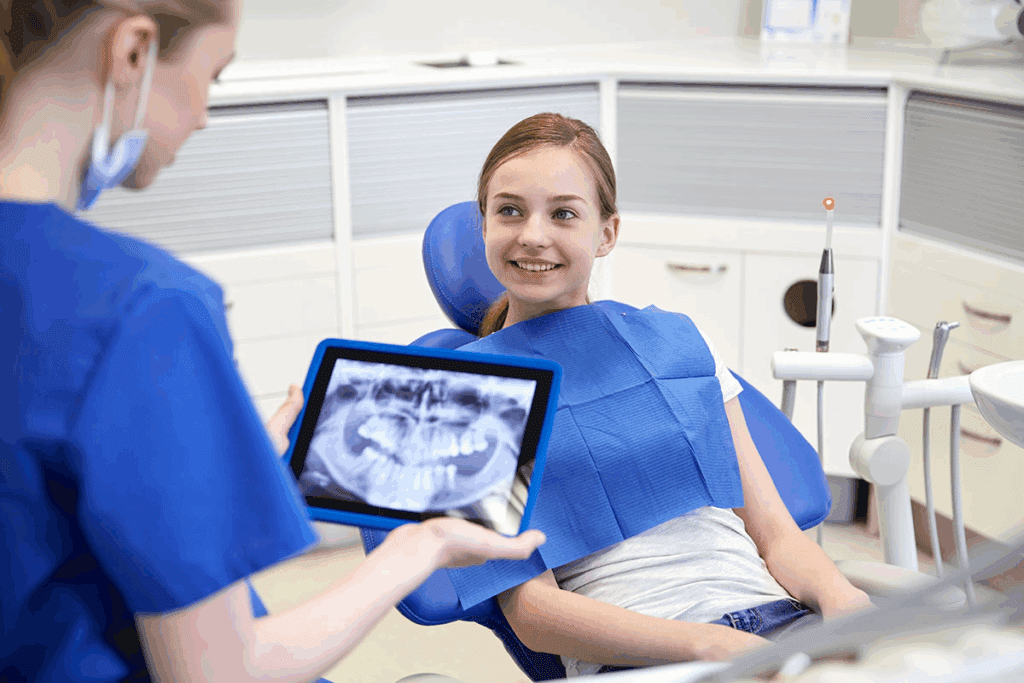
At Liv Hospital, we aim to give top-notch healthcare to all our patients. Cone Beam Computed Tomography (CBCT) scanners have changed dental imaging. They give us clear 3D images of teeth, bones, and facial structures dental ct.
We use advanced CBCT technology to improve how we diagnose and plan treatments. Unlike old X-rays, CBCT scanners show us detailed 3D views of the mouth and face. This helps us make better diagnoses and treatments.
Key Takeaways
- CBCT scanners provide high-quality 3D images for precise dental imaging.
- Advanced CBCT technology enhances diagnosis and treatment planning.
- Cone Beam CT offers a detailed view of oral and maxillofacial anatomy.
- Liv Hospital is committed to using cutting-edge technology for patient care.
- CBCT scanners are revolutionizing the field of dental imaging.
The Revolution of Dental CT Technology
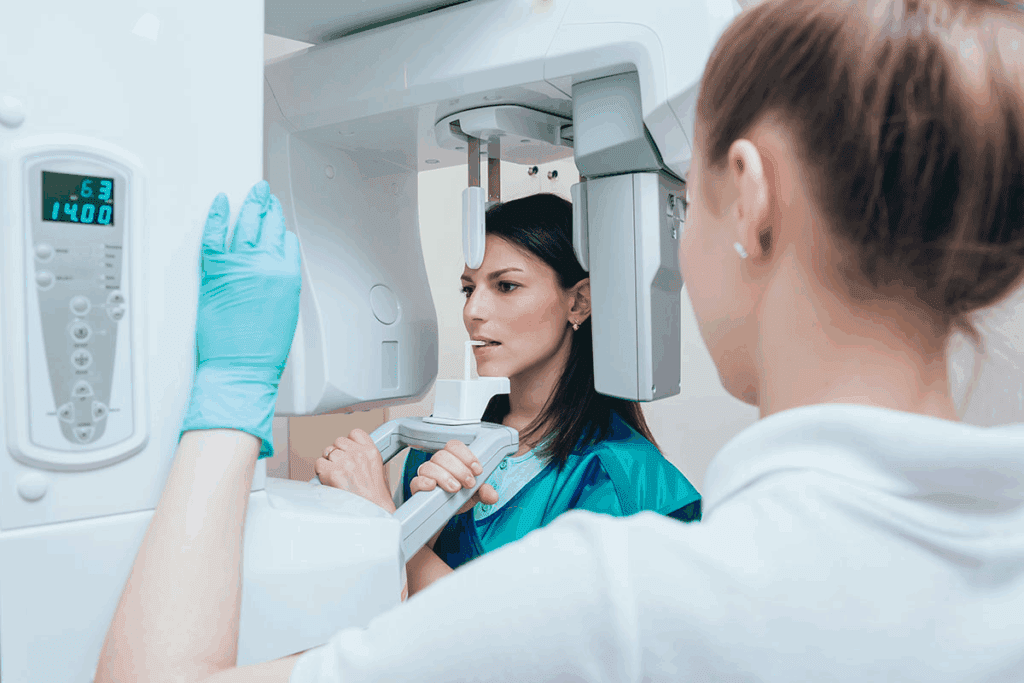
The move from 2D to 3D cone beam CT scanning has changed dentistry a lot. Dental professionals now diagnose and treat patients in new ways, thanks to cone beam CT (CBCT) technology.
From 2D to 3D Imaging
2D radiography had its limits, like distortion and superimposed structures. Cone beam CT scanners offer detailed, accurate images. These images help dentists plan treatments better and improve patient care.
Here are some benefits of 3D imaging over 2D:
- It shows complex structures better
- It’s more accurate for diagnosis and planning
- It reduces the need for exploratory surgeries
- It helps educate patients with clear images
Current Market Trends and Growth
The global cone beam CT scanner market is growing fast. It was worth USD 1.4 billion in 2024 and is expected to grow 6.5 percent annually until 2034.
This growth is due to several reasons:
- More dental disorders mean a need for better diagnostic tools
- Digital dentistry and CAD/CAM technologies are becoming more popular
- Dental professionals are learning more about 3D imaging benefits
- CBCT technology is getting better, with clearer images and less radiation
As dental CT scans become more common, we’ll see even more advancements. This will lead to better care and outcomes for patients.
Benefits of CBCT Over Traditional Radiography

CBCT is revolutionizing dental care with its 3D imaging. It has changed how we do dental diagnostics. Cone Beam Computed Tomography has made a big difference.
Enhanced Diagnostic Capabilities are a key benefit of CBCT. It offers 3D views of teeth, roots, and more. This is great for dental implants, orthodontics, and more.
Enhanced Diagnostic Capabilities
CBCT’s 3D images help make diagnoses and treatment plans better. For example, it helps plan dental implants by checking bone density. Traditional radiography can’t do this.
Reduced Radiation Exposure
Reduced Radiation Exposure is another big plus of CBCT. It uses a cone-shaped X-ray beam, which lowers radiation doses. This makes CBCT safer than traditional CT scans.
Improved Treatment Planning
Improved Treatment Planning is also a major advantage of CBCT. It gives detailed 3D images for better treatment planning. For example, it helps in orthodontics by showing impacted teeth positions.
In summary, CBCT technology is a game-changer in dentistry. It offers better diagnostics, implant planning, and root canal treatments. Its advantages over traditional radiography make it essential in modern dentistry.
Essential Components of a CBCT Scanner System
Knowing the main parts of a CBCT scanner helps us see its power. It has several key parts that work together. They make high-quality 3D images possible.
The CBCT machine uses a cone-shaped X-ray beam. It moves around the patient to take hundreds of images in one scan. This is thanks to a few important parts.
X-ray Source and Detector Technology
The X-ray source sends out the cone-shaped beam. It captures the data needed for 3D images. The detector technology catches the X-ray beam after it goes through the patient. It turns the data into images.
Key Features of X-ray Source and Detector:
- High-resolution imaging capability
- Low dose X-ray emission
- Advanced detector technology for clear image capture
Gantry and Patient Positioning Systems
The gantry is a big, round ring with the X-ray source and detector inside. It moves around the patient, taking data from different angles. The patient positioning system makes sure the area of interest is in the center. This allows for accurate scans.
It’s important to keep the patient comfortable. This helps avoid movement and ensures good scans. The gantry’s design and the positioning system’s flexibility are key for this.
Reconstruction Software
The reconstruction software is the heart of CBCT technology. It turns the X-ray data into detailed 3D images. It uses complex algorithms to do this, giving a full view of the patient’s anatomy.
Advanced reconstruction software features include:
| Feature | Description | Benefit |
|---|---|---|
| High-speed processing | Rapidly reconstructs images | Reduces patient wait times |
| Advanced noise reduction | Minimizes image noise | Improves diagnostic accuracy |
| Customizable protocols | Allows for tailored scanning | Enhances image quality for specific needs |
By understanding these key components, we see how complex and powerful modern CBCT scanners are. Each part is vital for making the high-quality 3D images needed for accurate diagnoses and treatment plans.
Setting Up Your Dental CT Practice Environment
Setting up a dental CT practice needs careful planning. You must think about space, electrical needs, and radiation protection. A good setup is key for safe and effective CBCT scans.
Space Requirements and Room Design
The room for the CBCT scanner must be big enough. It should fit the scanner, the patient, and the operator comfortably. For example, the Vatech Green X CBCT system needs a lot of space for easy access.
Key Considerations for Room Design:
- Adequate floor space for the scanner and its gantry movement
- Comfortable patient seating and access
- Operator console area with sufficient visibility
Electrical and Network Considerations
A reliable electrical supply is essential for the 3D cone beam scanner. The clinic must make sure the electrical setup can handle the scanner’s power needs.
| Electrical Requirement | Specification |
|---|---|
| Power Supply | 220V, 50/60Hz |
| Power Consumption | Maximum 2 kW |
| Network Connection | Gigabit Ethernet |
Radiation Protection Measures
Protecting patients and staff from radiation is critical. This includes using lead shielding and designing the room to absorb radiation. Also, make sure the scanner is calibrated properly.
Radiation Safety Strategies:
- Conduct regular radiation surveys
- Use personal dosimeters for staff monitoring
- Implement the ALARA principle to minimize exposure
By planning the dental CT practice environment well, clinics can use CBCT technology safely and effectively. This improves diagnostic skills and patient care.
Preparing Patients for CBCT Scanning
Getting patients ready for CBCT scanning is key to getting accurate results. Good preparation makes the scan better and makes the patient’s experience smoother and more comfortable.
Pre-Scan Instructions and Contraindications
Before a CBCT scan, patients need clear instructions. They should take off metal items like jewelry, glasses, or dentures. We also ask them to tell us about any health issues or if they’re pregnant, as these can change how the scan works.
Important pre-scan steps include:
- Removing all metal artifacts
- Telling the technician about any medical implants or conditions
- Following specific dietary instructions if needed
Removing Artifacts (Jewelry, Prosthetics)
Things like jewelry, glasses, or prosthetics can mess up the CBCT scan. We tell patients to take these off before scanning to avoid image problems. This simple action helps make sure the images are clear and precise, helping doctors make better diagnoses.
Patient Positioning Techniques
Getting the patient in the right position is vital for a good CBCT scan. We use chin and forehead rests to keep the head steady, reducing movement during the scan. This careful setup helps get clear, accurate images, which are key for diagnosis and treatment plans.
| Positioning Technique | Purpose | Benefit |
|---|---|---|
| Chin Rest | Stabilize the patient’s head | Reduces movement artifacts |
| Forehead Rest | Further stabilize the head | Enhances image clarity |
| Proper Seating | Ensure patient comfort | Reduces anxiety and movement |
By following these steps, we make sure our CBCT scans are top-notch. This leads to better care for our patients.
Step-by-Step Operation of CBCT Scanners
To get clear dental images, it’s key to follow a set way when using a CBCT scanner. This makes sure the images are top-notch and full of useful info.
Scanner Calibration and Warm-up
First, calibrate the CBCT scanner. This step checks if the scanner is working right. It keeps the images accurate.
- Do routine checks on the scanner’s parts.
- Make sure the X-ray source and detector work well.
- Check if the gantry is steady and aligned right.
After calibrating, warm up the scanner. This gets it ready to work by slowly turning on the X-ray source and other parts.
Protocol Selection Based on Clinical Needs
Picking the right scanning protocol is key for getting the info you need. Different protocols are for different uses, like planning implants or checking orthodontic work.
Think about what you need to see, like the area of interest or the patient’s specific needs. For example, a detailed implant plan might need a high-resolution scan, while a quick look might do with a lower one.
- Pick a protocol based on what you need to see.
- Change settings like voxel size and exposure.
- Think about the patient’s size and the area you’ll scan.
Field of View and Resolution Settings
The field of view (FOV) and resolution are very important in CBCT scanning. The FOV shows how much area you’re scanning, and the resolution is how detailed it is.
Changing these settings lets you customize the scan for your needs. For example, a small FOV with high resolution is great for looking at one tooth closely. But a bigger FOV might be better for seeing the whole jaw.
- Choose the right FOV for what you’re looking at.
- Adjust the resolution to get the right balance of detail and safety.
- Think about what you’re trying to find out.
By calibrating well, picking the right protocol, and adjusting the FOV and resolution, we get accurate and helpful scans. The CBCT scan makes precise 3D images. This lets dentists see teeth, jawbone, sinuses, and nerves clearly. The machine goes around your head, taking images from all sides in less than a minute. It uses much less radiation than old CT scans.
Radiation Safety Protocols in Dental CT Imaging
When we use cone beam CT in dental imaging, safety is key. We must always put our patients and staff first. This is more important than ever as we improve dental diagnostics.
Implementing the ALARA Principle
The ALARA principle means we aim to use the least amount of radiation needed. This is vital for keeping everyone safe. The Vatech Green X CBCT system is made to follow this rule, giving great 3D images with less radiation.
To follow ALARA, we look at several things. These include the type of CBCT scanner, how we set up scans, and the patient’s needs.
Dose Reduction Strategies
We can lower radiation doses in many ways. For example, we can adjust scan settings, use beam filters, and shield patients. These steps help reduce radiation.
| Dose Reduction Strategy | Description | Benefit |
|---|---|---|
| Optimizing Scanning Protocols | Adjusting scan settings based on clinical needs | Reduces unnecessary radiation exposure |
| Beam Filtration | Using filters to remove low-energy X-rays | Decreases patient dose and improves image quality |
| Patient Shielding | Using protective shields to minimize exposure to sensitive areas | Protects patients from unnecessary radiation |
Monitoring Cumulative Exposure
It’s important to keep track of how much radiation everyone gets. This helps us make sure doses are safe. It keeps everyone from harm and makes our work place safe.
By following these safety steps, we make sure cone beam CT is safe and works well. We get great images and keep radiation low.
Image Processing and Reconstruction Techniques
Turning raw data into clear images is key in CBCT scanning. We use advanced algorithms to make high-resolution 3D images from the scanner’s data.
Raw Data Acquisition
The first step is getting raw data. The CBCT machine takes many images from different angles. A computer then turns these into a 3D image.
This process uses special detector technology. It captures X-ray beams that have passed through the body.
Filtering and Artifact Reduction
After getting the raw data, we apply filters to improve image quality. Artifacts can come from things like patient movement or metal objects. Our advanced algorithms reduce these artifacts.
This makes the images clearer. It helps doctors diagnose dental problems more accurately.
3D Volume Rendering
The last step is 3D volume rendering. Here, the filtered data is turned into a 3D model. This gives a detailed view of the dental structure.
3D volume rendering lets doctors see complex structures from all sides. This helps in planning treatments accurately.
These techniques help us get high-quality images. They are essential for precise treatment planning in dentistry. This includes planning for implants, orthodontic work, and oral surgery.
Clinical Applications of Cone Beam CT in Dentistry
CBCT scanners are key in modern dentistry, bringing many benefits. They are versatile and preferred for many dental uses. This technology boosts diagnostic accuracy and treatment success.
Implant Planning and Guided Surgery
CBCT is vital for implant planning. It gives detailed images of the bone, helping plan and place implants accurately. This has changed surgery, making it less invasive and more effective.
A top dental implantologist says, “CBCT has changed how we plan and do implant surgeries. It has greatly improved patient results.”
“The use of CBCT in implant dentistry has been a game-changer, allowing for more precise and predictable results.”
Orthodontic Analysis and Treatment
CBCT is also key in orthodontic analysis and treatment planning. It offers a 3D view of teeth and bone, helping spot and plan for complex cases. This helps orthodontists treat more effectively.
Endodontic Diagnosis and Treatment
In endodontics, CBCT helps see the root canal system clearly. It finds hidden canals or infections, improving diagnosis and treatment planning. This is very helpful in complex cases.
Oral and Maxillofacial Surgery Applications
CBCT is also vital in oral and maxillofacial surgery. It helps assess complex cases, plan surgeries, and check post-op results. It gives surgeons detailed anatomy info, helping avoid complications and plan better.
CBCT technology is now the top choice for dental imaging and implant planning. Its detailed images have greatly improved diagnosis and treatment in many dental fields.
Interpreting CBCT Images for Accurate Diagnosis
Understanding CBCT images is key in dental diagnosis. It needs a deep knowledge of oral and maxillofacial structures. These images help us see a patient’s condition, diagnose, or plan treatments. The cone beam CT technology gives us a detailed view of your oral and maxillofacial structures. This helps us diagnose and plan your treatment more accurately.
Normal Anatomy Identification
Accurate interpretation starts with knowing normal anatomy. We need to recognize the typical look of dental and maxillofacial structures in CBCT images. For example, knowing the normal bone density and dental root appearance is important.
A study in the Journal of Oral and Maxillofacial Radiology says, “Understanding normal anatomy is key to spotting abnormalities.”
“The maxillofacial region’s complexity demands a deep knowledge of its anatomy for accurate diagnosis.”
Pathology Recognition
After knowing normal anatomy, we look for pathology. This means finding signs of disease or abnormalities like cysts, tumors, or bone loss around teeth. The CBCT scanner lets us examine these conditions in three dimensions.
Recognizing pathology means analyzing the size, shape, and density of lesions or abnormalities. For instance, a periapical cyst can be spotted by its look at a tooth’s apex. The dental cone beam technology helps us find these conditions early.
| Pathology | Typical CBCT Appearance |
|---|---|
| Periapical Cyst | Well-defined radiolucency at tooth apex |
| Dental Caries | Radiolucency in enamel or dentin |
| Bone Loss | Reduced bone density around teeth |
Measurement Tools and Techniques
CBCT images also let us take precise measurements with various tools and techniques. These measurements are vital for treatment planning, like checking bone for dental implants.
The 3D CBCT scanner offers accurate linear and angular measurements. For example, measuring the alveolar ridge’s height and width is key for implant planning. Our dentists use these measurements to plan treatments well, ensuring the best results.
In conclusion, interpreting CBCT images needs knowledge of normal anatomy, the ability to spot pathology, and skill in using measurement tools. By using the detailed images from cone beam CT technology, we can make accurate diagnoses and plan effective treatments.
Advanced Features of Modern CBCT Systems
Modern CBCT scanners bring new levels of accuracy to dental imaging. They have changed how we diagnose and treat dental issues.
The Vatech Green X CBCT system is a great example. It helps us diagnose better, plan treatments more accurately, and get better results for our patients.
CAD/CAM Integration
Modern CBCT systems now come with CAD/CAM technology. This makes it easier to go from imaging to making treatment plans and models.
A leading expert says, “CAD/CAM with CBCT has changed dentistry. It makes treatment planning more precise and efficient.”
“The future of dentistry lies in the integration of technologies like CBCT and CAD/CAM, which together provide a complete solution for diagnosis, treatment planning, and fabrication.”
Artificial Intelligence in Image Analysis
Artificial intelligence (AI) is being used more in CBCT image analysis. AI helps spot complex patterns and issues that humans might miss.
| Feature | Description | Benefit |
|---|---|---|
| AI-powered image analysis | Enhanced detection of anomalies | Improved diagnostic accuracy |
| CAD/CAM integration | Seamless transition from imaging to treatment | Streamlined workflow |
| Virtual treatment simulation | Predictive modeling of treatment outcomes | Enhanced patient communication |
Virtual Treatment Simulation
Virtual treatment simulation lets us see how treatments will work. It helps us talk better with patients and plan treatments.
Benefits of Virtual Treatment Simulation:
- Improved patient understanding
- Enhanced treatment planning
- Better outcomes
3D Printing Workflow Integration
CBCT technology now works with 3D printing. This makes it fast to make guides, models, and prosthetics. It makes treatment smoother.
These advanced features help us diagnose better, plan treatments, and get better results. Modern CBCT systems lead the way in dental technology. They give us the tools to provide top-notch care.
Conclusion
CBCT scanners have changed dental CT imaging a lot. They give high-quality 3D images. This helps doctors see better and plan treatments more accurately.
CBCT technology is very important in today’s dentistry. It lets dental experts get detailed 3D images. This leads to better diagnoses and treatments.
Using CBCT scanners in dental offices is very valuable. It improves patient care and results. CBCT technology will keep being key in dentistry, helping with better diagnosis and treatment.
FAQ
What is a CBCT scanner and how does it differ from a traditional CT scan?
A CBCT scanner is a special CT scan for dental and facial imaging. It uses a cone-shaped X-ray beam. This gives detailed 3D images with less radiation.
What are the benefits of using a CBCT scanner in dentistry?
CBCT scanners help dentists see more clearly and safely. They use less radiation and give better 3D images. This helps in planning treatments for complex cases.
How do I prepare a patient for a CBCT scan?
Before a CBCT scan, tell patients what to do. Remove jewelry and prosthetics. Use the right position to get clear images.
What are the essential components of a CBCT scanner system?
A CBCT scanner has key parts. These include the X-ray source, detector, gantry, and software. Together, they make high-quality 3D images.
How do I ensure radiation safety when using a CBCT scanner?
Follow the ALARA principle for safety. Use strategies to lower doses and track exposure. This keeps radiation low while keeping image quality high.
What are the clinical applications of CBCT in dentistry?
CBCT is used for many dental needs. It helps plan implants, analyze orthodontics, diagnose endodontics, and guide oral surgery. It offers detailed 3D images for better planning.
How do I interpret CBCT images for accurate diagnosis?
To read CBCT images, know normal anatomy and look for problems. Use tools and techniques to measure and analyze. Understanding dental anatomy and pathology is key.
What are the advanced features of modern CBCT systems?
New CBCT systems have cool features. They include CAD/CAM, AI in analysis, virtual planning, and 3D printing. These features improve diagnosis and treatment planning.
How do I set up a dental CT practice environment for CBCT scanning?
To set up a dental CT practice, think about space and electrical needs. Also, consider radiation safety. A good setup is essential for safe scanning.
What is the significance of CBCT scanners in dental CT imaging?
CBCT scanners are vital for dental imaging. They provide detailed 3D images. This improves diagnosis and treatment planning, changing dental care.
What is cone beam imaging?
Cone beam imaging is a technology in CBCT scanners. It uses a cone-shaped X-ray beam to create 3D images.
How does a 3D CBCT scanner work?
A 3D CBCT scanner captures data with a cone-shaped X-ray beam. This data is then turned into a 3D image using special software.
References
National Center for Biotechnology Information. Evidence-Based Medical Guidance. Retrieved from https://www.ncbi.nlm.nih.gov/pmc/articles/PMC2752916/