

The descending colon is a key part of the large intestine. It plays a big role in our digestive system. It’s found on the left side of our abdomen. It starts at the left colic flexure and goes down to meet the sigmoid colon.Explore the descending bowel — its location, length, and key functions in your digestive system.
The main job of the descending colon is to soak up water and salts. It also packs and holds waste until we need to go. Knowing about its role helps doctors find and treat problems with digestion.
Key Takeaways
- The descending colon is a part of the large intestine.
- It is located on the left side of the abdomen.
- Its primary function is to absorb water and electrolytes.
- The descending colon forms and compacts feces.
- It stores waste before elimination.
The Anatomy of the Descending Bowel
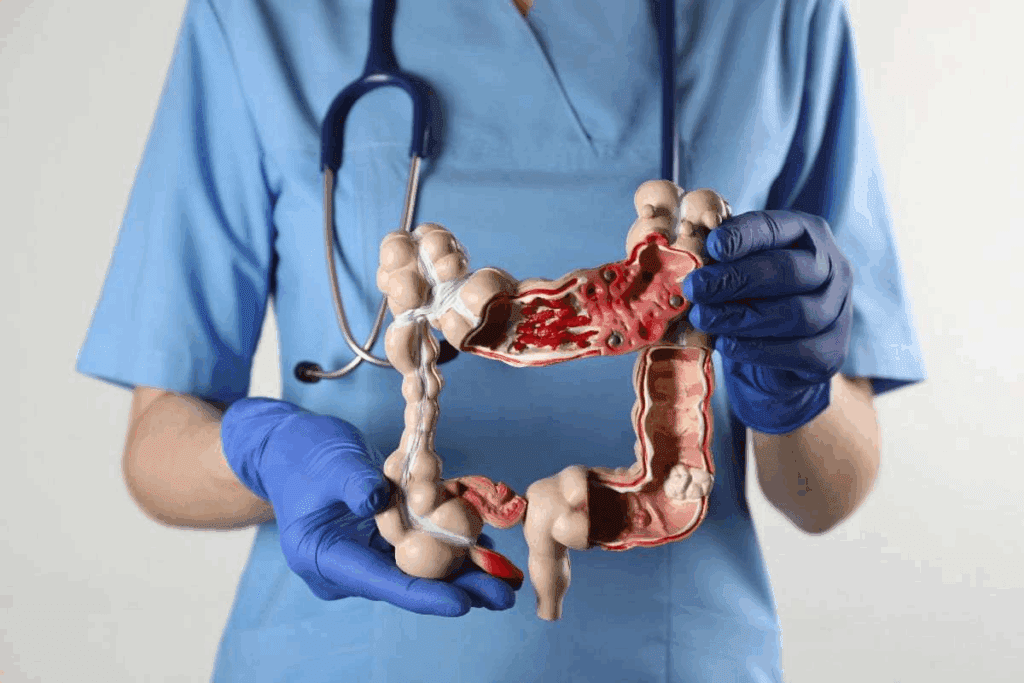
Understanding the anatomy of the descending colon is key to knowing its role in our bodies. It’s part of the large intestine, found on the left side of the abdomen. It’s vital for our digestive system.
Definition and Basic Structure
The descending colon is behind the peritoneum, the lining of the abdominal wall. It’s next to the left kidney. Its location and how it relates to other organs are unique.
The descending colon has several important features:
- Epiploic appendices: These are small, fat-filled pouches attached to the colon.
- Teniae coli: These are three narrow bands of smooth muscle that run along the length of the colon.
- Haustrations: These are the sacculated pouches of the colon, giving it a characteristic appearance.
Histological Composition
The descending colon has four layers: mucosa, submucosa, muscularis, and serosa. The mucosa is the innermost layer, touching the fecal matter. It has goblet cells that make mucus, helping stool move.
The colon is home to many microbes, like Bifidobacteria and Lactobacillus. These microbes help digest food and protect the gut lining.
The structure of the descending colon allows it to absorb water, regulate electrolytes, and form feces.
Location of the Descending Colon in the Human Body

The descending colon is found on the left side of the belly. It’s a key part of our digestive system. It starts at the splenic flexure and goes down to meet the sigmoid colon.
It’s located in the left lumbar region of the abdomen. It’s in front of the left kidney. This spot is important for its role in digestion.
Precise Anatomical Position
The descending colon is on the left side of the large intestine. It’s near the splenic flexure, a sharp bend. It’s behind the peritoneum, which lines the belly and covers organs. This spot keeps it stable.
Relationship to Surrounding Organs
The descending colon is close to other organs in the belly. It’s in front of the left kidney. Knowing this helps doctors diagnose and treat problems.
This part of the large intestine works with the rest of the digestive system. It connects to the sigmoid colon, showing its big role in digestion.
How Long Is the Descending Colon?
The length of the descending colon is key to understanding its role. It’s important for both learning about the body and for medical use.
Average Length Measurements
The descending colon is usually about 25 to 30 centimeters long. This size is important for medical procedures and knowing how it works in digestion. Some say it’s 4 to 6 inches, or 10 to 15 centimeters, but this is less common.
The whole colon, including the descending part, is a big muscular tube. It’s about 5 feet long and has five parts. The descending colon is a key part of this system, helping with digestion.
Variations in Length Among Different Populations
The length of the descending colon can vary a lot. Things like genetics, diet, and health can change it. For example, studies show that different ethnic groups have different colon lengths because of genetics.
Doctors need to know about these differences. They can change how they diagnose and treat patients. A longer or shorter colon might mean different things for surgery or reading scans.
In short, while the average length is a good starting point, there’s a lot of variation. Knowing this helps us understand the body better and improve medical care.
Embryological Development of the Descending Colon
Learning how the descending colon forms is key to understanding its structure. The development of the gastrointestinal tract, including the descending colon, is a detailed process. It involves several stages.
The start of the gastrointestinal tract’s development happens early in the embryo’s life. By the third week, a basic gut tube forms. This tube will grow into the entire tract, including the descending colon.
Fetal Development Stages
The gut tube splits into three parts: the foregut, midgut, and hindgut. The descending colon comes from the hindgut. This split happens around the fourth to fifth week of pregnancy.
The hindgut develops into parts like the distal third of the transverse colon, the descending colon, the sigmoid colon, and the rectum. These parts form through complex cell actions like growth, change, and shape-making.
Congenital Anomalies
Problems can arise during the descending colon’s development. These issues come from disruptions in normal growth.
Some common problems include:
- Colonic atresia
- Hirschsprung’s disease
- Congenital megacolon
| Congenital Anomaly | Description | Clinical Presentation |
| Colonic Atresia | Congenital obstruction of the colon | Abdominal distension, vomiting |
| Hirschsprung’s Disease | Absence of ganglion cells in the colon | Constipation, abdominal distension |
| Congenital Megacolon | Dilatation of the colon | Chronic constipation, abdominal distension |
Knowing about these issues is vital for early detection and treatment. This can greatly help patient outcomes.
The Digestive Journey: Where the Descending Colon Fits In
The descending colon is key to our digestive health. It helps form and store feces before we go to the bathroom.
Position in the Digestive Tract
The descending colon is part of the large intestine. It absorbs water and salts from the undigested food. It’s found on the left side of our belly, stretching from the splenic flexure to the sigmoid colon.
The position of the descending colon is important for its job. It gets food from the transverse colon, absorbs more water and salts. Then, it sends the waste to the sigmoid colon.
Functional Relationship with Other Digestive Organs
The descending colon works with other parts of our digestive system. Its functional relationship with the small intestine is key. It gets undigested food from the small intestine through the cecum and ascending colon.
- The small intestine digests food and absorbs nutrients.
- The large intestine, including the descending colon, absorbs water and electrolytes.
- The rectum stores feces until elimination.
Knowing how the descending colon works with other organs is important. It helps us understand its role in keeping our digestive system healthy. The teamwork between these organs makes sure waste is formed and eliminated correctly.
Primary Functions of the Descending Colon
The descending colon is key in the digestive system. It helps process waste material. It’s a vital part of the large intestine.
The descending colon has several important jobs. It absorbs water and electrolytes. It also forms and stores feces until it’s time to go.
Water Absorption Process
One main job of the descending colon is to absorb water. This makes waste more solid and easier to pass.
Its walls have special cells for absorbing water and electrolytes. This keeps our body hydrated.
Electrolyte Regulation
The descending colon also helps with electrolyte balance. It absorbs or secretes potassium and sodium as needed.
Fecal Formation and Storage
The descending colon forms and stores feces. Its muscles mix and move waste, making it solid.
Forming feces involves absorbing water and electrolytes. The colonic microbiota also breaks down waste.
| Function | Description | Importance |
| Water Absorption | Absorbs water from waste material | Concentrates waste, maintains hydration |
| Electrolyte Regulation | Regulates electrolytes like potassium and sodium | Maintains electrolyte balance |
| Fecal Formation and Storage | Forms and stores feces until elimination | Essential for proper waste elimination |
In summary, the descending colon is vital for a healthy digestive system. It absorbs water, regulates electrolytes, and forms and stores feces. These roles make it a key part of the large intestine.
Blood Supply and Innervation of the Descending Colon
It’s important to know how the descending colon gets its blood and nerve supply. This part of the large intestine needs a complex system of blood vessels and nerves to work right.
Arterial and Venous Networks
The left colic artery, a branch of the inferior mesenteric artery, mainly supplies blood to the descending colon. This artery brings oxygen-rich blood, which is key for the colon’s digestive work.
The venous drainage mirrors the arterial supply. The left colic vein flows into the inferior mesenteric vein. This vein then connects to the portal vein. Blood from here goes to the liver for detox and nutrient processing.
| Blood Vessel | Origin/Destination |
| Left Colic Artery | Branch of Inferior Mesenteric Artery |
| Left Colic Vein | Drains into Inferior Mesenteric Vein |
| Inferior Mesenteric Vein | Empties into Portal Vein |
Nerve Supply and Control
The descending colon gets its nerve supply from the inferior mesenteric plexus. This plexus sends both sympathetic and parasympathetic nerves. This mix is vital for controlling the colon’s movement, secretion, and blood flow.
The sympathetic innervation slows down the colon’s movement and secretion. On the other hand, the parasympathetic innervation helps these functions. This balance is key for the colon’s role in digestion.
Common Conditions Affecting the Descending Colon
The descending colon can face many disorders, from inflammatory bowel disease to colon cancer. Knowing about these conditions is key for the right diagnosis and treatment.
Inflammatory Disorders
Inflammatory disorders like ulcerative colitis and Crohn’s disease can harm the descending colon. These diseases cause inflammation and ulcers, leading to symptoms like diarrhea, pain, and weight loss.
Neoplastic Diseases
Neoplastic diseases, including colon cancer, are a big worry for the descending colon. Colon cancer often starts from benign polyps. Catching it early is vital for treatment. Risk factors include age, family history, and lifestyle.
- Risk factors for colon cancer include age, family history, and lifestyle factors.
- Early detection through screening is key for effective treatment.
Functional Disorders
Functional disorders, such as diverticulitis and irritable bowel syndrome (IBS), can also hit the descending colon. Diverticulitis is inflammation of diverticula, while IBS brings chronic pain and bowel habit changes.
It’s important to know the differences between these conditions for the right care. Tests like imaging and endoscopy help find the cause of symptoms.
Diagnostic Approaches for Descending Colon Issues
Diagnosing problems with the descending colon now uses imaging techniques and endoscopic procedures. These tools help doctors see inside the colon, find problems, and take tissue samples if needed.
Imaging Techniques
Imaging is key in finding colon problems. Common methods include:
- Computed Tomography (CT) scans
- Magnetic Resonance Imaging (MRI)
- X-rays
These methods help spot issues like tumors or swelling and see how far the disease has spread.
| Imaging Modality | Advantages | Limitations |
| CT Scan | Good at finding tumors and swelling | Uses radiation, needs contrast dye |
| MRI | Shows soft tissues well, no radiation | Costlier, might make some feel claustrophobic |
| X-ray | Fast, easy to get | Details are limited, uses radiation |
Endoscopic Procedures
Endoscopic methods are essential for seeing inside the descending colon. The main one is colonoscopy, which lets doctors check the whole colon.
In a colonoscopy, a flexible tube with a camera goes through the rectum. This lets the doctor:
- Look at the colon’s lining
- Find polyps or tumors
- Take tissue samples for tests
Colonoscopy is the top choice for finding colon problems, including those in the descending colon.
Surgical Considerations of the Descending Colon
Surgery for the descending colon treats serious issues like colon cancer and diverticulitis. These problems don’t get better with just treatment.
Doctors decide on surgery after checking the condition and the patient’s health. They look at how serious the problem is.
Common Surgical Procedures
There are several surgeries for the descending colon. These include:
- Bowel Resection: This is when the bad part of the colon is removed. Then, the good parts are joined back together.
- Colostomy: Sometimes, waste goes through a stoma in the abdomen. This is when the colon is diverted.
- Laparoscopic Surgery: This is a less invasive method. It helps patients recover faster and has less scarring.
Post-Operative Care and Recovery
After surgery, taking care of the patient is very important. This ensures they get better quickly.
Important parts of care include:
- Pain Management: Keeping pain under control helps patients move around sooner.
- Nutritional Support: Eating well is key for healing.
- Monitoring for Complications: Watching for any problems helps catch them early.
Understanding surgery for the descending colon helps doctors give better care. They can tailor treatment to each patient’s needs.
Conclusion
The descending colon is key to our digestive system. Knowing its anatomy and function helps us see its importance in keeping us healthy.
Understanding the descending colon’s structure is important. It tells us about its role in absorbing water, managing electrolytes, and forming feces.
It’s also important to know about common problems with the descending colon. These include inflammation, tumors, and other issues that affect its function.
In short, the descending colon is vital for our digestive health. Its problems can cause many health issues. So, it’s important to understand its role in our overall health.
FAQ
What is the descending colon?
The descending colon is a key part of the large intestine. It helps in the digestive process. It absorbs water and electrolytes, makes feces, and stores waste before it’s eliminated.
Where is the descending colon located?
You can find the descending colon on the left side of your abdomen. It’s in the left lumbar region, near the left kidney.
How long is the descending colon?
The descending colon is about 25 to 30 centimeters long. But, its length can vary from person to person.
What is the function of the descending colon?
The descending colon has several important roles. It absorbs water and electrolytes, makes and packs feces, and holds waste until it’s time to go.
What is the blood supply to the descending colon?
The blood for the descending colon comes from the left colic artery. This artery is a branch of the inferior mesenteric artery.
What are the common conditions affecting the descending colon?
The descending colon can face issues like inflammatory bowel disease (IBD), colon cancer, and other functional disorders.
How is the descending colon diagnosed?
Doctors use CT scans and colonoscopy to diagnose problems with the descending colon.
What are the surgical considerations for the descending colon?
Surgery might be needed for colon cancer or diverticulitis. Procedures like bowel resection and colostomy are common.
What side is the descending colon on?
The descending colon is on the left side of your abdomen.
What is the relationship between the descending colon and surrounding organs?
The descending colon is close to the left kidney. It works with the small intestine to absorb water and electrolytes and form feces.
References
Ng, A. P., et al. (2024). Outcomes of surgery for inflammatory bowel disease: A comprehensive review. World Journal of Gastroenterology. https://pubmed.ncbi.nlm.nih.gov/39341587/



 Departments
 Related Videos
 Our Doctors
 News
News