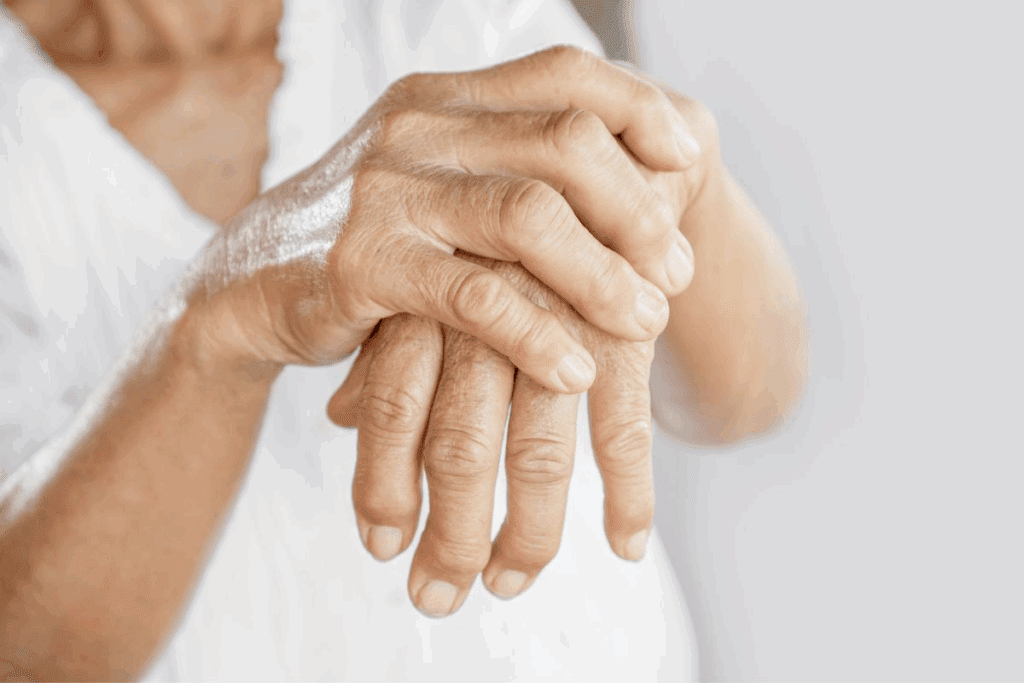
Joint dislocation is a serious injury where bones in a joint are forced out of their normal position. It’s very painful and can really affect your life. Did you know that joint dislocations happen a lot, mainly in people who do high-impact sports or activities? Individuals with dislocatable joints are especially at risk, as their joints are more prone to slipping out of place.
Many joints in the body can be dislocated, like the shoulder, hip, elbow, and patella. Each one has its own reasons and problems. Knowing the risks and how to prevent them can help avoid these injuries.
Key Takeaways
- Joint dislocation is a painful condition that occurs when bones are forced out of their normal position.
- The shoulder, hip, elbow, and patella are common joints that can be dislocated.
- High-impact activities increase the risk of joint dislocation.
- Understanding the causes and taking preventive measures can help reduce the risk.
- Prompt medical attention is key for treating joint dislocations effectively.
Understanding Joint Dislocations
Joint dislocations are a big deal in medicine. They often happen because of injuries or because a joint is unstable. When a joint dislocates, the bones move out of place. This disrupts the joint’s function and can cause a lot of pain and instability.
What Happens During a Dislocation
When a joint dislocates, the ligaments around it get stretched or torn. This can lead to joint instability. This instability makes the joint more likely to dislocate again in the future. The severity of the dislocation can vary, with some being partial (subluxation) and others being complete.
The process of dislocation involves several key factors. These include the force of the injury, the joint’s position at the time of injury, and the individual’s joint stability. Knowing these factors is key to diagnosing and treating dislocations well.
Dislocation vs. Subluxation
A dislocation is when the joint is completely out of place. On the other hand, a subluxation is when it’s only partially out of place. Both can be very painful and need medical attention.
“The distinction between dislocation and subluxation is critical for determining the appropriate treatment plan.”
An Orthopedic Specialist
The table below shows the main differences between dislocation and subluxation:
| Characteristics | Dislocation | Subluxation |
| Displacement | Complete | Partial |
| Joint Stability | Severely compromised | Partially compromised |
| Treatment Approach | Often requires immediate medical intervention | May require immobilization and physical therapy |
It’s important for healthcare providers to know the difference between dislocation and subluxation. This helps them create effective treatment plans. By accurately diagnosing the type of joint displacement, they can help restore joint stability and reduce pain.
Common Causes of Joint Dislocations
Traumatic injuries, sports activities, and inherent joint instability are the main reasons for joint dislocations. Knowing these causes is key for prevention and treatment.
Traumatic Injuries
Traumatic joint dislocations happen from big forces, like in car accidents or falls. These injuries can severely damage the joint, leading to dislocation.
Common scenarios include:
- Falls onto an outstretched hand, potentially dislocating the shoulder or elbow.
- Direct blows to the joint during sports or physical altercations.
- High-impact crashes that force joints beyond their normal range of motion.
Sports-Related Dislocations
Sports and physical activities are a big cause of joint dislocations. Athletes in contact sports, like football or rugby, are at high risk.
Common sports-related dislocation scenarios include:
- Collisions with other players or the ground.
- Falls during skiing, cycling, or other high-speed sports.
- Overuse or repetitive strain injuries that weaken the joint over time.
Congenital and Acquired Joint Instability
Some people are born with or get conditions that make joints unstable. This makes dislocations more likely. Conditions like hip dysplasia or ligament laxity from injuries can raise the risk.
| Condition | Description | Risk of Dislocation |
| Congenital Hip Dysplasia | A condition where the hip joint doesn’t form properly. | High |
| Ligament Laxity | Excessive looseness in the ligaments surrounding a joint. | Moderate to High |
| Previous Joint Injuries | Past injuries that have compromised the joint’s stability. | Moderate |
Understanding these causes helps prevent joint dislocations and reduce their impact.
Dislocatable Joints: An Overview of Vulnerable Areas
Knowing which joints are more likely to dislocate is key for prevention and treatment. Joints help us move and stay flexible. But, their design makes them prone to injuries, like dislocations.
Synovial Joints and Their Vulnerability
Synovial joints, or diarthrodial joints, are the most common and flexible joints in our bodies. They have a space between bones filled with synovial fluid. This setup allows for a lot of movement but also makes them more likely to dislocate.
Characteristics of Synovial Joints:
- Presence of synovial fluid
- Articular cartilage covering the ends of bones
- A joint capsule that encloses the joint
- Ligaments that provide stability
These features help joints move but also make them more at risk for dislocation, mainly when they face trauma or stress.
High-Risk vs. Low-Risk Joints
Not all joints face the same risk of dislocation. The risk varies based on the joint’s anatomy, function, and stabilizing structures.
| Joint Type | Dislocation Risk | Common Causes of Dislocation |
| Shoulder (Glenohumeral) | High | Trauma, sports injuries |
| Hip | High | Severe trauma, congenital conditions |
| Elbow | Moderate | Falls, sports injuries |
| Wrist | Moderate | Falls, sports injuries |
| Ankle | Low to Moderate | Sports injuries, twisting injuries |
The table shows the different risks of dislocation for various joints. Knowing these risks helps in taking preventive steps and in early diagnosis and treatment when a dislocation happens.
Shoulder Dislocation: The Most Common Joint Dislocation
Shoulder dislocation is the most common joint injury. This is because the shoulder joint is very flexible but also more likely to get hurt. The joint, or glenohumeral joint, is a ball-and-socket type that lets us move our arms in many ways.
Anatomy of the Shoulder Joint
The shoulder joint is made up of the humerus and scapula. The humerus fits into a shallow socket in the scapula, called the glenoid. This setup lets us move our arms a lot but also makes the joint more likely to dislocate.
A group of muscles and tendons surround the joint. They help keep it stable and supported.
Types of Shoulder Dislocations
Shoulder dislocations can happen in different ways. The most common is an anterior dislocation, where the humerus goes forward out of the socket. Posterior dislocations, where the humerus goes backward, are less common but can happen, often in people with certain conditions or after seizures. Inferior dislocations are rare.
Symptoms and Diagnosis
Symptoms of a shoulder dislocation include a lot of pain, swelling, and bruising. The shoulder might look different, and you might feel like it’s unstable. Doctors use physical exams and imaging like X-rays or MRI scans to diagnose it.
Knowing about shoulder dislocations helps prevent and treat them. By understanding the risks and taking steps to avoid them, we can lower our chances of getting a shoulder dislocation.
Hip Joint Dislocation: A Serious Medical Emergency
The hip joint is very stable, but it can dislocate if it gets hurt badly. This happens when a lot of force pushes the femoral head out of the acetabulum. This is a serious situation that needs quick medical help.
Structure and Stability of the Hip Joint
The hip joint is shaped like a ball-and-socket. The femoral head fits into the acetabulum, making it stable. Strong ligaments and muscles around the joint also help keep it stable.
Key factors that contribute to hip joint stability include:
- The depth of the acetabulum
- The presence of a labrum (cartilaginous ring) around the acetabulum
- Strong ligaments, such as the iliofemoral ligament
Causes of Hip Dislocations
Hip dislocations usually happen because of big injuries, like in car accidents or falls. Sports injuries, like those in football or hockey, can also cause hip dislocations.
Common causes include:
- Motor vehicle collisions
- Falls from heights
- Sports-related injuries
Symptoms and Complications
Symptoms of a hip dislocation include a lot of pain, not being able to move the hip, and a visible deformity. Serious complications can happen, like nerve damage or osteoarthritis.
- Nerve damage (e.g., to the sciatic nerve)
- Avascular necrosis (death of bone tissue due to lack of blood supply)
- Osteoarthritis
Getting medical help right away is very important. It helps avoid serious problems and helps the joint heal better.
“The management of hip dislocations requires a multidisciplinary approach, from initial assessment and reduction to rehabilitation, to minimize long-term consequences.”
— Orthopedic Guidelines
Knee Joint Dislocation: Complex and Dangerous
Knee joint dislocations are serious and need immediate medical help. The knee is a complex hinge joint that connects the lower end of the femur to the upper end of the tibia. It’s stable thanks to ligaments, tendons, and muscles.
Patellar vs. Tibiofemoral Dislocations
Knee dislocations are mainly two types: patellar and tibiofemoral. Patellar dislocations happen when the kneecap moves out of place. This usually comes from a direct hit or sudden twist.
Tibiofemoral dislocations involve the tibia moving out of place with the femur. This is more serious and can happen from big impacts, like car crashes or sports injuries.
Risk Factors and Mechanisms
Several things can make you more likely to get a knee dislocation. These include:
- Sports injuries, like in football and rugby
- Falls or car accidents
- Genetic conditions that affect knee stability
- Previous knee injuries or surgeries
The injury often comes from abnormal bending or twisting. Even small trauma can cause dislocations in people with certain conditions.
“Knee dislocations are true orthopedic emergencies due to the high risk of associated vascular injuries.” – Orthopedic Specialist
Associated Injuries and Vascular Complications
Knee dislocations often come with other injuries, like ligament tears, fractures, and nerve damage. A big worry is vascular injury, mainly to the popliteal artery. This artery is at risk because it’s fixed behind the knee, making it prone to injury during a dislocation.
| Associated Injury | Description | Complication Risk |
| Ligament Tears | Tears in the ligaments that stabilize the knee | High |
| Fractures | Breaks in the bones surrounding the knee | Moderate to High |
| Nerve Damage | Injury to the nerves around the knee | Moderate |
| Vascular Injury | Damage to the blood vessels, mainly the popliteal artery | High |
Quick action and treatment are key to avoid long-term problems and get the knee working right again.
Elbow Joint Dislocation: Common in Children and Athletes
Elbow joint dislocations are a big worry in kids and athletes. They can lead to serious problems and need quick treatment. The elbow is a complex joint that can easily get dislocated because of its shape and the forces it faces.
Elbow Joint Anatomy
The elbow is made up of three bones: the humerus, radius, and ulna. It stays stable thanks to bones and soft tissues like ligaments and muscles. Knowing how the elbow is put together helps doctors treat dislocations well.
The elbow has several important parts:
- The humeroulnar joint, which is the main connection.
- The humeroradial joint, involved in forearm rotation.
- The proximal radioulnar joint, key for supination and pronation.
- Ligaments such as the medial and lateral collateral ligaments that keep it stable.
Types and Mechanisms of Elbow Dislocations
Elbow dislocations can be different based on how the bones move and if there are fractures. The most common is when the ulna and radius move backward compared to the humerus.
Dislocations usually happen because of:
- Falling onto an outstretched hand, causing hyperextension.
- Direct trauma to the elbow.
- Twisting or bending forces.
Nursemaid’s Elbow in Children
Nursemaid’s elbow, or radial head subluxation, is common in young kids, usually under 4. It happens when the radius partially moves out of its socket, often from a sudden pull on the arm.
Children with nursemaid’s elbow might feel pain and not want to use their arm. Doctors can fix it with a simple procedure. They then watch for any signs it might happen again.
It’s very important to treat elbow dislocations right away to avoid serious problems. Whether it’s a simple case or a more complex one, knowing what to do is essential for recovery.
Wrist and Hand Dislocations
The wrist and hand are at risk for dislocations because of their complex structure and wide range of motion. These injuries can make it hard to do everyday tasks. We will look at what causes them, their symptoms, and how to treat them.
Wrist Joint Dislocations
Wrist joint dislocations happen when the bones in the wrist move out of place. This often occurs from falls onto an outstretched hand or other injuries. Symptoms include severe pain, swelling, and trouble moving the wrist.
Causes and Symptoms: Falling onto an outstretched hand is a common reason for wrist dislocation. This can happen during sports or accidents. Symptoms include pain, swelling, and bruising around the wrist.
| Cause | Symptoms | Treatment |
| Fall onto outstretched hand | Pain, swelling, bruising | Immobilization, reduction |
| Sports injuries | Limited mobility, deformity | Physical therapy, surgery |
Finger Joint Dislocations
Finger joint dislocations are common and can happen in any finger joint. They are often caused by direct trauma or when the finger is stretched too far. A dislocated finger can be very painful and may look crooked or deformed.
Treatment Options: Treatment for a dislocated finger usually involves closed reduction, where a doctor manually puts the bone back in place. Sometimes, surgery is needed to keep the joint stable.
It’s very important to see a doctor right away if you think you have a wrist or hand dislocation. Quick treatment can prevent more problems and help with healing.
Ankle and Foot Dislocations
The ankle and foot can suffer from different dislocations. These injuries often happen during sports, accidents, or other traumatic events. Knowing the causes, symptoms, and treatments is key for recovery.
Ankle Joint Dislocations
Ankle joint dislocations are serious and can cause long-term problems if not treated right. The ankle is made of bones that support our weight and help us move. But, its structure makes it prone to dislocations, mainly during sports or when we fall.
Symptoms include a lot of pain, swelling, and trouble walking. Seeing a doctor right away is important. They will check the injury and start treatment, which might include putting the ankle back in place, using a cast, and physical therapy.
Toe Joint Dislocations
Toe joint dislocations are less common but very painful. They can happen in any toe but are more common in the big toes. These injuries usually happen when something hits the toe or when the toe bends suddenly.
Doctors often fix toe joint dislocations by gently moving the toe back into place. Sometimes, they use a splint or tape the toe to a nearby one to help it heal.
Midfoot and Subtalar Dislocations
Midfoot dislocations affect the joints between the tarsal bones. Subtalar dislocations happen below the talus. These injuries are complex and often result from severe trauma. They need quick attention to avoid long-term issues like arthritis or chronic instability.
Doctors use X-rays or CT scans to diagnose these injuries. Treatment might include putting the foot back in place and using a cast, or sometimes surgery to stabilize the foot and help it heal.
Recovering from these dislocations takes time. Patients often have to avoid putting weight on their foot and then do exercises to regain strength and mobility.
Spinal Joint Dislocations: A Serious Concern
Spinal joint dislocations are serious and need quick medical help. They happen when the joints between vertebrae move out of place. This can be due to trauma, falls, or other high-impact events.
Dislocations can occur at different spine levels, like the neck, mid-back, and lower back. Each area has its own anatomy and risks. It’s important to know about these risks.
Cervical Spine Dislocations
Cervical spine dislocations affect the neck. They often result from severe trauma, like car accidents or falls. These injuries are dangerous because they can harm the spinal cord.
Symptoms include severe neck pain, numbness or weakness in limbs, and trouble breathing. Quick medical care is needed to keep the neck stable and prevent more harm.
“The management of cervical spine injuries requires a multidisciplinary approach, including neurosurgery, orthopedic surgery, and rehabilitation.”
— Journal of Neurosurgery: Spine
Thoracic and Lumbar Dislocations
Thoracic and lumbar spine dislocations happen in the mid-back and lower back. They can result from high-energy trauma, like car crashes or falls.
The thoracic spine is more stable because of its connection to the rib cage. But the lumbar spine is more mobile and prone to injuries. Dislocations in these areas can cause a lot of pain, neurological problems, and long-term disability if not treated right.
| Region | Causes | Symptoms | Complications |
| Cervical | Severe trauma, falls, car accidents | Neck pain, numbness, weakness | Neurological damage, breathing difficulties |
| Thoracic | High-energy trauma, falls | Mid-back pain, neurological deficits | Spinal instability, long-term disability |
| Lumbar | Trauma, heavy lifting, falls | Lower back pain, numbness, weakness | Chronic pain, neurological damage |
It’s key to understand the causes, symptoms, and risks of spinal joint dislocations. This knowledge helps in providing the right care and avoiding long-term harm. Quick medical help can greatly improve outcomes for those with these injuries.
Differentiating Dislocations from Other Injuries
It’s important to know the differences between dislocations and other joint injuries. This helps doctors diagnose and treat them right. Dislocations can look like sprains and fractures, making it hard to tell them apart.
Dislocation vs. Sprain
A dislocation happens when a joint moves out of place. Sprains, on the other hand, are when ligaments stretch or tear. Both can hurt a lot and swell, but they affect the joint differently.
For example, a shoulder dislocation might seem like a bad sprain because of the pain and stiffness. But a dislocated shoulder will look off and might need quick medical help to fix.
Dislocation vs. Fracture
Fractures are breaks in bones, and sometimes they happen with dislocations. It’s key to tell them apart because treatment is different.
X-rays can show if there’s a fracture or dislocation. If there’s a fracture, fixing the joint carefully is important to avoid more harm.
“The complexity of diagnosing joint injuries lies in understanding the nuances between different types of injuries. A thorough examination and appropriate imaging are critical.”
An Orthopedic Surgeon
When Dislocations and Fractures Occur Together
Dislocations and fractures can happen together, making things more complicated. For example, a hip dislocation might also have a broken acetabulum or femoral head. These complex cases need careful checking and might need surgery.
| Condition | Description | Common Symptoms |
| Dislocation | Joint is out of place | Pain, deformity, limited mobility |
| Sprain | Ligament stretching or tearing | Pain, swelling, bruising |
| Fracture | Break in the bone | Pain, swelling, deformity |
Getting the right diagnosis is key to treating joint injuries well. Knowing the differences helps doctors plan better treatments. This leads to better results for patients.
Diagnosis and Immediate Management of Dislocations
It’s key for healthcare providers to know how to diagnose and manage dislocations. This helps them give the right care and avoid problems.
Clinical Assessment
First, we do a detailed check-up to find out if a joint is dislocated. We ask about the patient’s health history and do a physical exam. We look for signs like deformity, swelling, and trouble moving the joint.
The patient’s symptoms and how the injury happened give us clues. We also check if the joint is stable and if there’s damage to nerves or blood vessels.
Imaging Studies
Imaging tests are vital to confirm the diagnosis and see how bad the injury is. X-rays are usually the first test used. They show the type and severity of the dislocation and any bone breaks.
At times, we might need CT or MRI scans too. These are used if we think there’s damage to soft tissues or complex bone injuries.
| Imaging Modality | Primary Use in Dislocation Diagnosis | Benefits |
| X-ray | Initial assessment of dislocation and fracture | Quick, widely available, and effective for bone assessment |
| CT Scan | Detailed evaluation of complex fractures and joint congruity | Provides detailed cross-sectional images, helpful in surgical planning |
| MRI | Assessment of soft tissue injuries and occult fractures | Excellent for visualizing soft tissues, including ligaments and tendons |
First Aid and Emergency Response
When someone has a dislocated joint, we start with first aid. We immobilize the joint to prevent more harm and ease pain. We also use ice to reduce swelling.
If there’s a big deformity or nerve and blood vessel problems, we need to act fast. We stress that trying to fix the dislocation without the right training and tools can make things worse.
Knowing how to diagnose and manage dislocations helps healthcare providers give better care. This reduces the chance of complications and improves how patients do.
Treatment and Pain Management for Dislocated Joints
Dislocated joints need different treatments, from manual reduction to surgery. It’s key to manage them well to fix the joint, ease pain, and avoid more problems.
Closed Reduction Techniques
Closed reduction is a non-surgical way to fix dislocated joints. It involves moving the joint back into place without surgery. This method is often done under sedation or anesthesia to reduce pain.
“Closed reduction works well for some dislocations, if done quickly,” says a top orthopedic doctor. “But, it’s important to follow up with proper care and rehab for healing.”
Surgical Interventions
Sometimes, surgery is needed for a dislocated joint. Surgery is required for complex dislocations, those with fractures, or significant soft tissue damage. Surgeons might do open reduction or other procedures to fix the joint and repair tissues.
- Open reduction and internal fixation
- Ligament repair or reconstruction
- Joint stabilization procedures
Pain Management Strategies
Managing pain is a big part of treating dislocated joints. Strategies include medication, physical therapy, and more, based on the patient’s needs. Good pain management helps with comfort and rehab.
Pain management might include:
- Medications like analgesics or anti-inflammatory drugs
- Physical therapy, like heat or cold therapy, and gentle exercises
- Alternative therapies, such as acupuncture or relaxation techniques
Combining the right treatments with good pain management helps patients with dislocated joints a lot.
Recovery and Rehabilitation After Joint Dislocation
A dislocated joint can be very painful and limit your movement. But, with the right care and rehab, you can fully recover. The recovery journey has several key steps to help you regain strength, mobility, and function.
Timeline for Healing
The time it takes to heal from a dislocated joint varies. It depends on the injury’s severity, the joint affected, and your age and health. The first part of recovery focuses on reducing pain and swelling. This can take from a few days to weeks.
During this time, it’s important to follow your healthcare provider’s advice on managing pain and keeping the joint stable. Once the pain goes down, we start exercises to improve movement and muscle strength.
Physical Therapy Protocols
Physical therapy is key in rehab after a joint dislocation. A good physical therapy plan helps improve joint movement, strengthens muscles, and enhances balance and coordination.
- Range of Motion Exercises: Gentle exercises to improve flexibility and mobility.
- Strengthening Exercises: Targeted exercises to strengthen the muscles around the dislocated joint.
- Proprioceptive Training: Exercises that help improve balance and coordination.
Return to Activities and Sports
Going back to activities and sports after a joint dislocation should be done slowly and with a healthcare provider’s guidance. It’s important to make sure the joint is strong and mobile enough for the activity.
- Gradual Progression: Gradually increase the intensity and duration of activities.
- Functional Testing: Perform functional tests to assess the joint’s readiness for specific activities.
- Protective Measures: Use protective gear or taping as needed to support the joint during activities.
By sticking to a detailed rehab plan, you can recover from a joint dislocation and get back to your usual activities and sports.
Conclusion
We’ve looked into joint dislocations, including types, causes, symptoms, and treatment. Joint dislocation is serious and needs quick medical help. This is to avoid long-term damage and help with recovery.
Each type of dislocated joint has its own challenges. From shoulder dislocations to hip and knee ones, knowing the differences is key. This knowledge helps in treating and managing dislocations effectively.
Getting help quickly is important. This can be through closed reduction or surgery. It’s also vital to manage pain well during treatment.
Recovering from a joint dislocation takes time and effort. It involves healing, physical therapy, and slowly getting back to activities. Understanding these steps helps people on their way to recovery.
We stress the importance of full care and support during treatment and recovery. This ensures the best results for those with joint dislocations.
FAQ
What is a joint dislocation?
A joint dislocation happens when bones in a joint move out of place. This causes instability and can be very painful.
Which joints are most commonly dislocated?
The shoulder joint is most often dislocated. Other common ones include the hip, knee, elbow, wrist, ankle, and fingers.
What causes joint dislocations?
Dislocations can come from injuries, sports accidents, or conditions that make joints unstable.
What is the difference between a dislocation and a subluxation?
A dislocation means the bones are completely out of place. A subluxation is when they are only partially out.
How are dislocations diagnosed?
Doctors use a physical check, medical history, and imaging like X-rays or CT scans to diagnose dislocations.
What is the immediate management for a dislocated joint?
First, provide first aid and immobilize the joint. Then, get emergency medical help to avoid more harm and aid healing.
How are dislocated joints treated?
Treatment can include closed reduction, surgery, or pain management. It depends on the dislocation’s severity and type.
What is the recovery process like after a joint dislocation?
Recovery includes a healing timeline, physical therapy, and advice on when to start activities again.
Can dislocations occur alongside fractures?
Yes, dislocations can happen with fractures, making diagnosis and treatment harder.
How can I prevent joint dislocations?
To prevent dislocations, wear protective gear, keep muscles strong, and manage any conditions that might cause instability.
What are the possible complications of joint dislocations?
Complications include injuries to blood vessels, nerves, and a higher chance of dislocations happening again. Quick and proper medical care is key.
How long does it take for a dislocated joint to heal?
Healing time varies based on the dislocation’s severity, treatment success, and individual health and rehabilitation.
Can joint dislocations be recurrent?
Yes, some people may have dislocations again, mainly if underlying issues or risks are not handled.
What is the role of physical therapy in recovering from a joint dislocation?
Physical therapy is vital for regaining strength, mobility, and function after a dislocation. It also lowers the risk of future dislocations and improves outcomes.
Reference:
Ebrahimzadeh, M. H., Moradi, A., Soltani, Z., & Kachooei, A. R. (2016). Epidemiology of joint dislocations and ligamentous/tendinous injuries among 2700 patients: Five-year trend of a tertiary center in Iran. Archives of Bone and Joint Surgery. Retrieved from https://pmc.ncbi.nlm.nih.gov/articles/PMC8800/