People with HIV often face painful mouth ulcers and oral sores. These issues can really hurt their daily life.
Studies show that up to 50% of those with HIV and up to 80% with AIDS get these oral problems. Mouth ulcers and sores are not just painful. They also show signs of HIV and how it’s progressing.
It’s key to know why HIV mouth ulcers happen and how to deal with them. At Liv Hospi, we focus on the oral health of those with HIV. We see it as a big part of their care.
Key Takeaways
- HIV can cause mouth ulcers and oral sores, affecting up to 50% of individuals with HIV.
- Oral manifestations are common in HIV patients and can indicate disease progression.
- Understanding the link between HIV and oral health is key for managing the condition.
- Managing HIV-related mouth ulcers can greatly improve life quality and prevent more issues.
- Comprehensive care for HIV patients includes looking after their oral health.
The Relationship Between HIV and Oral Health
HIV impacts more than just the immune system. It also affects oral health significantly. The virus weakens the body’s defenses. This makes people more likely to get oral infections and conditions.
How HIV Affects the Immune System
HIV attacks and destroys CD4 cells, which are important for fighting infections. As CD4 cells decrease, the body becomes more open to infections. These infections can show up in the mouth.
Because of HIV, the immune system can’t fight off many oral health problems. Oral manifestations of HIV include thrush, oral hairy leukoplakia, and Kaposi’s sarcoma.
Prevalence of Oral Manifestations in HIV Patients
Oral health issues are common in people with HIV. Studies show many HIV-positive patients face oral health problems at some point.
| Oral Manifestation | Description | Prevalence in HIV Patients |
| Oral Candidiasis (Thrush) | A fungal infection causing white patches in the mouth | High |
| Hairy Leukoplakia | White patches on the tongue, often associated with Epstein-Barr virus | Moderate |
| Kaposi’s Sarcoma | A type of cancer that can cause lesions in the mouth | Low to Moderate |
These oral manifestations show why regular dental visits and good oral hygiene are key for HIV patients.
Common Types of HIV Mouth Ulcers and Oral Lesions
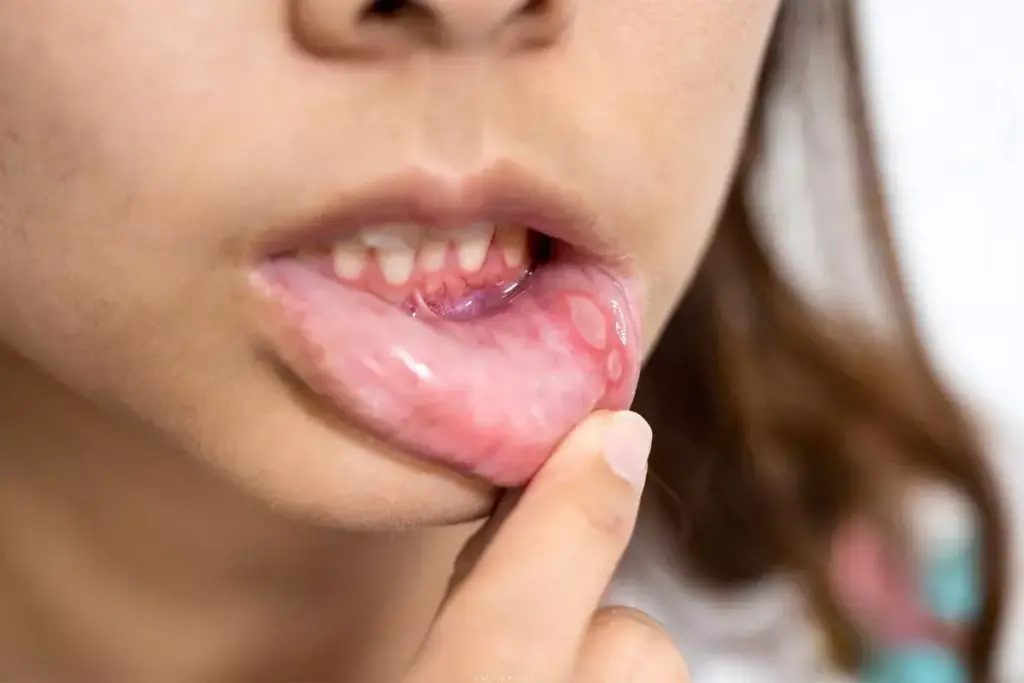
People with HIV often get specific types of mouth ulcers and lesions. These can be painful and affect their daily life. Knowing about these ulcers helps doctors diagnose and treat them better.
Aphthous Ulcers (Canker Sores)
Aphthous ulcers, or canker sores, are common in those with HIV. They look round or oval and can appear on the lips, cheeks, or under the tongue. They hurt and can make eating and talking hard. Managing these ulcers well is key to improving life quality.
Herpes Simplex Virus Lesions
Herpes simplex virus (HSV) causes lesions in HIV-positive people. HSV can lead to cold sores or blisters around the mouth and ulcers inside. These can come back and be worse in those with weak immune systems. Seeing HSV lesions can show how well the immune system is working.
Oral Candidiasis (Thrush)
Oral candidiasis, or thrush, is a fungal infection in the mouth. It shows as white patches on the tongue, cheeks, or throat. It’s more common in those with HIV/AIDS because their immune systems are weaker. Treating thrush quickly is important to stop it from spreading and to ease discomfort.
Hairy Leukoplakia
Hairy leukoplakia has white patches on the tongue that look corrugated or “hairy.” It’s linked to Epstein-Barr virus and often seen in HIV/AIDS patients. It usually doesn’t hurt but shows the immune system is weak. Watching for hairy leukoplakia helps track how HIV is progressing.
It’s important for doctors to know about these HIV-related mouth ulcers and lesions. By understanding each type, they can give better care to HIV-positive patients.
When HIV Mouth Ulcers Appear in Disease Progression
As HIV infection advances, mouth ulcers can signal significant changes in oral health. We will explore the different stages of HIV infection and how they relate to oral sores.
Oral Symptoms During Acute HIV Infection
During the acute stage of HIV infection, patients may experience a range of oral symptoms. These include mouth ulcers and sores. These symptoms can be among the first signs of HIV infection and are often accompanied by other flu-like symptoms.
The acute stage is characterized by a high viral load. This makes the individual highly infectious.
- Mouth ulcers can appear as a result of the body’s initial reaction to the HIV virus.
- These ulcers can be painful and may make eating and swallowing uncomfortable.
- For more information on oral ulcers in HIV patients, visit
Mouth Sores During Chronic HIV Infection
In the chronic stage of HIV infection, the virus is active but reproduces at lower levels. During this stage, hiv mouth sores can occur, but they may be less frequent than during the acute stage. The immune system is weakened, making it harder for the body to fight off infections that can cause mouth sores.
- The importance of maintaining good oral hygiene to prevent infections.
- The importance of oral sores hiv as a sign of a compromised immune system.
- The need for regular dental check-ups to monitor oral health.
Oral Manifestations in Advanced HIV/AIDS
In the advanced stages of HIV/AIDS, the immune system is severely weakened. This makes patients more susceptible to opportunistic infections. Mouth sores from aids can be more severe and persistent, often indicating a more serious health issue.
- Oral candidiasis (thrush) is a common opportunistic infection that can cause white patches in the mouth.
- Other infections, such as herpes simplex virus, can also cause painful mouth sores.
- Advanced HIV/AIDS patients require a full care plan to manage these oral manifestations effectively.
Understanding when mouth sores hiv are likely to appear during the disease progression is key. By recognizing the signs and symptoms early, healthcare providers can offer the right treatment and support. This improves the patient’s quality of life.
Conclusion: Diagnosis and Treatment of HIV-Related Oral Sores
It’s key to get the right diagnosis and treatment for HIV-related oral sores. This includes hiv mouth sores and hiv oral ulcers. Doctors use visual exams, swab tests, biopsies, and blood tests to find the cause. For more info on oral health with HIV, check out CATIE’s guide on mouth and throat.
Treatment depends on the cause. It might include antifungal meds, antiviral drugs, antibiotics, or ART. ART is vital for managing HIV and related oral issues like oral sores hiv and hiv mouth ulcers. Proper care for these sores is essential for a better life for those with HIV.
Knowing the causes and treatments for hiv ulcers in mouth and hiv oral ulcers helps doctors give better care. This improves the overall health and well-being of people with HIV.
FAQ:
What are the common oral manifestations of HIV infection?
HIV can cause many oral health problems. These include mouth ulcers, sores, and lesions. Common issues are aphthous ulcers, herpes simplex virus lesions, oral candidiasis (thrush), and hairy leukoplakia.
How does HIV affect the immune system, leading to oral health problems?
HIV weakens the immune system. This makes it hard for the body to fight off infections. As a result, people with HIV are more likely to get oral health issues like mouth ulcers and lesions.
Are mouth ulcers a symptom of HIV infection?
Yes, mouth ulcers can be a sign of HIV. These ulcers can cause discomfort and make eating hard. They also increase the risk of other infections.
When do HIV mouth ulcers typically appear during the disease progression?
HIV mouth ulcers can show up at different stages. They can appear during the acute, chronic, or advanced stages of HIV/AIDS. The type and severity of these ulcers can change as the disease gets worse.
How are HIV-related oral sores diagnosed?
Diagnosing HIV-related oral sores involves several steps. A healthcare provider will do a physical exam, ask about your medical history, and run lab tests. They might take tissue samples or blood tests to find the cause of the sores.
What treatment options are available for HIV-related mouth ulcers?
Treatment for HIV mouth ulcers depends on the cause. It might include antiviral or antifungal meds, or pain relief. Taking antiretroviral therapy (ART) is also key in managing HIV and oral health issues.
Can HIV mouth ulcers be a sign of a more serious condition?
Yes, HIV mouth ulcers can signal a more serious issue. This could be an opportunistic infection or a worsening of HIV disease. If you have persistent or severe ulcers, you should see a doctor right away.
How can I manage HIV-related oral health issues?
To manage HIV oral health issues, keep your mouth clean and visit the dentist regularly. Stick to your antiretroviral therapy (ART) plan. Eating well and living a healthy lifestyle can also help prevent oral problems.
References:
National Center for Biotechnology Information. Evidence-Based Medical Insight. Retrieved from https://pmc.ncbi.nlm.nih.gov/articles/PMC9374901/