

Chronic skin conditions like eczema affect over 31 million Americans. It can be a persistent and frustrating issue eczema.
Eczema, also known as dermatitis, causes dry, itchy skin and inflammation. It affects people of all ages.
We understand the challenges of living with eczema. We’re committed to helping manage its symptoms effectively.
Key Takeaways
- Eczema is a chronic condition that requires ongoing management.
- Symptoms can vary in severity and impact daily life.
- Understanding triggers is key for effective management.
- Treatment plans often include topical and oral medications.
- Lifestyle adjustments can significantly reduce symptom flare-ups.
Understanding Eczema: What You Need to Know
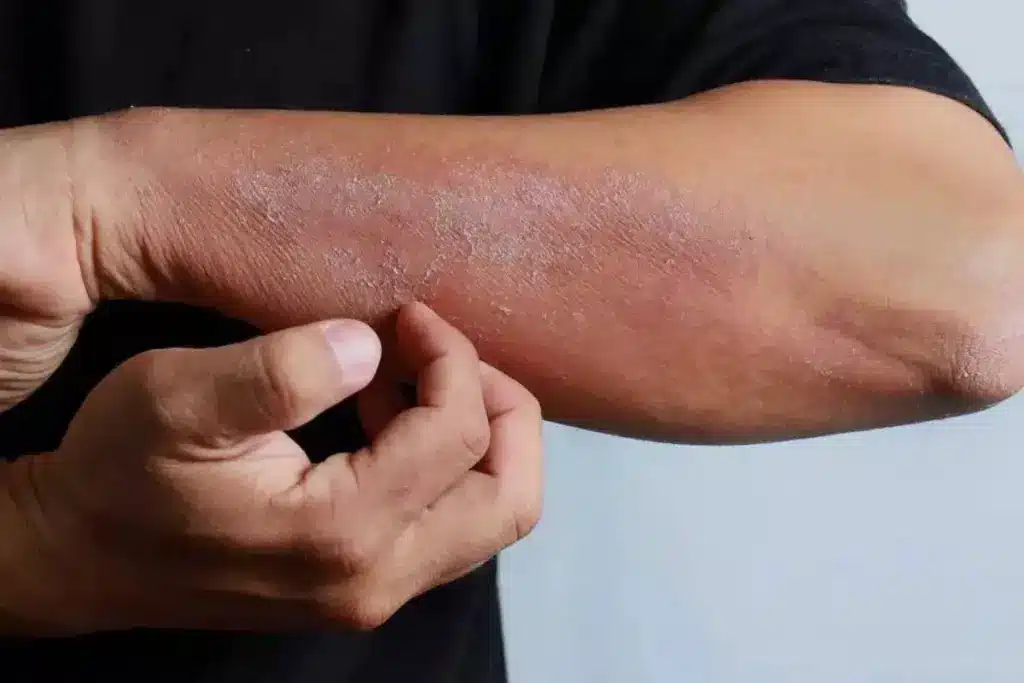
To understand how long eczema lasts, we first need to know what it is and why it happens. Eczema, or dermatitis, is a common skin problem that affects many people. It’s caused by a weak immune system and the mix of genes and environment.
What is Eczema?
Eczema makes the skin inflamed, itchy, and irritated. It can vary in severity and type, making it hard to manage. The skin’s protective layer is damaged, causing dryness, redness, and sometimes, oozing or crusting.
Key characteristics of eczema include:
- Dry, sensitive skin
- Inflammation and redness
- Intense itchiness
- Skin thickening (lichenification) due to chronic scratching
Common Causes of Eczema
Eczema is caused by genetics, environment, and the immune system. Knowing these causes helps in managing the condition better.
The main causes and triggers include:
- Genetic predisposition: People with a family history of eczema, asthma, or allergies are more likely to get it.
- Environmental triggers: Allergens, irritants, or extreme temperatures can start or make eczema worse.
- Allergies: Allergies to pollen, dust mites, or certain foods can trigger eczema.
- Stress: Stress can make eczema symptoms worse in some people.
Duration of Eczema: An Overview

Managing eczema means knowing how long it lasts and what affects it. Eczema can be either acute or chronic, each needing different treatments.
Acute vs. Chronic Eczema
Eczema is divided into acute and chronic types. Acute eczema happens when you’re exposed to something you’re allergic to. It goes away once you avoid the allergen. On the other hand, chronic eczema lasts a long time, with periods of flare-ups and calm.
- Acute Eczema: It’s caused by an irritant or allergen, and symptoms stop when you avoid it.
- Chronic Eczema: It needs constant care because it causes long-term inflammation and damages the skin.
Factors Affecting Duration
Many things can change how long eczema lasts. These include your genes, what’s around you, and how well treatments work. Knowing these helps create a plan just for you.
- Genetic Predisposition: If your family has eczema or other allergies, you might get chronic eczema too.
- Environmental Triggers: Things like allergens, irritants, and stress can make eczema worse and last longer.
- Treatment Efficacy: How well treatments like creams and changing your lifestyle work is key to managing eczema.
Doctors can make treatment plans better by knowing the type of eczema and what affects it. This helps patients with this long-lasting skin problem get better.
Symptoms of Eczema
Eczema, also known as dermatitis, is a skin condition. It causes inflammation, dryness, and itchiness. The symptoms can vary from mild to severe.
Common Signs to Watch For
Common symptoms include dry, itchy skin, redness, and inflammation. Eczema can also cause skin infections. These may need quick medical help.
- Dry, scaly skin
- Itchy skin, often severely
- Redness and inflammation
- Small, raised bumps or blisters
- Thickened skin due to chronic scratching
Some people may have more severe symptoms. These include:
- Open sores or cracks in the skin
- Signs of infection, including increased redness, swelling, or pus
When to Seek Medical Advice
If you notice any of these, get medical advice:
- Severe symptoms that interfere with your daily life
- Signs of skin infection
- No improvement with over-the-counter treatments
Seeing a doctor early can help manage eczema better. They can give a proper diagnosis and treatment plan.
| Symptom | Description | Severity |
| Dry Skin | Skin feels dry, tight, and may flake | Mild to Moderate |
| Itchy Skin | Skin feels itchy, often severely | Moderate to Severe |
| Redness and Inflammation | Skin appears red, swollen, and inflamed | Moderate to Severe |
Eczema Flare-Ups: Triggers and Patterns
Eczema flare-ups can be hard to predict. But knowing what triggers them can help manage them better. It’s key to understand what makes your eczema worse.
Identifying Your Triggers
What triggers eczema flare-ups varies a lot from person to person. Common culprits include soaps, detergents, stress, and changes in the environment. Keeping a symptom diary can help spot your personal triggers. By tracking when flare-ups happen and what might have caused them, you can find patterns.
Some foods or additives can also set off or make eczema symptoms worse. The connection between diet and eczema is complex. But staying away from known allergens and eating a balanced diet can help manage symptoms.
Seasonal Patterns
Eczema symptoms can follow the seasons too. For many, eczema gets worse in winter because of dry air. Others see more severe symptoms in summer due to heat and humidity. Changing your skincare routine with the seasons can help. For example, use more moisturizing products in winter and lighter, oil-free ones in summer.
Knowing these patterns lets you get ready and adjust your management plans. Whether it’s switching skincare products, avoiding certain triggers in peak seasons, or using humidifiers in dry months, being proactive can greatly improve your life.
Treatment Options for Eczema
There are many ways to treat eczema, from creams to changes in how you live. To manage eczema well, you need to tackle both symptoms and causes.
Topical Treatments and Their Efficacy
Topical treatments are often the first choice for eczema. These include:
- Corticosteroids: They help reduce inflammation and stop itching.
- Moisturizers: They keep the skin moist and prevent dryness.
- Topical Immunomodulators: They change how the immune system works to lessen inflammation.
These treatments work differently and have different side effects. For example, using corticosteroids for a long time can make the skin thinner. But moisturizers are usually safe to use for a long time.
| Treatment | Efficacy | Potential Side Effects |
| Corticosteroids | High | Skin thinning, adrenal suppression |
| Moisturizers | Variable | Rare, generally safe |
| Topical Immunomodulators | Moderate to High | Skin irritation, increased risk of infections |
Lifestyle Modifications
Changing your lifestyle is also key in managing eczema. This includes:
- Avoiding Triggers: Stay away from things that make eczema worse, like allergens and stress.
- Dietary Changes: Some foods can make eczema worse. Keeping a food diary can help find out which ones.
- Stress Management: Stress can make eczema worse. Using stress-reducing activities like meditation can help.
By making these lifestyle changes and using topical treatments, you can manage your eczema better. This can help reduce how often it flares up.
Home Remedies for Eczema Relief
There are many home remedies that can help soothe eczema symptoms. These methods can work alongside medical treatments to improve your skin’s health and overall well-being.
Soothing Baths and Moisturizers
Soothing baths are a simple yet effective way to alleviate eczema symptoms. Oatmeal baths, for instance, have been long praised for their anti-inflammatory properties. You can use colloidal oatmeal or wrap regular oatmeal in a cloth to create a sachet. Soaking in a lukewarm bath with baking soda can also help neutralize skin pH and reduce irritation.
Moisturizing is another critical aspect of eczema management. Using rich, fragrance-free moisturizers like coconut oil or shea butter can help lock in moisture and protect the skin. Applying moisturizer immediately after bathing can enhance its effectiveness by trapping moisture in the skin.
Natural Remedies to Consider
Beyond baths and moisturizers, several natural remedies can provide eczema relief. Aloe vera, known for its soothing properties, can be applied topically to calm irritated skin. Some individuals also find relief in using cold compresses to reduce itching and inflammation.
“Natural remedies can offer a gentle and effective way to manage eczema symptoms, but it’s important to consult with a healthcare professional before introducing new treatments.”
Other natural remedies include tea tree oil, which has antimicrobial properties, and chamomile, which can soothe irritated skin. But, it’s essential to dilute essential oils appropriately and perform patch tests to avoid adverse reactions.
The Role of Diet in Managing Eczema
Diet plays a big role in managing eczema. It can affect how often and how bad flare-ups are. Even though we don’t know what causes eczema, food can help make symptoms better or worse.
Foods That May Trigger Eczema
Knowing and avoiding foods that trigger eczema is key. Foods like dairy, gluten, nuts, and soy can be troublemakers. Keeping a food diary can help you see which foods make your eczema worse.
Common Trigger Foods:
- Dairy products
- Gluten-containing foods
- Nuts and seeds
- Soy products
- Processed foods with additives
Anti-Inflammatory Diet Recommendations
Eating foods that fight inflammation can help with eczema. Foods high in omega-3s, antioxidants, and fiber are good choices.
| Food Group | Examples | Benefits |
| Fatty Fish | Salmon, Sardines | Rich in omega-3 fatty acids, reducing inflammation |
| Fruits and Vegetables | Berries, Leafy Greens | High in antioxidants, protecting against oxidative stress |
| Nuts and Seeds | Flaxseeds, Walnuts | Good source of omega-3s and fiber |
| Whole Grains | Quinoa, Brown Rice | Rich in fiber, promoting gut health |
By choosing the right foods, people with eczema can lessen flare-ups. This can make their life better.
Eczema in Different Age Groups
It’s important to know how eczema affects people at different ages. This chronic skin condition can hit anyone, at any time. Each age group faces its own set of challenges, so we need to tailor our approach to help.
Eczema in Infants and Children
In babies and young kids, eczema shows up as a red, itchy rash. It can be on the face, scalp, or arms and legs. To manage it, we need to use gentle skin care and stay away from things that can make it worse.
Some common signs include:
- Redness and itching
- Dry, scaly skin
- Crusting or oozing
Parents can help their kids by:
- Choosing gentle, fragrance-free cleansers
- Keeping their skin moisturized
- Staying away from things that might irritate their skin
Eczema in Adults
For adults, eczema can show up in different places, like the hands, feet, or near the eyes. It can also make people feel stressed and upset because of how it looks and affects their daily life.
Adults can manage their eczema by:
- Using topical corticosteroids when it flares up
- Making lifestyle changes, like managing stress and avoiding irritants
- Trying phototherapy for severe cases
| Age Group | Common Symptoms | Management Strategies |
| Infants and Children | Red, itchy rash on face, scalp, or extremities | Gentle skin care, avoiding triggers, moisturizing |
| Adults | Eczema on hands, feet, or around eyes; stress and emotional distress | Topical corticosteroids, lifestyle modifications, phototherapy |
Eczema affects people in different ways, depending on their age. Understanding these differences helps us manage it better. This way, we can all live better lives despite eczema.
Long-Term Outlook for Eczema
Eczema is a chronic condition, but knowing its long-term outlook can help you manage it. It’s not just about treating symptoms. It’s also about making lifestyle changes to prevent flare-ups and improve your overall health.
Can Eczema Be Cured?
There is no cure for eczema yet. But, research is ongoing, bringing new insights into treatments. Managing eczema well can greatly reduce its impact on your daily life.
Managing Eczema Over Time
Managing eczema over time needs a multi-faceted approach. This includes:
- Using topical treatments as prescribed by healthcare professionals
- Adopting lifestyle modifications such as avoiding triggers and maintaining a healthy diet
- Regularly moisturizing to keep the skin hydrated and reduce the risk of flare-ups
Effective eczema management also means knowing what triggers symptoms. By understanding these triggers, you can take steps to reduce their impact.
| Common Triggers | Management Strategies |
| Stress | Practice stress-reducing techniques such as meditation or yoga |
| Environmental allergens | Use HEPA filters and avoid exposure to known allergens |
| Certain foods | Maintain a food diary to identify and avoid trigger foods |
The Psychological Impact of Eczema
Eczema’s emotional toll can be as tough as its physical symptoms. It affects not just the skin but also mental health and overall well-being.
Coping with Emotional Stress
Dealing with eczema’s emotional stress needs a mix of strategies. Stress management techniques like meditation and deep breathing can help ease the emotional load.
Key Strategies for Managing Emotional Stress:
- Mindfulness and relaxation techniques
- Seeking support from family, friends, or support groups
- Engaging in activities that bring joy and distraction
It’s important to know when to seek professional help. Counseling or therapy can give people the tools to handle eczema’s emotional side.
Support Systems and Resources
A strong support system is key for those facing eczema’s psychological impact. Support groups, online or in-person, offer a sense of community and understanding.
Available Resources:
- National Eczema Association (NEA) for educational resources and support
- Local mental health professionals specializing in chronic condition management
- Online forums and communities for connecting with others who have eczema
We urge those with eczema to check out these resources. Finding the right support can greatly improve their journey with eczema.
When to Consult a Specialist
Managing eczema often needs professional help. For mild cases, over-the-counter treatments and lifestyle changes can work. But, severe or ongoing cases need a dermatologist’s help.
Guidelines for Seeing a Dermatologist
Here are signs it’s time to see a dermatologist:
- Severe symptoms that affect your daily life or sleep.
- Frequent flare-ups even with treatments or lifestyle changes.
- Signs of infection, like more redness, swelling, or pus.
- Uncertain diagnosis, unsure if it’s eczema or something else.
- Lack of improvement with over-the-counter treatments.
Seeing a dermatologist can give you a correct diagnosis and a treatment plan made just for you.
Preparing for Your Appointment
To get the most from your visit, prepare well. Here’s how:
- Keep a symptom diary: Note when symptoms happen, any triggers, and how you’ve treated them.
- List your medications: Include all topical or oral meds, and supplements or vitamins.
- Prepare your questions: Write down any questions or worries about your eczema or treatment.
Being prepared helps you have a useful visit. You’ll get the help you need to manage your eczema well.
Conclusion: Moving Forward with Eczema Management
Managing eczema well means using many approaches together. This includes medical treatments, changing your lifestyle, and getting emotional support. Knowing your skin condition and what triggers it can help improve your symptoms and life quality.
It’s key to work with healthcare experts to make a care plan that’s just for you. This team effort helps people manage their eczema better. It makes flare-ups less common and less severe.
We’re here to help you all the way, giving advice on managing eczema. We aim to make it easier for you to deal with this skin condition. With the right help and strategies, you can live a full and healthy life, even with eczema.
FAQ
What is eczema, and what causes it?
Eczema, also known as dermatitis, is a chronic skin condition. It happens when your immune system is not working right. It’s caused by a mix of your genes and the environment around you. Things like allergies and certain environmental factors can also play a part.
What are the common symptoms of eczema?
Signs of eczema include dry, itchy skin and redness. Inflammation is another common symptom. If your symptoms get worse or you see signs of infection, you should see a doctor.
How can I manage eczema flare-ups?
Knowing what triggers your eczema can help you manage it better. Soaps, detergents, stress, and changes in the weather are common triggers.
What are the treatment options for eczema?
To manage eczema, you need a mix of treatments and lifestyle changes. Topical treatments like corticosteroids and moisturizers are often used. Changing your lifestyle, like avoiding triggers and eating healthy, is also important.
Are there any home remedies that can help alleviate eczema symptoms?
Yes, things like oatmeal baths or using coconut oil can help. But, always talk to a doctor before trying new remedies.
How does diet play a role in managing eczema?
Eating foods that can trigger eczema, like dairy or gluten, should be avoided. Foods rich in omega-3s, fruits, and vegetables can help manage symptoms.
Can eczema be cured?
Eczema is a chronic condition and can’t be cured. But, with the right management, you can improve your symptoms and life quality.
How can I cope with the emotional stress of eczema?
Dealing with the emotional side of eczema needs support and resources. Joining support groups, talking to a counselor, and learning stress management can help a lot.
When should I consult a specialist for my eczema?
If your symptoms are severe, you have frequent flare-ups, or you see signs of infection, see a dermatologist. Keeping a symptom diary and making a list of questions can help your appointment go well.
How can I manage eczema over time?
Managing eczema long-term means using medical treatments, making lifestyle changes, and keeping an eye on your condition. Understanding your eczema, finding your triggers, and working with doctors can improve your symptoms and life quality.
References
JAMA Network. Evidence-Based Medical Insight. Retrieved from https://www.jamanetwork.com/journals/jamadermatology/fullarticle/2801443