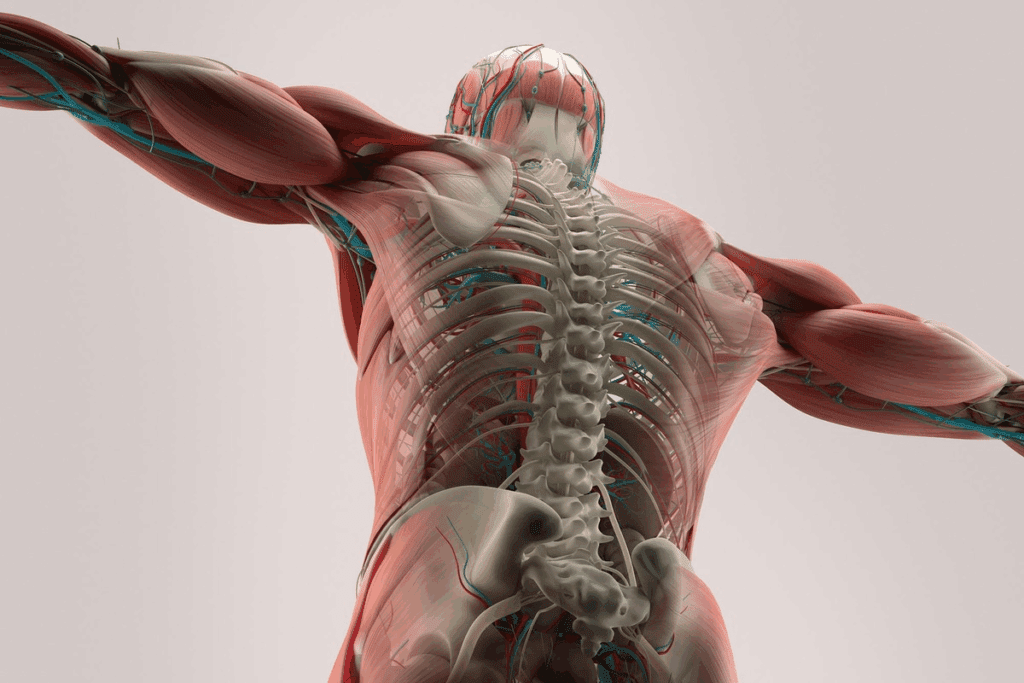
Knowing the anatomy of the abdominal cavity is key for doctors to diagnose and treat patients well. We break the abdomen into smaller parts to find organs and spot diseases.Learn the 9 essential abdomen regions. Understand the anatomy, key organs in each region, and their clinical importance clearly.
The abdominal area is split into four quadrants and nine regions. The four-quadrant system is often used in medicine. These quadrants are named by their location: right upper, right lower, left upper, and left lower.
It’s vital for doctors to know these areas and the organs inside them. This knowledge helps them talk clearly with each other and make accurate diagnoses.
Key Takeaways
- Understanding abdominal anatomy is key for accurate diagnosis and patient care.
- The abdomen is split into four quadrants and nine regions for better organ localization.
- The four-quadrant system is commonly used in clinical practice.
- Knowing the organs in each quadrant is essential for healthcare professionals.
- Accurate anatomical knowledge improves patient outcomes.
The Importance of Abdominal Anatomy in Clinical Practice
Clinical practice relies heavily on knowing abdominal anatomy well. The abdominal cavity is complex, with many organs and structures. This makes a systematic approach to diagnosis and treatment necessary.
“Accurate anatomical knowledge is the foundation upon which clinical decisions are made,” says a key expert. This shows how vital abdominal anatomy is in healthcare.
Abdominal anatomy is key in clinical practice. It helps healthcare professionals talk clearly about patient conditions. The abdomen is divided into quadrants and regions, making communication easier.
Standardized Communication Among Healthcare Professionals
Using standardized anatomical divisions is important. The four-quadrant and nine-region systems help healthcare providers describe symptoms and conditions accurately. This is vital for multidisciplinary teams working together on patient care.
For example, when a patient has abdominal pain, healthcare professionals can pinpoint the cause. They use the quadrant or region where the pain is. This method makes the diagnostic process more efficient and effective.
Correlation Between Symptoms and Underlying Organs
Dividing the abdomen into specific regions and quadrants helps clinicians link symptoms to organs. For instance, pain in the right lower quadrant often means appendicitis. Knowing these connections is key for diagnosing and treating abdominal issues.
“The precise localization of abdominal pain to specific quadrants or regions is a cornerstone of abdominal diagnosis.” This method guides further testing and treatment decisions, showing the importance of abdominal anatomy.
By linking symptoms to specific anatomical locations, healthcare professionals can spot issues with organs. This is critical for creating the right treatment plan. It highlights the role of abdominal anatomy in clinical practice.
Overview of Abdomen Regions and Division Systems
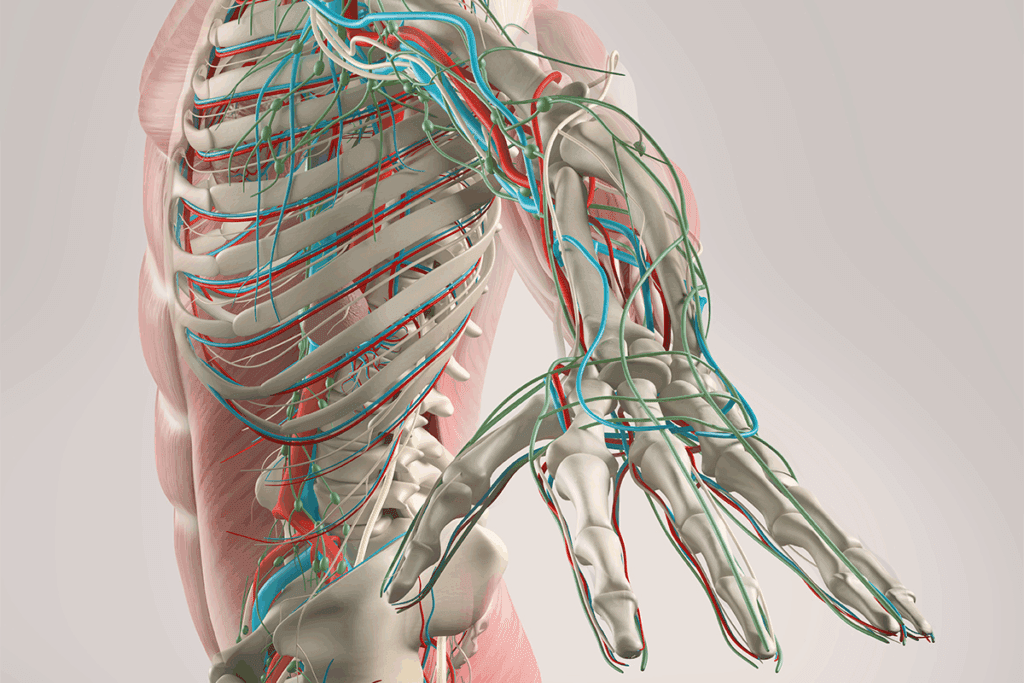
The abdominal cavity is divided into regions for medical reasons. This helps doctors make accurate diagnoses and treatments. Anatomists and medical staff break down the abdominopelvic cavity into smaller areas for study and discussion.
Historical Development of Abdominal Division
The way we divide the abdominal cavity has changed over time. Early anatomists saw the need for a systematic way to understand its complex anatomy. Historically, various division systems have been developed, showing our growing knowledge of human anatomy and the need for clear clinical communication.
These systems have improved with advances in medical imaging and surgery. This has led to better diagnoses and treatments.
Comparison Between Four-Quadrant and Nine-Region Systems
The four-quadrant and nine-region systems are the two main ways to divide the abdomen. The four-quadrant system is simpler and more commonly used in clinical practice. It offers a straightforward way to pinpoint abdominal pain or problems.
The nine-region system, on the other hand, provides a more detailed classification. It allows for more precise localization of organs and structures. This system is more complex but valuable for surgery and detailed diagnostics.
Healthcare professionals need to know both systems. They offer different ways to understand abdominal anatomy, helping in diagnosing and managing patient conditions.
The Four-Quadrant System of the Abdomen
Knowing the four-quadrant system of the abdomen is key for good medical care. It splits the abdominal area into four parts. This helps doctors find where pain or problems are.
Anatomical Landmarks: Median Line and Transumbilical Plane
The four-quadrant system relies on two main landmarks: the median line and the transumbilical plane. The median line is an imaginary line from the top of the chest to the pubic bone. It splits the abdomen into left and right sides.
The transumbilical plane is a line across the belly button. It divides the abdomen into upper and lower parts. These lines create the four quadrants: right upper, left upper, right lower, and left lower.
Clinical Applications of the Four-Quadrant System
The four-quadrant system is very useful in checking for abdominal pain. Doctors can find where the pain is to guess what might be wrong. This helps them make a good plan for treatment.
Important organs and structures are found in each quadrant:
- Right Upper Quadrant (RUQ): Liver, gallbladder, duodenum
- Left Upper Quadrant (LUQ): Stomach, spleen, pancreas
- Right Lower Quadrant (RLQ): Appendix, cecum, right ovary
- Left Lower Quadrant (LLQ): Sigmoid colon, left ovary
This system helps doctors talk clearly about patient issues. It makes it easier to find and treat problems in the abdomen.
The Nine-Region System of the Abdomen
The nine-region system of the abdomen is more detailed than the four-quadrant system. It helps doctors diagnose conditions more accurately. This system divides the abdominal cavity into nine regions. It gives a precise framework for understanding abdominal anatomy and related pathologies.
Anatomical Landmarks: Midclavicular Lines, Subcostal and Transtubercular Planes
The nine-region system is defined by specific anatomical landmarks. The midclavicular lines are vertical lines that run down from the midpoint of each clavicle. Two transverse planes, the subcostal plane and the transtubercular plane, further divide the abdomen. The subcostal plane is located at the lower edge of the tenth costal cartilages, while the transtubercular plane passes through the tubercles of the iliac crests.
These landmarks help to delineate the nine regions. The right and left hypochondriac regions, the epigastric region, the right and left lumbar regions, the umbilical region, and the right and left iliac regions. Understanding these regions is key for localizing abdominal pain and identifying the underlying organs or structures involved.
Advantages of the Nine-Region System for Precise Diagnosis
The nine-region system offers several advantages for precise diagnosis. It divides the abdomen into smaller areas, allowing for more specific correlation between symptoms and underlying organs. This system is very useful in clinical practice. It helps healthcare professionals narrow down the causes of abdominal pain based on the region affected.
Region | Organs/Structures | Clinical Significance |
Right Hypochondriac | Liver, Gallbladder | Right upper quadrant pain, jaundice |
Epigastric | Stomach, Pancreas | Epigastric pain, pancreatitis |
Left Hypochondriac | Spleen, Stomach | Left upper quadrant pain, splenic rupture |
Right Lumbar | Ascending Colon | Right flank pain, colonic pathology |
Umbilical | Small intestine | Periumbilical pain, intestinal obstruction |
Left Lumbar | Descending Colon | Left flank pain, colonic pathology |
Right Iliac | Appendix, Cecum | Right lower quadrant pain, appendicitis |
Left Iliac | Sigmoid Colon | Left lower quadrant pain, diverticulitis |
The detailed classification provided by the nine-region system enhances diagnostic accuracy. It guides further investigation and treatment. By understanding the specific organs and structures within each region, healthcare professionals can develop a more targeted approach to patient care.
Right Upper Quadrant (RUQ): Organs and Structures
The right upper quadrant (RUQ) of the abdomen is packed with vital organs. These organs are key to digestion and metabolism. We’ll look at the main organs and structures here and talk about common pain issues.
Major Organs
The RUQ is home to important organs like the right part of the liver, the gallbladder, and the right kidney. It also has a small part of the stomach, the duodenum, the head of the pancreas, parts of the ascending and transverse colon, and small intestine sections.
The liver is the biggest organ in this area. It’s vital for detoxification, metabolism, and making bile. The gallbladder holds bile from the liver. It releases it into the duodenum to help digest fats.
Common Pathologies Associated with RUQ Pain
Pain in the RUQ can signal several health issues. Gallstones and cholecystitis often cause pain here. Liver diseases like hepatitis and cirrhosis can also lead to pain in this area.
Duodenal ulcers and pancreatitis can also cause RUQ pain. This shows why it’s critical to diagnose abdominal symptoms carefully.
Left Upper Quadrant (LUQ): Organs and Structures
The left upper quadrant is key in abdominal anatomy. It houses important organs like the stomach, spleen, and pancreas. This area is surrounded by the rib cage and has a complex layout of vital structures.
Major Organs: Stomach, Spleen, Pancreas
The stomach, a major digestion organ, is partly in the LUQ. It secretes digestive enzymes and acids here. The spleen filters blood and stores red blood cells in this quadrant. The pancreas, with its tail in the LUQ, aids in digestion and hormone production.
These organs are vital for digestion, immune function, and blood sugar control. Knowing their roles helps in diagnosing and treating LUQ issues.
Common Pathologies Associated with LUQ Pain
LUQ pain can signal several health problems. Issues like gastritis, ulcers, and splenic damage can cause pain. Pancreatitis, whether sudden or long-term, also shows up as LUQ pain.
Healthcare experts need to recognize these conditions to offer the right treatments. Knowing the LUQ’s anatomy and its symptoms is critical in medical practice.
“Accurate diagnosis of abdominal pain requires a deep understanding of each quadrant’s organs, including the left upper quadrant.” This knowledge helps doctors link symptoms to specific organs. It guides them in creating effective treatment plans.
Right Lower Quadrant (RLQ): Organs and Structures
Knowing the anatomy of the right lower quadrant is key for diagnosing and treating abdominal issues. The right lower quadrant (RLQ) is one of the four main areas of the abdominal cavity. It is defined by the median plane and the transumbilical plane.
The RLQ houses important organs and structures vital for our body’s functions. These include the appendix, cecum, parts of the small intestines, the right half of the female reproductive system, and the right ureter.
Major Organs in the RLQ
Understanding the major organs in the RLQ is vital for accurate diagnosis and treatment. These organs are:
- The appendix, a small, finger-like pouch attached to the cecum, which can be a source of pain if inflamed.
- The cecum, the beginning of the large intestine, which receives contents from the small intestine.
- Parts of the small intestines, specially the ileum, which is involved in nutrient absorption.
- In females, the right ovary and fallopian tube, which are part of the reproductive system.
- The right ureter, which carries urine from the right kidney to the bladder.
Common Pathologies Associated with RLQ Pain
Pain in the RLQ can stem from various conditions related to the organs in this area. Some common issues include:
Condition | Description |
Appendicitis | Inflammation of the appendix, often requiring surgical intervention. |
Cecal Diverticulitis | Inflammation of diverticula in the cecum, which can mimic appendicitis. |
Ovarian Cysts or Torsion | Conditions affecting the right ovary, potentially causing severe pain. |
Ureteral Stones | Stones in the right ureter, causing pain that can radiate to the RLQ. |
A medical expert notes, “Accurate diagnosis of RLQ pain requires a thorough understanding of the organs and structures within this quadrant, as well as the possible pathologies that can affect them.”
“The diagnosis of acute appendicitis is often challenging and requires a combination of clinical evaluation, laboratory tests, and imaging studies.”
— Medical Expert, Surgeon
Understanding the anatomy and common pathologies of the RLQ is critical for healthcare professionals. Recognizing the signs and symptoms of RLQ conditions can improve patient outcomes and reduce complications.
Left Lower Quadrant (LLQ): Organs and Structures
The left lower quadrant is home to many important organs and structures. It’s a key area in medicine because many diseases can affect it.
This region includes parts of the digestive system, the urinary system, and the female reproductive system. Knowing the anatomy here is key for treating diseases.
Major Organs: Sigmoid Colon, Left Ovary
The sigmoid colon, part of the large intestine, is in the LLQ. It can get diseases like diverticulitis and sigmoid volvulus. In women, the left ovary is also in this area. It can get cysts, twist, or have an ectopic pregnancy.
Other important parts in the LLQ are the left ureter and parts of the small intestine. These can also get sick, making the LLQ hard to diagnose.
Common Pathologies Associated with LLQ Pain
Pain in the left lower quadrant can come from many sources. Diverticulitis, which is inflammation of the sigmoid colon, is a common cause. Other causes include ovarian cysts or torsion in women, and urinary problems like kidney stones.
To diagnose LLQ pain, doctors need to know the organs and structures well. They also need to do a detailed check-up.
Doctors must think about all possible reasons for LLQ pain. This helps them give the right treatment.
Detailed Anatomy of the Nine Abdomen Regions
Knowing the anatomy of the nine abdominal regions is key for accurate diagnosis and treatment. The nine-region division helps healthcare professionals pinpoint problems more precisely. This detailed view of the abdominal anatomy is vital.
Epigastric Region: Organs and Clinical Significance
The epigastric region is between the costal margins and the subcostal plane. It has vital organs like the stomach, liver, and pancreas. This area is important because it often feels pain from the stomach, pancreas, and sometimes the heart.
Problems in this area can cause stomach pain or discomfort. This might be due to gastritis, peptic ulcers, or pancreatitis. It’s important to diagnose accurately because of the many vital organs here.
Right and Left Hypochondriac Regions: Organs and Clinical Significance
The right and left hypochondriac regions are on either side of the epigastric area. The right side has the liver’s right lobe and the gallbladder. The left side has the spleen, stomach’s fundus, and parts of the pancreas.
These areas are important because they have vital organs. For example, the right side often deals with liver and gallbladder issues. The left side might have spleen or pancreatic problems.
Region | Major Organs | Common Pathologies |
Epigastric | Stomach, Pancreas, Liver | Gastritis, Pancreatitis, Peptic Ulcer |
Right Hypochondriac | Liver, Gallbladder | Cholecystitis, Liver Metastases |
Left Hypochondriac | Spleen, Stomach, Pancreas | Splenic Injury, Pancreatitis |
Umbilical Region: Organs and Clinical Significance
The umbilical region is around the umbilicus. It has parts of the small intestine, the transverse colon, and sometimes the greater omentum. This area is significant because it can have various problems, like umbilical hernias and infections.
Issues in this area might show as pain or swelling around the umbilicus. Knowing this area’s anatomy is key for diagnosing problems like umbilical hernias or omental issues.
Right and Left Lumbar Regions: Organs and Clinical Significance
The right and left lumbar regions are between the costal margins and the iliac crests. The right side has parts of the ascending colon. The left side has parts of the descending colon and sometimes the left kidney.
These areas are important because they can have many problems. For example, they might have kidney stones, colonic diseases, or retroperitoneal issues. Pain or masses here could mean kidney stones, colonic tumors, or retroperitoneal fibrosis.
“A thorough understanding of the abdominal regions is essential for accurate diagnosis and effective management of abdominal pathologies.”
— Clinical Anatomy Journal
In conclusion, knowing the nine abdominal regions is key for understanding the complex organs and structures in the abdominal cavity. By linking clinical findings with the specific region, healthcare professionals can narrow down diagnoses and plan treatments.
Clinical Assessment Based on Abdominal Regions
Assessing the abdomen is key in clinical practice. We divide it into regions and quadrants to find pain sources and choose treatments.
Physical Examination Techniques
Physical exams are essential in clinical assessment. We use inspection, palpation, percussion, and auscultation to check the abdomen. Each method gives us clues about what’s inside and any problems.
Inspection lets us see the belly’s shape, looking for swelling, scars, or lumps. Palpation finds tender spots, guarding, or lumps. Percussion checks organ sizes and finds fluids or gases. Auscultation listens for bowel sounds and blood flow issues.
Technique | Purpose | Findings |
Inspection | Observe abdominal contour | Distension, scars, masses |
Palpation | Assess tenderness and masses | Tenderness, guarding, masses |
Percussion | Assess organ size and detect fluid/gas | Organ size, fluid, gas |
Auscultation | Evaluate bowel sounds and vascular abnormalities | Bowel sounds, bruits |
Differential Diagnosis Based on Location of Pain
The pain’s location helps us guess what’s wrong. For example, pain in the right upper quadrant might mean liver or gallbladder issues. Pain in the left lower quadrant could point to problems with the sigmoid colon or ovaries.
By linking physical exam results with pain location, we can guess what might be wrong. Knowing the clinical significance of the abdomen’s layout is vital for treating patients well.
Diagnostic Imaging of Abdominal Regions
Advanced imaging tools are key in checking the abdomen’s health. They help doctors see inside the abdomen. This makes it easier to find problems and plan treatments.
Ultrasound Applications by Quadrant
Ultrasound is a common tool for looking at the abdomen. It’s used in different parts of the abdomen:
- Right Upper Quadrant (RUQ): Checks the liver, gallbladder, and right kidney.
- Left Upper Quadrant (LUQ): Looks at the spleen, stomach, and left kidney.
- Right Lower Quadrant (RLQ): Sees the appendix, cecum, and right ovary.
- Left Lower Quadrant (LLQ): Examines the sigmoid colon, left ovary, and nearby areas.
CT and MRI Protocols for Specific Regions
CT and MRI scans are important for detailed checks of the abdomen. Each scan has its own method for different areas:
Region | CT Protocol | MRI Protocol |
Epigastric | Contrast-enhanced CT | MRI with gadolinium |
Hypochondriac | High-resolution CT | MRI with fat suppression |
Lumbar | Standard CT protocol | MRI with T2 weighting |
Region-Specific Imaging Findings
Each part of the abdomen shows different things on scans. For example, the right lower quadrant is often checked for appendicitis. The left upper quadrant is looked at for spleen injuries.
Knowing these specific findings is vital for correct diagnosis and treatment of abdominal issues.
Conclusion
Knowing the anatomy of the abdomen is key for good patient care. The four-quadrant and nine-region systems help doctors talk and diagnose clearly. They make sure everyone is on the same page.
Each part of the abdominal cavity has its own organs and structures. Knowing this helps doctors assess and manage patients better. By learning about the abdomen’s anatomy, doctors can improve their skills and care for patients more effectively.
The 9 quadrants of the abdomen help doctors find organs more precisely. This leads to better diagnoses and treatment plans. Using this knowledge in practice improves patient care and outcomes.
FAQ:
What are the 9 quadrants of the abdomen?
The 9 quadrants of the abdomen help doctors find specific areas in the belly. They include the epigastric, right and left hypochondriac, umbilical, right and left lumbar, hypogastric, and right and left iliac regions.
What is the difference between the four-quadrant and nine-region systems?
The four-quadrant system divides the belly into four parts. The nine-region system divides it into nine parts. The four-quadrant system is used more often in hospitals. The nine-region system is more detailed.
What organs are present in the right upper quadrant (RUQ)?
The RUQ has big organs like the liver, gallbladder, and duodenum. Pain here can mean problems like cholecystitis, hepatitis, or peptic ulcer disease.
What is the clinical significance of the left upper quadrant (LUQ)?
The LUQ has organs like the stomach, spleen, and pancreas. Pain here can mean issues like gastritis, splenic rupture, or pancreatitis.
What are the common pathologies associated with right lower quadrant (RLQ) pain?
RLQ pain often means problems like appendicitis, cecal diverticulitis, or ovarian torsion.
How is the abdomen divided into regions?
The belly is divided using landmarks like the median line, transumbilical plane, and midclavicular lines. Also, the subcostal and transtubercular planes are used.
What is the importance of understanding abdominal anatomy?
Knowing the belly’s anatomy is key for doctors. It helps them talk clearly, find problems right, and care for patients well.
What are the advantages of the nine-region system?
The nine-region system is more detailed. It helps doctors find problems more accurately and pinpoint pain sources better.
How do healthcare professionals use abdominal regions in clinical assessment?
Doctors use the belly’s regions for exams, figuring out what’s wrong, and for imaging tests.
What diagnostic imaging modalities are used to evaluate abdominal regions?
Tests like ultrasound, CT, and MRI are used. Each test has its own way of looking at the belly.
What is the role of the four-quadrant system in clinical practice?
The four-quadrant system is common in hospitals. It helps doctors talk clearly and find problems accurately.
How do the 9 quadrants of the abdomen relate to the organs present?
The 9 quadrants help doctors know where organs are and what’s wrong. This helps them treat patients better.
References:
National Center for Biotechnology Information. Abdominal Quadrants: Anatomy, Regions, and Organs. Retrieved from https://www.ncbi.nlm.nih.gov/books/NBK459455/