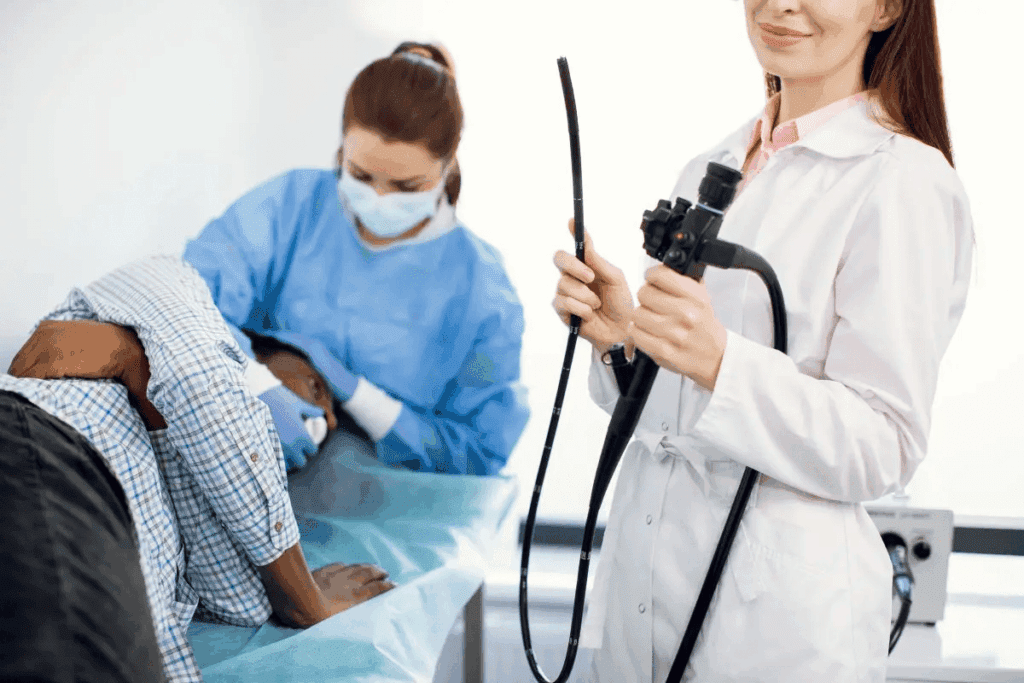
Computed Tomography (CT) scans are key in medical imaging, mainly for the belly and pelvic areas. Oral contrast agents help make the gut visible, helping doctors spot health issues.
Oral contrast agents help tell apart different parts in the belly. They come in two main types: positive and neutral. Knowing about these agents is key for better imaging and patient safety.
We’ll look at the five main oral contrasts for CT scans. We’ll cover what they’re made of, how they’re used, and their benefits. This guide is for healthcare pros.
Key Takeaways
- CT scans are a common imaging modality used to diagnose various medical conditions.
- Oral contrast agents enhance the visibility of the gastrointestinal tract.
- There are two primary categories of oral contrast agents: positive and neutral agents.
- Understanding the different types of oral contrast is essential for optimizing imaging protocols.
- Patient safety is a top priority when selecting oral contrast agents for CT scans.
What You Need to Know About CT Imaging
To understand oral contrast agents, you need to know about CT imaging basics. CT scans use x-rays to show the body’s inside. This tech has changed how doctors diagnose and treat patients.
Basic Principles of CT Scanning
CT scanning combines x-rays from different angles. This creates detailed images of the body. It’s fast and doesn’t hurt, making it a key tool for doctors.
CT scans work by showing how much x-rays different tissues block. For example, bones block more x-rays than soft tissues. This helps doctors see different parts of the body clearly.
Role of Contrast Media in Diagnostic Imaging
Contrast media are key for better CT scan results. They make certain areas stand out, helping doctors see what’s going on. There are many types, including oral agents for the gut.
Key benefits of contrast media include:
- Enhanced visualization of blood vessels and organs
- Improved detection of lesions and abnormalities
- Better differentiation between various tissue types
Knowing how contrast media work is important. They help oral agents make the gut visible. This leads to better diagnoses and treatment plans.
Understanding Oral Contrast and Its Importance
Oral contrast agents are key in making CT scans more accurate. They make the gastrointestinal tract visible, helping to spot problems in the bowel and nearby areas.
Definition and Purpose
Oral contrast media are substances given to patients before CT scans. They make the gastrointestinal tract stand out. This helps doctors see and diagnose issues better.
“The use of oral contrast agents has become an indispensable tool in radiology, allowing for more precise diagnoses and treatment plans.” These agents make it easier to see if something is wrong, like inflammation or tumors.
How Oral Contrast Enhances Diagnostic Accuracy
Oral contrast agents make the bowel and its contents clearer. This is key for spotting problems like bowel obstructions. They help find where and what the blockage is.
They also help doctors see the bowel’s walls and insides better. This lets them spot issues like thickened walls or tumors. A top radiology expert says,
“Oral contrast agents are essential for the accurate diagnosis of gastrointestinal disorders, providing critical information that guides clinical management.”
Differentiating Bowel from Other Structures
Oral contrast agents are great at showing the bowel apart from other parts of the belly. They make it clear what’s the bowel and what’s not. This cuts down on mistakes in diagnosis.
In short, oral contrast agents are vital for better diagnosis and for telling the bowel apart from other things. They are a key part of CT imaging, helping doctors make the right decisions.
Categories of Oral Contrast Agents
CT scans use different types of oral contrast agents. These are divided into three main groups: positive, neutral, and negative contrast agents. Knowing about these categories helps pick the right contrast agent for each diagnostic task.
Positive Contrast Agents
Positive contrast agents make things look brighter on CT scans because they block more X-rays. Barium sulfate is a well-known positive contrast agent. It’s great for showing the GI tract and spotting problems like tumors or inflammation.
These agents help doctors see the bowel clearly by making it stand out from other tissues. But, they might not be good for everyone, like those with allergies or bowel damage.
Neutral Contrast Agents
Neutral contrast agents have the same X-ray blocking as soft tissues. They make the bowel bigger without changing its X-ray blocking too much. Water is a neutral contrast agent, often used in CT enterography to look at the small bowel.
These agents are good for seeing the bowel wall and its contents without the bright look of positive agents. They help find small problems like early inflammation or tiny tumors.
Negative Contrast Agents
Negative contrast agents block less X-rays than soft tissues, so they look darker on CT scans. Air and carbon dioxide are examples. They make the bowel bigger and contrast with the bowel wall.
These agents are useful in certain situations, like when you need a clear view of the bowel’s inside. But, they might not be for everyone because they can irritate the bowel.
In summary, choosing the right oral contrast agent depends on what you need to see and the patient’s situation. It’s important to know how positive, neutral, and negative contrast agents work and when to use them for the best CT scan results.
Type 1: Barium Sulfate Solutions
Barium sulfate solutions are key in CT scans for their safety and effectiveness. They have been used for decades to see the inside of the gut. This makes them a top choice for medical imaging.
Composition and Physical Properties
Barium sulfate is a white powder that doesn’t dissolve in water. It’s mixed with water to make a drink for patients before a CT scan. Its high density helps it show up well on X-rays, making the gut stand out in images.
The way barium sulfate solutions feel and taste can be changed. This makes them easier for patients to swallow and more effective for doctors to see what’s going on.
Available Formulations and Flavors
There are many types of barium sulfate solutions to help patients. Some taste better, while others are easier to swallow. These changes help make the experience more comfortable for everyone involved.
- Flavored barium sulfate suspensions to improve palatability
- Aqueous suspensions for patients who prefer a simpler formulation
- Formulations with additives to reduce gastrointestinal side effects
Safety Profile and Non-Nephrotoxicity
Barium sulfate is very safe to use. It doesn’t get absorbed by the gut, so it doesn’t harm the kidneys. This makes it a great choice for people with kidney problems.
But, barium sulfate isn’t good for everyone. It’s not safe for people who might have a hole in their gut. If it gets out, it can cause serious problems.
- Barium sulfate is safe for patients with renal impairment due to its non-nephrotoxic nature.
- It is not suitable for patients with suspected gastrointestinal perforation.
Type 2: Water-Soluble Iodinated Contrast
Water-soluble iodinated contrast agents are a key option for CT scans. They are great for patients who can’t handle barium sulfate. These agents are best for those with suspected bowel perforation or when barium is not safe.
Diatrizoate (Gastrografin)
Diatrizoate, also known as Gastrografin, is a common water-soluble iodinated contrast. It’s great for showing the gastrointestinal tract. It’s often used when there’s a chance of bowel perforation or leakage.
The benefits of diatrizoate include:
- Rapid absorption from the gut
- Works well for certain bowel conditions
- Safe for patients where barium is not okay
Iohexol and Other Iodinated Agents
Iohexol is another iodinated contrast used for CT scans. It’s known for being less osmolar than older agents like diatrizoate. This makes it easier for some patients to tolerate.
Key features of iohexol include:
- Lower osmolality, which may reduce gut side effects
- Good for a wide range of CT imaging needs
- Safe for many patient groups
Contraindications and Safety Considerations
Water-soluble iodinated contrast agents are usually safe. But, there are important things to watch out for. Patients with known hypersensitivity to iodinated contrast, thyroid issues, or at risk of kidney problems need extra care.
Important safety points include:
- Watch for signs of hypersensitivity reactions
- Check kidney function before giving it
- Use the least amount needed
Knowing about water-soluble iodinated contrast agents like diatrizoate and iohexol helps doctors make better choices for CT scans.
Type 3: Water as Neutral Oral Contrast
Water is now used as a neutral oral contrast agent in CT scans. It has low-attenuation properties. This makes it perfect for certain medical uses where seeing the bowel and its surroundings is key.
Mechanism of Action
Water works as a neutral oral contrast by making the stomach and intestines bigger. This helps in seeing the gastrointestinal tract better during CT scans. Its low attenuation helps in spotting the bowel lumen from other structures and lesions.
“The use of water as an oral contrast agent is based on its ability to provide a clear distinction between the bowel and adjacent tissues without causing significant artifacts,” notes a study on contrast agents in CT imaging.
Clinical Applications
Water is great for CT scans of the abdomen and pelvis. It helps in checking the stomach and intestinal walls. It’s also used to look at the duodenum and other small intestine parts.
- Assessment of gastric wall pathology
- Evaluation of the duodenum and small intestine
- Visualization of bowel wall inflammation or ischemia
Advantages and Limitations
Using water as a neutral oral contrast has its perks. It’s easy to get, cheap, and safe. But, it can be absorbed by the body. This might lessen its ability to make the bowel bigger over longer scan times.
Despite these downsides, water is a good choice for certain medical needs. It’s useful when other contrast agents can’t be used or aren’t well-tolerated by patients.
Type 4: Low-Attenuation Dilute Solutions
We look at low-attenuation dilute solutions as a good choice for oral contrast in certain CT scans. These solutions help see the gastrointestinal tract better. They work well when other contrast agents don’t.
Composition and Properties
These solutions mix water with a bit of contrast agent, like barium or iodine. They are diluted to get the right contrast. The key property is their ability to show the bowel lumen clearly without causing problems.
Specific Clinical Applications
They are great for seeing the bowel wall and lumen in detail. This is useful for diagnosing bowel obstruction, Crohn’s disease, or bowel wall inflammation. The low-attenuation quality helps spot issues in the bowel.
Comparison with Other Neutral Agents
Compared to water, these solutions offer a better contrast in some cases. While water is neutral, these solutions give a bit more contrast. The choice depends on the clinical question and the radiologist’s preference.
In summary, low-attenuation dilute solutions are a special tool for CT scans. Their unique features make them ideal for certain cases. They give radiologists another way to improve imaging.
Type 5: Negative Oral Contrast Agents
We use negative oral contrast agents like air and carbon dioxide to make certain structures stand out during CT scans. These agents create a contrast that’s opposite to positive agents. This helps us see the gastrointestinal tract and its surroundings more clearly.
Air and Carbon Dioxide
Air and carbon dioxide are the top choices for negative oral contrast. Air is easy to get and cheap, while carbon dioxide is absorbed faster, which might be more comfortable for patients. The choice between them depends on the situation and how well the patient can handle it.
These gases make the gastrointestinal tract bigger. This makes it easier to see the bowel wall and find problems. This is really helpful for spotting things like bowel obstructions or tumors.
Specialized Applications in CT Imaging
Negative oral contrast agents are used in special ways in CT imaging. For example, in CT colonography, carbon dioxide is used to fill the colon. This makes it easier to see the inside of the colon.
They’re also good for looking at the small bowel. Using positive contrast can hide some problems. The negative contrast from air or carbon dioxide makes the bowel wall and lumen more visible.
Benefits and Limitations
The good things about negative oral contrast agents are they clearly show the gastrointestinal tract. They don’t need special preparation or expensive stuff. But, there are downsides like how well patients can handle them and the chance of artifacts if they move during the scan.
In summary, agents like air and carbon dioxide are key in some CT imaging tasks. They help make the gastrointestinal tract visible and are very useful in diagnostic radiology.
Patient Preparation and Administration Protocols for Oral Contrast
To get the best CT scan results, it’s key to follow the right steps for patient prep and oral contrast use. Doing this right helps get clear, useful images for doctors.
Timing of Administration
When to give the oral contrast is very important. It changes based on the CT scan type and the patient’s health. Patients usually drink the contrast at a set time before the scan.
For example: For a basic abdominal CT scan, patients drink the contrast 60 to 90 minutes before. This lets the contrast fill the lower gut, making the bowel and nearby areas clearer.
Volume Considerations
The amount of contrast used also matters a lot. It depends on the CT scan type and the patient’s body. Enough contrast is needed to fill the whole bowel for accurate diagnosis.
- The usual amount is between 900 to 1800 ml, based on the scan type.
- Children or those with certain health issues might need less.
Patient Instructions and Compliance
It’s important to give clear instructions to patients about oral contrast. They need to know why it’s important and any side effects they might feel.
Good communication helps patients follow the instructions better. They should know how to get ready for the scan, including what to eat and when to drink the contrast.
By sticking to these steps, doctors can make sure oral contrast works well. This leads to more accurate diagnoses and better care for patients.
Clinical Effectiveness of Different Oral Contrast Types
It’s key to check how well oral contrast agents work for CT scans. Each type has its own strengths for spotting bowel issues and cancer.
Detection of Bowel-Related Pathologies
Oral contrast agents are vital for finding and understanding bowel problems. Positive oral contrast agents, like barium sulfate, help spot blockages, tears, and other gut issues.
They show up well on scans, making it easier to see the bowel and find problems. For example, barium sulfate is great at showing the inside of the bowel and finding growths on the lining.
Visualization of Bowel Wall Inflammation and Ischemia
Neutral oral contrast agents, such as water, are best for seeing inflammation and lack of blood flow in the bowel. They give a clear view of the bowel and nearby areas without hiding small details.
They’re very useful for looking at Crohn’s disease. Seeing the bowel wall in detail is key for diagnosing and tracking the disease.
Oncologic Applications and Tumor Detection
In cancer imaging, picking the right oral contrast agent is important. Low-attenuation dilute solutions help find tumors in the gut by making them stand out against the background.
Using these agents with advanced CT scans, like dual-energy scanning, makes them even more effective for cancer detection.
Recent Advances in Oral Contrast for CT Scan
The field of CT scanning has seen big changes in oral contrast agents. These changes have made it easier for doctors to diagnose patients. They have also made the process more comfortable for patients.
Low-Volume Protocols
One big change is the use of low-volume protocols. These protocols use less oral contrast, making the process easier for patients. A study in the American Journal of Roentgenology found that these protocols improve patient comfort without losing image quality.
“The reduction in oral contrast volume has been a game-changer, making patients more comfortable and improving diagnostic results.”
Medical Expert, Radiologist
These protocols use more concentrated contrast agents. This means patients need less contrast to get good images. It also lowers the chance of contrast being aspirated.
Dual-Energy CT Applications
Dual-energy CT (DECT) is another big step forward. DECT scans at two different energy levels. This helps doctors see different tissues and materials better, which is very helpful in complex cases.
DECT’s main benefits are:
- It helps see different tissues and materials better.
- It makes it easier to spot contrast agents.
- It helps doctors see bowel wall problems more clearly.
Future Directions in Contrast Development
The future of oral contrast agents looks promising. Researchers are working on making them safer, more effective, and more comfortable for patients. They are looking into new materials that could improve image quality and reduce side effects.
Experts say the future of oral contrast agents is bright. They believe it will lead to better images and fewer side effects. We expect to see even more improvements in the future.
Conclusion
Oral contrast agents are key in CT imaging. They help doctors see the difference between the bowel and other parts of the body. We’ve looked at five types of these agents, each with its own uses.
The right choice of oral contrast agent depends on the patient’s needs and the situation. For example, barium sulfate is often used because it provides strong contrast. On the other hand, water-soluble iodinated agents are good for patients with certain health issues.
In summary, knowing about the different oral contrast agents and their uses is important. It helps doctors make the most of CT scans. By picking the best agent, doctors can give better care and improve health outcomes. As CT imaging gets better, so will our ability to diagnose and treat diseases.
FAQ
What are the different types of oral contrast agents used for CT scans?
There are five main types of oral contrast agents for CT scans. These include barium sulfate solutions, water-soluble iodinated contrast agents, and water as a neutral agent. There are also low-attenuation dilute solutions and negative oral contrast agents.
What is the purpose of oral contrast in CT imaging?
Oral contrast agents help make CT scans more accurate. They make it easier to see the bowel and other parts of the abdomen and pelvis. This helps doctors make better diagnoses.
How do I prepare for a CT scan with oral contrast?
To prepare for a CT scan, follow the instructions given. This includes the amount and timing of the oral contrast. You may also need to follow dietary restrictions or other preparations.
What are the benefits of using barium sulfate solutions as oral contrast?
Barium sulfate solutions are safe and don’t harm the kidneys. They make the gastrointestinal tract very visible. This makes them a top choice for many CT scans.
Are there any contraindications for using water-soluble iodinated contrast agents?
Yes, there are. Water-soluble iodinated contrast agents are not safe for people with certain health issues. This includes suspected bowel perforation or severe bleeding. They should also be used carefully in those with allergies or kidney problems.
How does water compare to other neutral oral contrast agents?
Water is cheap and easy to find. It’s often used as a neutral oral contrast. But, it might not work as well as other agents in some cases.
What are the advantages of using negative oral contrast agents?
Negative oral contrast agents, like air or carbon dioxide, offer a different view. They can make certain structures or lesions stand out. This is useful in specific medical situations.
How do recent advances in oral contrast agents impact CT imaging?
New developments, like low-volume protocols and dual-energy CT, are making CT scans safer and more accurate. These advancements could lead to even better contrast agents in the future.
What is the role of oral contrast in detecting bowel-related pathologies?
Oral contrast agents are key in finding problems in the bowel. They help spot obstructions, inflammation, or tumors. This is because they clearly show the gastrointestinal tract.
Can oral contrast agents be used for oncologic applications?
Yes, they can. Oral contrast agents help find and stage tumors in the gut and nearby tissues. They provide important information for cancer diagnosis and treatment planning.
References
National Center for Biotechnology Information. Oral Contrast Types for Enhanced CT Scan Visualization. Retrieved from https://pmc.ncbi.nlm.nih.gov/articles/PMC12263082/)