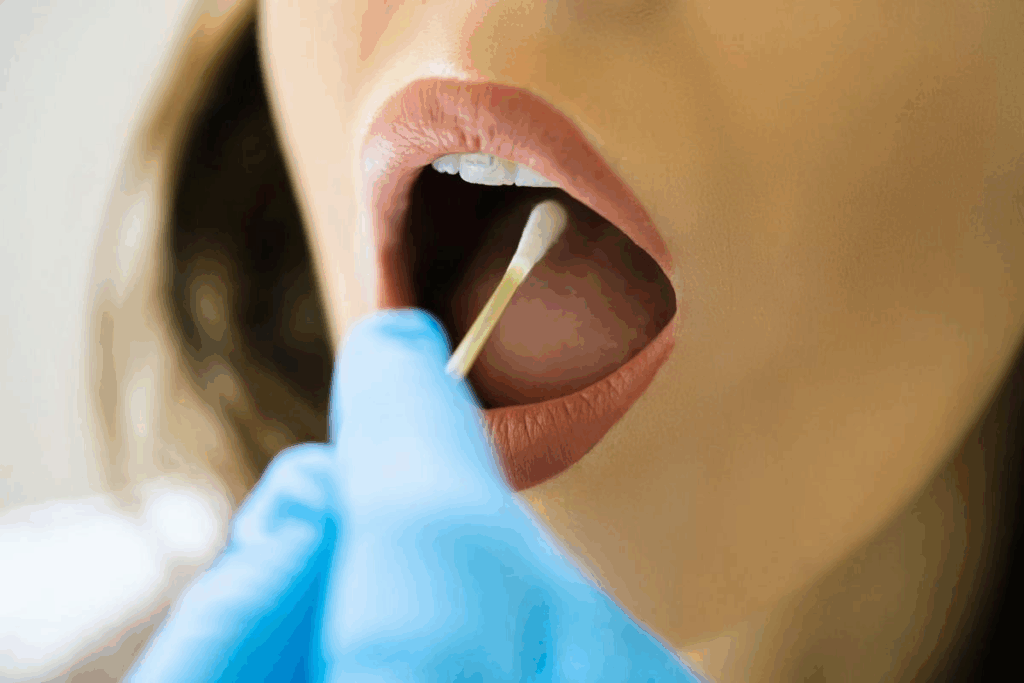
Oral cancer is a serious condition that can be deadly if caught late. At Liv Hospital, we know how vital it is to spot and treat it quickly. Medical Expert, an oncologist at Medical organization, says, “Oral oral cancer forms when cells on the lips or in the mouth mutate.”What does the first stage of gum cancer look like? Learn to spot 5 alarming early signs and symptoms on your gums for early detection.
In the beginning, oral cancer might show white patches known as leukoplakia or red patches called erythroplakia on the gums. Spotting these signs early is key to getting the right treatment. We focus on patient care and use the latest diagnostic tools to check and plan treatment carefully.
Key Takeaways
- Oral cancer can be life-threatening if not detected early.
- Early signs include white patches (leukoplakia) or red patches (erythroplakia) on the gums.
- Prompt identification and treatment are vital for survival.
- Liv Hospital offers patient-centered care with advanced diagnostic protocols.
- Thorough professional evaluation and expert treatment planning are essential.
Understanding Oral Cancer and Its Prevalence
It’s important to know about oral cancer to catch it early and treat it well. Oral cancer affects the mouth and throat and is a big health issue worldwide. We’ll look at what it is, its types, stats, and how it affects life quality.
Definition and Types of Oral Cancer
Oral cancer is when abnormal cells grow out of control in the mouth or throat. The most common type is squamous cell carcinoma, making up over 90% of cases. Other types include minor salivary gland tumors, lymphomas, and sarcomas. Squamous cell carcinoma is very aggressive and needs quick action.
“Finding oral cancer early is key to better survival and treatment,” say top doctors. Early oral cancer often shows small symptoms, so being aware and getting regular check-ups is important.
Statistics on Oral Cancer in the United States
The American Cancer Society says about 59,660 people will get oral cavity or oropharyngeal cancer in 2025. Sadly, about 12,770 will die from it. These numbers show why we need to spread the word and take steps to prevent it. Oral cancer hits men more than women and mostly people over 40.
Impact on Quality of Life
Oral cancer and its treatment can really hurt a person’s life quality. Symptoms like pain, trouble swallowing, and speech changes can mess up daily life. Also, the emotional toll of a cancer diagnosis can cause anxiety and depression. Early detection and treatment can help lessen these effects, improving life quality and survival chances.
Understanding oral cancer better means we need a wide approach to fight it. This includes raising awareness, teaching healthcare folks, and supporting patients and their families.
Visual Characteristics of the First Stage of Gum Cancer
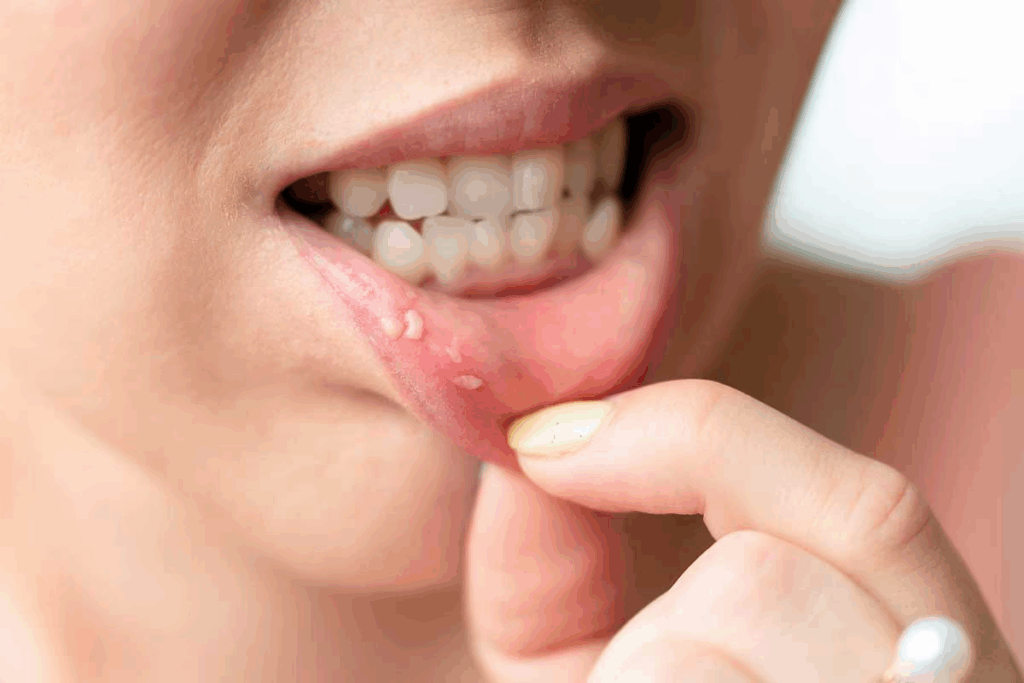
The first stage of gum cancer shows clear signs that can be seen during a detailed oral check-up. Spotting these early signs is key to catching the disease early.
Medical Expert, a head and neck surgical oncologist at Houston Methodist, explains, “Oral cancers can show up as white or red patches in the mouth.” These signs can be white patches (leukoplakia), red patches (erythroplakia), or a mix of both.
White Patches (Leukoplakia)
Leukoplakia looks like white patches or plaques on the gums or inside the mouth. These patches can be flat or slightly raised and may harden over time. It’s important to remember that not all white patches are cancerous, but any that don’t go away need to be checked out.
Leukoplakia often has these features:
- White or grayish patches on the gums
- Red areas might be present within the patches
- The patches can be smooth or rough
Red Patches (Erythroplakia)
Erythroplakia shows up as red patches that feel velvety and can’t be rubbed off. These are less common than leukoplakia but are more likely to be cancerous or precancerous.
Here are some key traits of erythroplakia:
- Red, velvety look
- Can’t be wiped away
- Has a higher risk of being cancerous
Mixed Red and White Lesions
Some lesions have both red and white parts, known as mixed or speckled leukoplakia. These can look different and might be at higher risk because of their mixed look.
Here’s what mixed lesions might look like:
- White and red areas together
- Texture can vary, possibly with ulcers
- Higher risk of becoming cancerous
Spotting these signs early is vital for gum cancer detection and treatment. Regular check-ups and knowing these signs can greatly improve treatment success.
Physical Appearance of Early Gum Lesions
It’s key to know how early gum lesions look to catch oral cancer early. When checking the gums for cancer, look for certain signs.
Size and Dimensions of Stage I Oral Cancer
Stage I oral cancer, like gum cancer, has small lesions. They are under 2 centimeters wide and don’t go deep into the tissue. These small changes make regular dental checks very important.
Texture and Surface Changes
Early gum lesions can look different. They might show as white patches (leukoplakia), red patches (erythroplakia), or a mix of both. The surface might get rough or have ulcers, and sometimes, they have a white or yellowish film.
The feel of these lesions can vary. Some are smooth, while others are rough or crumbly. It’s important to remember that not all changes are cancer. But, any lasting change should be checked by a doctor.
Location Patterns on the Gums
Gum cancer can happen anywhere on the gum line. But, some spots are more likely to get lesions. Common spots are around the molars and premolars. Yet, lesions can pop up anywhere.
It’s vital to check yourself and see a dentist regularly. Dentists can spot early signs of gum cancer. They can also do biopsies to see if a lesion is cancerous.
Common Early Warning Signs and Symptoms
Knowing the early signs of oral cancer can help a lot. We should watch for small changes in our mouth that might mean we have this disease.
Persistent Mouth Sores Lasting Over Two Weeks
Mouth sores that last more than two weeks are a big warning sign. Medical Expert. These sores might not hurt at first, so we might ignore them. But if they don’t go away, it’s time to see a doctor.
Unexplained Bleeding Gums
Bleeding gums can be a sign of oral cancer too. Bleeding gums often mean gum disease, but if it happens without reason, it could be serious. Watch out for bleeding that happens without you brushing or flossing too hard.
Loose Teeth Without Apparent Cause
Loose teeth can mean gum disease, but if they’re loose without reason, it might be oral cancer. The disease can weaken the teeth’s support, making them loose.
Subtle Changes in Oral Sensation
Feeling numb or pain in your mouth can be an early sign. These feelings can happen before you see any visible signs. Paying attention to any odd feelings in your mouth is key to catching oral cancer early.
Spotting these signs early can really help in treating oral cancer. If you notice any of these symptoms, see a doctor right away for a check-up.
The Painless Progression: Why Early Detection is Challenging
Oral cancer often starts without symptoms, making it hard to catch early. Many people don’t know they have it until it’s too late.
Absence of Pain in Early Stages
Oral cancer usually doesn’t hurt in the beginning. Medical Expert, a patch, loose teeth, or a growth. Without pain, people might not go to the doctor until it’s serious.
Similarities to Common Oral Conditions
Oral cancer can look like harmless things like canker sores. This makes it hard to tell it apart from other, less serious issues. Both patients and doctors might think it’s something minor at first.
The Importance of Visual Examination
Looking for signs is key when symptoms aren’t clear. Regular dental visits and self-checks can spot problems early. Knowing what your mouth looks like normally helps you notice any changes.
Understanding the early detection challenges and the role of visual checks is important. It helps us improve how we find and treat oral cancer.
Risk Factors Contributing to Gum Cancer Development
Gum cancer can come from many sources. These include lifestyle, genetics, and the environment. Knowing these risks helps prevent and catch gum cancer early.
Tobacco and Alcohol Use
Using tobacco, like smoking or chewing, is a big risk for gum cancer. Medical Expert. Drinking alcohol, too, raises this risk, even more so when combined with tobacco.
Tobacco and alcohol use are things you can change. By quitting or cutting down, you can lower your risk of gum cancer.
HPV Infection
Human Papillomavirus (HPV), mainly HPV-16, is linked to oral cancers. This is more common in younger people and those who don’t use tobacco or alcohol.
Age, Gender, and Genetic Factors
Age is a big factor, with most cases in people over 55. Men are more likely to get oral cancer than women. Family history and certain genetic syndromes can also raise your risk.
Chronic Irritation and Poor Oral Hygiene
Long-term irritation from dentures or sharp teeth can lead to gum cancer. Bad oral hygiene, causing gingivitis or periodontitis, also increases risk.
Risk Factor | Description | Impact on Risk |
Tobacco Use | Smoking, chewing tobacco | Significantly increases risk |
Alcohol Consumption | Drinking alcohol, specially with tobacco | Elevates risk, specially with tobacco use |
HPV Infection | Particularly HPV-16 | Increases risk, specially in younger populations |
Age and Gender | Over 55 years, male gender | Increased risk with age, higher in men |
Chronic Irritation | Ill-fitting dentures, sharp teeth | Contributes to risk |
Poor Oral Hygiene | Gingivitis, periodontitis | May increase risk |
Diagnostic Process for Suspected Gum Cancer
When gum cancer is suspected, a detailed diagnostic process is started. This process is key to confirm the disease and plan treatment. It involves several important steps.
Initial Assessment
The first step is an initial visual examination. Medical Expert, “Your doctor or dentist will check for sores or white patches.” They look for signs like white or red patches, ulcers, or swelling on the gums.
Biopsy Procedures
If the exam finds suspicious lesions, a biopsy is done next. This means taking a small tissue sample for a microscope check. There are two main types of biopsies:
- Incisional biopsy: Taking a part of the suspicious tissue
- Excisional biopsy: Taking the whole suspicious area
The biopsy results show if it’s cancer and what type and stage it is.
Imaging Tests for Staging
After confirming cancer, imaging tests are used to see how far it has spread. These tests help doctors understand the cancer’s extent. Common tests include:
- X-rays: To look at the bones in the head and neck
- CT scans: For detailed images of the head, neck, and chest
- MRIs: To check soft tissue involvement
- PET scans: To find if cancer has spread to other parts
Knowing the stage is vital for a good treatment plan and predicting results.
Differentiating Early Gum Cancer from Other Oral Conditions
Telling early gum cancer apart from other mouth sores is key for the right treatment. Oral cancer can show up in many ways, making it hard to spot without a close look.
Canker Sores vs. Cancer Lesions
Canker sores, or aphthous ulcers, are common and can hurt but are rarely cancerous. The American Cancer Society says, “Canker sores are often painful, but they aren’t malignant.” Yet, they can sometimes look like the first signs of oral cancer.
Here’s how canker sores and cancer lesions differ:
- Canker sores hurt, while early cancer spots don’t.
- Canker sores heal in one to two weeks, but cancer spots don’t.
- Canker sores have a white or yellow center with a red edge.
If a sore lasts or has other worrying signs, see a doctor right away.
Gingivitis and Periodontitis Comparison
Gingivitis and periodontitis are gum diseases that cause inflammation and irritation. They are different from gum cancer but can look similar.
Condition | Characteristics | Differences from Gum Cancer |
Gingivitis | Inflammation of the gums, often causing redness and bleeding | Typically reversible with good oral hygiene, not a lesion |
Periodontitis | Advanced gum disease leading to pockets between gums and teeth, possible bone loss | Involves loss of attachment and bone, not just a surface lesion |
Gum Cancer | Abnormal cell growth on the gums, potentially forming a distinct lesion | Lesion may not be painful initially, requires biopsy for diagnosis |
Other Benign Oral Lesions
Other conditions can look like early gum cancer, including:
- Fibromas: Benign growths that can appear as firm, smooth nodules.
- Papillomas: Small, benign tumors caused by the human papillomavirus (HPV).
- Lichen planus: An inflammatory condition that can cause white, lacy patches or red, inflamed tissues.
A detailed check by a healthcare expert is needed to tell these apart from gum cancer.
Spotting and correctly diagnosing early is key for good treatment. If worried about any mouth lesions or symptoms, get a doctor’s thorough check.
Treatment Approaches for Stage I Oral Cancer
Early-stage oral cancer treatment aims to remove the cancer and keep the mouth working well. Medical Expert, “With any mouth cancer, full surgical removal is the primary mode of treatment.” We’ll look at the treatments for stage I oral cancer, like surgery and radiation.
Surgical Interventions
Surgery to remove the tumor is often the first step for stage I oral cancer. The goal is to remove the cancer completely, along with some healthy tissue around it. This ensures all cancerous cells are gone.
- Tumor Resection: The surgical removal of the tumor and surrounding tissue.
- Neck Dissection: In some cases, removing lymph nodes in the neck may be necessary to prevent cancer spread.
Advances in surgical techniques have made treatments better and faster. For example, transoral robotic surgery (TORS) lets doctors remove tumors more precisely with less damage to nearby tissues.
Radiation Therapy Options
Radiation therapy is also a good treatment for stage I oral cancer, when surgery margins are close or there’s a high risk of coming back. External beam radiation therapy (EBRT) and brachytherapy are two common types used.
- EBRT: Delivers high-energy beams from outside the body to target cancer cells.
- Brachytherapy: Involves placing radioactive material directly inside or near the tumor.
Radiation therapy can be used alone or with surgery to make treatment more effective.
Recovery and Prognosis
The outlook for stage I oral cancer is usually good, thanks to early and right treatment. Recovery depends on various factors, like where the tumor is, the patient’s health, and the treatment used.
“The prognosis for patients with early-stage oral cancer is generally good, with high survival rates when treated appropriately.” – Medical Expert
Emerging Treatment Modalities
New treatments for oral cancer are being researched. Immunotherapy and targeted therapy are being studied for better results.
- Immunotherapy: Boosts the body’s immune system to fight cancer.
- Targeted Therapy: Uses drugs that target specific cancer cell characteristics.
These new treatments offer hope for better survival rates and quality of life for oral cancer patients.
Prevention and Regular Screening Recommendations
Preventing oral cancer needs both self-awareness and professional help. Knowing the risks and taking steps can lower your chance of getting gum cancer.
Self-Examination Techniques
Checking your mouth regularly is key to finding oral cancer early. Look in a well-lit area with a mirror. Search for white or red spots, sores, or lumps on your gums, tongue, or mouth. Do this every month to spot problems early.
Professional Dental Check-ups
Self-checks are important, but dental visits are just as vital. Medical Expert, “Going to the dentist twice a year is key for cancer screening.” Your dentist can spot early signs of oral cancer that you might miss. They also help with oral care and find other health issues.
Lifestyle Modifications for Prevention
Changing your lifestyle can lower your oral cancer risk. Stay away from tobacco products, as they are a big risk factor. Drinking less alcohol is also good, as too much can raise your risk. Eating lots of fruits and veggies helps keep your body healthy and can fight cancer.
Vaccination Against HPV
HPV is linked to some oral cancers. Getting vaccinated against HPV can help prevent some oral cancers. The HPV vaccine mainly fights cervical cancer but also protects against other cancers, including some oral ones.
Combining self-checks, dental visits, healthy living, and HPV vaccines can greatly lower your risk of gum cancer. We urge everyone, but those at higher risk, to take care of their oral health.
Conclusion
Early detection of oral cancer is key for effective treatment and better patient outcomes. Medical Expert, “Oral cancer is curable if detected early.” We’ve looked at the visual signs of early gum cancer, like white and red patches, and mixed lesions.
Knowing these signs and the risk factors, like tobacco and alcohol use, and HPV infection, helps spot the disease early. Regular self-exams and dental check-ups are essential for early detection.
Being proactive and informed can greatly improve treatment chances. For stage I oral cancer, treatments like surgery and radiation therapy are promising if caught early.
We stress the need for awareness and quick action in fighting oral cancer. By knowing the early signs and getting regular screenings, we can lessen oral cancer’s impact on people and communities.
FAQ
What are the early signs of oral cancer on the gums?
Early signs of oral cancer on the gums include white or red patches. You might also notice persistent mouth sores or unexplained bleeding gums. These signs can point to early stage gum cancer.
How does early stage oral cancer on gums appear?
Early stage oral cancer on gums can show up as white patches or red patches. Sometimes, you’ll see a mix of both. These patches can be flat or slightly raised and feel rough.
What are the risk factors for developing gum cancer?
Risk factors for gum cancer include tobacco and alcohol use, HPV infection, and age. Gender, genetic factors, and poor oral hygiene also play a role. Knowing these can help prevent and detect gum cancer early.
How is gum cancer diagnosed?
Gum cancer is diagnosed through a visual check, biopsy, and imaging tests. These steps help find out if you have cancer and how far it has spread.
Can early stage gum cancer be differentiated from other oral conditions?
Yes, early stage gum cancer can be told apart from other oral issues like canker sores or gum disease. A detailed check and tests are needed for accurate diagnosis.
What are the treatment approaches for stage I oral cancer?
Stage I oral cancer treatments include surgery, radiation, and new methods. The right treatment depends on the cancer’s size, location, and your health.
How can oral cancer be prevented?
Preventing oral cancer involves self-exams, dental check-ups, and avoiding tobacco and alcohol. Vaccines against HPV also help. These steps can catch cancer early and prevent it.
Is dying from oral cancer painful?
Oral cancer can be very painful, mainly in later stages. But, with the right pain care, you can manage pain and improve your life quality.
What does stage 1 mouth cancer look like?
Stage 1 mouth cancer might look like a small, painless sore in your mouth. It could be white, red, or both. Seeing a doctor if you notice any unusual mouth changes is key.
What are the symptoms of early stage oral cancer?
Early oral cancer symptoms include persistent sores, bleeding gums, loose teeth, and changes in how your mouth feels. Knowing these signs can help catch cancer early.
References
National Center for Biotechnology Information. Early-Stage Oral Cancer Appearance on Gums. Retrieved from https://www.ncbi.nlm.nih.gov/pmc/articles/PMC9562013/