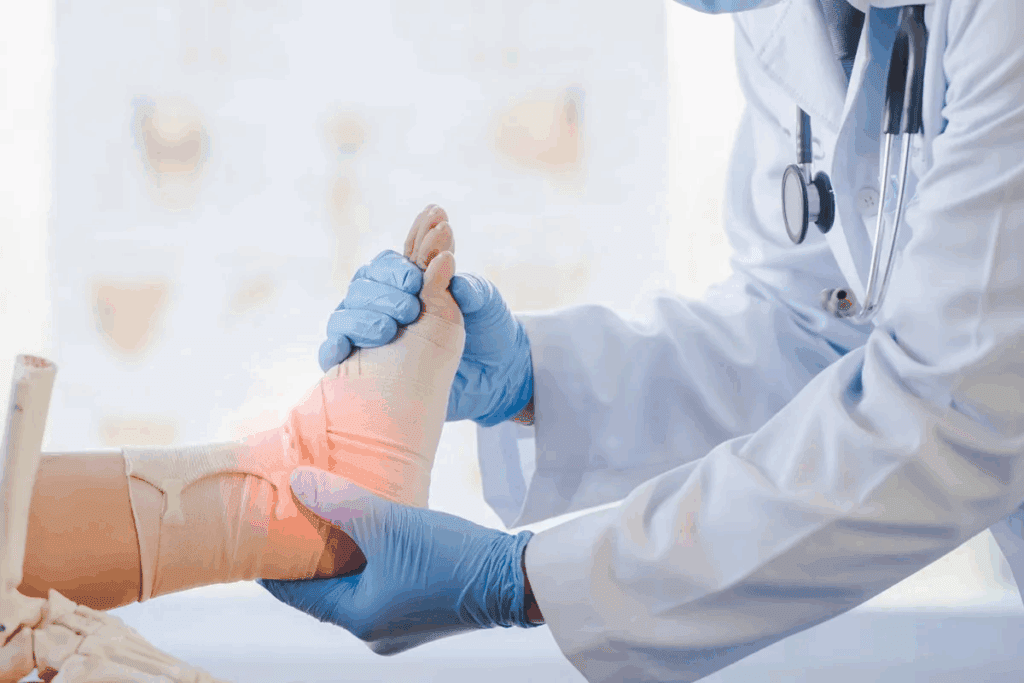
Did you know over 7 million people in the United States get bone fractures every year? There’s often confusion about the terms used for these injuries. Are “break” and “fracture” the same, or do they mean different things?
Doctors often call the same injury a “break” or “fracture.” But the real difference is in how serious the injury is. Knowing the difference between a bone break and a fracture is key for the right treatment.
Key Takeaways
- The terms “break” and “fracture” are often used interchangeably to describe a bone injury.
- Both terms refer to a bone that has been cracked or shattered.
- The distinction between the two lies in the context and severity of the injury.
- Understanding the difference is critical for proper diagnosis and treatment.
- Bone fractures are a common injury, affecting millions of people each year.
Understanding Bone Injuries: The Basics
It’s important to know the basics of bone injuries for the right treatment. These injuries, like fractures and breaks, happen often. They can come from accidents, falls, or sports.
The Structure and Function of Bones
Bones are key for support, protection, and movement. The periosteum, a layer on the bone, is vital for healing and growth. Underneath is the cortex, the bone’s dense outer layer. Then, there’s the endosteum, lining the bone’s inner surface.
This structure lets bones respond to different forces. Knowing this helps in treating bone injuries well.
How Bones Respond to Force and Trauma
Bones react differently to force or trauma. The impact’s severity and type matter. This can lead to fractures or breaks, causing various injuries.
There are many types of fractures, like complete and incomplete fractures. There are also displaced and non-displaced fractures. Knowing these helps figure out how serious the injury is.
Fracture vs Break: Are They Different?
The terms “fracture” and “break” are often used the same way in everyday talk. But do they mean the same thing in medical terms? It’s key to look into the medical language and how it’s used.
Medical Terminology Explained
In medical talk, a fracture means any break in a bone. The word comes from the Latin “frangere,” which means “to break.” So, “fracture” and “break” are connected, both meaning something is broken.
But doctors usually say “fracture” instead of “break.” This is because “fracture” is clearer and more specific. It covers all kinds of bone injuries, from small cracks to big breaks with many pieces.
Common Misconceptions Clarified
Many think a fracture is worse than a break. But in medical terms, both mean the same thing – a bone that’s cracked or broken. The real difference is in the word choice, not how bad the injury is.
To make things clear, let’s look at a comparison:
| Term | Medical Usage | Common Usage |
| Fracture | Preferred term for any break in bone continuity | Often seen as more technical or severe |
| Break | Less commonly used in formal medical contexts | Frequently used the same as “fracture” |
In short, “fracture” and “break” describe the same thing. But doctors like “fracture” better because it’s more precise. Knowing this can help clear up confusion between doctors and patients about bone injuries.
Types of Bone Fractures
It’s important to know the different types of bone fractures. This knowledge helps doctors diagnose and treat them better. Bone fractures, or broken bones, can vary a lot in how they look and how serious they are.
Complete vs Incomplete Fractures
A complete fracture happens when a bone breaks into two or more pieces. On the other hand, an incomplete fracture is when the bone only partially breaks, leaving it somewhat intact.
Complete fractures can be more serious, depending on how far apart the pieces are. Incomplete fractures, like greenstick fractures in kids, are less severe.
Displaced vs Non-displaced Fractures
A displaced fracture means the bone pieces are not in the right place. This can make healing harder. A non-displaced fracture is when the bone stays in line, even though it’s broken.
Displaced fractures usually need surgery to fix the bone pieces. This is because they’re harder to heal on their own.
Knowing the difference between these fracture types is key. It helps doctors choose the best treatment. This ensures the bone heals right and avoids complications.
Simple Fractures vs Complex Breaks
Bone fractures can vary from simple to complex. Knowing the difference is key for the right treatment.
Defining Simple Bone Fractures
A simple bone fracture has one break in the bone. The bone stays in line and the skin is not broken. This is called a closed fracture. Such fractures can happen from falls, sports, or car accidents.
For simple fractures, doctors often use casts or splints. They help the bone heal. Sometimes, doctors also give pain medicine to ease the discomfort.
Understanding Complex or Comminuted Breaks
A comminuted bone break or complex fracture has many bone pieces. This makes the injury more serious. These fractures can be either displaced or non-displaced, based on the bone’s position.
Complex fractures need more treatment. This might include surgery to fix the bone pieces. Doctors might use plates, screws, or rods to help the bone heal right.
It’s important for doctors to know the difference. This helps them choose the best treatment for each patient.
Open vs Closed Fractures
The difference between open and closed fractures is important. It affects how doctors treat them and how patients recover. Knowing these differences helps doctors choose the right treatment and predict possible problems.
Closed Fracture Characteristics
A closed fracture happens when a bone breaks but doesn’t go through the skin. This kind of fracture is usually simpler than an open fracture because it’s less likely to get infected. Closed fractures can be either non-displaced or displaced, depending on if the bone stays in place.
Closed fractures often come from direct hits, falls, or sudden twists. Symptoms include pain, swelling, bruises, and trouble moving the area. Doctors use physical checks and scans like X-rays or CT scans to diagnose them.
Open or Compound Fracture Risks
An open fracture, or compound fracture, happens when a bone breaks through the skin. This makes it more likely to get infected because bacteria can easily get into the wound.
The Gustilo-Anderson system helps classify open fractures by their severity. It looks at the wound size, soft tissue damage, and if there’s contamination or blood vessel injury.
| Gustilo-Anderson Classification | Description | Characteristics |
| Type I | Wound | Minimal soft tissue damage, low energy trauma |
| Type II | Wound > 1 cm but | Moderate soft tissue damage, moderate energy trauma |
| Type III | Wound > 10 cm or significant soft tissue damage | High energy trauma, extensive soft tissue damage, often with vascular injury or severe contamination |
The Gustilo-Anderson system helps doctors decide how to treat open fractures. Higher grades mean more risk of infection, bone not healing, and other serious problems. This means they need quick and strong treatment, like surgery to clean and fix the bone.
Hairline and Stress Fractures
The terms ‘hairline fracture’ and ‘stress fracture’ are often used together. But they have different characteristics. Both happen when stress on the bone causes a crack. Yet, their causes and symptoms can differ.
Identifying Hairline Bone Fractures
A hairline bone fracture is a small crack in the bone. It’s hard to spot on X-rays at first. These fractures often affect athletes who run or jump a lot.
Symptoms of a hairline fracture include:
- Pain that gets worse with activity
- Swelling or tenderness in the affected area
- Pain that lasts even when resting
Stress Fracture Symptoms and Causes
A stress fracture happens when stress on a bone builds up over time. It leads to a crack. This fracture is common in people who start exercising more.
The symptoms of a stress fracture are similar to those of a hairline fracture. They include pain that gets worse with activity and better with rest. Common causes include:
- Sudden increase in exercise intensity or frequency
- Change in running surface or footwear
- Poor biomechanics or foot structure
| Fracture Type | Common Causes | Symptoms |
| Hairline Fracture | Repetitive stress, sports injuries | Pain with activity, swelling |
| Stress Fracture | Increased physical activity, poor biomechanics | Pain that worsens with activity, tenderness |
It’s important to know the difference between hairline and stress fractures for proper treatment. Both need rest and sometimes immobilization to heal.
Fracture Severity Levels
Fracture severity levels are very important in orthopedic medicine. They affect treatment and recovery. It’s key for doctors to understand these levels to give the right care.
Classification Systems Explained
Doctors use standardized systems to classify fracture severity. The AO/OTA fracture classification system is one of the most common. It looks at the fracture’s location, how much it’s displaced, and how complex it is.
This system is great because it helps standardize diagnosis and treatment. It makes sure patients get the same care, no matter who treats them.
How Doctors Determine Fracture Severity
Doctors look at several things to figure out fracture severity. They check how much the bone is displaced, how many pieces the bone is broken into, and if it’s open or closed. They use X-rays, CT scans, and sometimes MRI scans to get a clear picture.
Knowing the severity is key because it decides the treatment. For example, a simple fracture might just need a cast. But a complex one might need surgery.
- Fracture location and extent of displacement
- Number of fracture fragments
- Presence of any associated injuries
- Whether the fracture is open or closed
By looking at these factors, doctors can accurately say how severe the fracture is. Then, they can plan the best treatment.
Diagnosing Bone Injuries
Healthcare professionals use both physical checks and advanced imaging to diagnose bone injuries. Getting the diagnosis right is key to picking the right treatment and helping the injury heal.
Clinical Examination Techniques
The first step in diagnosing bone injuries is a thorough clinical exam. This includes a detailed medical history and physical check-up. Doctors look for swelling, bruising, and any deformities. They also check the patient’s range of motion and pain levels.
Key components of a clinical examination include:
- Visual inspection for deformities or swelling
- Palpation to identify areas of tenderness
- Assessment of range of motion and functional ability
- Neurological examination to check for nerve damage
Imaging Methods for Fracture Detection
While a clinical exam gives important clues, imaging is often needed to confirm the diagnosis and understand the injury’s severity.
Common imaging methods used include:
| Imaging Method | Advantages | Limitations |
| X-rays | Quick, widely available, and cost-effective | Limited detail for soft tissue injuries |
| CT Scans | Provides detailed cross-sectional images, useful for complex fractures | Higher radiation exposure, more expensive |
| MRIs | Excellent for soft tissue evaluation, detects stress fractures | More expensive, not suitable for patients with certain metal implants |
The choice of imaging method depends on the injury’s symptoms and suspected fracture type. For example, X-rays are often the first choice for suspected fractures. CT scans or MRIs might be used for more complex cases or when detailed soft tissue assessment is needed.
Treatment Approaches for Different Fractures
Knowing the right treatment for different fractures is key to a good recovery. The choice between non-surgical and surgical methods depends on the fracture’s type, severity, and location. It also depends on the patient’s health.
Conservative Treatment Methods
For non-displaced or stable fractures, where the bone stays in place, non-surgical treatment works well. This method uses casts, splints, or braces to help the bone heal. Patients are told to avoid weight on the affected area and watch for any complications.
Pain management is a big part of non-surgical treatment. This might include pain and swelling medicines. Physical therapy is also suggested to keep the area moving and strong while it heals.
Surgical Interventions for Severe Fractures
For complex or severe fractures, like displaced or comminuted fractures, surgery is needed. Surgery helps put the bone back in place and keeps it stable for healing.
There are different surgical methods, like internal fixation with metal plates and screws. External fixation uses frames outside the skin to stabilize the bone. The choice depends on the fracture and the patient’s health.
- Internal fixation helps the bone heal faster and allows for moving around sooner.
- External fixation is used for temporary support or when internal methods can’t be used.
The Bone Healing Process
The fracture healing process is amazing. It’s a series of steps that fix the bone. These steps start with inflammation and end with bone remodeling.
Stages of Bone Healing
Bone healing goes through several stages:
- Inflammatory Phase: First, there’s bleeding and inflammation. A hematoma forms. The body brings cells and nutrients to start healing.
- Soft Callus Formation: Next, a soft callus forms. It’s made of cartilage and tissue. This callus helps stabilize the bone.
- Hard Callus Formation: Then, the soft callus turns into a hard callus. This callus is bone tissue. It strengthens the healing bone.
- Bony Union and Remodeling: Last, the hard callus turns into solid bone. This can take months to years. It depends on the fracture and individual factors.
Factors Affecting Healing Time
Many things can change how fast bones heal:
- Age: Older people heal slower. This is because their bones are less dense and their cells work less.
- Nutrition: Eating enough calcium, vitamin D, and protein helps bones heal well.
- Comorbidities: Conditions like diabetes and osteoporosis can slow healing.
- Smoking and Alcohol Consumption: Both can slow healing. They reduce blood flow and make it harder for the body to fix tissues.
Knowing these factors and stages helps manage healing. It makes the healing process better for people with bone fractures.
Potential Complications of Bone Fractures
It’s important to know about the possible complications of bone fractures. This knowledge helps in managing and recovering from fractures. Both simple and complex fractures can lead to short-term and long-term issues.
Short-term Complications
Short-term issues often happen during the healing process. These can include:
- Infection, which is more common in open fractures.
- Nerve damage or swelling that affects nerves.
- Compartment syndrome, where muscle compartments get too tight.
- Venous thromboembolism, like deep vein thrombosis and pulmonary embolism, in patients who can’t move much.
Quick medical care can help avoid these problems. For example, antibiotics can prevent infections in open fractures.
Long-term Complications and Sequelae
Even after healing, long-term issues can occur. These may include:
- Malunion or nonunion, where the fracture heals wrong or not at all.
- Chronic pain or discomfort from the fracture or surgery.
- Reduced mobility or stiffness in the affected limb or joint.
- Osteoarthritis or other degenerative joint diseases in the affected area.
| Complication | Description | Risk Factors |
| Malunion | Improper healing of the fracture. | Inadequate immobilization, poor alignment. |
| Nonunion | Failure of the fracture to heal. | Infection, inadequate blood supply, excessive motion. |
| Chronic Pain | Ongoing pain in the affected area. | Nerve damage, improper healing, degenerative changes. |
Knowing about these complications helps doctors prevent and treat them. Early detection and treatment can avoid long-term problems.
Special Considerations for Different Age Groups
Bone fractures affect people in different ways, from kids to older adults. Each age group faces unique challenges when it comes to diagnosing, treating, and recovering from fractures.
Pediatric Fractures: Growth Plate Concerns
In kids, fractures can hit the growth plates. These are cartilage areas that let bones grow. Damage here can impact how bones grow in the future.
- Growth Plate Injuries: Doctors use systems like the Salter-Harris classification to figure out how bad these injuries are.
- Treatment Approaches: Careful management is key to avoid long-term problems, like growth issues.
Geriatric Fractures: Osteoporosis and Recovery
Older people are more likely to break bones because of osteoporosis. This is when bones get weak. Healing can be tough because of other health issues and weaker bones.
- It’s important to manage osteoporosis to prevent and treat fractures in seniors.
- Rehab programs are made for each person’s health. They aim to get them moving again and prevent more breaks.
Handling fractures in different age groups needs a detailed plan. It must consider the special needs and challenges of each group.
Prevention Strategies for Bone Injuries
Keeping bones strong is vital to avoid fractures. A mix of diet, exercise, and safety steps can help. This approach not only lowers fracture risk but also boosts overall health.
Lifestyle Factors for Bone Health
Lifestyle greatly affects bone health. Nutrition is key; eating foods rich in calcium and vitamin D is essential. Dairy, leafy greens, and fortified cereals are great sources.
Exercise is also vital. Activities like walking, running, and dancing strengthen bones. They stimulate bone growth and density. Adding weight or resistance training can also help.
| Nutrient | Benefit | Food Sources |
| Calcium | Essential for bone strength | Dairy products, leafy greens, fortified cereals |
| Vitamin D | Aids calcium absorption | Fatty fish, fortified dairy products, sunlight exposure |
| Protein | Supports bone structure | Lean meats, fish, eggs, dairy products |
Safety Measures to Prevent Traumatic Fractures
Along with lifestyle changes, safety steps can greatly lower fracture risk. Fall prevention is critical, mainly for older adults. Simple home changes like removing tripping hazards and improving lighting can help a lot.
Wearing protective gear during sports and activities is also key. Helmets, knee pads, and elbow pads are must-haves for activities like cycling and skateboarding.
By focusing on bone health through diet and exercise, and adding safety measures, we can lower bone injury risk. This approach not only strengthens bones but also improves overall health.
Conclusion
Knowing the difference between a fracture and a break is key for treating bone injuries right. Both terms mean a bone is cracked or broken. But they are not exactly the same.
There are many types of bone fractures, like simple and complex ones. Each needs a different treatment plan. Finding out how bad the fracture is helps doctors choose the best treatment.
Good treatment for fractures helps with pain and healing. It also lowers the chance of complications. Taking care of your bones can help avoid fractures.
In short, treating bone fractures well is important for your bone health. Knowing about fractures and treatments helps you protect your bones. This way, you can keep your bones strong and healthy.
FAQ
What is the difference between a fracture and a break?
A fracture and a break mean the same thing in medical terms. They both describe a bone that has been cracked or broken. The terms are often used the same way, with no real difference between them.
What are the different types of bone fractures?
There are many types of bone fractures. These include complete, incomplete, displaced, non-displaced, simple, comminuted, open, and closed fractures. Each type has its own characteristics and treatment needs.
What is a stress fracture, and what are its symptoms?
A stress fracture is a small crack in a bone. It’s usually caused by too much stress or overuse. Symptoms include pain, swelling, and tenderness in the affected area, which gets worse with activity.
How are bone fractures diagnosed?
Doctors use a few methods to diagnose bone fractures. They do a clinical exam and use imaging like X-rays, CT scans, and MRIs. The choice of imaging depends on the fracture’s type and severity.
What are the stages of bone healing?
Bone healing goes through several stages. These include the inflammatory phase, soft callus formation, hard callus formation, and remodeling. The time each stage takes can vary based on age, nutrition, and health.
What are the possible complications of bone fractures?
Complications from bone fractures include infection, malunion, nonunion, nerve damage, and long-term disability. Quick and proper treatment can help avoid these issues.
How can bone injuries be prevented?
Preventing bone injuries involves lifestyle changes and safety measures. Eating well and exercising regularly are key. Wearing protective gear and making homes safer can also help.
Are there any special considerations for managing fractures in different age groups?
Yes, managing fractures varies by age. Pediatric fractures might involve growth plate injuries. Geriatric fractures can be complicated by osteoporosis and other age-related issues.
What is the Gustilo-Anderson classification system used for?
The Gustilo-Anderson system classifies open fractures by severity. It considers wound size, soft tissue damage, and contamination. This helps guide treatment and predict outcomes.
What is a comminuted fracture?
A comminuted fracture is when a bone breaks into many pieces. This type of fracture is hard to treat and often needs surgery.
How do doctors determine fracture severity?
Doctors use systems like the AO/OTA fracture classification to assess severity. These systems look at the fracture’s location, type, and any associated injuries.
Reference
- National Library of Medicine (NLM) – Bone Healing and Fractures
https://www.ncbi.nlm.nih.gov/books/NBK537351/