Losing upper teeth can change your life. But now, thanks to new dental tech, there are lasting solutions. Dental implants have changed dentistry, giving a permanent and natural look instead of dentures.
Studies show dental implants work great, with over 90% in the upper jaw working well after 10 years. At Liv Hospital, we offer top care and methods for the best results for our patients.
This guide will show you how to get full upper implants. We’ll cover from the first visit to aftercare. It’s here to help you choose the right tooth replacement.
Key Takeaways
- High success rates of dental implants in the upper jaw.
- Advanced protocols for full upper implants at Liv Hospital.
- A complete guide to the implant process.
- Natural-looking and permanent tooth replacement solutions.
- Personalized care for international patients.
What Are Full Upper Implants?
Full upper implants have changed dentistry, giving patients a solid choice for tooth loss. They make the upper jaw look and work like new. This greatly improves how you look and feel.
Definition and Basic Concept
Full upper implants put implants in the upper jaw for a full set of prosthetic teeth. They’re perfect for those who’ve lost most or all upper teeth. The number of implants needed varies, usually between 4 to 8, based on the restoration and bone density.
Studies show dental implants fail only 3.1% of the time worldwide. The All-on-Four method has a 98.8% success rate for prosthetic survival.
Components of Full Upper Implants
Full upper implants have several key parts:
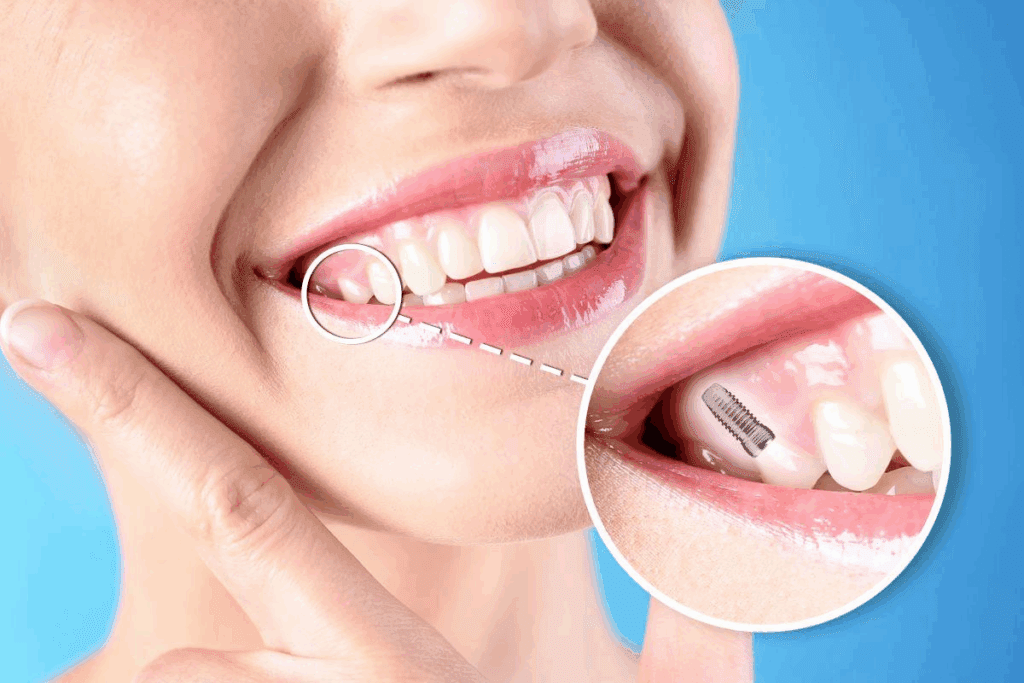
- Dental Implants: These are titanium posts in the jawbone for the prosthetic teeth.
- Abutments: Connectors between the implants and prosthetic teeth.
- Prosthetic Teeth: Made to look and work like natural teeth.
Success Rates and Statistical Evidence
Full upper implants have strong success rates backed by data. The overall failure rate for dental implants is 3.1%. The All-on-Four method has a 98.8% success rate for prosthetic survival. This shows how reliable full upper implants are for dental restoration.
| Technique | Success Rate | Failure Rate |
|---|---|---|
| All-on-Four | 98.8% | 1.2% |
| Traditional Implants | 96.9% | 3.1% |
“The introduction of full arch implant solutions has been a game-changer in restorative dentistry, giving patients a highly successful and satisfying treatment option.” — Medical Expert, Renowned Dental Specialist
Benefits of Choosing Full Upper Implants
Choosing full upper implants is often a choice for a more stable and comfortable option than dentures. They work like natural teeth, improving how we eat and feel about our smile.
Functional Advantages
Full upper implants help us chew better than dentures. They don’t slip and cause pain, thanks to being anchored in the jawbone. This makes eating more efficient and comfortable.
Improved chewing ability is just the start. They also keep the face looking right by stopping bone loss from missing teeth.
Aesthetic Improvements
Full upper implants look and feel like real teeth. They make our smile better and boost our confidence.
The natural appearance comes from being custom-made. They match our teeth or create a new smile.
Long-Term Oral Health Benefits
Full upper implants are good for our teeth in the long run. They stop other teeth from moving, which can cause problems.
They also help keep the jawbone strong. This reduces the chance of bone loss and changes in our face.
In short, full upper implants offer many benefits. They improve how we eat, look, and keep our teeth healthy for years to come.
Who Is a Candidate for Full Upper Implants?
To find out if someone is a good candidate for full upper implants, we look at many things. We check their medical and dental history. This helps us see if they’re right for this big change.
Ideal Candidates
The best candidates have enough bone to hold the implants. Having enough bone is key for the implants to work well. We also check if their gums are healthy and if their medical history is okay for the surgery.
“The success of the implants depends on the bone and health of the patient,” says Medical Expert, a top dental expert. He highlights how important it is to check everything before starting the implants.
Bone Density Requirements
Bone density is very important for full upper implants. Enough bone is needed to keep the implants in place. We use special scans to check the bone in the upper jaw.
We look at how good and how much bone there is. This helps us decide the best plan for each patient. Sometimes, we might need to add bone or choose a different implant.
Health Considerations and Contraindications
Some health issues can make it hard for people to get full upper implants. We think about gum disease, medical history, and lifestyle when deciding. People with uncontrolled diabetes or who smoke a lot might have trouble healing.
- Gum health: Patients need healthy gums or be ready to treat gum disease first.
- Medical history: Some medical conditions need special care or treatment before surgery.
- Lifestyle habits: Smoking and other habits can affect how well the implants do.
We carefully check these things to see if implants are right for someone. Our aim is to give a treatment plan that fits each person’s needs. This way, we can make sure they get the best results.
Types of Full Upper Implant Solutions
Full upper implants come in many forms, each designed for different needs. Patients have several advanced options to choose from. Each option has its own benefits and who it’s best for.
Fixed Bridges (All-on-4 or All-on-6)
Fixed bridges, like All-on-4 or All-on-6, are a top choice for full upper implants. They use four or six implants to hold a full arch prosthesis. This gives strong stability and looks natural.
The All-on-4 method lets patients get a temporary prosthesis the same day as surgery. This cuts down healing time and gives a functional, good-looking solution while implants integrate with the bone.
Implant-Supported Removable Dentures
Implant-supported removable dentures are another good option. These dentures are attached to implants, making them more stable and secure than regular dentures. They’re easy to remove for cleaning, which is a big plus for those who value hygiene.
Usually, two to four implants are needed to support these dentures.
Hybrid Restorations
Hybrid restorations mix the best of fixed and removable prostheses. They have a fixed framework with removable denture teeth. This setup makes cleaning easy while keeping the look and feel of a fixed prosthesis.
They’re great for patients with special needs or preferences that other options can’t meet.
A study in the Journal of Oral Implantology says implants have changed how we treat tooth loss. They improve oral function and quality of life. This highlights the need to know about the different full upper implant solutions available today.
The Consultation and Planning Process
We start the full upper implants journey with a detailed consultation. It’s all about you and what you need. This first step helps us understand your oral health and plan the best implant procedure.
Initial Evaluation
The first part of the consultation is an initial evaluation. We check your overall oral health. This includes looking at your teeth, gums, and jawbone for any issues that might affect the implants.
Key aspects of the initial evaluation include:
- Review of your dental and medical history
- Examination of your teeth and gums
- Assessment of your jawbone density and structure
Advanced Diagnostic Imaging
Advanced imaging is key in planning. We use CBCT 3D imaging and intraoral scans. These tools give us detailed images of your jawbone and tissues.
- Evaluate the quality and quantity of your jawbone
- Identify the optimal placement sites for the implants
- Create a precise treatment plan tailored to your anatomy
Digital Treatment Planning
We then create a digital treatment plan. This plan is made just for you. It outlines the steps for a successful full upper implants procedure.
The benefits of digital treatment planning include:
- Enhanced accuracy in implant placement
- Improved predictability of outcomes
- Reduced risk of complications
Experts say, “A well-planned treatment is key to the success of dental implant procedures.” Our team focuses on personalized care through careful planning and precise execution.
“The integration of digital technology in treatment planning has revolutionized the field of dental implants, allowing for more precise and predictable outcomes.” — Expert in Dental Implantology
By using advanced imaging and digital planning, we ensure top-quality care. It’s all about meeting your unique needs.
Preparing for Your Full Upper Implants Procedure
Knowing what to do before full upper implants can make a big difference. We’ll help you through each step to make sure everything goes smoothly.
Pre-Surgical Requirements
Before surgery, you’ll need to meet some pre-surgical requirements. This includes a detailed medical history, diagnostic tests, and an oral exam. We’ll check your jawbone and tissues.
We also ask you to:
- Tell us about any medicines you’re taking
- Share any health issues that might affect the surgery
- Follow any pre-op instructions we give you
Necessary Preliminary Dental Work
At times, preliminary dental work is needed before implants. This might include tooth removal, infection treatment, or removing old dental work.
Our team will help decide what’s best for you. We’ll make sure your mouth is ready for the implants.
Bone Grafting Considerations
If your jawbone is too thin or weak, a bone graft might be needed. This is key for a stable implant base.
Bone grafting uses bone from your body or synthetic substitutes. It takes months to heal before implant surgery.
By following these steps, you can greatly improve your implant procedure’s success. We’re here to guide you every step of the way.
Step-by-Step Full Upper Implants Procedure
For those looking to fix their upper jaw with dental implants, knowing the steps is key. The full upper implants process is detailed and includes several important steps. These range from the first meeting to the final tooth placement.
Anesthesia Options
The first step is choosing the right anesthesia. We have different options to keep you comfortable during surgery. You can choose from local anesthesia, sedation dentistry, or general anesthesia, based on your needs and the surgery’s complexity.
Implant Placement Surgery
The implant placement surgery is a key part. Here, the dental implants are put into the jawbone. This is done under local anesthesia to reduce pain. The surgeon makes a small cut in the gum to see the bone and then drills a hole for the implant.
Number of Implants Required
The number of implants needed varies, usually between 4 to 8. This depends on the type of restoration and your bone health. The All-on-4 or All-on-6 methods are popular. They use fewer implants to support a full set of teeth.
| Restoration Type | Number of Implants | Typical Use Case |
|---|---|---|
| All-on-4 | 4 | Patients with sufficient bone density |
| All-on-6 | 6 | Patients requiring additional support |
| Implant-Supported Removable Dentures | 4-8 | Patients preferring removable options |
Temporary Restoration Fitting
After surgery, a temporary tooth is placed to look and feel like real teeth. This temporary tooth is worn until your permanent one is ready. This usually takes a few months after the implants have healed and attached to the bone.
Knowing these steps helps you get ready for the full upper implants procedure. It makes the journey to a new smile smoother.
Recovery and Healing Timeline
Knowing the recovery and healing timeline is key for those with full upper implants. It includes several stages, from right after surgery to the osseointegration process. This can take a few months.
Immediate Post-Operative Care
Right after surgery, we give clear instructions on managing pain, swelling, and bleeding. We tell patients to rest and not do too much. Good post-operative care is vital for a smooth recovery.
- Apply ice packs to reduce swelling
- Take prescribed medications to manage pain
- Follow a soft-food diet
Weeks 1-2 After Surgery
In the first two weeks, some discomfort is normal but it usually goes away as the body heals. It’s important to keep up with oral hygiene and go to follow-up appointments to make sure healing is on track.
- Gently brush the surgical site with a soft-bristled toothbrush
- Rinse with saltwater or antibacterial mouthwash
- Avoid smoking and tobacco products
Osseointegration Process (3-6 months)
The osseointegration process, where the jawbone fuses with the implant, is a key phase that lasts several months. During this time, the implant merges with the bone, making a strong base for the final prosthesis.
We keep a close eye on the healing during this phase, making sure the implant bonds well with the bone. Patients are advised to eat well and not put too much pressure on the implant.
By knowing and sticking to the recovery and healing timeline, patients can get the best results from their full upper implants. Our team is dedicated to helping every step of the way.
Final Restoration and Adjustment Process
Getting your full upper implants done needs a careful final restoration process. This step is key because it turns the implants into a working and beautiful smile.
Impressions and Measurements
The first thing we do is take exact impressions and measurements of your mouth. Accurate impressions are key for a comfortable and working prosthesis. We use the latest digital impression tech to get detailed images of your teeth. This helps make a prosthesis that looks and feels like your own.
Customization of Permanent Prosthesis
After getting the right impressions, we start making your permanent prosthesis. Our dental lab works with us to make a prosthesis that looks good and works well. We pick the right shade, shape, and size of teeth for a natural look.
A famous dental expert once said,
“The key to a successful final restoration lies in the precision of the impressions and the craftsmanship of the dental laboratory.”
This focus on detail makes sure your prosthesis is strong and looks great.
Final Fitting and Occlusal Adjustments
At the final fitting, we make sure the prosthesis fits perfectly and make any needed bite adjustments. Occlusal adjustments are important for a good bite and chewing. We work with you to make any small changes until you’re happy with your new prosthesis.
The final steps are a team effort between our dental team and you. We make sure the result is what you want and improves your life.
Cost of Full Upper Implants in the United States
Understanding the cost of full upper implants is key for those thinking about this dental option. The price can change a lot based on several things. These include how many implants you need and what kind of restoration you choose.
Average Price Range
In the United States, a single dental implant can cost between $3,600 and $6,500. So, for full upper implants, which usually need 4 to 8 implants, the total can be from $14,400 to $52,000. This big range comes from things like how complex the procedure is, the dentist’s skill, and where you live.
Remember, these prices aren’t just for the implants. They also cover things like abutments and the final prosthesis.
Insurance Coverage Options
Dental insurance for implants varies a lot among providers. Some plans might cover part of the cost, while others might not cover implants at all. It’s important for patients to check their insurance to see what’s covered.
Many dental offices can help with insurance claims. They can also guide you on how to get the most from your insurance.
Financing Alternatives
There are many ways to make full upper implants more affordable. You can look into third-party financing companies that focus on medical and dental procedures. They offer flexible payment plans.
- CareCredit
- LendingClub
- Other specialized healthcare financing companies
Talking to your dental provider about financing can help find the best option for you.
How to Maintain Your Full Upper Implants
To keep your full upper implants in top shape, follow a strict daily cleaning routine and see your dentist regularly. Good care extends the life of your implants and boosts your oral health.
Daily Cleaning Routine
Keeping your full upper implants clean is key. Brush your teeth at least twice a day with a soft-bristled toothbrush and gentle toothpaste. Also, floss or use interdental brushes daily to clear plaque and food from around the implants.
- Use a soft-bristled toothbrush to avoid damaging the implant surfaces.
- Choose a toothpaste that is compatible with your implant material.
- Incorporate an antibacterial mouthwash to reduce the risk of infection.
Professional Maintenance Schedule
Seeing your dentist regularly is vital for your implants’ success. We suggest visiting your dentist at least twice a year. Your dentist will check the implants, gums, and restoration’s condition during these visits.
Professional cleaning by your dentist or hygienist is also key. They can remove tartar and plaque, preventing problems.
Long-Term Care Considerations
For long-term care, watch for signs like loosening, pain, or infection in your implants. Also, be careful with your diet and avoid hard foods and objects that could harm your implants.
| Care Aspect | Recommendation |
|---|---|
| Daily Hygiene | Brush twice daily, floss once daily |
| Professional Check-ups | Schedule visits at least twice a year |
| Dietary Considerations | Avoid hard foods and excessive force |
By sticking to these tips and being proactive about your oral health, you can enjoy your full upper implants for many years.
Conclusion
Full upper implants are a reliable and long-lasting solution for missing teeth. They greatly improve life quality. With the right care, these implants can last for decades.
They offer a durable and beautiful alternative to dentures. This guide has covered full upper implants from start to finish. We’ve talked about their benefits, like better function and looks, and how they help your teeth health for years.
If you’re thinking about full upper implants, talk to a specialist. They can help figure out what’s best for you. This ensures a successful treatment and a brighter smile.
FAQ
What are full upper implants?
Full upper implants, also known as full arch implants, replace a full arch of missing teeth in the upper jaw. They use multiple implants to support a fixed or removable prosthesis.
How successful are full upper implants?
Full upper implants have a high success rate, over 95% in some cases. Success depends on the patient’s health, bone density, and the dentist’s expertise.
What are the benefits of choosing full upper implants?
They improve chewing and speech, enhance aesthetics, and offer long-term oral health benefits. They also boost confidence and quality of life.
Who is a candidate for full upper implants?
Ideal candidates have enough bone density in their upper jaw and good health. A specialist can determine if you’re a good candidate.
What types of full upper implant solutions are available?
Options include fixed bridges (like All-on-4 or All-on-6), implant-supported removable dentures, and hybrid restorations. The choice depends on your needs and preferences.
How long does the full upper implants procedure take?
The procedure involves several stages, including surgery and fitting temporary restorations. It can take several months, with osseointegration taking 3-6 months.
What is the cost of full upper implants?
Costs vary based on the implant solution, number of implants, and location. On average, it’s $20,000 to $50,000 or more per arch.
How do I maintain my full upper implants?
Daily cleaning, regular professional maintenance, and long-term care are key. Proper care ensures the implants last longer.
Are full upper implants covered by insurance?
Coverage varies by insurance provider and policy. Some plans cover part of the costs, while others don’t. Financing options are available.
Can I get full upper implants if I have bone loss in my upper jaw?
Bone loss can be addressed with bone grafting. This can restore bone density for implant placement. A specialist can determine the best treatment.
How many implants are required for full upper implants?
The number of implants needed varies, usually between 4 to 8. It depends on the implant solution and your needs.
National Center for Biotechnology Information. Upper Dental Implants: A Complete Guide. Retrieved from https://pubmed.ncbi.nlm.nih.gov/30244018/