
General anaesthesia intubation is a key medical procedure. It needs precision, skill, and a focus on the patient. This involves putting an endotracheal tube into the patient’s airway. It helps with mechanical ventilation or protects the airway.
Liv Hospital sets high standards by focusing on patient safety and high-quality care. This procedure is done under sedation and muscle relaxants. General anaesthesia intubation may be used to keep the airway secure, ensuring the patient remains comfortable and safe throughout the procedure.
Key Takeaways
- General anaesthesia intubation is a complex procedure requiring skill and precision.
- Patient safety is the top priority during the intubation process.
- Liv Hospital follows international standards for high-quality care.
- The procedure involves inserting an endotracheal tube into the patient’s airway.
- Sedatives and muscle relaxants are used to ensure patient comfort.
The Fundamentals of General Anaesthesia Intubation
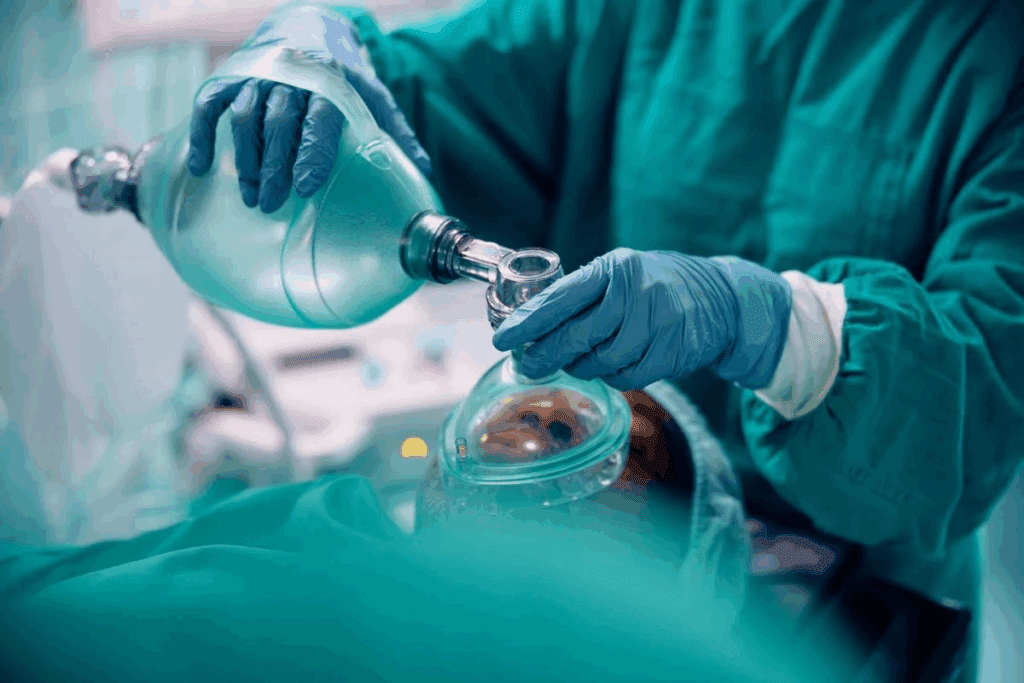
General anaesthesia intubation is key for patient safety in surgeries and critical care. It involves putting an endotracheal tube in to keep the airway open. This makes breathing controlled.
Definition and Clinical Significance
General anaesthesia intubation means putting an endotracheal tube into a patient’s airway for ventilation. It’s important because it lets anaesthesia be given and keeps oxygen flowing during surgery.
This method is very important. It’s a main part of taking care of patients during surgery. It helps keep the airway safe and controls breathing.
Indications and Contraindications
There are many times when general anaesthesia intubation is needed. This includes emergency surgeries, long surgeries, and when patients can’t breathe on their own. The choice to intubate depends on the patient’s health, the surgery type, and how long the anaesthesia will last.
Indications for General Anaesthesia Intubation:
- Emergency surgeries needing quick airway management
- Long surgeries where the airway must be secured
- Patients with hard breathing or airway problems
- Critical care needing mechanical ventilation
Even though intubation is very helpful, there are times when it’s not right. Doctors must think about possible problems, like hard intubation, or special needs of the patient. They also need to know about the equipment and techniques needed.
Comprehensive Pre-Procedure Patient Assessment
A thorough pre-procedure patient assessment is key to safe and effective general anaesthesia intubation. It checks the patient’s airway, looks at their medical history, and assesses the risks of intubation.
Airway Evaluation Techniques
Airway evaluation is vital in the pre-procedure assessment. It helps predict any challenges during intubation. The Mallampati classification, thyromental distance measurement, and neck mobility assessment are used. These methods give insights into how easy or hard intubation might be.
| Technique | Description | Clinical Significance |
| Mallampati Classification | Assessment of oral cavity visibility | Predicts ease of laryngoscopy |
| Thyromental Distance | Measurement from thyroid notch to mentum | Indicates possible intubation difficulty |
| Neck Mobility Assessment | Evaluation of neck flexion and extension | Affects laryngoscopy and intubation ease |
Patient History and Risk Stratification
Looking closely at the patient’s medical history is critical. It helps spot conditions that might make intubation harder, like previous difficult intubation, neck or facial trauma, or respiratory conditions. Risk stratification sorts patients by their risk for intubation complications. This guides the creation of a good intubation plan.
- Review of previous anaesthesia records
- Assessment of current medical conditions
- Evaluation of medications that may affect intubation
By using airway evaluation techniques, a detailed patient history, and risk stratification, healthcare providers can make general anaesthesia intubation safer and more successful.
Essential Equipment for General Anaesthesia Intubation
The success of general anaesthesia intubation depends on the right equipment. It’s important to have all the tools ready for safe and effective airway management.
Primary Intubation Equipment
The main tools for intubation are laryngoscopes, endotracheal tubes, and stylets. Laryngoscopes help see the airway. Endotracheal tubes secure it. Stylets guide the tube.
“The importance of proper equipment cannot be overstated in airway management.”
Choosing the right size and type of these devices is key for successful intubation.
Laryngoscopes come in different types, like Macintosh and Miller blades. Each has its own benefits based on the patient’s anatomy and the doctor’s preference. Endotracheal tubes vary in size and are made to be flexible and kink-resistant to avoid airway blockage.
Adjunct and Emergency Equipment
Along with primary equipment, adjunct equipment like bougies and videolaryngoscopes help in tough intubations. They offer different ways to see and reach the airway. Emergency gear, like tools for a surgical airway, is vital when intubation fails and quick airway access is needed.
It’s essential to have all equipment organized and easy to reach. Having backup equipment ready for failures is also important. Regular checks and maintenance ensure everything works when needed.
Pre-Intubation Preparation Protocol
Pre-intubation preparation is key to safe and effective intubation under general anesthesia. It involves careful checks and preparations to improve patient outcomes.
Optimal Patient Positioning
Getting the patient in the right position is vital for successful intubation. The aim is to line up the oral, pharyngeal, and laryngeal axes for easy laryngoscopy. This is done by putting the patient in a sniffing position, with the neck flexed and the head extended.
Anesthesiology experts stress that proper positioning greatly helps in intubation. It also lowers the risk of complications.
“The sniffing position is considered optimal for intubation as it provides the best alignment of the airway axes.”
Equipment Verification Process
The equipment check is a critical part of pre-intubation prep. It makes sure all needed gear is ready and works right. This includes checking the laryngoscope, the endotracheal tube, and the anesthesia machine.
- Verify the laryngoscope light is functioning.
- Check the endotracheal tube cuff for leaks.
- Ensure the anesthesia machine is set to the correct settings.
By carefully following the pre-intubation prep, healthcare teams can make intubation safer and more effective. A leading anesthesiology journal notes, “Attention to detail during pre-intubation preparation is key to reducing risks and ensuring successful intubation.”
Pharmacology of General Anaesthesia Intubation
Understanding the science behind general anaesthesia intubation is key for safe airway management. This process involves complex agents and their roles. It requires a deep knowledge of pharmacology.
Induction Agents Selection and Administration
Induction agents start general anaesthesia. They help move from being awake to being unconscious, making airway management easier. Common agents include:
- Propofol: Known for quick onset and recovery.
- Etomidate: Good for patients with heart issues because it doesn’t affect blood pressure much.
- Thiopental: A barbiturate used in the past, but less now due to availability.
The right induction agent depends on the patient’s health, the anaesthesiologist’s choice, and the procedure’s needs.
Neuromuscular Blocking Agents
Neuromuscular blocking agents (NMBAs) relax muscles for easier intubation. They are divided into depolarizing and non-depolarizing types.
- Depolarizing NMBAs: Succinylcholine is the most used, known for quick action and short effect.
- Non-depolarizing NMBAs: Agents like rocuronium and vecuronium are chosen for their good profiles and reversibility.
The choice of NMBA depends on how urgent the intubation is, the patient’s muscle mass, and the procedure’s length.
Adjunctive Medications
Adjunctive medications improve intubation conditions, manage risks, and provide pain relief. They include:
- Opioids: Help reduce the body’s stress response to intubation.
- Lidocaine: Used to lessen coughing and the body’s stress response to intubation.
- Benzodiazepines: Used for their calming and memory-blocking effects.
Using these medications should match the patient’s needs and the situation.
Executing General Anaesthesia Intubation: Step-by-Step Technique
To successfully perform general anaesthesia intubation, healthcare professionals must follow a detailed, step-by-step approach. This ensures not only the safety of the patient but also the effectiveness of the procedure.
Direct Laryngoscopy Approach
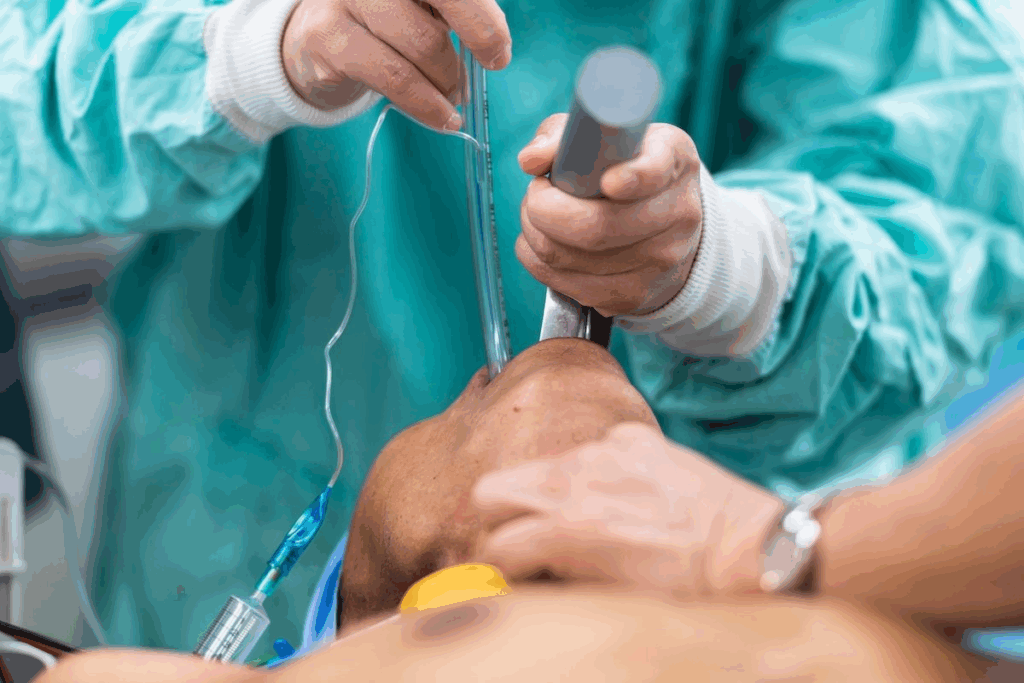
The first critical step in general anaesthesia intubation is the direct laryngoscopy approach. This involves using a laryngoscope to visualize the airway. The laryngoscope is carefully inserted into the patient’s mouth, and the blade is used to gently lift the jaw, providing a clear view of the glottis.
Proper positioning is key during direct laryngoscopy. The patient’s head is placed in a sniffing position. This aligns the oral, pharyngeal, and laryngeal axes, making the airway easier to see.
Endotracheal Tube Placement
Once the airway is visualized, the next step is endotracheal tube placement. The endotracheal tube is carefully inserted through the vocal cords into the trachea. This requires precision to avoid trauma to the surrounding tissues and to ensure that the tube is correctly positioned.
The use of a stylet or bougie can aid in guiding the endotracheal tube into place, even when the airway is difficult to visualize.
Securing the Airway
After the endotracheal tube is placed, it is essential to secure the airway to prevent displacement. This is typically achieved by inflating the cuff around the tube to create a seal within the trachea, followed by securing the tube with tape or a tube holder.
Verification of the tube’s position is critical. It involves checking for end-tidal CO2 and listening for breath sounds bilaterally. This confirms that the tube is correctly placed and that ventilation is effective.
Verification of Successful Intubation
Ensuring the endotracheal tube is in the right place is key. This step is vital for good ventilation and avoiding problems.
Primary Confirmation Methods
First, we check if the tube is in the right spot. Clinical assessment looks at how the patient reacts. We check for chest movement and listen for breathing sounds. We also make sure the tube is in place.
End-tidal CO2 monitoring is another important tool. It shows if there’s carbon dioxide in the breath, proving the tube is in the airway.
“The use of end-tidal CO2 monitoring has become a standard of care for verifying endotracheal tube placement,” as noted by anesthesia guidelines. This method provides a rapid and reliable indication of correct tube positioning.
Secondary Confirmation Techniques
After the first checks, we use more methods to be sure. A chest X-ray helps see where the tube is in relation to the carina. It’s very useful for patients with tricky airways or who need to breathe through a tube for a long time.
- Checking the tube’s position relative to the carina
- Verifying that the tube is not in a mainstem bronchus
- Assessing for any signs of complications, such as pneumothorax
Using both primary and secondary methods helps doctors make sure intubation is done right and safely.
Managing Difficult Airway Scenarios
It’s key to manage difficult airways well to keep patients safe during general anesthesia. This means doing a preoperative check, using skilled intubation methods, and having a backup plan.
Difficult Airway Recognition
Spotting a difficult airway early is very important. You need to look at the patient’s airway, their past intubation history, and other important details. Signs of a tough airway include a high Mallampati score, limited neck movement, and a short thyromental distance.
- Mallampati classification
- Neck mobility assessment
- Thyromental distance measurement
Alternative Intubation Approaches
When a difficult airway is found, you might need to try other ways to intubate. Video laryngoscopy and fiberoptic intubation are good options. Video laryngoscopy gives a clear view of the glottis. Fiberoptic intubation lets you see the airway as you go.
| Technique | Advantages | Limitations |
| Video Laryngoscopy | Better glottic view, easier to teach | Equipment cost, possible fogging |
| Fiberoptic Intubation | Works well in tough airways, little head movement needed | Needs skill, might cause bleeding |
Failed Intubation Algorithm
Having a plan for when intubation doesn’t work is critical. This includes calling for help, trying other methods, and thinking about emergency front-of-neck access if all else fails.
- Call for help
- Try other intubation methods (like video laryngoscopy or fiberoptic)
- Think about emergency front-of-neck access if nothing else works
By knowing and using these strategies, healthcare teams can handle tough airway situations well. This ensures patient safety and good outcomes.
Post-Intubation Management and Monitoring
The time after intubation is very important for patient care. It needs careful management and constant monitoring. This ensures the patient’s safety and the best possible results.
Ventilation Parameter Optimization
It’s key to keep the patient’s air and oxygen flow right. This means adjusting the ventilator settings based on the patient’s respiratory mechanics and gas exchange. Important things to watch are tidal volume, breathing rate, and PEEP.
Changing these settings needs a deep understanding of the patient’s lung health. For example, those with acute respiratory distress syndrome (ARDS) might need more PEEP to get enough oxygen.
Ongoing Patient Assessment
Keeping a close eye on the patient’s health is essential. This means watching vital signs like heart rate, blood pressure, and oxygen levels. It also includes checking how awake and comfortable the patient is.
Looking out for signs of breathing or heart problems is also key. For example, watching for barotrauma or hemodynamic instability helps fix issues fast.
By focusing on these important parts of care after intubation, healthcare teams can greatly improve patient results. They can also lower the chance of problems.
Conclusion: Excellence in General Anaesthesia Intubation
Reaching excellence in general anaesthesia intubation takes skill, knowledge, and a focus on safety and quality. It’s not just about being good at the technical parts. It’s also about being careful and detailed in every step, from start to finish.
Hospitals like Liv Hospital are key in pushing for better intubation care. They set high standards for safety and care. This helps doctors and nurses reduce risks and get better results for patients.
Improving in intubation is a never-ending journey. It needs ongoing learning, skill building, and a dedication to quality care. By focusing on safety and following best practices, healthcare teams can achieve the best results and better patient outcomes.
FAQ
What is general anaesthesia intubation?
General anaesthesia intubation is a detailed procedure. It involves putting a tube into a patient’s airway. This is done while they are under anaesthesia to keep them safe and comfortable.
Why is a thorough patient assessment before the procedure important?
A detailed patient assessment is key. It helps ensure the procedure goes smoothly. It checks the patient’s airway and medical history to spot any risks.
What equipment is essential for general anaesthesia intubation?
You need laryngoscopes, endotracheal tubes, and stylets. Also, bougies and emergency equipment for a surgical airway are important.
How is the successful placement of the endotracheal tube verified?
Verification is done through clinical checks and end-tidal CO2 monitoring. A chest X-ray is also used to confirm the tube’s correct position.
What is the importance of optimal patient positioning during intubation?
Proper positioning is critical. It aligns the patient’s oral, pharyngeal, and laryngeal axes. This makes direct laryngoscopy easier and increases the chance of successful intubation.
How are difficult airway scenarios managed?
Difficult airways are managed by recognizing the challenges. Alternative methods are used, and a clear plan is in place for failed intubations. This ensures patient safety.
What is the role of pharmacology in general anaesthesia intubation?
Pharmacology is vital. It involves using induction agents, neuromuscular blockers, and other medications. These help with intubation and managing complications.
What are the key steps in executing general anaesthesia intubation?
The main steps are direct laryngoscopy and careful tube placement. Securing the airway is also important to prevent displacement and ensure protection.
How is post-intubation management and monitoring performed?
Post-intubation care involves adjusting ventilation and closely watching the patient. This helps quickly spot and manage any complications.
What is the significance of continuous skill development in general anaesthesia intubation?
Continuous skill development is essential. It keeps healthcare professionals up-to-date with the latest techniques. This ensures patient safety and quality care.
References
- Muleta, J., et al. (2024). A rare case of bile leak due to type 2 duct of Luschka injury: Diagnosis and intervention. Journal of Surgical Case Reports. Retrieved from https://academic.oup.com/jscr/article/2024/3/rjae179/7632948