Geriatrics addresses the health needs of older adults, focusing on frailty, dementia, falls, and chronic disease management.
Send us all your questions or requests, and our expert team will assist you.
The overview and definition of macular degeneration provides essential insight into a leading cause of vision loss among older adults worldwide. This page is designed for international patients, their families, and caregivers seeking clear, medically accurate information about the condition and the comprehensive services offered by Liv Hospital.
Macular degeneration affects the central portion of the retina, known as the macula, leading to progressive loss of sharp, central vision. According to recent studies, more than 10 million people globally are living with some form of this disease, highlighting the importance of early detection and timely intervention.
In this detailed overview and definition, you will learn about the underlying causes, the two primary types, common symptoms, diagnostic procedures, current treatment modalities, and practical strategies for daily living. The information is tailored to help you make informed decisions about care pathways, especially if you are considering treatment at a JCI‑accredited facility such as Liv Hospital.
Macular degeneration, medically referred to as age‑related macular degeneration (AMD), arises from a complex interplay of genetic, environmental, and lifestyle factors. While the exact cause remains multifactorial, several key contributors have been identified.
Family history significantly increases susceptibility. Specific gene variants, particularly those affecting the complement pathway, have been linked to higher risk.
Exposure to ultraviolet light, chronic inflammation, and cardiovascular conditions such as hypertension also play a role. Managing these risk factors can slow disease progression and improve overall ocular health.
By understanding the overview and definition of these causes, patients can work with clinicians at Liv Hospital to develop personalized prevention and monitoring plans.

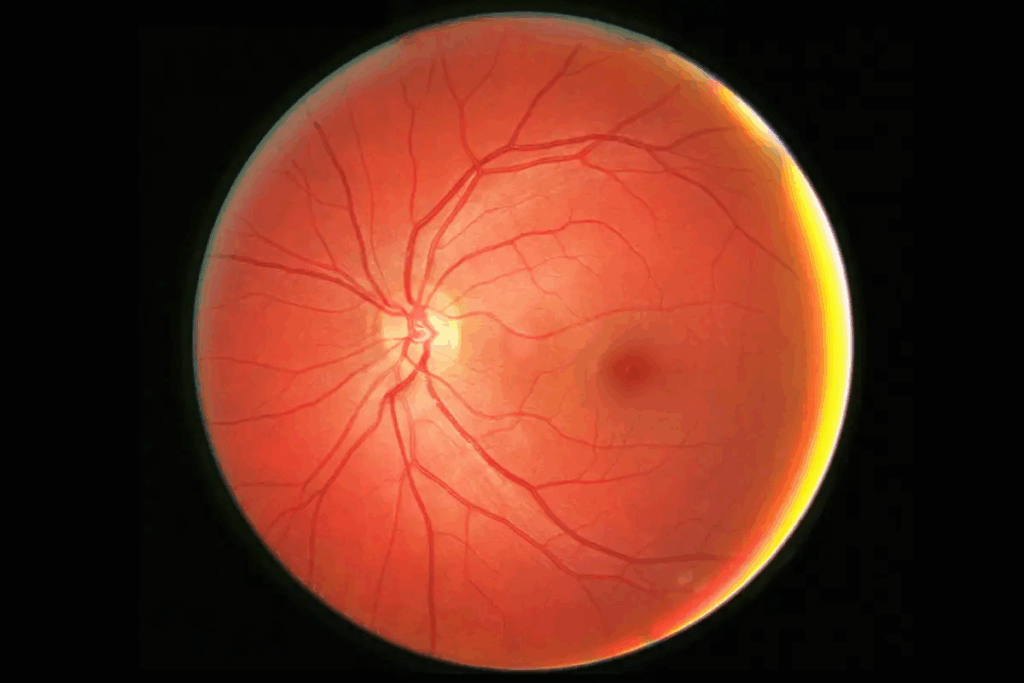
The dry form is the most common presentation, accounting for the vast majority of cases. The slow, progressive atrophy of the Retinal Pigment Epithelium and photoreceptors characterizes it. Clinically, it is marked by the presence of drusen. In its advanced stages, it manifests as Geographic Atrophy, where large areas of the retina waste away, leaving well-demarcated regions of blindness.


The wet form is less common but more serious, causing most cases of severe vision loss. It often develops from the dry form. In wet macular degeneration, the retina does not get enough oxygen and releases more Vascular Endothelial Growth Factor, a protein that causes new, weak blood vessels to grow from the choroid into the retina. This process is called choroidal neovascularization.
Early recognition of macular degeneration symptoms can dramatically affect outcomes. Patients typically notice changes in central vision rather than peripheral sight.
Regular eye examinations, especially for individuals over 50 or with known risk factors, enable clinicians to detect subtle signs such as drusen deposits. At Liv Hospital, comprehensive eye exams include visual acuity testing, dilated retinal examination, and advanced imaging to catch early disease stages.

Accurate diagnosis relies on a combination of clinical evaluation and state‑of‑the‑art imaging technologies. The following tests are routinely employed:
These diagnostic tools contribute to a thorough overview and definition of disease status, guiding treatment planning. Liv Hospital’s ophthalmology department utilizes the latest OCT and angiography equipment, ensuring precise assessment and monitoring.
Management of macular degeneration ranges from nutritional supplementation for dry AMD to intravitreal injections for wet AMD. Treatment goals focus on slowing progression, preserving existing vision, and, when possible, improving visual function.
Research at leading institutions, including Liv Hospital’s research wing, explores gene therapy, stem‑cell transplantation, and novel drug delivery systems. Early clinical trials show promise in restoring retinal function and halting disease progression.
Understanding the full overview and definition of both current and future treatments empowers patients to discuss options with their ophthalmologists and make choices aligned with their health goals.
Beyond medical interventions, adapting daily life and accessing support services are essential components of comprehensive care.
Patients who integrate these strategies often experience better visual outcomes and maintain a higher level of daily functioning.
Liv Hospital offers internationally recognized, JCI‑accredited ophthalmology services tailored to the needs of global patients. Our multidisciplinary team combines expertise in retinal diseases with cutting‑edge technology, ensuring precise diagnosis and personalized treatment plans. From seamless appointment coordination to interpreter support and comfortable accommodation, every aspect of the patient journey is managed with professionalism and compassion.
Ready to take the next step in managing macular degeneration? Contact Liv Hospital today to schedule a comprehensive eye assessment and explore the most advanced treatment options available.
Our dedicated international patient team is here to guide you through every stage of care, ensuring a smooth and supportive experience.

Send us all your questions or requests, and our expert team will assist you.
Macular degeneration develops from a mix of genetic and environmental influences. A family history of the disease increases susceptibility, especially when specific complement pathway gene variants are present. Lifestyle factors such as smoking (which can triple risk), a diet low in antioxidants and omega‑3 fatty acids, obesity, and sedentary habits further elevate risk. Environmental exposures like ultraviolet light and chronic inflammation, as well as systemic health issues such as hypertension, also contribute. Managing these factors through lifestyle changes and regular monitoring can slow disease progression.
Dry (atrophic) AMD accounts for about 85‑90% of cases and is characterized by the slow accumulation of drusen and thinning of the retinal pigment epithelium, leading to gradual central vision loss. Wet (neovascular) AMD represents 10‑15% of cases and involves the growth of abnormal choroidal blood vessels that leak fluid or bleed, causing sudden and significant central vision loss. Symptoms of both include blurry or distorted central vision, but wet AMD often presents with rapid onset of dark spots and more pronounced visual distortion, requiring urgent treatment to preserve sight.
Geographic Atrophy is the late stage of dry macular degeneration, where retinal cells slowly die, leading to blind spots. Choroidal Neovascularization is the main feature of wet macular degeneration, with new, leaky blood vessels growing under the retina. Atrophy happens slowly, while neovascularization is fast and can cause fluid leaks and scarring.
Stem cells, especially induced pluripotent stem cells, can be turned into retinal pigment epithelium cells. Scientists grow these cells in the lab and then transplant them into the eye to replace the damaged ones. The goal is to rebuild the support layer for photoreceptors, stop vision loss from getting worse, and possibly bring back some vision where the retina is still healthy.
Adopting a diet high in leafy greens, fatty fish, and antioxidants supports retinal health, while maintaining a healthy weight and staying physically active improves ocular circulation. Vision rehabilitation using low‑vision aids, magnifiers, and adaptive technology helps maintain independence. Psychosocial support through counseling, support groups, and patient education reduces anxiety and promotes adherence to treatment. Regular follow‑up at specialized centers like Liv Hospital ensures timely adjustments to therapy, maximizing visual preservation and daily functioning.

 Rheumatology
 Pulmonology
 Breast Cancer
 Chronic Pain
 Orthopedics
 Cardiology
Leave your phone number and our medical team will call you back to discuss your healthcare needs and answer all your questions.
Your Comparison List (you must select at least 2 packages)