Discover how ovarian cysts are diagnosed using ultrasounds, blood tests, and specialist evaluations to ensure accurate detection and effective monitoring.

We're Here to Help.
Get in Touch.

Send us all your questions or requests, and our expert team will assist you.

Doctors

Ovarian Cysts: Diagnosis and Evaluation

How Are Ovarian Cysts Diagnosed?

The diagnostic process for ovarian cysts turns symptoms into precise medical data. Evaluation distinguishes harmless functional cysts from complex masses needing intervention.
Physical exams, high-resolution imaging, and lab tests determine cyst size, type, and location, guiding a personalized management plan and avoiding unnecessary procedures.

Icon LIV Hospital

The Comprehensive Pelvic Examination

GYNECOLOGY

The first step in any evaluation is a clinical pelvic exam. During this manual checkup, a gynecologist assesses the size, shape, and mobility of the ovaries and uterus. If an ovary feels enlarged, firm, or tender, it serves as a primary indicator for further testing.
While a physical exam can detect the presence of a larger mass, it cannot determine whether a cyst is fluid-filled or solid, which is why imaging is almost always the next step.

Icon 1 LIV Hospital

Transvaginal Ultrasound: The Gold Standard

GYNECOLOGY

Ultrasound is the most effective and common tool for diagnosing ovarian cysts. A transvaginal ultrasound involves inserting a small, specialized probe into the vagina to get a high-definition view of the ovaries.
This allows the doctor to see if a cyst is “simple” (filled only with fluid) or “complex” (containing solid areas or multiple compartments). Simple cysts are almost always benign, while complex cysts require more frequent monitoring or further investigation.

Abdominal Ultrasound for Large Masses

If a cyst is particularly large or has moved higher into the pelvic cavity, an abdominal ultrasound may be used in conjunction with the transvaginal approach.
This provides a wider field of view, allowing the specialist to see how the cyst is interacting with other organs like the bladder or the abdominal wall. This “macro” view is essential for planning surgical removal if the cyst has reached a significant size.

Color Doppler Imaging

During an ultrasound, a doctor may use Color Doppler to evaluate the blood flow to the cyst and the ovary. This is a critical diagnostic step for two reasons: it can help identify “ovarian torsion” (where blood flow is cut off due to twisting) and it can detect abnormal blood vessel patterns that might suggest malignancy.
High-velocity blood flow into the solid parts of a complex cyst is a marker that warrants a more cautious clinical approach.

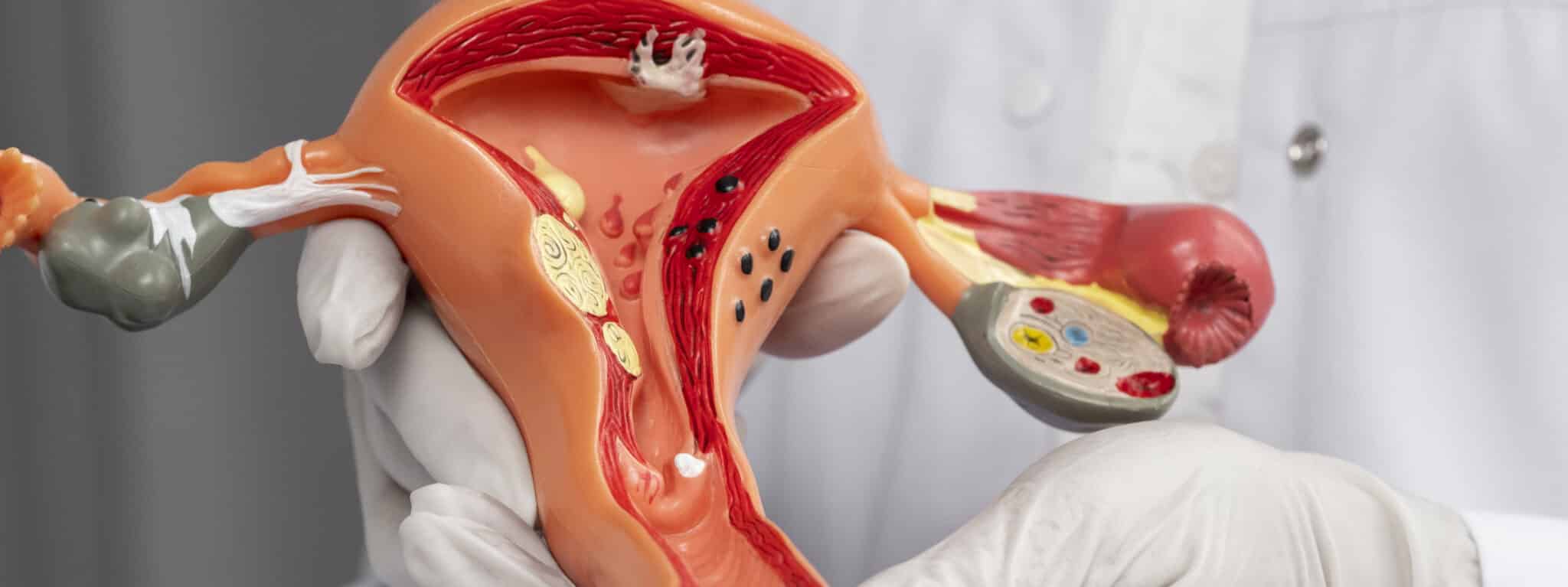
doctor-holding-anatomic-model-high-angle (1) (1)

Magnetic Resonance Imaging (MRI)

While ultrasound is excellent for initial detection, an MRI provides an unmatched level of detail regarding the tissue composition of a cyst. An MRI can often distinguish between an endometrioma (filled with old blood), a dermoid cyst (containing fat and other tissues), and a potentially cancerous growth.
This level of precision is vital when a surgeon needs to know exactly what they are dealing with before making an incision.

Serum CA-125 Tumor Marker Test

CA-125 is a blood protein that may be elevated in ovarian cancer, but it can also rise in benign conditions such as endometriosis, fibroids, or pelvic infections.
Therefore, it is mainly used in postmenopausal women or to monitor known complex masses, rather than as a standalone test in younger women.

Pregnancy Testing and Hormonal Panels

Since many ovarian cysts are functional (related to the menstrual cycle), a pregnancy test is often performed to rule out an ectopic pregnancy, which can cause similar pelvic pain.
Additionally, hormonal blood tests for levels of estrogen, progesterone, LH, and FSH can help determine if the cysts are part of a larger endocrine disorder like Polycystic Ovary Syndrome (PCOS).

Diagnostic Laparoscopy

When imaging is inconclusive or a cyst appears suspicious, diagnostic laparoscopy may be performed.
This minimally invasive procedure allows direct visualization of the cyst and enables immediate removal or biopsy, providing the most definitive confirmation of an ovarian mass.

Monitoring and "Watchful Waiting" Protocols

Not every ovarian cyst requires immediate treatment. Small, simple cysts are often managed with watchful waiting, using follow-up ultrasounds every 6–12 weeks to monitor changes and avoid unnecessary intervention.

Differentiating Cysts from Other Pelvic Conditions

An essential step is differential diagnosis to confirm the pain is not originating from the appendix, bowel, or urinary tract. By combining pelvic imaging with a detailed symptom history, specialists ensure the problem is correctly identified and treated at its source.

Expert Ovarian Cyst Diagnosis at Liv Hospital

At Liv Hospital, clarity is the first step to healing. Using advanced 3T MRI and 4D Ultrasound, our radiologists and gynecologists collaborate to characterize ovarian cysts with precision, providing peace of mind and expert care.

30 Years of
Excellence

Trusted Worldwide

With patients from across the globe, we bring over three decades of medical

Book a Free Certified Online
Doctor Consultation

Clinics/branches
Assoc. Prof. MD.  Ümit Yasemin Sert Dinç Assoc. Prof. MD. Ümit Yasemin Sert Dinç Gynecology Overview and Definition
Group 346 LIV Hospital

Reviews from 9,651

4,9

Was this article helpful?

Was this article helpful?

We're Here to Help.
Get in Touch.

Send us all your questions or requests, and our expert team will assist you.

Doctors

FREQUENTLY ASKED QUESTIONS

How small can a cyst be detected on ultrasound?

Ultrasound can detect cysts just a few millimeters in size. Cysts under 3 cm are often normal.

No. Ultrasound is best for simple cysts; MRI is used for complex ones.

Many simple cysts disappear on their own within a few cycles.

No. It can be elevated due to benign conditions in premenopausal women.

Only large cysts can be felt; most require imaging.

Spine Hospital of Louisiana

Let's Talk About Your Health

BUT WAIT, THERE'S MORE...

Leave your phone number and our medical team will call you back to discuss your healthcare needs and answer all your questions.

Let's Talk About Your Health

How helpful was it?

helpful
helpful
helpful
Your Comparison List (you must select at least 2 packages)