
Hernia repair is a surgery to fix a hernia. A hernia happens when an organ bulges through a weak spot in the muscle. This can cause a lot of pain and make everyday tasks hard. Our ultimate guide to the hernia repair procedure. Learn what happens during surgery, the different types, and essential recovery tips from experts.
What Exactly is a Hernia?
A hernia is when an organ pushes through a weak spot in the muscle. This can happen in places like the belly, groin, or diaphragm. You might see a bulge or feel pain, mostly when you cough, lift, or bend.
Common Causes of Hernias
Hernias can be caused by weak muscles, strain, or being born with it. Things like heavy lifting, coughing a lot, or being overweight can make hernias worse. Age and family history also play a part.
Recognizing Hernia Symptoms
Symptoms of a hernia depend on where it is and how bad it is. You might see a bulge, feel pain or discomfort, or feel like something is heavy. If a hernia gets stuck or cut off, it’s a serious emergency.
Knowing about hernias and their symptoms is key. Hernia repair surgery can help fix these problems. It can make you feel better, prevent more serious issues, and improve your life.
Types of Hernias That May Require Surgical Repair

Many types of hernias need surgery to fix symptoms and avoid serious problems.
Inguinal Hernias
Inguinal hernias happen when part of the intestine pushes through a weak spot in the abdominal muscles. This weak spot is in the inguinal canal. It’s more common in men. Key characteristics include:
- Protrusion through the inguinal canal
- Higher prevalence in men
- Potential for severe pain if not treated
Umbilical Hernias
Umbilical hernias occur near the belly button. They happen when part of the intestine bulges through an opening in the abdominal muscles. They are common in babies but can also affect adults.
Hiatal Hernias
A hiatal hernia happens when the upper part of the stomach bulges through an opening in the diaphragm. This can cause heartburn and chest pain. Treatment often involves:
- Lifestyle changes
- Medications to reduce acid
- Surgery in severe cases
Incisional Hernias
Incisional hernias occur from a weakened area in a previous surgical scar. Risk factors include:
- Previous abdominal surgery
- Weakened scar tissue
- Increased intra-abdominal pressure
When is a Hernia Repair Procedure Necessary?
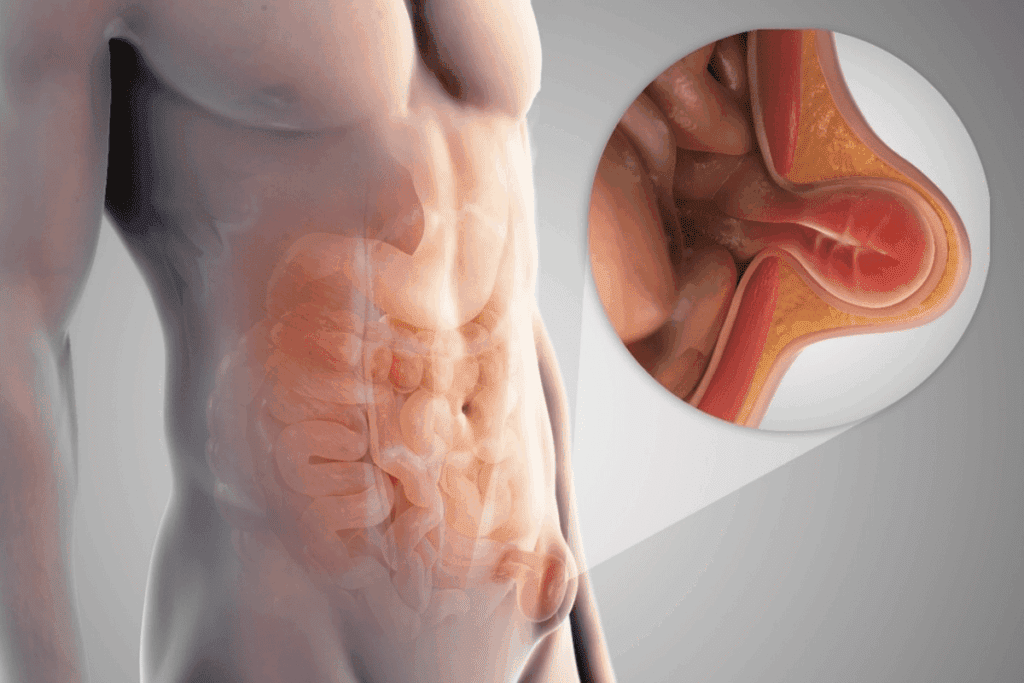
Knowing when to get a hernia repair is key to better health. A hernia repair is often needed when symptoms are bad or when complications arise.
Indications for Surgical Intervention
Doctors usually suggest surgery for symptomatic or at-risk hernias. This includes hernias that hurt a lot, are stuck, or might cut off blood supply.
Choosing hernia repair surgical treatment depends on a doctor’s evaluation. They look at the hernia’s size, how bad the symptoms are, and the patient’s health.
Indication | Description |
Significant Pain | Pain that interferes with daily activities |
Incarcerated Hernia | Hernia that cannot be pushed back into the abdomen |
Risk of Strangulation | Cutting off of blood supply to the herniated tissue |
Risks of Delaying Hernia Repair
Waiting too long to fix a hernia can increase risks. This can lead to serious problems like stuck hernias and cut-off blood supply. These issues can cause a lot of pain, block the bowel, and even be life-threatening.
Non-Surgical Management Options
Not every hernia needs surgery right away. Non-surgical management options might be for those with mild symptoms or who can’t have surgery.
These options include waiting and watching, making lifestyle changes, and using supportive devices. But, it’s important to talk to a doctor about the risks of delaying hernia repair to find the best solution.
The Hernia Repair Procedure: Step-by- Step Overview
Understanding hernia repair is key for those facing surgery. The process is complex but aims to be safe and effective.
Goals of Hernia Repair Surgery
The main goal of hernia repair surgery is to alleviate symptoms. It aims to prevent complications by strengthening the weak area where the hernia is.
- To relieve pain and discomfort associated with the hernia.
- To prevent the hernia from becoming incarcerated or strangulated.
- To restore the normal anatomy and function of the affected area.
General Surgical Approach
Hernia repair can be done in different ways, like open repair and laparoscopic repair. The choice depends on the hernia’s type and size, and the patient’s health.
Typical Duration and Hospital Stay
The surgery’s length varies, from 30 minutes to several hours. Most are done on an outpatient basis, so patients go home the same day. But, some might need a short hospital stay for care.
Anesthesia Options for Hernia Repair
Hernia repair surgery can use local anesthesia, regional anesthesia, or general anesthesia. The choice depends on the patient’s health, the surgeon’s preference, and the procedure’s needs.
- Local anesthesia is for minor procedures or certain health conditions.
- Regional anesthesia numbs a larger area, like below the waist.
- General anesthesia makes the patient unconscious during the surgery.
Open Incision Hernia Surgery Technique
The open incision technique is a common way to fix hernias. It involves making one cut in the belly to get to the hernia.
Step-by-Step Procedure
First, the surgeon makes a cut near the hernia. The size of this cut depends on the hernia’s size.
Then, they go through the layers of tissue to find the hernia sac. They push the sac back into the belly and fix the weak spot with mesh.
Next, they close the incision with stitches or staples. They also close the skin with stitches or staples.
Benefits of Open Repair
Open incision hernia surgery has many benefits. It’s a simple method that surgeons know well. It works for many types and sizes of hernias.
One big plus is that it lets the surgeon see the hernia and the tissue around it. This is very helpful in complex cases.
Potential Drawbacks
Even though it’s effective, open incision hernia surgery has some downsides. One big worry is the bigger cut. This can cause more damage to the tissue and might make recovery longer than with less invasive methods.
There’s also a chance of infection and other problems that can happen with any open surgery.
Typical Recovery Timeline
The time it takes to recover from open incision hernia surgery varies. Most people can start with light activities in a few weeks.
But full recovery can take months. During this time, it’s important to avoid heavy lifting and hard work.
Laparoscopic Hernia Repair Method Method
Laparoscopic hernia repair is a modern surgery that treats hernias with less pain and quicker recovery. It’s more popular than traditional methods because of these benefits.
Minimally Invasive Approach Explained
This method uses small cuts for a thin, lighted tube with a camera and special tools. Surgeons see the hernia and area around it on a screen. This helps them make precise repairs.
Procedural Steps
The steps for laparoscopic hernia repair include:
- Administering general anesthesia to ensure patient comfort
- Making small incisions for the laparoscope and surgical instruments
- Insufflating the abdominal cavity with carbon dioxide to improve visualization
- Identifying and reducing the hernia
- Placing synthetic mesh to reinforce the weakened area
- Securing the mesh with sutures or staples
- Closing the incisions
Advantages Over Open Surgery
Laparoscopic hernia repair has many benefits over open surgery, such as:
Advantages | Benefits |
Less Postoperative Pain | Reduced need for pain medication |
Qu suppliesicker Recovery | Faster return to normal activities |
Smaller Incisions | Less noticeable scarring |
These benefits make laparoscopic hern ia repair a good choice for many.
Limitations and Considerations
While it has many benefits, laparoscopic hernia repair also has some downsides, such as:
- The need for general anesthesia
- Potential for complications like infection or adhesions
- Need for special training and equipment
- Possible higher cost than open repair
Patients should talk to their surgeon about these points to see if it’s right for them.
Robotic Hernia Repair Option
The robotic hernia repair option is a top choice for treating hernias. It’s a minimally invasive method with fewer complications.
How Robotic Surgery Works
Robotic surgery uses a high-tech system for precise procedures. The system has a console for the surgeon, a cart with instruments, and a 3D vision system. This setup gives surgeons a clear view, making dissections and mesh placement precise.
Key components of robotic hernia repair include:
- High-definition 3D visualization
- Precise robotic instruments
- Enhanced surgeon ergonomics
Benefits of Robotic Assistance
Robotic surgery in hernia repair has many benefits. It offers better precision, leading to fewer complications and less chance of hernia coming back. It’s also less painful after surgery, with smaller cuts and quicker recovery times than open surgery.
Patients often experience:
- Less postoperative pain
- Shorter hospital stays
- Faster return to normal activities
Comparing to Other Surgical Approaches
Robotic hernia repair stands out when compared to other methods. It’s more precise than laparoscopic surgery, which can lower complication risks. Yet, it needs specialized training and is pricier than traditional methods.
Surgical Approach | Precision | Recovery Time | Cost |
Robotic | High | Short | Higher |
Laparoscopic | Moderate | Moderate | Moderate |
Open | High | Long | Lower |
Cost Considerations for Robotic Surgery
The cost of robotic hernia repair is a big factor for patients. It’s pricier than open or laparoscopic repair. But, the benefits of quicker recovery and fewer complications might make it worth it.
Factors influencing the cost include:
- Surgeon’s fees
- Hospital charges
- Cost of robotic equipment and maintenance
Mesh Placement in Hernia Repair
Hernia repair often uses surgical mesh for extra support. This method is popular because it lowers the chance of hernia coming back.
Types of Surgical Mesh Materials
Surgical mesh comes in different materials, each with its own benefits. The main types are:
- Polypropylene mesh
- Polyester mesh
- ePTFE (expanded polytetrafluoroethylene) mesh
- Composite mesh
These materials are picked for their strength, safety, and how well they blend with body tissues.
Mesh Material | Characteristics | Common Uses |
Polypropylene | Strong, durable, promotes tissue ingrowth | Inguinal, ventral hernias |
Polyester | Flexible, less likely to cause adhesions | Ventral, hiatal hernias |
ePTFE | Microporous, reduces adhesions | Hi слож Hiatalገር, ventral hernias |
How Mesh Reinforces the Repair
Mesh reinforcement helps by giving a base for body tissue to grow into. This strengthens the weak area. It’s key in stopping the hernia from coming back by supporting the tissue and easing tension on the repair.
Mesh vs. Non-Mesh Repairs
The choice between mesh and non-mesh repairs depends on several factors. Mesh repairs often have lower recurrence rates but can lead to complications like mesh erosion. Non-mesh repairs avoid these issues but might have a higher chance of recurrence.
Our surgeons look at many things, like the hernia’s type and location, the patient’s health, and the surgery’s goals. They decide whether mesh or non-mesh is best for each patient.
Potential Mesh Complications
While mesh placement is usually safe, some complications can happen. These include:
- Mesh infection
- Mesh erosion
- Adhesions
- Chronic pain
Knowing these risks helps in understanding what to expect and making informed choices about hernia repair surgery.
Preparing for Your Hernia Repair Surgery
Getting ready for hernia repair surgery needs careful planning. We help you prepare to reduce risks and improve recovery. Our team guides you through each step to ensure the best results.
Pre-Surgical Consultations and Tests
You’ll have many tests and talks before surgery. These help us check your health and find any risks. You might have blood tests, imaging, and a review of your medical history.
“It’s important to follow your doctor’s advice on these tests,” says Dr. [Last Name], a top hernia expert. “It helps make the surgery go smoothly.”
We’ll also talk about your health history, past surgeries, allergies, and medicines. This info helps us plan the safest surgery for you.
Medication Management
Managing your medicines is key before surgery. Tell us about all your drugs, supplements, and vitamins. Some medicines, like blood thinners, might need to be changed or stopped to avoid bleeding.
- Write down all your medicines and bring the list to your pre-surgery talk.
- Follow our advice on changing or stopping certain medicines.
- Tell us about any allergies or sensitivities to medicines.
Dietary and Activity Guidelines
We might suggest special diets before surgery to help your health. Eating well can make recovery easier. “A healthy diet before surgery helps your body heal better,” says a nutrition expert.
Keep doing your usual activities, but avoid heavy lifting or hard exercises close to surgery. This helps avoid putting too much strain on the hernia.
What to Bring to the Hospital
Be ready for your surgery day. Bring:
- Your insurance cards and ID.
- A list of your medicines and their amounts.
- Comfortable clothes to wear home.
- Any other items our staff tells you to bring.
By following these tips and talking openly with our team, you can help make your surgery a success. This will also make your recovery smoother.
Recovery After Hernia Repair Surgery
Recovering well after hernia repair surgery needs good care, managing pain, and slowly getting back to normal. We’ll help you through this, making sure you follow your surgeon’s advice for a smooth recovery.
Immediate Post-Operative Care
Right after surgery, we focus on controlling pain, watching for complications, and starting the healing. You’ll stay in a recovery area until you’re ready to go home.
Key aspects of immediate post-operative care include:
- Resting in a comfortable position to minimize discomfort
- Following the prescribed pain management regimen
- Observing the surgical site for any unusual signs such as increased redness, swelling, or discharge
Pain Management Strategies
Managing pain is key to recovery. Your surgeon will give you medicine for pain. It’s important to take it as directed and tell your doctor if it’s not working or if you have side effects.
Effective pain management strategies may include:
- Using pain relief medication as directed
- Applying ice packs to reduce swelling and ease pain
- Resting and avoiding strenuous activities
A leading medical expert says, “Good pain management is essential for a comfortable recovery and to avoid problems.”
“Pain is a personal experience and can vary greatly from one individual to another. So, it’s important to work closely with your healthcare provider to find the best pain management plan.”
Activity Restrictions and Gradual Return
Getting back to normal activities is important for a good recovery. At first, avoid heavy lifting, bending, or hard exercises. As you get better, you can do more, with your surgeon’s advice.
Guidelines for activity restrictions include:
- Avoiding heavy lifting (usually more than 10-15 pounds) for several weeks
- Limiting strenuous activities and exercises
- Gradually resuming normal activities as advised by your surgeon
When to Contact Your Doctor
Knowing when to see your doctor is important during recovery. If you have severe pain not helped by medicine, signs of infection, or unusual symptoms, call your doctor right away.
Stay alert during your recovery and don’t hesitate to contact your healthcare provider if you have any worries.
Potential Complications and Risks of Hernia Repair
Hernia repair is common and usually works well. But, like any surgery, it comes with risks and complications. Knowing these is key for patients to make smart choices about their health.
Common Side Effects
Most people get some common side effects after hernia repair. These include pain, swelling, bruising, and trouble moving. We use medicine to help with pain, and these issues usually go away in a few weeks.
It’s essential for patients to follow their doctor’s instructions closely. This helps avoid complications and makes recovery smoother.
Serious Complications to Watch For
Though rare, serious problems can happen. These include infection, bleeding, damage to nearby tissues or organs, and bad reactions to anesthesia. Look out for severe pain, high fever, vomiting, or trouble peeing. If you notice these, get medical help right away.
Long-Term Concerns
Some people face long-term issues after hernia repair. These might be chronic pain, numbness, or scar tissue. While these can be managed, talking to your doctor is important to figure out the best way to handle them.
Hernia Recurrence Rates
Another big worry is the chance of the hernia coming back. How likely it is depends on the type of hernia, the surgery, and the patient. Recurrence rates are often lower with mesh repair. But, even with mesh, there’s a small chance it could happen again. Regular check-ups with your surgeon can help catch any signs of a return.
Knowing about the possible complications and risks of hernia repair helps patients get ready for the surgery and recovery. Always talk to your healthcare provider about any worries or questions. This way, you’ll be well-informed.
Choosing a Hernia Specialist and Surgical Facility
Choosing the right hernia specialist and a good surgical facility is key for a successful hernia repair. Your decisions about your care can greatly affect your outcome and experience.
Qualifications to Look For
When picking a hernia specialist, look at their qualifications and experience. Make sure they are board-certified in general surgery or a related field. Also, ask about their experience with hernia repairs, including their use of the latest techniques.
Key Qualifications:
- Board certification in general surgery
- Experience with hernia repair surgeries
- Familiarity with advanced surgical techniques
Questions to Ask Your Surgeon
Having a list of questions for your surgeon is important. Ask about their approach to hernia repair, the mesh they use, and how they handle complications. Also, ask about follow-up care and pain management.
Example Questions:
- What surgical approach do you recommend for my condition?
- What type of mesh do you use, and why?
- How will you manage pain after surgery?
Evaluating Hospital or Surgical Center Quality
The quality of the hospital or surgical center matters a lot. Look for places that are accredited and have a good reputation for surgery. Online reviews and your doctor’s recommendations can also help.
Quality Indicators | Description |
Accreditation Status | Ensure the facility is accredited by a recognized organization. |
Patient Reviews | Check online reviews for insights into patient satisfaction. |
Surgeon and Staff Qualifications | Verify the qualifications and experience of the surgical team. |
Insurance and Cost Considerations
It’s important to understand your insurance and the costs of hernia repair. Talk to your insurance to know what’s covered and what you’ll pay out-of-pocket. Also, ask your surgeon’s office about their billing and any financial help they offer.
Cost Factors to Consider:
- Surgeon’s fees
- Facility charges
- Anesthesia costs
- Follow-up care expenses
Conclusion
Knowing about hernia repair is key for those with hernias. We’ve covered the different hernia types, why surgery is needed, and the various surgical methods. These include open, laparoscopic, and robotic approaches.
Mesh plays a big role in hernia repair. We talked about the types of mesh and how they help prevent hernias from coming back. The choice between mesh and non-mesh repairs depends on the hernia type and the patient’s health.
Before surgery, patients get ready with consultations, medication checks, and diet advice. After surgery, they manage pain, follow activity rules, and get follow-up care. This helps them recover well.
In short, hernia repair is a big surgery that needs careful thought. By knowing the options and what to expect, patients can make good choices. It’s important to pick a skilled hernia specialist and a good surgical place for the best results.
FAQ
What is a hernia and how does it occur?
A hernia happens when an organ or tissue bulges through a weak spot in the muscle or tissue. This can be due to strain, aging, or being born with it.
What are the common symptoms of a hernia?
Symptoms include a bulge or lump, pain when lifting or bending, and sometimes nausea or vomiting. These happen if the hernia gets stuck or cut off.
What types of hernias can be treated with surgical repair?
Hernias like inguinal hernias, umbilical hernias, hiatal hernias, and incisional hernias can be fixed with surgery. It depends on the hernia’s size and how serious it is.
When is surgical intervention necessary for a hernia?
Surgery is needed if a hernia is causing symptoms, getting bigger, or at risk of serious problems. The decision to operate depends on the patient’s health and the hernia’s details.
What are the differences between open and laparoscopic hernia repair?
Open repair uses one big cut, while laparoscopic uses small cuts and a camera. Laparoscopic surgery is less invasive and might heal faster.
What is robotic hernia repair, and how does it differ from other methods?
Robotic hernia repair uses a robotic system to help the surgeon. It’s a minimally invasive method that might lead to less pain and quicker recovery.
Will I need mesh during my hernia repair surgery?
A: Surgical mesh is often used to strengthen the area. But, whether to use it depends on the hernia type, size, and your health. Your surgeon will decide what’s best for you.
How should I prepare for hern ia repair surgery?
Get ready by going to pre-surgery talks, following your doctor’s medication advice, and eating and moving as suggested. Also, plan for care and support after surgery.
What can I expect during the recovery period after hernia repair surgery?
Recovery means managing pain, following activity limits, and slowly getting back to normal. Always follow your surgeon’s advice and seek help if you have concerns.
What are the possible complications or risks with hernia repair surgery?
Risks include pain, swelling, and infection. Sometimes, there can be problems with the mesh or other serious issues.
How do I choose the right surgeon and surgical facility for my hernia repair?
Look for a qualified surgeon and a good facility. Ask questions, check the facility’s quality, and consider costs and insurance.
References
National Center for Biotechnology Information. Evidence-Based Medical Insight. Retrieved from https://www.ncbi.nlm.nih.gov/pmc/articles/PMC2749387/