
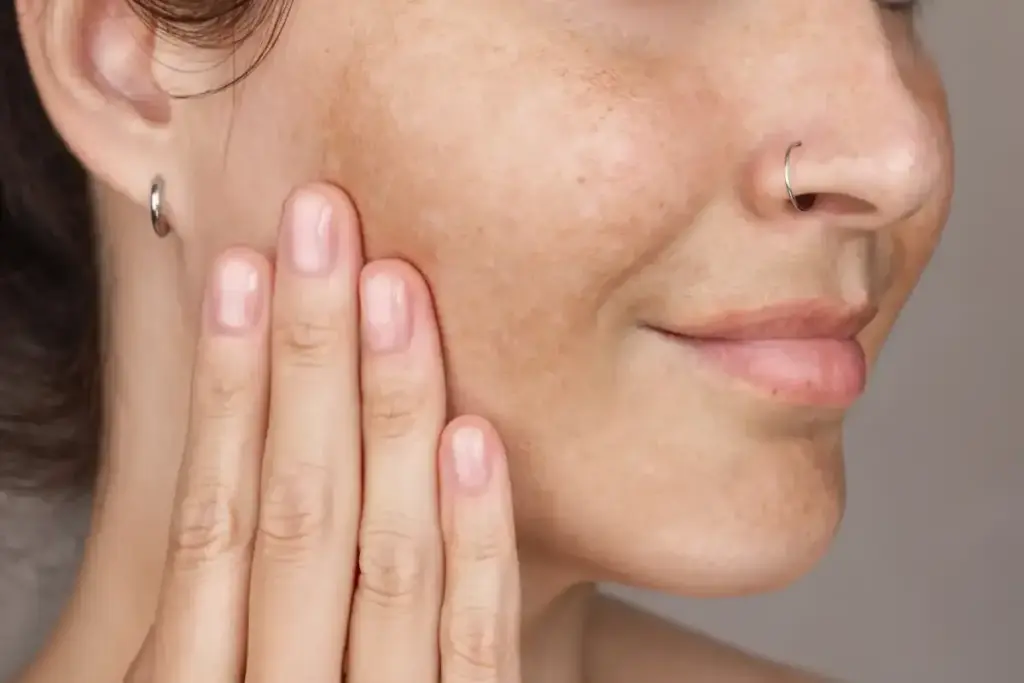
Many people notice flat, tan or brown sun spots on skin after years of enjoying sunshine. These marks appear when UV rays trigger a sudden overproduction of melanin in certain areas. They often show up on faces, hands, and shoulders as we get older.
We believe that understanding your body is a vital step toward feeling your best. At Liv Hospital, we combine world-class medical expertise with a warm, patient-centered approach. Our team helps you navigate these common age-related concerns with clarity and care.
You might feel curious about how deep are sunspots under the skin and if they stay forever. By looking at layers of tissue, we can find effective ways to restore your natural glow. Our guide explores causes, depth, and modern solutions for clear results.
Key Takeaways
- Sunspots result from concentrated melanin caused by UV exposure.
- They typically appear on your face, hands, and shoulders.
- These marks often become more visible as you age.
- Liv Hospital uses cutting-edge technology to treat pigment.
- Professional treatments can significantly fade or remove these spots.
- Understanding depth is vital for choosing correct care.
Understanding Sunspots: What They Are and Why They Appear Darker
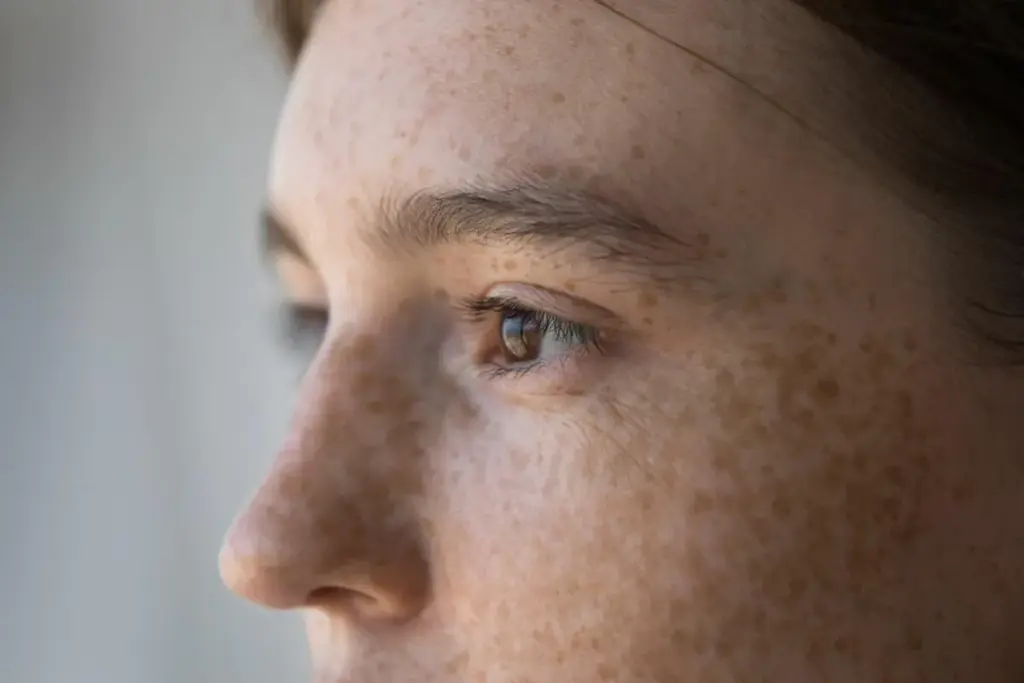
Sunspots, also known as solar lentigines, are spots on the skin from too much sun. They happen when the skin tries to protect itself from UV rays. This leads to uneven melanin, causing the spots.
Unlike freckles, sunspots don’t fade easily. Knowing why they appear is key to dealing with them.
What Are Brown Sun Spots on Skin?
Brown sun spots are harmless marks from too much sun. They often show up on sun-exposed areas like the face and hands. These spots form when melanin builds up from UV damage.
Key characteristics of brown sun spots include:
- They are benign and not cancerous.
- They appear as flat brown or black spots.
- They are more prevalent with aging and increased sun exposure.
Why Do Sunspots Look Dark and Appear Darker Than Surrounding Skin?
Sunspots look darker because they have more melanin. The skin tries to protect itself from UV rays by making more melanin. This can cause sunspots to form over time.
The table below summarizes the factors contributing to the dark appearance of sunspots:
| Factor | Description |
| UV Radiation Exposure | Prolonged exposure to UV radiation stimulates melanin production. |
| Melanin Accumulation | Melanin accumulates in certain areas, leading to discoloration. |
| Skin’s Natural Response | The skin’s natural response to UV damage is to produce more melanin, resulting in darker spots. |
How Deep Are Sunspots Under the Skin and Are They Permanent?
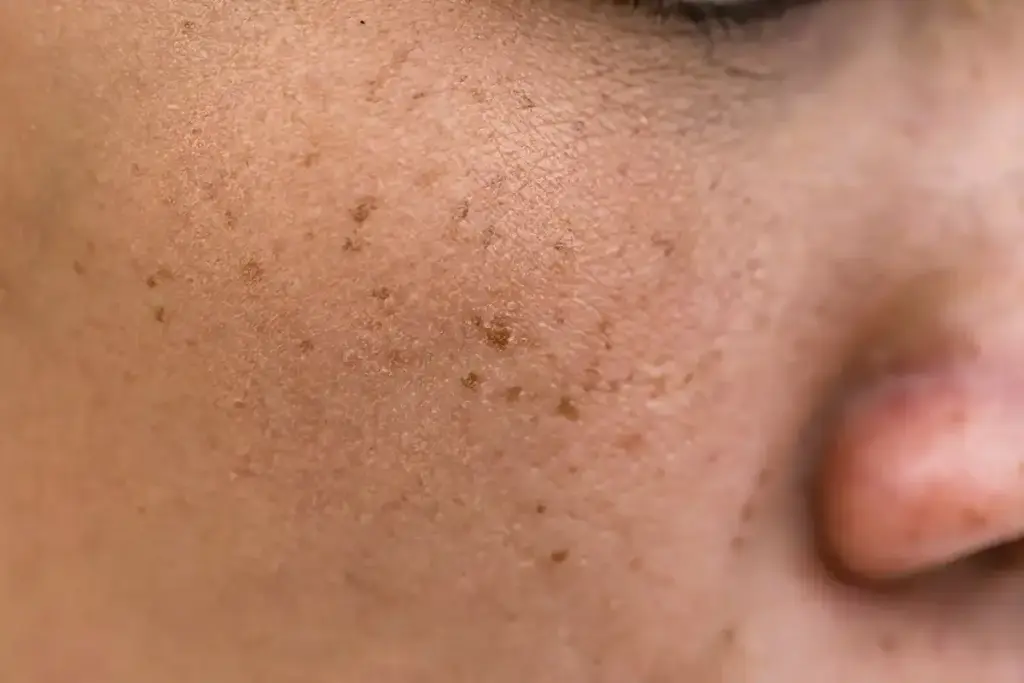
Sunspots are a common concern for many. They are dark spots on the skin caused by too much sun. Knowing how deep they are and if they last forever is key to treating them.
The Skin Layers Affected by Sun Spots Face and Body
Sunspots often show up on the face, hands, and other sun-exposed areas. The skin has layers, with the outermost being the epidermis. Sunspots usually start in the epidermis but can go deeper if they’re dark or long-lasting.
The depth of sunspots can vary:
- Superficial sunspots are confined to the epidermis.
- Deeper sunspots may extend into the dermal layer.
Do Sun Spots Go Away on Their Own?
Some sunspots might fade over time, but many need treatment. How likely they are to go away depends on their depth, your skin type, and sun exposure.
Factors influencing the persistence of sunspots include:
- Continued UV exposure, which can cause further darkening.
- Skin care habits, such as using sunscreen and protective clothing.
- Genetic predisposition to hyperpigmentation.
Are Sunspots Permanent? Factors That Determine Persistence
Sunspots can last a long time but aren’t always permanent. The right treatment and prevention can help. Laser therapy, chemical peels, and sun protection can reduce or remove them.
Key factors that determine the persistence of sunspots:
- The depth and size of the sunspot.
- The effectiveness of the chosen treatment.
- Ongoing sun protection measures.
Understanding these factors and taking action can help reduce sunspots. It also prevents new ones from forming.
Conclusion: Your Path to Clearer Skin with Liv Hospital
Sunspots can be a big worry for many, affecting their skin and confidence. At Liv Hospital, we know how important it is to tackle sun damage with the right treatment. We offer plans that are tailored just for you.
Our team uses the latest in skin care, like laser therapy and chemical peels. We also have topical treatments. These help patients get the clear skin they want. We focus on your needs and support you every step of the way.
Preventing more sun damage is key to keeping your skin healthy. We teach our patients how to protect their skin. With Liv Hospital’s help, you can start on the path to the clear, healthy skin you’ve always wanted.
FAQ
How deep are sunspots under the skin compared to other marks?
Sunspots, or solar lentigines, form in the epidermis and are generally superficial, unlike deeper scars or moles.
Why do sunspots look dark and sometimes change in intensity?
They appear dark due to concentrated melanin, and exposure to sunlight can make them darker or more noticeable.
Do sun spots go away if I stay out of the sun?
Sunspots may fade slightly over time without sun exposure, but they rarely disappear completely on their own.
Are sunspots permanent if I use over-the-counter creams?
OTC creams may lighten sunspots but usually cannot remove them entirely; professional treatments are more effective.
Can I get a sun spot face treatment that is safe for sensitive skin?
Yes, options like mild chemical peels, topical lightening agents, or laser therapy can be tailored for sensitive skin under professional care.
Why do sunspots appear darker as we get older?
Cumulative sun exposure over the years increases melanin deposits, making sunspots darker and more prominent with age.
What is the best way to prevent sun spots face and body markings from returning?
Consistent sun protection with sunscreen, protective clothing, and limiting UV exposure helps prevent new sunspots from forming.
References
National Center for Biotechnology Information. Evidence-Based Medical Insight. Retrieved from https://pmc.ncbi.nlm.nih.gov/articles/PMC9971785/



 Departments
 Related Videos
 Our Doctors
 News
News