
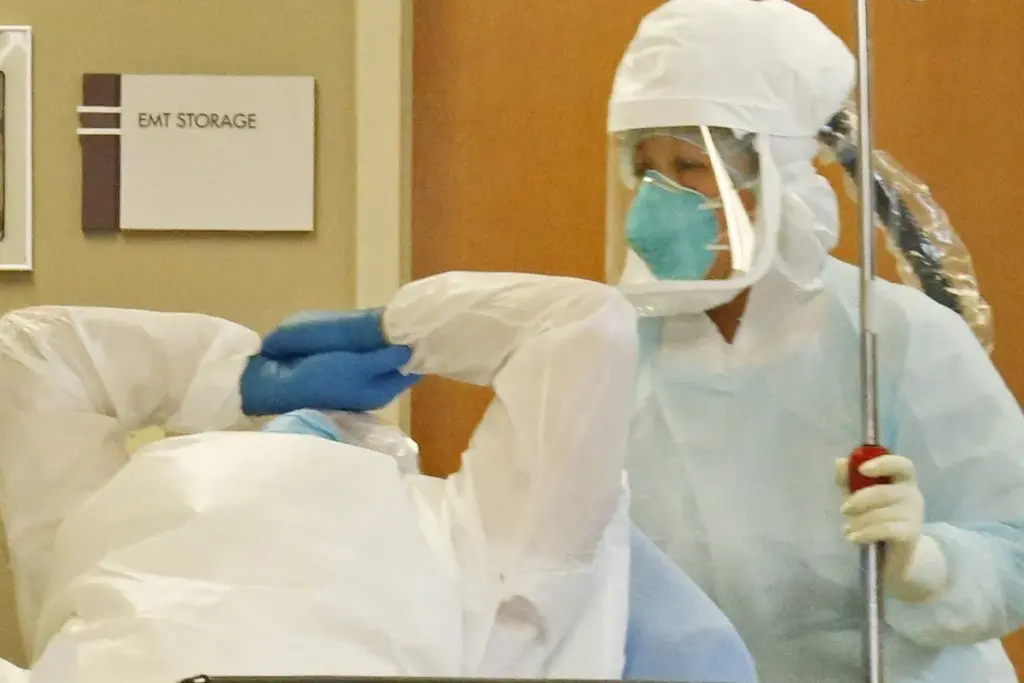
Ebola virus disease is a severe and often fatal illness. It is caused by viruses from the Orthoebolavirus genus. Recent outbreaks in Uganda and the Democratic Republic of Congo have shown the need for accurate information on ebola transmission pathways.
We know that ebola virus transmission happens in two main ways. These are zoonotic transmission from animals to humans and human-to-human transmission. Understanding these ways is key to developing effective prevention and control measures.
The virus spreads to humans through contact with infected animals. Then, it spreads within the human population through direct contact with bodily fluids. By looking at the role of various animals in the transmission process, we can better understand the mode of transmission ebola.
Key Takeaways
- Ebola virus disease is a severe and often fatal illness.
- Transmission occurs through zoonotic and human-to-human pathways.
- Understanding transmission pathways is key for prevention and control.
- The virus spreads through direct contact with bodily fluids.
- Various animals play a role in the transmission process.
Understanding Ebola Virus Disease
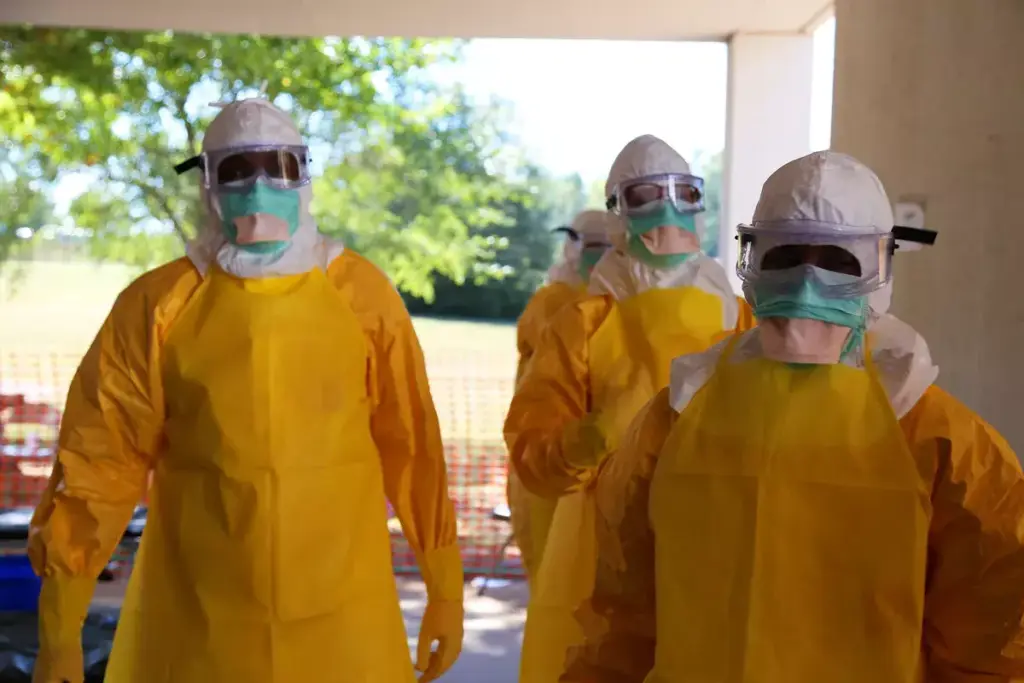
Ebola virus disease is a severe and deadly condition. It has been a major global health worry. We will look into its history, impact, and key points to grasp its complexity.
What Is Ebola and Its Origins
Ebola first appeared in 1976 in South Sudan and the Democratic Republic of the Congo. It is caused by the Ebola virus, thought to come from animals, mainly bats. The death rate from Ebola is about 50%.
The time from getting infected to showing symptoms is 2 to 21 days. A person isn’t contagious until symptoms start. Knowing where Ebola comes from helps us fight it better.
The Global Impact of Ebola Outbreaks
Ebola outbreaks have hit global health hard. They’ve caused a lot of sickness and death, mainly in West Africa. Fighting Ebola has been tough because of weak healthcare, cultural issues, and how fast it spreads.
Key aspects of the global impact include:
- High mortality rates associated with Ebola outbreaks
- Economic disruption in affected regions
- Strain on local and international healthcare resources
- Increased awareness and preparedness for infectious disease outbreaks
The 2014-2016 West Africa Epidemic
The 2014-2016 outbreak in West Africa was the biggest and most complex Ebola case. It hit Guinea, Liberia, and Sierra Leone hard. This showed we need to be better at spotting and handling outbreaks.
Important lessons from this epidemic are:
- Early detection and reporting of cases
- Effective contact tracing and isolation
- Community engagement and participation in outbreak response
- International cooperation and support
Knowing Ebola’s history and how it spreads is key to stopping future outbreaks.
How Is Ebola Transmitted from Animals to Humans
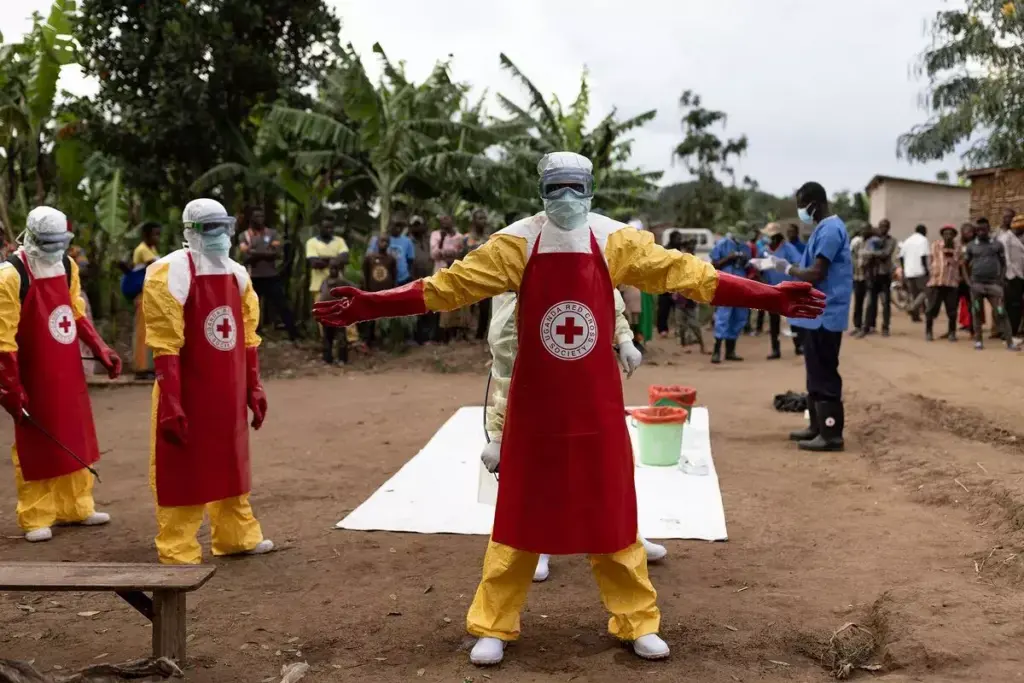
It’s important to know how Ebola moves from animals to humans to stop outbreaks. The virus spreads from wild animals to people. Finding out which animals carry the virus first is key.
Primary Animal Reservoirs
Fruit bats of the Pteropodidae family are the natural hosts of the Orthoebolavirus. These bats live in Africa, where Ebola outbreaks happen. The virus can spread to other animals and people by touching infected bats or animals that touched bats.
Spillover Events: The Jump from Animals to Humans
When the Ebola virus jumps from animals to humans, it’s called a spillover event. This usually happens when people touch the blood or fluids of sick animals. Hunting and eating bushmeat, like fruit bats, porcupines, and non-human primates, are common ways this happens.
Hunting and Bushmeat Practices
In many African communities, hunting and eating bushmeat is a tradition. But, if the animals are sick with Ebola, it can spread to people. It’s important to handle and cook bushmeat safely to avoid the virus.
Public health education is key to stopping Ebola. Teaching communities about the dangers of handling and eating bushmeat, during outbreaks, is essential.
Human-to-Human Transmission of Ebola
It’s important to know how Ebola spreads between people to stop outbreaks. The virus moves from animals to humans and then from person to person. This happens through direct contact with infected bodily fluids.
Direct Contact with Bodily Fluids
Getting Ebola from another person usually involves direct contact with their blood or fluids. Direct contact with bodily fluids is the main way Ebola spreads between humans. This includes sweat, saliva, urine, and more.
Contaminated Objects and Surfaces
Ebola can also spread through contact with contaminated objects. Using proper infection control and personal protective equipment (PPE) is key in healthcare settings.
Incubation Period and Infectiousness
The time from exposure to symptoms is called the incubation period. It can last from 2 to 21 days. People are not contagious until they show symptoms. But once they do, they can spread the virus through bodily fluids.
| Incubation Period | Infectiousness |
| 2 to 21 days | Once symptoms appear |
Common Misconceptions About Ebola Transmission
There are many myths about how Ebola spreads. For example, Ebola is not spread through the air, water, or by mosquitoes. The main way it spreads is through direct contact with infected bodily fluids.
Understanding how Ebola spreads helps us fight outbreaks. We can then develop better ways to stop it.
Conclusion
Knowing how Ebola spreads between humans and animals is key to stopping outbreaks. The Ebola disease spread mainly happens through direct contact with infected fluids. But, there’s a chance it could spread through the air too.
We’ve looked at how Ebola is mainly spread, the role of animals, and how it moves from person to person. The disease is very deadly, with a 50 percent fatality rate. To control outbreaks, we need to use many strategies, like good care, infection control, and getting the community involved.
To fight Ebola, we must improve our watch, better infection control, and get people to understand the risks. By knowing how you get Ebola and how does someone contract Ebola, we can tackle the disease better. Even though Ebola is infectious, we can lessen its effects and make the world safer.
FAQ
How is Ebola virus transmitted?
Ebola virus spreads from animals to humans. It then moves between people through direct contact with bodily fluids.
What are the primary animal reservoirs of Ebola?
Fruit bats are the main animal sources of Ebola.
How does Ebola spread from animals to humans?
Ebola jumps from animals to humans in spillover events. This often happens when people hunt and handle bushmeat.
Can Ebola be transmitted through mosquitoes?
No, Ebola is not spread by mosquitoes. It mainly spreads through direct contact with bodily fluids.
How is Ebola transmitted between humans?
Ebola spreads between humans through direct contact with bodily fluids. It also spreads through contaminated objects and surfaces. This happens even during the incubation period when a person is infectious.
What is the incubation period of Ebola?
The incubation period is the time from exposure to the virus to when symptoms start. During this time, a person can spread the virus.
Is Ebola airborne?
No, Ebola is not airborne. It spreads only through direct contact with bodily fluids or contaminated objects and surfaces.
Can animals other than fruit bats carry Ebola?
Yes, other animals can carry Ebola. This includes animals that come into contact with infected fruit bats or their bodily fluids.
How can Ebola transmission be prevented?
To prevent Ebola, we need to improve surveillance and infection control. We also need to raise awareness and avoid contact with infected animals and bodily fluids.
What was the impact of the 2014-2016 West Africa Ebola epidemic?
The 2014-2016 West Africa Ebola epidemic showed the challenges in stopping Ebola outbreaks. It led to better global health security and response strategies.
References
World Health Organization. Evidence-Based Medical Guidance. Retrieved from https://www.who.int/news-room/fact-sheets/detail/ebola-disease[4