

Lyme disease spread by Ixodes ticks is a big worry in North America and Europe. Knowing how long it takes for a tick to spread Lyme disease is key to keeping your family safe.
For a long time, people thought ticks had to be attached for 24 to 48 hours to spread Borrelia burgdorferi, the Lyme disease bacteria. But new studies show that it might happen quicker than we thought.
The CDC says the chance of getting Lyme disease from a tick bite is only 1 to 3 percent. This is even in places where Lyme disease is common. We’ll look into the latest on Lyme disease spread and how to lower your risk.
Key Takeaways
- Lyme disease transmission by Ixodes ticks is a significant public health concern.
- The risk of acquiring Lyme disease from an observed tick bite is low.
- Recent research suggests that transmission may occur faster than previously thought.
- Understanding the transmission timeline is key to prevention.
- Proper tick removal techniques can lower infection risk.
Understanding Lyme Disease Transmission
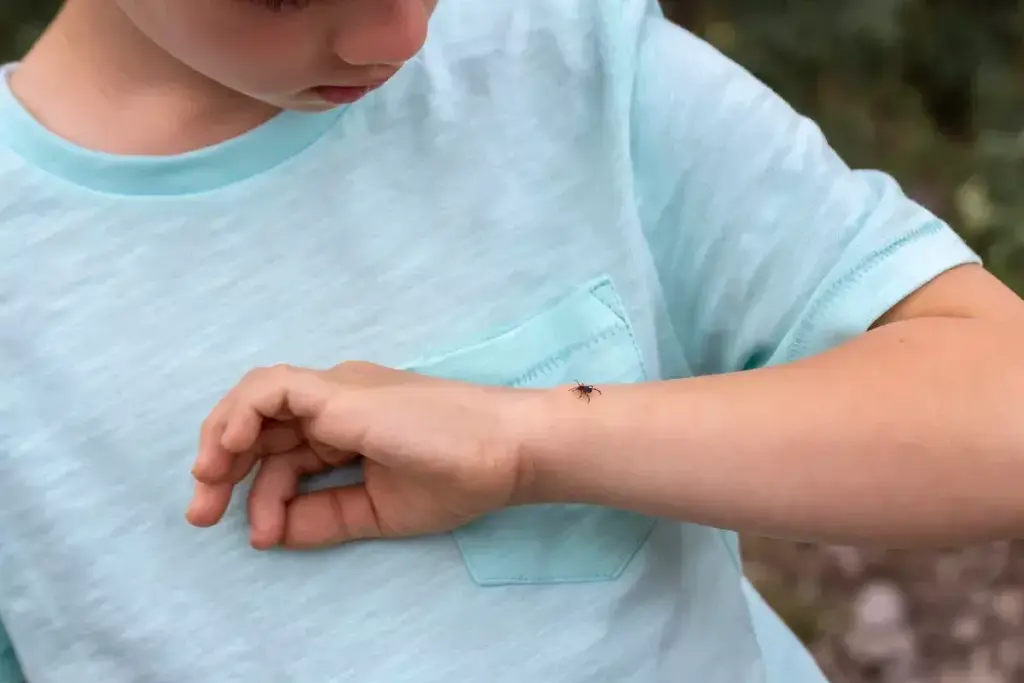
To understand Lyme disease transmission, we first need to know what it is. Lyme disease, also known as Lyme borreliosis, is caused by the bacterium Borrelia burgdorferi. It spreads mainly through the bite of infected Ixodes ticks. These ticks live in wooded, bushy, and grassy areas.
What is Lyme Disease and Borrelia burgdorferi
Borrelia burgdorferi is a spiral-shaped bacterium. It stays dormant in the tick’s midgut. When a tick feeds on a host’s blood, the bacteria become active and move to the tick’s salivary glands. This is when they can be transmitted to the host.
Lyme disease can cause symptoms like fever, headache, and a “bull’s-eye” rash. It’s important to know that Lyme disease is not contagious from person to person. It’s not spread through airborne transmission, contaminated food or water, or from contact with infected dogs. The main way it spreads is through the bite of an infected tick.
The Role of Ixodes Ticks as Vectors
Ixodes ticks are the main vectors of Lyme disease. These ticks have a hard exoskeleton, making them “hard ticks.” When an Ixodes tick feeds on an infected animal, like a mouse or deer, it gets the Borrelia burgdorferi bacteria. These bacteria then live inside the tick.
| Tick Stage | Characteristics | Transmission Risk |
| Larva | Small, six-legged, newly hatched | Low, unless previously infected |
| Nymph | Eight-legged, immature stage | High, due to small size and frequent feeding |
| Adult | Eight-legged, mature stage | Moderate, as they are larger and more likely to be noticed |
The nymph stage is key in spreading Lyme disease. They are small, making them hard to notice, and they often feed on humans.
How Long Does It Take to Contract Lyme Disease
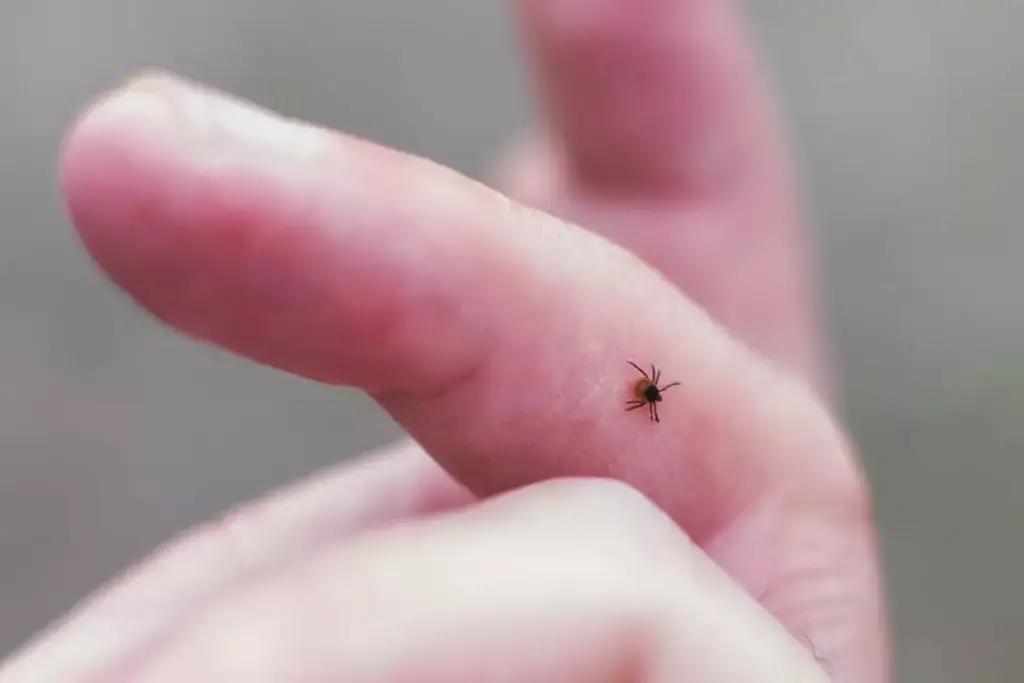
Knowing how long it takes to get Lyme disease is key to treating it well. When a tick bites, it can pass on Borrelia burgdorferi, the Lyme disease bacteria. How long the tick stays attached is very important.
Traditional Timeline: The 24-36 Hour Rule
For a long time, people thought a tick had to be attached for 24 to 36 hours to pass on Borrelia burgdorferi. This idea came from early studies. They said the longer the tick stayed, the higher the risk of getting Lyme disease.
Recent Research: Transmission in Under 12 Hours
New studies have changed this idea. They found that Lyme disease can be passed on in less than 12 hours. The Institut Pasteur found that some ticks can pass on the disease in as little as 6 hours. This means the risk of getting Lyme disease might be higher than we thought.
CDC Guidelines and Special Circumstances
The Centers for Disease Control and Prevention (CDC) give advice on Lyme disease. They say removing ticks quickly is very important. Even though they stick to the 24-36 hour rule, they know it can happen faster. Things like the tick species and how long it’s been feeding can change how fast the disease is passed on.
| Tick Attachment Duration | Transmission Risk | Guideline/Source |
| Under 12 hours | Increasing risk, possible transmission | Recent research, Institut Pasteur |
| 24-36 hours | Significant risk, traditional guideline | CDC, traditional studies |
| Over 36 hours | High risk | CDC, various studies |
In summary, while the old 24-36 hour rule is helpful, new studies show Lyme disease can spread faster. Knowing these times and what affects them is key. It helps us understand the risk and how to treat Lyme disease better.
Common Misconceptions About Lyme Disease Spread
Lyme disease is often misunderstood, leading to unnecessary fear and misconceptions about its transmission. It’s not contagious through person-to-person contact, airborne transmission, or contact with infected animals. It’s spread only through the bite of infected Ixodes ticks.
One common myth is that you can contract Lyme disease from a dog. But, the Centers for Disease Control and Prevention (CDC) says Lyme disease cannot be directly transmitted from dogs to humans. While dogs can carry infected ticks into their homes, the disease is not contagious from dog to human.
Another misconception is that eating infected deer meat can transmit Lyme disease. There is no evidence to support this claim. Lyme disease transmission requires the bite of an infected tick.
Understanding the facts about Lyme disease transmission can help alleviate unnecessary fears. We emphasize the importance of preventive measures against tick bites. This includes using insect repellents and conducting regular tick checks after spending time outdoors. If a tick bite occurs, prompt removal and monitoring for symptoms can help prevent Lyme disease. By being aware of the risks and taking proactive steps, we can effectively protect ourselves against Lyme disease.
FAQ
Is Lyme disease contagious?
No, Lyme disease is not contagious. You can’t catch it from touching someone who has it. It spreads mainly through tick bites.
How is Lyme disease spread?
Lyme disease spreads through tick bites. The tick carries the bacteria Borrelia burgdorferi.
Can you get Lyme disease from a dog?
No, you can’t get Lyme disease directly from a dog. But, if an infected tick bites your dog, it might bite you too.
How long after a tick is attached does it take to transmit Lyme disease?
It used to be thought that a tick needed 24-36 hours to spread Lyme disease. But new studies show it can happen in under 12 hours.
Can seed ticks carry Lyme disease?
Yes, seed ticks can carry Lyme disease. They can pass it on to humans through their bites.
Can you get Lyme disease by eating a tick?
Eating a tick doesn’t seem to spread Lyme disease to humans. There’s no proof of this happening.
Can you get Lyme disease from eating deer meat?
Eating deer meat doesn’t directly spread Lyme disease. But touching infected deer or ticks can lead to disease through bodily fluids.
How long must a tick be attached to transmit disease?
It’s thought that ticks need 24-36 hours to spread disease. But studies now suggest it can happen in less than 12 hours.
Are Ixodes ticks the only vectors for Lyme disease?
Ixodes ticks are the main vectors for Lyme disease. But different regions have different tick species that can spread the disease.
Is Lyme disease communicable from animals to humans?
Lyme disease isn’t spread directly from animals to humans. The main way it spreads is through tick bites.
What is the life cycle of Borrelia burgdorferi?
Borrelia burgdorferi lives in a cycle between ticks and mammals. Mammals like rodents and small animals are its hosts.