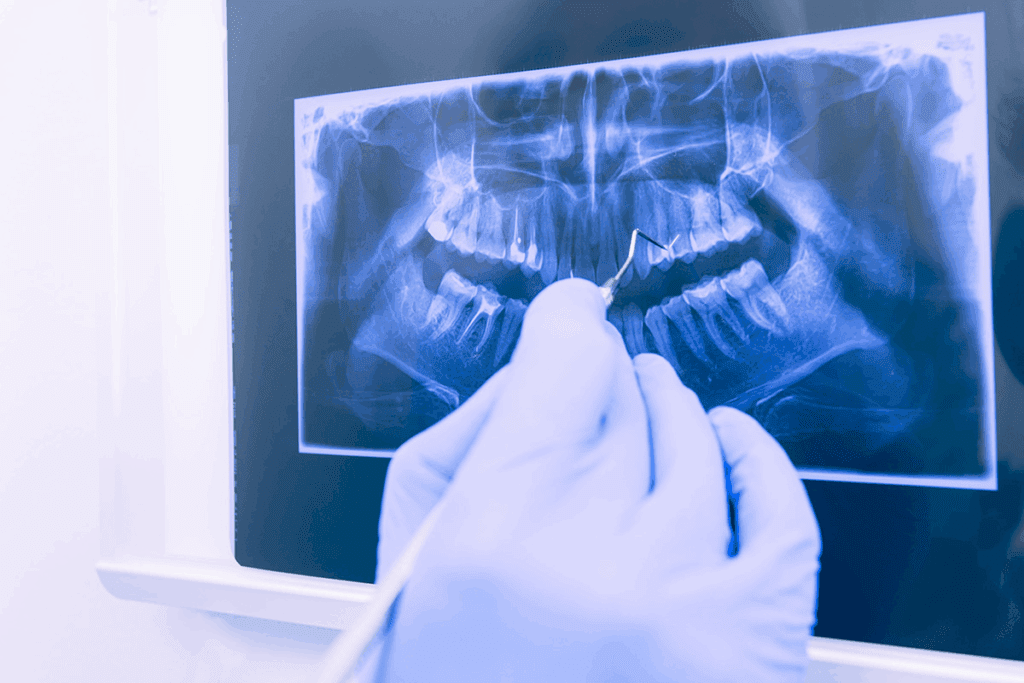
At Liv Hospital, we know patients worry about radiation exposure in dental care. But, a single bitewing x-ray has a very low radiation dose. It’s about 0.001 millisievert (mSv).how much radiation in a dental x rayPanorex X Ray Radiation Dose: The Ultimate Best Chart
Bitewing x-rays are key in dentistry. They help find cavities, check bone health, and spot dental diseases early. We use the latest methods and care for our patients. This way, bitewing x-rays are safe and really helpful.
Key Takeaways
- Dental x-rays, including bitewing x-rays, expose patients to very low levels of radiation.
- A single bitewing x-ray delivers approximately 0.001 millisievert (mSv) of radiation.
- Modern digital technology has made bitewing x-rays safer and more efficient.
- At Liv Hospital, we follow evidence-based practices to minimize radiation exposure.
- Bitewing x-rays are key for early detection of dental issues, preventing bigger problems.
Understanding Bitewing X-Rays in Dentistry
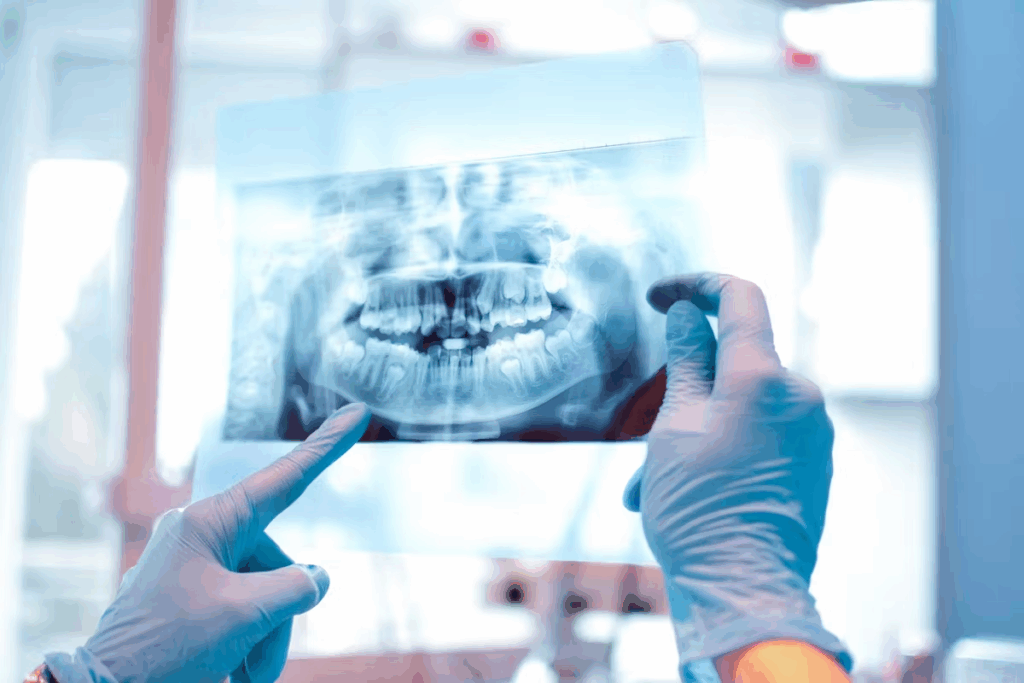
Bitewing X-Rays are key in dentistry, giving insights into our teeth’s health. They show the back teeth clearly, helping dentists spot problems not seen in regular checks.
What Are Bitewing X-Rays?
Bitewing X-Rays are dental X-Rays that show the back teeth well. They include the upper and lower molars and premolars. This tool helps dentists see teeth and bone details, spotting issues early.
Diagnostic Purpose and Benefits
Bitewing X-Rays mainly help find cavities and check bone health. They’re great for catching dental diseases like tooth decay and gum disease early. This makes treatment easier and more effective.
- Early detection of cavities and dental decay
- Assessment of bone density and changes in the bone structure
- Identification of gum disease and other periodontal issues
With bitewing X-Rays, dentists can plan treatments that really work. This helps patients keep their teeth and mouth healthy.
When and Why Dentists Use Bitewings
Dentists use bitewing X-Rays often, like during regular visits and when they see dental problems. They’re very helpful for those with a history of tooth decay or gum disease. This lets dentists track the disease and change treatment plans as needed.
Knowing when and why dentists use bitewing X-Rays helps patients see their importance. It shows how these tools help keep our teeth and mouth healthy.
The Science of Dental Radiation
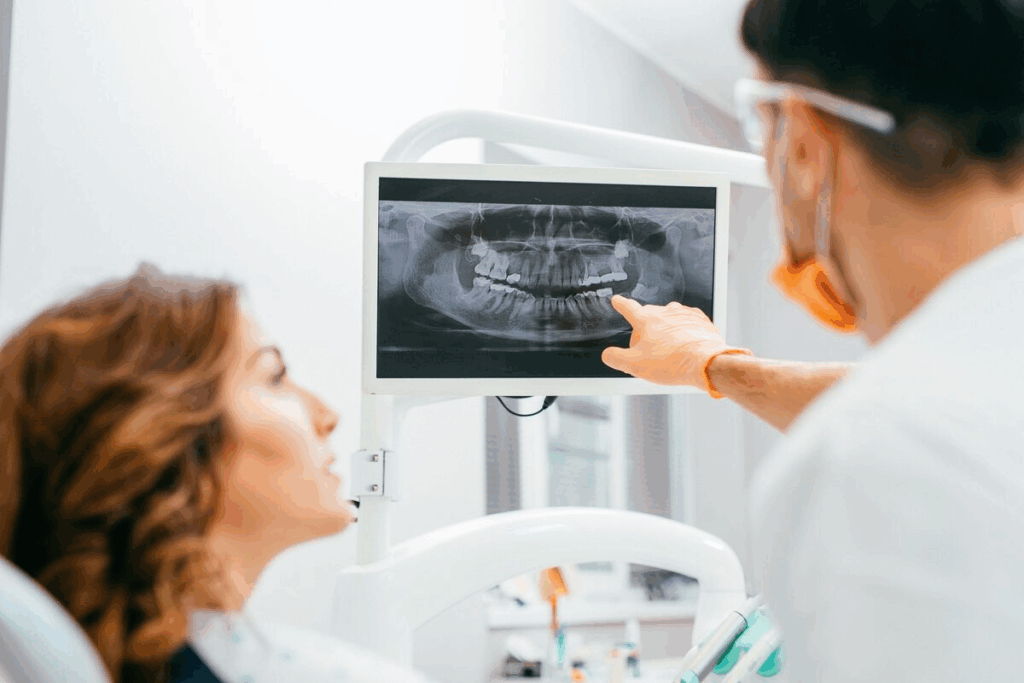
Learning about dental radiation science is key to understanding safety. Dental X-rays use ionizing radiation to see teeth and bone. This tech helps us find and fix dental problems.
How X-Ray Technology Works
X-ray tech sends ionizing radiation to the teeth. The radiation that goes through is caught by a sensor or film. This makes an image that shows different parts of the mouth.
Key components of X-ray technology include:
- The X-ray tube, which generates the radiation
- The collimator, which shapes the X-ray beam
- The sensor or film, which captures the image
Types of Radiation in Dental Imaging
Dental imaging mainly uses X-rays, a type of electromagnetic radiation. X-rays are ionizing because they can remove electrons from atoms. This lets X-rays go through different materials, like human tissue, at varying levels.
Measuring Radiation: Understanding Units
Radiation is measured in Gray (Gy), Sievert (Sv), and millisievert (mSv). The Gray shows the dose of radiation absorbed. The Sievert shows the biological effect of radiation. Dental X-rays usually use microsieverts (μSv) or millisieverts (mSv) to measure risk.
For example, a dental X-ray might expose you to about 5 μSv. Here’s a comparison:
- A chest X-ray is about 20 μSv
- A flight from New York to Los Angeles exposes you to about 40 μSv
Knowing these units helps us see how safe dental X-rays are.
Bitewing X-Ray Radiation Exposure Levels
It’s important to know how much radiation bitewing x-rays use. These x-rays help dentists check our teeth and jawbone health. They are a key tool in dentistry.
Single Bitewing Radiation Dose
A single bitewing x-ray uses very little radiation. It’s about 5 microsieverts. This is similar to what you get from a few hours of natural background radiation.
Full Set (Four Bitewings) Exposure
Getting four bitewing x-rays at once is also safe. The total dose is about 0.005 mSv (or 5 microsieverts). This makes it a safe way to check your teeth.
Effective Dose Measurements
Effective dose measurements show the risk of radiation from dental x-rays. A single bitewing x-ray has an effective dose of about 0.001 mSv. A full mouth series has a higher dose but is also safe.
Type of X-Ray | Radiation Dose (mSv) | Equivalent Background Radiation |
Single Bitewing | 0.001 | A few hours |
Full Set (Four Bitewings) | 0.005 | 1-2 days |
Panoramic X-Ray | 0.01-0.02 | Several days |
Knowing about radiation levels helps dentists and patients make better choices. It’s about using bitewing x-rays wisely for dental checks.
Comparing Dental X-Ray Radiation to Everyday Sources
To understand dental X-ray radiation, we compare it with daily radiation sources. This shows dental X-rays are low and a small part of our total radiation.
Natural Background Radiation
We’re always exposed to natural background radiation. This comes from cosmic rays and radon gas in the air. On average, we get about 3,000 microsieverts of this radiation each year just by living on Earth.
To put this into perspective, natural background radiation is like getting 100 chest X-rays or 30,000 digital dental X-rays each year.
Air Travel and Cosmic Radiation
Air travel means we get more cosmic radiation because of the thinner air at high altitudes. A four-hour flight can expose us to 20 to 50 microsieverts of cosmic radiation.
“Cosmic radiation exposure during flights is a significant contributor to overall radiation dose for frequent flyers.”
Common Household Radiation Sources
Household items like granite countertops can also emit radon, adding to our radiation exposure. But the levels are usually very low and not a big worry for most people.
Medical Imaging Comparison
Medical imaging, like CT scans, gives us much more radiation than dental X-rays. For example, a CT scan can give about 7,000 microsieverts, which is like 2,333 digital dental X-rays.
Radiation Source | Typical Dose (microsieverts) |
Single Digital Dental X-Ray | 5 |
Four-Hour Flight | 20-50 |
Annual Natural Background Radiation | 3,000 |
CT Scan | 7,000 |
The table shows dental X-ray radiation is much lower than other common radiation sources.
Evolution of Dental X-Ray Technology
Dental X-ray technology has changed a lot, from old film to digital radiography. These changes have made diagnosing better and safer for patients by cutting down on radiation.
Traditional Film-Based X-Rays
For years, film-based X-rays were the main way to see inside teeth. But they had big problems. They needed chemical processing, which took a lot of time and could be wrong.
Also, they used a lot of radiation, more than today’s standards. Handling and storing these films was hard because they were light-sensitive. This made the process slow and put patients at risk of more radiation.
Digital Radiography Advancements
Digital X-rays changed dental imaging a lot. They have instant images, use less radiation, and show better pictures. These changes make diagnosing faster and more accurate.
Some key benefits of digital radiography include:
- Less radiation for patients
- Images appear right away, cutting down on retakes
- Images can be edited for better diagnosis
- It’s better for the environment because it doesn’t need chemical processing
Radiation Reduction Through Technology
New digital X-ray tech has cut down radiation a lot. Studies show digital X-rays use up to 75% less radiation than old film methods. This is because of better X-ray beams and detectors.
Technologies like collimation, beam limitation, and filtration have helped. They make images clearer and safer for patients. As dental radiography keeps improving, we’ll see even less radiation.
Safety Measures in Modern Dental Radiography
Safety is key in dental radiography. Today, we focus on lowering radiation exposure. We use many safety steps to make sure patients get the least amount of radiation needed for good images.
Protective Equipment and Practices
Protective gear is a big part of dental radiography safety. Lead aprons and thyroid collars are used to shield patients from X-rays. These tools block or absorb X-rays, keeping them away from sensitive body parts. We also make sure the X-ray beam is focused and limited to avoid extra exposure.
“Protective equipment is vital for radiation safety in dental radiography,” dental experts say. “Lead aprons and thyroid collars help protect patients from too much radiation.”
Collimation and Beam Limitation
Collimation is another important safety step. It limits the X-ray beam to fit the image receptor size. This reduces the tissue exposed to radiation, lowering the dose. Modern X-ray machines have collimators to help with this.
Filtration Techniques
Filtration removes low-energy X-rays from the beam. These X-rays are more likely to be absorbed by the body, increasing radiation dose. By removing them, we lower the patient’s radiation exposure. Aluminum filters are often used in dental X-ray units for this.
By using protective gear, collimation, and filtration, we greatly reduce dental radiography risks. Our dedication to these measures ensures patients get safe and effective diagnostic care.
Regulatory Guidelines and Professional Recommendations
Guidelines for dental X-rays come from professional groups and government rules. These rules help make sure dental X-rays are safe and work well. We follow advice from groups like the American Dental Association (ADA) and rules from the FDA.
American Dental Association Guidelines
The ADA has detailed rules for dental X-rays. They say how often to take X-rays based on a patient’s risk for cavities. For example, children and adults at high risk for cavities might need more X-rays, while those at low risk might need fewer.
The ADA’s rules aim to find a good balance. They want to make sure X-rays help diagnose problems without exposing patients to too much radiation.
FDA Regulations on Dental Radiation
The FDA controls the use of radiation in dental and medical imaging. They set standards for X-ray machines and guide on reducing radiation exposure. The FDA’s rules help make sure dental imaging benefits outweigh the risks. Dental professionals must follow these rules to ensure safe care.
ALARA Principle in Dental Practice
The ALARA principle means keeping radiation exposure as low as possible. It’s a key idea in radiologic safety. We follow ALARA by using the least amount of radiation needed and by using techniques like digital radiography and proper collimation.
By sticking to the ALARA principle, we reduce risks from dental X-rays. This way, we can get the needed information for quality care without exposing patients too much.
Special Considerations for Different Patient Groups
When it comes to bitewing X-rays, we must think about different patient groups. This includes children, pregnant women, and those with weakened immune systems. Each group has its own needs and risks that dentists need to consider.
Radiation Concerns for Children
Children are more vulnerable to radiation because their bodies are growing. So, we must be extra careful when using X-rays on kids. The American Academy of Pediatric Dentistry suggests using the least amount of radiation needed for good images.
- Using digital X-ray technology to reduce radiation exposure
- Employing thyroid collars to protect the thyroid gland
- Limiting the number of X-rays taken to the minimum required for diagnosis
Pregnancy and Dental X-Rays
Pregnant women need special care with dental X-rays. Even though X-rays are generally safe, we take extra steps to lower exposure. The American College of Radiology says the risk to the fetus is very small.
“The use of a lead apron and thyroid collar can further reduce the already minimal risk.”American College of Radiology
Considerations for Immunocompromised Patients
Patients with weakened immune systems, like those with HIV/AIDS, need careful X-ray use. Their bodies might not heal as well or fight off infections as others do. So, getting an accurate diagnosis is very important.
We adjust our X-ray use for these patients. We weigh the need for information against the possible risks.
Frequency Recommendations Based on Risk Factors
The need for bitewing X-rays varies based on several factors. These include how well someone takes care of their teeth, their history of cavities, and any dental work they’ve had. For example:
Patient Group | Recommended Frequency |
Children with high caries risk | Every 6-12 months |
Pregnant women with active caries | As needed, with appropriate shielding |
Immunocompromised patients | Every 6-12 months, depending on oral health |
By looking at these factors and using the latest technology, we can make sure our patients get the benefits of X-rays. At the same time, we keep their radiation exposure low.
Conclusion: Balancing Diagnostic Benefits and Radiation Risks
We’ve looked at how important bitewing X-rays are in dental care. They help dentists find problems that can’t be seen with the naked eye. This is key for keeping teeth healthy.
Bitewing X-rays do expose patients to some radiation. But, the good they do is much more important than the small risks. Knowing how these X-rays work and the safety steps taken helps patients trust their dental care.
Finding the right balance is key. We need to make sure we get accurate diagnoses without too much radiation. Today’s dental care follows strict rules to make sure X-rays are safe and used wisely.
FAQ
What are bitewing x-rays?
Bitewing x-rays show the upper and lower teeth in a specific area. They help dentists find problems like cavities and bone loss.
Are bitewing x-rays safe?
Yes, bitewing x-rays are safe when used right. The radiation is low, and dentists follow rules to keep it that way.
How much radiation is in a bitewing x-ray?
A single bitewing x-ray has about 0.001-0.005 millisieverts (mSv) of radiation. This depends on the technology used.
What is the effective dose of a full set of bitewing x-rays?
A full set of four bitewing x-rays has an effective dose of 0.004-0.02 mSv.
How does dental x-ray radiation compare to natural background radiation?
People get about 2.4 mSv of natural background radiation each year. So, bitewing x-rays have much less radiation.
Are digital x-rays safer than traditional film-based x-rays?
Yes, digital x-rays use less radiation than traditional ones. This is because of new technology.
Can pregnant women safely undergo bitewing x-rays?
Bitewing x-rays are usually safe for pregnant women. Dentists use a lead apron to protect them.
How often should I have bitewing x-rays?
How often you need bitewing x-rays depends on your oral health. Your dentist will decide based on your needs.
What safety measures are used during dental x-rays?
Dentists use lead aprons and collimation to limit the x-ray beam. They also use filtration to reduce radiation.
What is the ALARA principle in dental practice?
The ALARA principle means to keep radiation exposure as low as possible. It helps dentists achieve their goals safely.
Are bitewing x-rays necessary?
Yes, bitewing x-rays are important. They help dentists find problems early, which can prevent bigger issues.
How do dentists minimize radiation exposure for children?
Dentists use special x-ray equipment for kids. They also use digital x-rays to reduce radiation.
What are the benefits of using digital radiography?
Digital radiography has many benefits. It uses less radiation, takes less time, and gives better images.
References
Government Health Resource. Bitewing X-Ray Radiation Exposure: A Low Dose Assessment. Retrieved from https://www.epa.gov/radiation/frequent-questions-radiation-medicine