Starting a weight training journey can be both exciting and intimidating. As a beginner, it’s key to grasp the basics of weight training and its many benefits. Weight lifting is more than just building muscle; it boosts overall health and well-being.Learn ‘how to begin weight lifting.’ Our simple, powerful beginner’s guide gives you the best, proven routines for amazing, safe results.
Recent studies show that regular weight training can greatly lower mortality risk. Those who do resistance training once or twice a week see a 9 percent drop in all-cause mortality risk. At Liv Hospital, we guide your wellness journey with evidence-based advice and patient-focused care. We help you begin with the right protocols and international standards.
Key Takeaways
- Weight training uses resistance to challenge muscles, building strength, endurance, and lean muscle.
- Regular weight training can significantly lower mortality risk.
- Doing resistance training once or twice weekly can cut all-cause mortality risk by 9 percent.
- Weight lifting is vital for better health and well-being.
- Getting proper guidance and patient-centered care is key to starting your weight lifting journey safely and effectively.
The Health Benefits of Weight Training
Weight training offers many benefits for health and life quality. It improves physical health, mental well-being, and longevity.
Physical Benefits
Weight training makes bones stronger, boosts metabolism, and lowers injury risk. Regular lifting improves physical health and reduces chronic disease risk.
Key physical benefits include:
- Increased muscle mass
- Enhanced bone density
- Improved body composition
- Better overall physical function
Mental Health Advantages
Weight training also benefits mental health. It reduces anxiety and depression, improves mood, and boosts cognitive function. These mental health benefits make weight training vital for fitness.
Weight training can:
- Reduce stress and anxiety
- Improve mood and overall sense of well-being
- Enhance cognitive function and concentration
Longevity and Mortality Risk Reduction
Regular weight training increases longevity and lowers mortality risk. It reduces chronic disease risk, like heart disease and diabetes, which are major mortality factors.
Health Benefit | Description |
Increased Longevity | Regular weight training can contribute to a longer life by reducing the risk of chronic diseases. |
Reduced Mortality Risk | Weight lifting can lower the risk of death from various causes, including heart disease and diabetes. |
Improved Overall Health | Weight training enhances overall health, improving physical and mental well-being. |
Women, in particular, see big benefits from weight training. They gain muscle, stronger bones, and better health. Adding weight training to their routine brings many health benefits beyond looks.
Understanding Different Types of Strength Training
For beginners, knowing the different types of strength training is essential. It’s not a one-size-fits-all approach. It uses various techniques and tools to boost muscle strength and endurance.
Strength training falls into several categories, each with its own benefits. Let’s look at these categories to see how they can help you reach your fitness goals.
Bodyweight Exercises
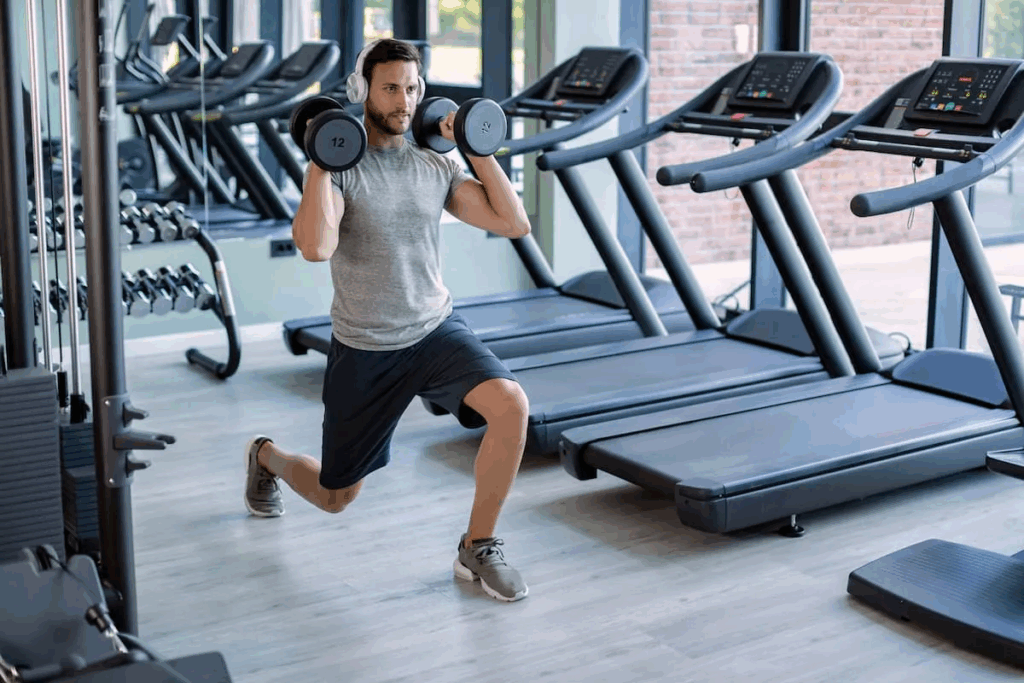
Bodyweight exercises use your own weight as resistance. They’re great for beginners. They help build strength and get you used to lifting movements. Examples include push-ups, squats, and lunges.
Benefits of Bodyweight Exercises:
- Improved strength and muscle tone
- Enhanced flexibility and mobility
- No equipment required, making it accessible anywhere
Free Weights vs. Machines
The debate often focuses on free weights versus machines. Free weights, like dumbbells and barbells, mimic natural movements. They work multiple muscles at once.
Machines offer a controlled environment. They help isolate muscles and lower injury risk. But, they might not build functional strength like free weights.
Feature | Free Weights | Machines |
Range of Motion | Natural, multi-planar | Fixed, single-planar |
Muscle Engagement | Multiple muscle groups | Isolates specific muscles |
Injury Risk | Higher if form is poor | Lower due to controlled movement |
Resistance Bands and Alternative Equipment
Resistance bands are a versatile tool. They’re lightweight, portable, and offer resistance in multiple directions.
“Resistance bands are an excellent addition to any workout routine, providing a unique form of resistance that complements traditional methods.”
Other alternatives include kettlebells and cable machines. Each offers a unique way to challenge muscles and keep workouts interesting and effective.
Essential Equipment for Beginners
Good news for beginners: you can start lifting weights with basic, affordable gear. You don’t need a gym to do strength training. Use resistance bands, body weight, or even water bottles from home.
Home Gym Basics
Setting up a home gym can be simple or detailed, depending on you. For beginners, start with the basics. Resistance bands and dumbbells are great for many exercises. They save space and are easy on the wallet.
If you have more space and money, consider a bench and a barbell. But remember, you can get strong without a lot of gear.
Gym Equipment Guide
If you join a gym, knowing the equipment helps you use it better. Gyms have many machines and free weights.
- Free Weights: Includes dumbbells, barbells, and kettlebells. These work many muscles.
- Resistance Machines: Target specific muscles and are for isolation exercises.
- Cardio Equipment: Treadmills, ellipticals, and bikes are for warming up or heart health.
Equipment Type | Examples | Primary Use |
Free Weights | Dumbbells, Barbells | Compound Exercises, Strength Training |
Resistance Machines | Leg Press, Chest Press | Isolation Exercises, Targeted Muscle Groups |
Cardio Equipment | Treadmill, Elliptical | Cardiovascular Fitness, Warm-Up |
What You Really Need to Get Started
For beginners, the most important thing is to start. Inactive older adults can get strong in months with regular training. The key is to keep going and get stronger over time.
To sum up, you can start lifting weights with little money. Start with basic gear like resistance bands or dumbbells. Then, grow your home gym or try gym options as you get more into it.
How to Begin Weight Lifting Safely
Starting weight lifting is exciting but must be done safely. It’s important to learn proper techniques and safety tips. We’ll show you how to start lifting weights safely, focusing on form, warming up, cooling down, and preventing injuries.
Proper Form and Technique
Good form and technique are key to safe and effective weight lifting. Start by focusing on form over strength. Pay attention to every movement, thinking about the muscles used and how you move.
This careful approach helps build a strong foundation and lowers injury risk. Here are some tips for proper form:
- Begin with lighter weights and gradually add more as you get stronger.
- Move in a controlled way, avoiding jerky movements.
- Use your core muscles to support your body during exercises.
- Practice in front of a mirror or record yourself to check your form.
Warming Up and Cooling Down
Warming up and cooling down are vital for a safe workout. Warming up gets your muscles ready for exercise, improving blood flow and reducing injury risk. Cooling down helps your body recover, reducing soreness and improving flexibility.
A good warm-up includes:
- 5-10 minutes of light cardio, like jogging or cycling.
- Dynamic stretching for the muscles you’ll be working.
For cooling down, use static stretches, holding each for 15-30 seconds. This improves flexibility and reduces muscle tension.
Injury Prevention Strategies
Preventing injuries is essential in weight lifting. Knowing the risks and taking steps to avoid them helps keep you safe and consistent. Key strategies include:
- Listen to your body and rest when needed.
- Avoid overtraining and give your body time to recover.
- Use proper equipment and ensure it’s in good condition.
- Get help from a qualified trainer or healthcare professional if unsure.
By following these strategies, you can create a safe and effective workout space. This supports your fitness goals for the long term.
Creating Your First Workout Plan
Starting your weight lifting journey means making a workout plan. A good plan keeps you focused, helps you get stronger, and prevents injuries. It’s important to think about a few key things when planning your workouts.
Frequency and Duration
How often and how long you work out depends on your goals and schedule. Beginners should start with 2-3 times a week. This lets your body rest and recover. Each workout should be 45 to 60 minutes, including warm-up and cool-down.
Here’s a sample table for beginners:
Workout Frequency | Workout Duration | Rest Days |
2-3 times/week | 45-60 minutes | 4-5 days |
Full-Body vs. Split Routines
You can choose between full-body workouts or split routines. Full-body workouts cover all major muscles in one session. Split routines focus on different muscle groups each day.
Full-Body Workouts: Great for beginners, these workouts are efficient. They cover all major muscle groups. An example includes squats, deadlifts, bench press, and rows.
Split Routines: As you get more experienced, split routines can help you focus on specific areas. For example, you might have a day for chest and triceps, another for back and biceps, and a third for legs and shoulders.
Progressive Overload Principles
Progressive overload is key in weight lifting. It means slowly increasing the weight or intensity of your workouts. This challenges your muscles and helps them grow. You can increase the weight, do more reps, or reduce rest time.
- Increase the weight or resistance you’re using.
- Add more repetitions or sets to your workout.
- Decrease rest time between sets and exercises.
By using these principles, you’ll keep making progress and reaching your fitness goals.
Mastering the Fundamental Compound Lifts
Building a strong weight lifting foundation starts with mastering compound lifts. These exercises work on many muscles at once, making them efficient for building strength. They are key to any good weight training plan, and knowing how to do them right is vital for reaching your fitness goals.
Bench Press Technique
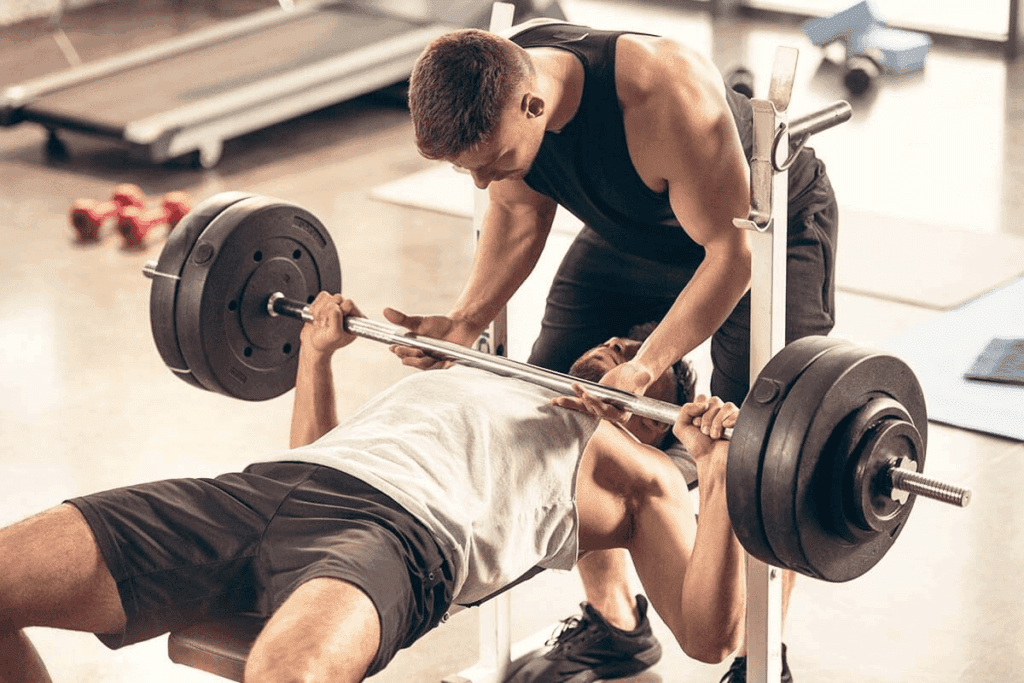
The bench press is a must-have for upper body strength. It targets the chest, shoulders, and triceps. To do it right, lie on a flat bench and hold the bar with your hands wider than your shoulders. Lower the bar to your chest, then push it up until your arms are straight. Proper form is key to avoid injury and get the best results.
Squat Form and Variations
Squats are essential for lower body strength. They work the quadriceps, hamstrings, and glutes. Stand with your feet shoulder-width apart, then lower down until your thighs are almost touching the ground. Push through your heels to go back up. Variations like the front squat and sumo squat can also target different muscles, adding variety to your workouts.
Deadlift Basics
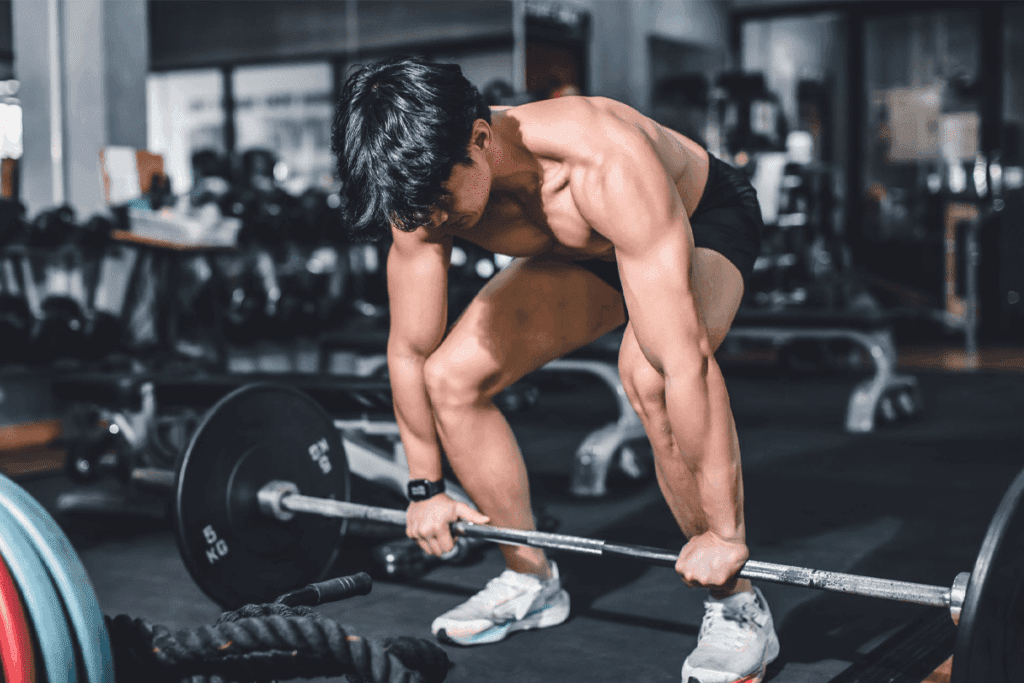
The deadlift is a powerful exercise that works many muscles, including the back, legs, and core. Stand with your feet shoulder-width apart, bend down to grab the bar, and lift it up to hip level. Keep your back straight and engage your core throughout. Deadlifts are great for building strength and muscle.
Overhead Press and Row Fundamentals
The overhead press strengthens the shoulders, while rows work the back and arms. To do the overhead press, stand with your feet shoulder-width apart and lift the weight straight up over your head. For rows, hold the bar with your hands shoulder-width apart and pull it towards your chest. Both exercises are vital for a balanced upper body.
Learning these compound lifts is the first step to a successful weight training journey. Focus on proper technique and include these exercises in your routine. This will help you reach your fitness goals.
Weight Training for Women: Special Considerations
Weight training offers many benefits for women, like stronger bones and better mental health. It’s key to know the special benefits and things to think about for women who train with weights.
Debunking Common Myths
Many women think weight training will make them bulky. But, research shows women don’t have enough testosterone for big muscles. Instead, it helps tone and strengthen muscles, making them look better.
Another myth is that weight training doesn’t help with weight loss. But, building muscle through weight training can boost metabolism. This means the body burns more calories, even when not working out.
Benefits Specific to Women
Weight training has many benefits for women. It improves bone density, which lowers the risk of osteoporosis and fractures. It also helps with menopause symptoms like hot flashes and mood swings.
It also helps with body composition by adding muscle and losing fat. This makes you look better and feel healthier.
Adaptations for Female Physiology
Women need to think about their unique body needs when training. For example, women generally have less muscle and bone than men. They might need to adjust how hard they train and how much they do.
It’s also important to focus on exercises that strengthen the core and improve flexibility. This helps prevent injuries and boosts performance. Plus, hormonal changes during the menstrual cycle can affect energy and recovery. Women might need to adjust their training schedule to match these changes.
Starting Weight Lifting at Home
Starting weight lifting at home is easy and effective for building strength. Many think you need a gym to start lifting weights. But, you can gain strength with bodyweight exercises, resistance bands, or even household items.
No-Equipment Strength Exercises
You can lift weights at home without any special equipment. Bodyweight exercises like push-ups, squats, lunges, and planks are great for strength. They work many muscles and can be adjusted for your fitness level.
For instance, if push-ups are hard, start with knee push-ups or wall push-ups. As you get stronger, move to regular push-ups. Squats and lunges can be done without weights. You can make them harder by doing more reps or sets.
Minimal Equipment Workouts
Adding variety to your workouts? Use minimal equipment like resistance bands or dumbbells. Resistance bands are light, cheap, and easy to carry, perfect for home workouts.
Dumbbells are also great for home exercises. They’re good for many exercises like bicep curls, shoulder presses, and chest presses. Even water bottles or cans can be used as dumbbells when you’re just starting.
Creating Space for Home Training
One big plus of lifting at home is setting up your own workout area. You don’t need a lot of space. A corner of your living room or a garage area works well.
To make a good home gym, consider these tips:
- Clear a dedicated space for your workouts.
- Invest in a good exercise mat for comfort and safety.
- Use mirrors to ensure proper form and technique.
- Keep your equipment organized and within reach.
By following these tips, you can make a useful home gym. It will help you reach your weight lifting goals.
It’s important to know that older adults can gain strength quickly with resistance training. This shows anyone, no matter their age or fitness level, can benefit from starting a weight lifting routine at home.
Nutrition Fundamentals for New Lifters
Good nutrition is key for weight lifting success. It affects how well you do in workouts and how fast you recover. Knowing what to eat is important for reaching your goals.
Protein Requirements
Protein is vital for muscle repair and growth in weight lifters. Aim for 1.2 grams of protein per kilogram of body weight each day. For example, a 70 kilogram person needs about 84 grams of protein daily.
You can get enough protein from food and supplements. Lean meats, fish, eggs, dairy, and plant-based foods like legumes and tofu are good sources. It’s important to eat enough protein for muscle recovery and growth.
Food Source | Protein Content per Serving |
Chicken Breast | 31g per 100g serving |
Lean Beef | 26g per 100g serving |
Fish (Salmon) | 20g per 100g serving |
Eggs | 6g per large egg |
Greek Yogurt | 10g per 100g serving |
Pre and Post-Workout Nutrition
What you eat before and after workouts is important. Pre-workout nutrition gives you energy, while post-workout nutrition helps your body recover and repair muscles.
Before working out, eat a mix of carbs and protein 1-3 hours beforehand. Good options are a banana with peanut butter or chicken with rice and veggies.
After working out, eat carbs and protein within 30-60 minutes. Try a protein shake with a banana or grilled chicken with sweet potatoes.
Hydration and Recovery
Drinking enough water is essential for performance and recovery. Water helps keep your body temperature stable and moves nutrients to your muscles. Drink at least 8-10 glasses of water a day, more if you’re active or in a hot climate.
Other recovery tips include getting 7-9 hours of sleep and taking rest days. These help your body fix and adapt to weight lifting.
Age-Related Benefits and Modifications
Weight training is great for older adults. It helps keep them physically strong and independent. As we get older, our muscles and strength go down. But, regular weight training can help improve muscle strength and health.
Weight Training for Older Adults
Studies show that older adults can get stronger quickly with weight training. Medical Expert. This is key to staying mobile and avoiding falls.
Older adults should focus on exercises that boost balance, flexibility, and strength. Start with light weights and slowly add more. Always use the right form to avoid injuries.
Adapting Exercises for Different Age Groups
As we age, our bodies change, and exercises need to adjust. For older adults, begin with bodyweight exercises or light bands. Then, move to free weights or machines.
Age Group | Recommended Exercises | Modifications |
65-74 years | Squats, lunges, leg press | Start with bodyweight or light resistance |
75+ years | Chair squats, seated leg press | Use supportive devices or machines |
Preventing Age-Related Muscle Loss
Increasing the weight or resistance in exercises is important. Older adults should do resistance training two times a week. This targets all major muscle groups.
Nutritional support is also key. Adequate protein helps muscles repair and grow. Proper hydration and nutrition boost the effects of weight training.
Weight training can greatly improve the health and independence of older adults. It’s a great way to enhance quality of life. With the right guidance, older adults can safely and effectively do weight training.
Conclusion: Your Weight Lifting Journey Begins
Starting your weight lifting journey is exciting. It’s about building strength, confidence, and healthy habits. It’s not just about lifting heavy weights.
To reach your fitness goals, follow a beginner weight lifting program. See each session as progress. This mindset will help you grow.
Remember, proper form, rest, and nutrition are key. Being consistent and patient will get you there. By learning about weight lifting, you’re starting a healthier lifestyle.
Your weight lifting journey is a path to wellness. Stay committed and see how it improves your health and mind.
FAQ
What are the benefits of weight training for overall health?
Weight training boosts bone density and metabolism. It also improves mental health. Plus, it lowers the risk of heart disease and diabetes.
What types of strength training are available for beginners?
Beginners can try bodyweight exercises, free weights, machines, and resistance bands. Each has its own benefits and uses.
Do I need to invest in expensive equipment to start weight lifting?
No, you can start with bodyweight exercises and resistance bands. They are good alternatives to expensive gear.
How can I prevent injuries while weight lifting?
Focus on proper form and technique to avoid injuries. Warm up and cool down regularly. Use progressive overload to keep improving.
What is the best way to create a workout plan for weight lifting?
First, decide on workout frequency and duration. Choose between full-body or split routines. Understand progressive overload.
What are the fundamental compound lifts that I should master?
Master the bench press, squat, and deadlift. These are key for building overall strength.
Is weight training beneficial for women, and are there special considerations?
Yes, weight training is good for women. Adapt your routine to your body and debunk myths.
Can I start weight lifting at home without a gym membership?
Yes, start at home with bodyweight exercises or minimal gear. Create a space for training.
What are the nutrition fundamentals for supporting my weight lifting journey?
Eat enough protein and focus on pre and post-workout nutrition. Stay hydrated to support your workouts and recovery.
Is weight training beneficial for older adults, and are there age-related modifications?
Yes, it’s good for older adults. Adapt exercises for different ages and prevent muscle loss.
How do I get started with weight lifting as a beginner?
Learn the basics, create a workout plan, and focus on form. Prioritize nutrition and recovery.
What is progressive overload, and how does it help with weight lifting?
It’s about gradually increasing weight or resistance to build strength. It helps you progress.
How often should I work out when starting weight lifting?
Start with 2-3 times a week. Adjust based on your goals and fitness level.
References
National Center for Biotechnology Information. Evidence-Based Medical Guidance. Retrieved from https://pubmed.ncbi.nlm.nih.gov/22776878/