

Managing type 2 diabetes means knowing how blood glucose affects your health over time.
Learning to calculate your A1C from daily blood sugar readings lets you take control of your health. This way, you can make better choices about your care.
The A1C test shows how much glucose is attached to hemoglobin in your blood. It looks at the past three months, giving a full view of your glucose control.
Online A1C calculators and conversion charts help you connect quick glucose tests with the A1C’s three-month view. This makes managing diabetes easier.
Key Takeaways
- Understanding the link between A1C and blood glucose is key for managing type 2 diabetes.
- Calculating A1C from daily blood sugar readings helps you take charge of your health.
- Online A1C calculators and charts make diabetes care more accessible.
- A1C tests give a detailed three-month view of glucose control.
- Daily blood sugar readings can help estimate A1C levels.
Understanding the A1C Test and Blood Glucose Relationship

Knowing how the A1C test and blood glucose are connected is key to managing diabetes well. The A1C test checks your blood sugar levels over the last 3 months.
What Hemoglobin A1C Measures in Your Body
The A1C test looks at how much sugar is attached to hemoglobin in your blood. Hemoglobin is a protein in red blood cells that carries oxygen. When your blood sugar levels are high, more hemoglobin gets coated with sugar. So, the A1C test shows your average blood sugar levels over 3 months.
The Two to Three Month Blood Sugar Window
The A1C test shows your blood sugar control over a two to three-month period. It gives a bigger picture than daily readings. This is great for seeing how well diabetes is managed over time.
A1C Versus Daily Blood Glucose Readings
Daily blood glucose readings tell you your sugar levels right away. But, the A1C test looks at your sugar levels over a longer time. Daily readings can change a lot because of what you eat, how active you are, and your medicine. The A1C test smooths out these changes, giving a clearer view of your blood sugar control.
- A1C test provides average blood glucose levels over 2-3 months.
- Daily blood glucose readings offer immediate feedback.
- Both are essential for complete diabetes management.
By understanding the A1C test and its link to blood glucose, people with diabetes can manage their condition better. They can make smart choices about their treatment plans.
A1C Chart for Type 2 Diabetes: Interpreting Your Numbers
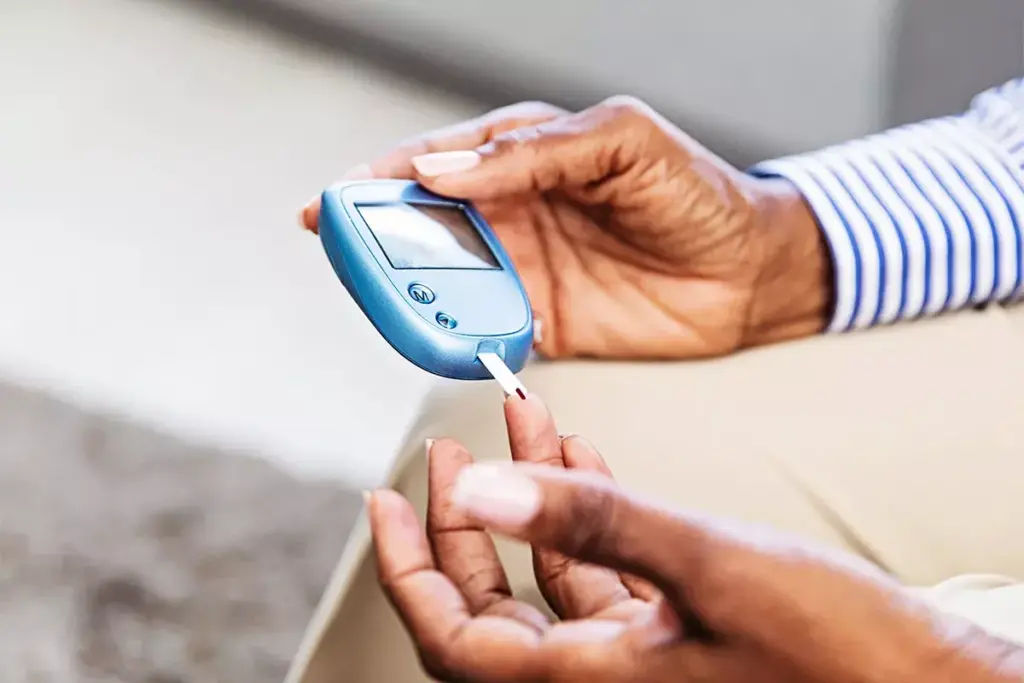
Knowing your A1C levels is key to managing type 2 diabetes well. The A1C chart is a helpful tool. It shows your blood sugar control over the last 2-3 months.
Normal Range: Below 5.7 Percent
An A1C below 5.7 percent is normal. It means your blood sugar is in the target range. You’re less likely to have diabetes. Eating well and exercising regularly can help keep your A1C in check.
Prediabetes Range: 5.7 to 6.4 Percent
An A1C between 5.7 and 6.4 percent means you have prediabetes. It’s a sign you’re at risk for type 2 diabetes. Changing your lifestyle, like losing weight and being more active, can help prevent diabetes.
Diabetes Diagnosis: 6.5 Percent and Above
An A1C of 6.5 percent or higher means you have diabetes. This is a wake-up call to work with your doctor. You’ll need a plan that includes medication, diet, and exercise.
Understanding Estimated Average Glucose in mg/dL
Your A1C level also shows your estimated average glucose (eAG) in mg/dL. For example, an A1C of 5.7 percent is about 117 mg/dL. Knowing your eAG helps you manage your blood sugar better.
It’s important to understand your A1C chart and how it relates to your eAG. Here are some key points:
- Normal A1C: Below 5.7 percent
- Prediabetes: 5.7 to 6.4 percent
- Diabetes: 6.5 percent and above
Using an A1C calculator online or talking to your doctor can help you understand your A1C results. This way, you can manage your blood sugar levels effectively.
How to Calculate Your A1C at Home Using Three Methods
Managing your diabetes starts with knowing how to check your A1C at home. With the right tools and knowledge, you can keep track of your blood sugar levels. This helps you make better choices for your health. There are three main ways to do this: using a formula, online calculators, or A1C charts.
Method 1: Apply the A1C to Average Glucose Formula
The A1C to average glucose formula is simple. It helps estimate your average blood sugar levels. The formula is: 28.7 x A1C – 46.7 = eAG (estimated average glucose). For example, if your A1C is 7%, your eAG is about 154 mg/dL.
“Knowing your A1C and its link to average glucose is key for managing diabetes,” says a top diabetes educator. This formula gives you insights into your glucose control over time.
Method 2: Use Online A1C Calculator Tools
Online A1C calculators are easy to use. They help figure out your A1C and average glucose levels. Just enter your A1C value, and the calculator shows your estimated average glucose in mg/dL.
Online calculators make it simple, perfect for those who don’t like formulas. They help you track your diabetes metrics and see changes over time.
Method 3: Reference A1C Conversion Charts
A1C conversion charts are handy for quick look-ups. They show your estimated average glucose based on your A1C. You can find these charts online or through diabetes resources. They help you link your A1C percentage to your average blood glucose in mg/dL.
For instance, an A1C of 6.5% means your estimated average glucose is about 140 mg/dL. Using these charts helps you see how well you’re managing your diabetes and make needed changes.
By using these three methods, you can actively manage your diabetes. Whether you like formulas, online tools, or charts, knowing how to calculate your A1C at home empowers you to manage your health better.
Conclusion
Knowing and managing A1C levels is key for good type 2 diabetes care. Regular A1C checks help see if your diabetes plan is working. This lets you make smart choices about your health.
Using an A1C chart helps you understand your blood sugar better. You can then make changes to stay healthy. Good diabetes care means regular A1C tests, a healthy lifestyle, and following your doctor’s advice.
Keeping your blood sugar in check stops diabetes problems. Being informed and active helps you manage your diabetes well. This way, you can improve your health and do better with your diabetes care.
FAQ
What is the A1C test, and how does it relate to blood glucose levels?
The A1C test measures average blood sugar over the past 2–3 months by assessing the percentage of glucose attached to hemoglobin in red blood cells.
How do I interpret my A1C numbers using an A1C chart?
An A1C below 5.7% is normal, 5.7–6.4% indicates prediabetes, and 6.5% or higher suggests diabetes; higher percentages reflect higher average blood glucose.
Can I calculate my A1C at home, and if so, how?
You can estimate A1C using your average home blood glucose readings and an online formula, but lab tests provide the most accurate result.
What is the A1C to average glucose formula, and how do I use it?
The formula is: Average Glucose (mg/dL) = (28.7 × A1C) – 46.7; it helps convert A1C percentages into estimated daily glucose levels.
Are online A1C calculators reliable?
They provide rough estimates but may not replace lab testing, which is more accurate and clinically validated.
How often should I check my A1C levels?
People with diabetes should typically check every 3–6 months or as advised by their healthcare provider.
Can I manage my type 2 diabetes effectively by understanding and managing my A1C levels?
Yes, monitoring and aiming for target A1C levels helps guide treatment, diet, and lifestyle choices to maintain stable blood sugar.
References
National Center for Biotechnology Information. Evidence-Based Medical Insight. Retrieved from https://pmc.ncbi.nlm.nih.gov/articles/PMC8465972/