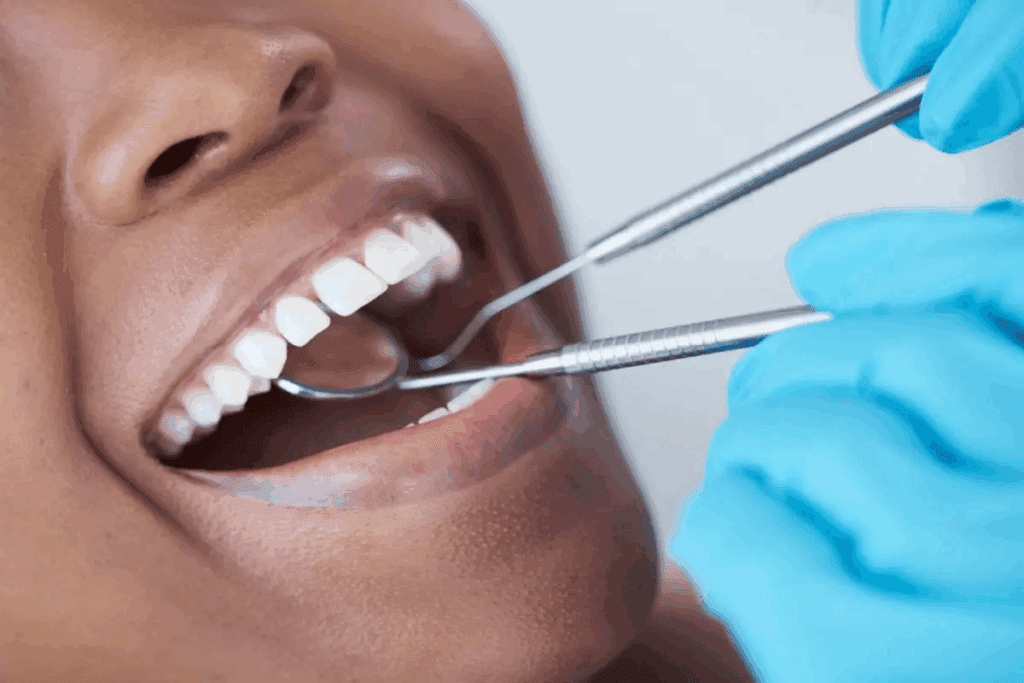
Do you have many damaged, missing, or severely worn teeth? This makes eating, speaking, and smiling hard. Full mouth rehabilitation might change everything for you.
At Liv Hospital, we get how tough dental health problems can be. Our team works together to fix total mouth reconstruction needs.
Complete mouth restoration is a big dental job. It fixes all teeth in your upper and lower jaws. It brings back your smile, oral function, and quality of life.
Key Takeaways
- Complete mouth restoration is a big dental job.
- It fixes all teeth in both upper and lower jaws.
- This job needs a team effort.
- It brings back your smile and quality of life.
- Liv Hospital offers care for total mouth reconstruction.
What Is Complete Mouth Restoration?
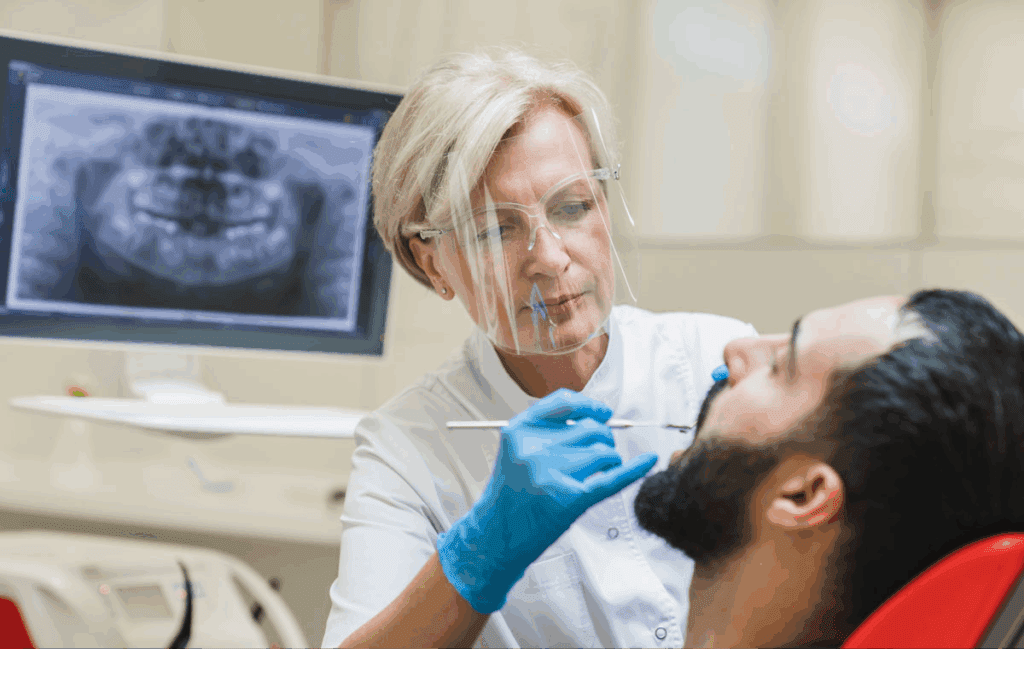
Complete mouth restoration is a set of dental procedures aimed at improving a patient’s smile and oral function. It’s a detailed process that starts with a thorough evaluation and a treatment plan made just for the patient.
Definition and Comprehensive Approach
Complete mouth restoration, or full-mouth rehabilitation, is a detailed treatment to fix a patient’s mouth health, function, and look. It involves checking the teeth, gums, and tissues carefully. We use the latest tools and methods to find the problems and create a plan just for the patient.
The Interdisciplinary Dental Team
The success of complete mouth restoration depends on a team of interdisciplinary dental team. This team includes experts like prosthodontists, periodontists, oral surgeons, and orthodontists. They all work together to make sure the patient gets the best results. Each expert adds their knowledge to cover all parts of the patient’s oral health.
Goals of Full-Mouth Rehabilitation
The main goals of full-mouth rehabilitation are to fix the mouth’s function, ensure the teeth’s health, and improve looks. This helps protect the teeth and boosts the patient’s life quality. The table below explains these goals and why they matter.
| Goal | Description | Significance |
|---|---|---|
| Functional Harmony | Restoring the natural alignment and function of the teeth | Improves chewing and speaking abilities |
| Pulpal Health | Ensuring the health of the dental pulp | Prevents pain and infection |
| Optimal Esthetics | Enhancing the appearance of the teeth and smile | Boosts confidence and self-esteem |
Understanding complete mouth restoration helps patients see how complex and beneficial this dental treatment is.
Signs You May Need a Full-Mouth Reconstruction
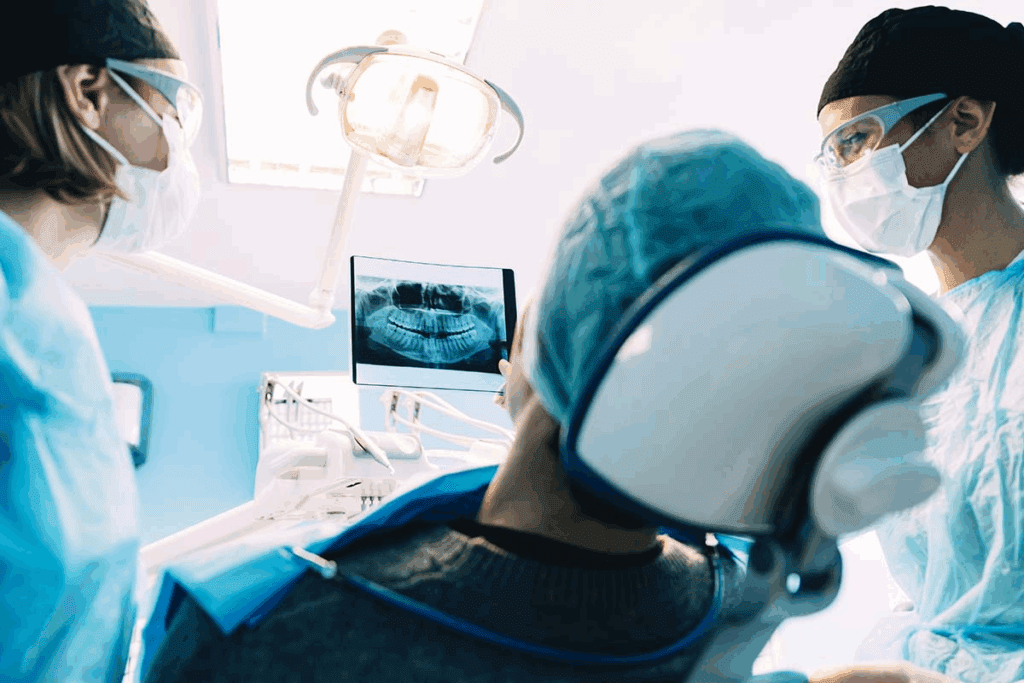
Several signs suggest you might need a full-mouth reconstruction if you have serious dental problems. If you’re facing any of these issues, it’s key to talk to a dentist. They can help figure out the best treatment for you.
Excessive Tooth Wear and Damage
Severe tooth wear is a big sign you might need a full-mouth reconstruction. This wear can come from many things, like:
- Teeth Grinding or Clenching: Grinding or clenching your teeth can wear them down a lot.
- Acid Erosion: Eating or drinking acidic things can wear away your tooth enamel.
- Improper Bite Alignment: If your bite is off, it can wear down your teeth unevenly.
Severe tooth wear can mess with how your teeth look and work. It might make chewing and speaking hard.
Multiple Missing or Failing Teeth
Having many missing or failing teeth can really hurt your oral health and life quality. Problems with missing teeth include:
- Difficulty Chewing: Without teeth, eating some foods can be tough.
- Shifting Teeth: Gaps from missing teeth can make other teeth move, causing bite problems.
- Impact on Self-Esteem: Visible gaps can lower your confidence and self-esteem.
Failing teeth need quick attention to avoid more problems.
Functional Problems and Chronic Pain
Functional problems and chronic pain in your mouth or jaw might mean you need a full-mouth reconstruction. Issues like:
- TMJ Disorders: TMJ problems can cause pain and make jaw movement hard.
- Chronic Pain: Ongoing pain in your teeth, gums, or jaw can really affect your daily life.
- Difficulty Chewing or Swallowing: Functional problems can make eating and swallowing hard.
Fixing these problems often needs a full-mouth reconstruction. It helps restore your mouth’s function and eases pain.
The Complete Mouth Restoration Assessment Process
A complete mouth restoration assessment is key to understanding your oral health needs. It helps us create a treatment plan that fits your specific needs. This ensures the best results for your full-mouth rehabilitation.
Initial Consultation and Complete Examination
The process starts with an initial consultation. We examine your teeth, gums, and overall oral health. We review your dental history, visually examine you, and may do preliminary tests to find issues.
Our team talks with you about your concerns, what you hope for, and your goals. Knowing your needs and wants is important for a personalized treatment plan.
Advanced Diagnostic Imaging and Records
We use advanced diagnostic imaging to understand your oral health better. This includes 3D scans, X-rays, and digital radiography. These tools help us see your teeth, jawbone, and tissues clearly.
We also keep detailed records of your oral health. These include notes from the initial consultation, diagnostic findings, and other important information for your treatment plan.
Functional and Aesthetic Evaluation
A key part of the assessment is the functional and aesthetic evaluation. We check how your teeth and jaws work together. We look at your bite, chewing, and TMJ health. We also consider how your teeth, gums, and smile look.
This evaluation helps us plan a treatment that improves your oral function and smile. We aim to meet your health and beauty expectations.
Developing Your Personalized Treatment Plan
A personalized treatment plan is key to effective complete mouth restoration. It gives a clear path for treatment. We gather a team of dental experts to make a plan just for you.
The Interdisciplinary Planning Approach
Our team considers every part of your oral health. This means:
- Sharing info and insights among specialists
- Coordinating treatments for the best results
- Fixing both how your mouth works and how it looks
This teamwork helps us make a plan that covers all your oral health needs. This way, your complete mouth restoration will be the best it can be.
Treatment Sequencing and Timeline
After your plan is made, we set a treatment order. This order is important for:
- Doing basic treatments first
- Reducing visits and time
- Making changes as needed
Planning your treatment carefully helps us keep your life as normal as possible. It also makes your treatment more effective.
Digital Treatment Planning and Visualization
We use advanced digital tools for planning. These include:
- 3D imaging and simulation software
- Digital smile design technology
- Computer-aided design (CAD) for precise restorations
These tools help us see what your treatment could look like. This makes talking with your dental team easier. It helps everyone know what to aim for.
By using teamwork and digital tools, we make a treatment plan that’s just right for you. It’s a big step towards a successful complete mouth restoration.
Preparing for Your Full-Mouth Rehabilitation
Before starting your full-mouth rehabilitation, there are important steps to take. We want to make sure you’re ready for what’s ahead. We’ll answer any questions and address any concerns you might have.
Pre-Treatment Considerations
Pre-treatment steps are key for a successful full-mouth rehabilitation. These include:
- Checking your oral health to find any issues that need fixing before starting.
- Talking about what you hope to achieve with your dental team to make sure everyone is on the same page.
- Looking at your medical history to see if it might affect your treatment.
It’s important to follow any pre-treatment instructions from your dentist. This might mean arriving early or avoiding certain foods and drinks.
Temporary Solutions During Treatment
During your full-mouth rehabilitation, temporary solutions might be needed. These include provisional restorations that are used while your permanent ones are being made.
Temporary solutions have several benefits:
- They let you try out your new teeth before they’re permanent.
- They help you eat and speak comfortably while you wait.
- They give your dentist feedback to make your final restorations even better.
Setting Realistic Expectations
It’s important to have realistic expectations for your full-mouth rehabilitation. This means understanding the treatment timeline, any challenges you might face, and what the final result will be.
“The key to a successful full-mouth rehabilitation is not just about achieving a beautiful smile, but also about restoring function and improving overall oral health.” — Expert in Restorative Dentistry
By working closely with your dental team and following their advice, you can achieve a great outcome that meets your expectations.
Foundation Treatments: Establishing Oral Health
Foundation treatments are key to a successful full-mouth reconstruction. We must fix any oral health problems first. This ensures your treatment works well.
Periodontal Therapy
Periodontal therapy is vital for foundation treatments. It treats gum disease and keeps your teeth’s support healthy. This includes scaling and root planing to clean your teeth and gums.
Benefits of Periodontal Therapy:
- Reduces inflammation and infection
- Promotes healing of the gums and bone
- Prevents further disease progression
- Creates a healthy foundation for restorative treatments
Endodontic Treatments and Root Canal Therapy
Endodontic treatments, like root canals, are for infected or damaged teeth. They remove the infected pulp and seal the tooth. This saves the tooth and keeps it healthy.
The importance of endodontic treatments lies in their ability to:
- Relieve pain caused by infection
- Save teeth that would other wise be lost
- Prevent the spread of infection to other parts of the mouth
Oral Surgery and Bone Augmentation
Oral surgery might be needed for full-mouth reconstruction. This includes bone augmentation to build up the jawbone. It helps dental implants stay stable.
Oral surgery is key for your restoration’s long-term success. It fixes any anatomical issues. This makes your new smile possible.
Restorative Procedures in Full-Mouth Reconstruction
Restorative dentistry is key in full-mouth reconstruction. It offers treatments to fix teeth health, function, and look. Each patient gets a care plan that fits their needs.
Dental Implants for Missing Teeth
Dental implants are a big deal in modern dentistry. They give a strong, natural look for missing teeth. An implant is placed in the jawbone to hold a crown, bridge, or denture.
Getting dental implants takes a few steps. First, there’s a consultation, then the implant is placed, and lastly, the restoration is done. Implants help with chewing, look better, and last a long time.
Crowns, Bridges, and Veneers
Crowns, bridges, and veneers are also important in full-mouth reconstruction. Crowns cover damaged teeth, bridges replace missing ones, and veneers make teeth look better.
| Restorative Procedure | Purpose | Benefits |
|---|---|---|
| Crowns | Cover damaged or decayed teeth | Restore shape, size, and function |
| Bridges | Replace missing teeth | Improve chewing function and aesthetics |
| Veneers | Enhance appearance of teeth | Improve color, shape, and alignment |
Full Arch Prosthetics Options
For those needing a lot of work, full arch prosthetics are a good choice. They can be supported by implants or natural teeth. This gives a stable, working dental arch.
Choosing full arch prosthetics depends on several things. These include how many teeth are missing, jawbone health, and overall dental health. Our team helps pick the best option for each patient, aiming for the best results.
Advanced Technologies in Complete Mouth Restoration
Advanced technologies are changing how we do complete mouth restoration. They make the process better and the results more accurate. These new tools help us diagnose, plan, and restore teeth more effectively.
Digital Smile Design and CAD/CAM Technology
Digital Smile Design (DSD) lets us show patients what their smile will look like before we start. It helps in planning and makes talking about treatment easier. With CAD/CAM technology, we can make restorations with great precision.
Using DSD and CAD/CAM together makes the restoration process smoother. It ensures the final result looks and works great. This combo of digital design and making helps us create custom, precise restorations.
3D Imaging and Treatment Planning
3D imaging has changed dentistry, giving us detailed views of teeth and mouth. It helps us diagnose and plan treatments better. This means we can predict outcomes more accurately.
With 3D imaging, we see teeth, bones, and soft tissues in 3D. This helps us understand what’s needed for complex treatments. It’s key for planning things like dental implants.
| Technology | Application | Benefit |
|---|---|---|
| Digital Smile Design | Smile preview and treatment planning | Enhanced patient communication and precise planning |
| CAD/CAM Technology | Design and fabrication of restorations | High precision and customization |
| 3D Imaging | Diagnostic imaging and treatment planning | Accurate diagnosis and enhanced predictability |
Computer-Guided Surgery and Precision Dentistry
Computer-guided surgery is a big step forward in surgery accuracy. It uses 3D images to guide the placement of dental implants and other parts. This makes surgery safer and more successful.
This tech reduces the chance of problems and improves the restoration’s outcome. By combining it with precision dentistry, we get better results that last longer.
These advanced technologies are a big step up in dental care. They let us offer patients treatments that are both personalized and effective. With digital smile design, 3D imaging, and computer-guided surgery, we can do a lot more for our patients.
Recovery and Adaptation After Your Restoration
Recovering from a complete mouth restoration needs careful attention to post-procedure care. Understanding the recovery process is key for a smooth transition to your new smile and better oral function.
Post-Procedure Care Instructions
After your complete mouth restoration, we’ll give you detailed care instructions. These guidelines help your mouth heal right and enjoy your new smile fully. It’s important to follow these instructions closely to avoid complications and ensure a good recovery.
- Maintain good oral hygiene by gently brushing and flossing your teeth.
- Avoid certain foods that could disrupt the healing process or damage your new restorations.
- Attend all scheduled follow-up appointments to monitor your progress.
Adjusting to Your New Bite and Smile
Adjusting to your new bite and smile takes time. It’s normal to feel a bit off as your mouth and facial muscles adjust. Take it easy and be patient with your body during this time.
To help with the adjustment, we suggest:
- Eating softer foods initially to reduce strain on your new restorations.
- Practicing good oral hygiene to maintain the health of your gums and new teeth.
- Reporting any discomfort or concerns to us promptly.
Managing Discomfort and Possible Complications
While we aim to make recovery as comfortable as possible, some discomfort or sensitivity might occur. Managing this discomfort is important for a successful recovery.
| Potential Issue | Management Strategy |
|---|---|
| Sensitivity | Use desensitizing toothpaste and avoid extreme temperatures. |
| Discomfort | Follow the pain management plan provided by your dentist. |
| Infection | Monitor for signs of infection and contact your dentist if you experience any unusual symptoms. |
By following post-procedure care instructions and knowing how to manage issues, you can have a successful recovery. Our team is here to support you, ensuring you get the best results from your full-mouth rehabilitation.
Long-Term Maintenance of Your Restored Mouth
Keeping your complete mouth restoration in top shape is key. It’s not just about looks; it’s about keeping your dental work working well for a long time.
Daily Home Care Routine
A good daily routine is the base for long-term care. This includes:
- Brushing your teeth at least twice a day with a fluoride toothpaste
- Flossing daily to remove plaque and food particles
- Using an antibacterial mouthwash to reduce bacteria and freshen breath
Consistency is key. A thorough oral hygiene routine can help avoid problems like gum disease or implant failure.
Professional Maintenance Schedule
Regular visits to the dentist are vital for your restoration’s success. We suggest:
- Scheduling dental check-ups every six months
- Professional cleanings as advised by your dentist
- Monitoring the condition of your restorations and addressing any issues promptly
“Regular maintenance is essential for catching problems early, ensuring your restored mouth lasts long.”
Signs That Require Immediate Attention
Knowing when to seek dental help can prevent big problems. Look out for:
- Unexplained pain or discomfort in your teeth or gums
- Sensitivity to hot or cold temperatures
- Changes in the fit or feel of your restorations
If you notice these symptoms, contact your dentist right away. A renowned dental expert once said,
“The key to a successful restoration lies not just in the procedure itself, but in the care that follows.”
By following a strict daily care routine, getting regular professional check-ups, and watching for urgent signs, you can enjoy your complete mouth restoration for many years.
Financial Considerations for Total Mouth Reconstruction
It’s important to know the costs of total mouth reconstruction before starting. This treatment is a big deal and involves many steps. It’s a big investment.
The Cost Factors
The price of total mouth reconstruction changes based on several things. These include how much work is needed, the materials used, and the dentist’s skill. Getting a clear cost breakdown is key to understand what you’ll spend.
Here’s a quick look at what might affect the cost:
| Procedure | Cost Range |
|---|---|
| Dental Implants | $3,000 – $6,000 per implant |
| Crowns and Bridges | $800 – $2,000 per unit |
| Full Arch Prosthetics | $15,000 – $30,000 per arch |
Insurance Coverage and Financing
Many worry about the cost of total mouth reconstruction. Luckily, some insurance plans help cover the cost if it’s needed for health reasons. It’s a good idea to check with your insurance to see what they cover.
If you need more help, there are financing options. These include payment plans and dental financing programs. They’re made to help make the treatment more affordable.
Financing and Payment Plans
We have flexible financing options to help with the cost. Our team will help you set up a payment plan that works for you. We want to make sure money doesn’t stop you from getting the dental care you need.
By understanding the costs and looking into financing, you can make a smart choice about total mouth reconstruction.
Conclusion: Embracing Your New Smile and Function
Complete mouth restoration is a journey that changes your life. It boosts your oral health and overall well-being. By understanding the steps, you can make smart choices for your care. This leads to a smile that boosts your confidence.
We’ve shown you how complete mouth restoration works. From the first check to the final fix, our team is with you. We make sure your mouth works well and looks good.
To keep your new smile, good oral hygiene is key. Regular dental visits are also important. These habits help keep your smile and mouth healthy for years.
FAQ
What is complete mouth restoration?
Complete mouth restoration is a detailed dental process. It aims to fix all teeth in both jaws. It needs a team effort from different dental experts.
Why do I need a full-mouth reconstruction?
You might need it if your teeth are worn down or missing. Or if you have chronic pain. Talk to a dentist to find out.
What is the complete mouth restoration assessment process?
This process is a deep look at your teeth. It starts with a first meeting and a full check-up. Then, it includes special scans and looks at how your teeth work and look.
How is a personalized treatment plan developed?
A plan is made by a team of dental experts. They use tools like 3D images to plan your treatment. This way, they can show you what your teeth will look like after.
What are the benefits of full-mouth rehabilitation?
It aims to fix how your teeth work and look. It also makes sure your teeth are healthy. This helps protect your teeth from getting worse.
What are the different types of restorative procedures used in full-mouth reconstruction?
Procedures include dental implants, crowns, and bridges. You might also get veneers or full arch prosthetics.
How long does it take to recover from a complete mouth restoration?
Recovery time varies. But, following your dentist’s care instructions is key to a smooth recovery.
How do I maintain my restored mouth?
Keep your mouth clean with brushing and flossing. Regular dental visits are also important. Watch for any signs of trouble like pain or sensitivity.
What are the financial considerations for total mouth reconstruction?
It’s a big investment in your health and happiness. Knowing the cost and insurance options can help manage it.
Can I get a full-mouth reconstruction if I have gum disease?
You might need gum disease treatment first. Your dentist will check your teeth and plan your treatment.
How do I know if I’m a candidate for full-mouth rehabilitation?
Talk to a dentist to see if you need it. They’ll check your teeth and plan a treatment just for you.
What is the role of advanced technologies in complete mouth restoration?
Technologies like digital smile design and 3D imaging are key. They help make precise and beautiful restorations.
References
National Center for Biotechnology Information. Evidence-Based Medical Guidance. Retrieved from https://pubmed.ncbi.nlm.nih.gov/26025621/