
Graves’ disease is a common autoimmune condition. It causes hyperthyroidism, where the thyroid gland makes too many thyroid hormones. Getting an accurate diagnosis is key to effective treatment. Blood work plays a big role in this.
We’ll show you the important tests for diagnosing Graves’ disease. These include thyroid function tests that check thyroid-stimulating hormone (TSH) levels and other key markers. Knowing about these tests helps you manage your thyroid health better.
We aim to make the diagnostic process clearer by explaining the blood tests and their importance. This way, you can face the diagnostic process with confidence.
Key Takeaways
- Graves’ disease is a leading cause of hyperthyroidism.
- Comprehensive blood work is essential for diagnosing Graves’ disease.
- TSH level measurement is a critical test for assessing thyroid function.
- Understanding your test results is key for effective treatment.
- Our guide will walk you through the diagnostic process.
Understanding Graves Disease and When to Seek Testing

Graves’ disease is an autoimmune disorder that leads to hyperthyroidism. This happens when the immune system attacks the thyroid gland. It then makes too many thyroid hormones.
What is Graves Disease?
Graves’ disease is the main cause of hyperthyroidism, making up 60 to 80 percent of cases. It happens when the immune system wrongly attacks the thyroid gland. This causes it to make too much T3 and T4.
Prevalence and Risk Factors
Graves’ disease affects 20 to 50 people per 100,000 each year. It’s more common in women and usually starts between 20 and 50 years old. Having a family history of thyroid issues or other autoimmune diseases also increases your risk.
Common Symptoms That Warrant Testing
Symptoms of Graves’ disease can vary but often include:
- Unexplained weight loss despite increased appetite
- Rapid or irregular heartbeat
- Nervousness, anxiety, or irritability
- Fatigue or muscle weakness
- Heat sensitivity and increased sweating
- Changes in menstrual cycle
If you’re experiencing several of these symptoms, see a healthcare professional. They can help with the right evaluation and diagnosis. For more on Graves’ disease symptoms and causes, visit Mayo Clinic’s Graves’ Disease page.
The Diagnostic Process Overview
Diagnosing Graves’ disease involves a physical exam, medical history, and lab tests. Tests check T3 and T4 levels and for thyroid-stimulating immunoglobulin (TSI) or thyrotropin receptor antibody (TRAb). These are signs of Graves’ disease.
Knowing about the diagnostic process and symptoms is key. It helps in getting the right treatment for Graves’ disease.
Essential Blood Tests for Graves Disease Diagnosis
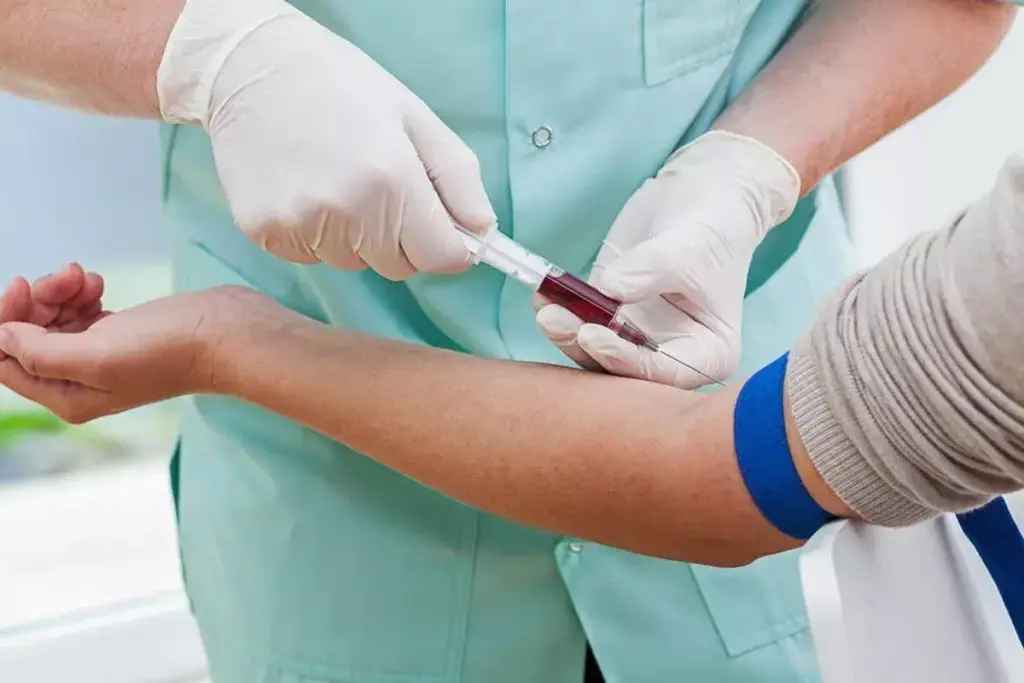
To diagnose Graves’ disease, doctors use specific blood tests. These tests check thyroid function and related antibodies. They help find out if you have the disease and how severe it is.
Thyroid Function Tests
Thyroid function tests are key in diagnosing Graves’ disease. They measure TSH, Free T4, and Free T3 levels in your blood. High levels of these hormones mean your thyroid is overactive.
TSH levels are usually low in Graves’ disease. This is because of the high levels of thyroid hormones. On the other hand, Free T4 and Free T3 levels are high, showing an overactive thyroid.
| Test | Normal Range | Graves’ Disease Indication |
| TSH | 0.4-4.0 mIU/L | Low |
| Free T4 | 0.8-1.8 ng/dL | Elevated |
| Free T3 | 2.3-4.2 pg/mL | Elevated |
How to Prepare for Thyroid Blood Work
Preparing for thyroid blood work is easy. You usually need to fast for 8 hours before the test. Some medications can affect the results, so tell your doctor about them.
“It’s important to follow your doctor’s instructions for thyroid blood tests to get accurate results.”
Understanding Your Test Results
It’s important to understand your thyroid test results. High TSH, Free T4, and Free T3 levels mean you might have hyperthyroidism. Also, finding TSI and TRAb antibodies confirms Graves’ disease.
Your doctor will look at your test results and your health. If you have Graves’ disease, they will talk about treatment options with you.
Graves Disease and Lymph Nodes: A Detailed Look
It’s important to understand how Graves disease affects lymph nodes for a full diagnosis and treatment plan. Graves disease is an autoimmune disorder that mainly targets the thyroid gland. But it also impacts other systems, like the lymphatic system.
Lymphatic System Involvement in Graves Disease
Graves disease can really affect the lymphatic system. This system is key to our immune function. Its involvement in Graves disease can cause many problems. We’ll look at how Graves disease affects lymph nodes and what it means for health.
Lymph nodes are small, bean-shaped parts of our lymphatic system. They filter lymph fluid and catch pathogens, helping our immune system. In Graves disease, the lymph nodes can get involved because of the autoimmune nature of the disorder.
Lymph Node Examination During Diagnosis
Checking the lymph nodes is a key part of diagnosing and treating Graves disease. Doctors might do a physical exam to look for any oddities in the lymph nodes, like swelling or tenderness.
Examining the lymph nodes can give important clues about how far the disease has spread. It helps doctors decide on the best treatment. Sometimes, they might need to use imaging studies to get a better look at the lymph nodes.
When Imaging Studies May Be Necessary
Imaging studies, like ultrasound or CT scans, might be needed to check the lymph nodes in Graves disease patients. These studies help figure out how much the lymph nodes are involved and if there are any complications.
| Imaging Study | Purpose | Benefits |
| Ultrasound | Assess lymph node size and structure | Non-invasive, quick, and cost-effective |
| CT Scan | Evaluate lymph node involvement and possible complications | Provides detailed images, useful for planning surgery |
In conclusion, the link between Graves disease and lymph nodes is complex and needs a detailed look. Knowing how Graves disease affects the lymphatic system and including lymph node checks in diagnosis is key for good management and treatment.
Confirming Your Diagnosis and Next Steps
Getting a Graves’ disease diagnosis involves several steps. These include antibody tests and talking to your healthcare provider. After the tests, your doctor will confirm the diagnosis and create a treatment plan with you.
Definitive Antibody Testing
Antibody tests are key in diagnosing Graves’ disease. They look for specific antibodies like Thyroid-Stimulating Immunoglobulin (TSI) and Thyrotropin Receptor Antibodies (TRAb). These antibodies show if you have Graves’ disease.
Your doctor might suggest one or both tests. They will look at your test results, medical history, and physical exam to understand your condition fully.
Working With Your Healthcare Provider
It’s important to work closely with your healthcare provider. They will explain your test results and what they mean for your health.
You and your doctor will create a treatment plan that fits your needs. This might include medication, radioactive iodine therapy, or surgery, based on your condition and health.
What to Expect After Diagnosis
After getting a Graves’ disease diagnosis, you’ll start treatment soon. The goal is to lower thyroid hormone levels, ease symptoms, and prevent complications.
Your healthcare provider will keep a close eye on your progress. They will adjust your treatment as needed to help you get the best results. With the right care, you can manage Graves’ disease well and live a good life.
Conclusion
Getting the right diagnosis and treatment for Graves disease is key. It helps keep your thyroid healthy and controls hyperthyroidism. We’ve covered the important steps for testing, like blood work and checking lymph nodes.
Knowing how to diagnose and treat Graves disease is important. Working with your doctor helps you get the best care. If symptoms don’t go away, seeing a doctor is vital to avoid serious problems.
Managing hyperthyroidism means using medicine, making lifestyle changes, and keeping an eye on your health. We suggest you be involved in your care. Ask questions and get help when you need it.
With the right treatment, people with Graves disease can live full, healthy lives. Focus on your thyroid health and stay informed. This way, you can handle hyperthyroidism management confidently.
FAQ
What is Graves’ disease and how is it diagnosed?
Graves’ disease is an autoimmune disorder that leads to hyperthyroidism. It’s diagnosed through physical exams, medical history, and lab tests. These include thyroid function tests and antibody tests.
What blood tests are used to diagnose Graves’ disease?
Blood tests for Graves’ disease include TSH, Free T4, and Free T3. Antibody tests like TRAb or TSI are also used.
What are normal TSH levels, and how do they relate to Graves’ disease?
Normal TSH levels are between 0.4 to 4.0 mU/L. In Graves’ disease, TSH levels drop because of high thyroid hormones.
How do I prepare for thyroid blood work?
To prepare for thyroid blood work, follow your doctor’s instructions. This might mean fasting or avoiding certain medications.
Can Graves’ disease affect the lymph nodes, and how are they evaluated?
Yes, Graves’ disease can affect lymph nodes. They are checked through physical exams and imaging like ultrasound or CT scans.
What is the role of antibody testing in diagnosing Graves’ disease?
Antibody testing, like TRAb or TSI, confirms Graves’ disease. It detects antibodies that stimulate the thyroid gland.
How is Graves’ disease treated, and what are the treatment options?
Graves’ disease treatment includes medications, radioactive iodine, and surgery. The choice depends on the disease’s severity and individual factors.
What can I expect after being diagnosed with Graves’ disease?
After diagnosis, you’ll work closely with your doctor. This may involve regular blood tests, medication changes, and lifestyle adjustments.
How do I manage my Graves’ disease, and what lifestyle changes can I make?
Managing Graves’ disease means adjusting your treatment plan with your doctor. Lifestyle changes include a healthy diet, exercise, and stress management.
Can I get tested for Graves’ disease if I have no symptoms?
Testing for Graves’ disease without symptoms is possible. But, it’s usually recommended for those with symptoms or risk factors.
References
https://my.clevelandclinic.org/health/diagnostics/17556-thyroid-blood-tests



 Departments
 Related Videos
 Our Doctors
 News
News