
Knowing your Body Mass Index (BMI) is key for men aiming for top health. BMI is a simple way to guess body fat. It’s a first step to check your weight and spot health risks.Discover the ‘ideal bmi men‘ range. Our simple, powerful guide and calculator help you find your best, most healthy weight.
But, health is more than just numbers. At Liv Hospital, we focus on full care. We start with your body mass index. For adult men, a healthy BMI is between 18.5 and 24.9 kg/m2. It’s a key marker for being well.
Key Takeaways
- Understanding BMI is essential for men’s health and wellness.
- BMI calculation provides an evidence-based starting point for assessing weight status.
- A healthy BMI for men is between 18.5 and 24.9 kg/m2.
- Comprehensive health assessment goes beyond BMI to overall wellness.
- Liv Hospital emphasizes personalized care for optimal health outcomes.
What Body Mass Index Really Means

BMI is a simple tool for checking body fat and weight categories. It’s widely used in medicine to assess weight and health risks.
The Definition and Purpose of BMI
Body Mass Index (BMI) is your weight in kilograms divided by your height in meters squared (kg/m²). It shows if your weight is healthy for your height. BMI helps sort people into weight categories like underweight, normal, overweight, and obese.
BMI Categories:
BMI Category | BMI Range |
Underweight | Less than 18.5 |
Normal weight | 18.5 – 24.9 |
Overweight | 25 – 29.9 |
Obese | 30 or greater |
Why BMI Matters for Men’s Health
BMI is key for men’s health because it spots health risks tied to weight. High BMI in men raises the risk of diabetes, heart disease, and some cancers. Low BMI can lead to osteoporosis, less muscle, and other health problems.
Knowing your BMI lets men work on a healthy weight. This can lower disease risks and boost overall health.
The Science Behind BMI Calculations
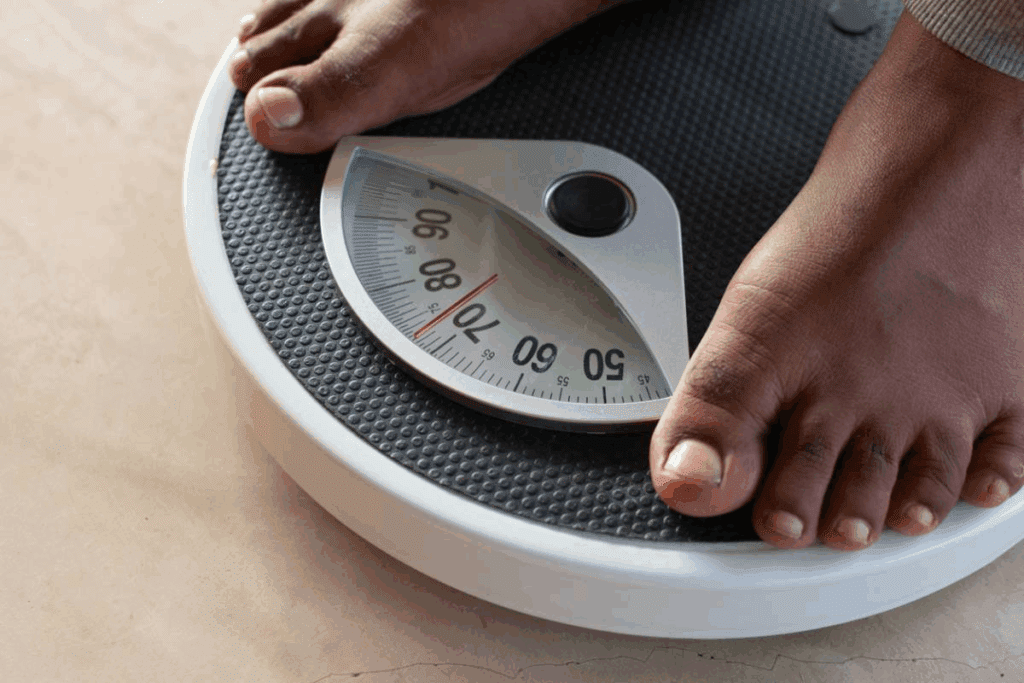
The science of BMI uses a simple math formula. It links weight and height. This formula helps figure out if a person’s weight is healthy for their height.
The Standard BMI Formula Explained
The BMI formula is easy: weight in kilograms divided by height in meters squared (kg/m²). It’s the base for BMI, helping sort people into weight categories.
To calculate your BMI manually, you need your weight in kilograms and height in meters. The formula is: BMI = weight (kg) / height (m)². For example, a 70 kg man who is 1.75 m tall has a BMI of 22.86.
Metric vs. Imperial Measurement Systems
The BMI formula uses the metric system. But, you can also use imperial measurements. Just convert your weight and height to the right units.
If you use imperial measurements, you need to convert first. Turn pounds to kilograms by dividing by 2.20462. Then, change inches to meters by dividing by 39.37. After that, use the BMI formula.
Here are the steps for both systems:
- Metric System: weight (kg) / height (m)²
- Imperial System: [weight (lb) / 2.20462] / [height (in) / 39.37]²
Knowing how to calculate BMI in both systems is helpful. It lets people check their weight status, no matter their preferred units.
Step-by-Step Guide to Calculate Your BMI
Calculating your Body Mass Index (BMI) is easy. We’ll show you how to do it using both the metric and imperial systems. This way, you can figure out your BMI no matter which system you’re used to.
Using the Metric System (kg/m²)
To find your BMI in the metric system, you need your weight in kilograms and height in meters. The formula is simple: BMI = weight (in kg) / height (in meters) squared.
For example, if you weigh 70 kg and are 1.75 meters tall, your BMI calculation is as follows:
- Square your height: 1.75 m * 1.75 m = 3.0625 m²
- Divide your weight by the squared height: 70 kg / 3.0625 m² = 22.86
Your BMI is 22.86. This tells you about your weight status.
Using the Imperial System (lb/in²)
If you’re more comfortable with pounds and inches, you can also calculate your BMI. The formula is: BMI = [weight (in pounds) / height (in inches) squared] * 703.
For instance, if you weigh 154 pounds and are 68 inches tall, your BMI calculation is:
- Square your height: 68 in * 68 in = 4624 in²
- Divide your weight by the squared height: 154 lb / 4624 in² = 0.0333
- Multiply by 703: 0.0333 * 703 = 23.42
Your BMI is 23.42.
Health experts say BMI is a good way to check if your weight is healthy. Using a BMI calculator can make it easier, whether you’re trying to lose weight or stay healthy.
Practical Examples with Real Numbers
Let’s look at a few examples to see how BMI is calculated in different situations.
Weight (kg) | Height (m) | BMI | Category |
60 | 1.65 | 22.04 | Normal |
80 | 1.75 | 26.12 | Overweight |
50 | 1.60 | 19.53 | Normal |
The table shows how BMI can tell if you’re at a healthy weight, underweight, or overweight. For those trying to lose weight, a bmi calculator to lose weight can be very helpful.
Understanding how to calculate your BMI and what it means is a big step towards a healthier life. Whether you use the metric or imperial system, it’s simple and straightforward.
“Maintaining a healthy weight is key for overall health, and BMI is a simple way to check if your weight is healthy for your height.”
— World Health Organization
Ideal BMI for Men: What the Research Shows
Research on BMI gives us insights into healthy weights for men. It’s key for men to know their health status.
Standard BMI Categories for Adult Men
BMI categories help classify weight status. For adult men, there are specific groups:
- Underweight: BMI
- Normal weight: BMI = 18.5-24.9
- Overweight: BMI = 25-29.9
- Obese: BMI ≥ 30
The Healthy BMI Range of 18.5-24.9
A BMI of 18.5 to 24.9 is healthy for adult men. This range lowers the risk of diseases like diabetes and heart disease.
Keeping a healthy BMI is key for wellness and living longer. It’s not just about the weight; it’s about the health benefits.
Median BMI Statistics for Healthy Men
Research shows the median BMI for healthy men is about 24.5 kg/m². This is near the top of the normal range, showing many healthy men are close to the upper limit.
This statistic highlights the need for weight management in health. A median BMI of 24.5 kg/m² for healthy men shows the importance of staying within the normal range.
Key statistics to consider:
- The normal BMI range (18.5-24.9) has the lowest health risks.
- Men with a BMI over 25 are overweight and face more health risks.
- Staying within a healthy BMI through diet and exercise can greatly reduce chronic disease risks.
Age and Body Type Considerations for Men’s BMI
BMI calculations can be influenced by various factors including age, body frame size, and ethnicity. While BMI provides a general guideline, it’s essential to consider these additional factors for a more accurate health assessment.
How Age Affects Optimal BMI Ranges
As men age, their body composition naturally changes. Older adults may experience a decrease in muscle mass and an increase in body fat, even if their weight remains relatively stable. This change can affect their BMI, potentially leading to a misleadingly normal reading in someone who is actually at risk for health issues related to excess body fat.
We recognize that age-related changes can impact the interpretation of BMI. For instance, a higher BMI might be more acceptable for older men due to the natural redistribution of body fat. Yet, maintaining a healthy BMI is key across all age groups.
Body Frame Size and Its Impact
Body frame size is another critical factor that can influence BMI interpretation. Men with a larger bone structure or muscle mass may have a higher BMI without being overfat. On the other hand, individuals with a smaller frame may be at health risk even at a BMI considered normal.
Using body frame size in conjunction with BMI can provide a more nuanced understanding of health risks. For example, a muscular man might have a high BMI due to muscle, not fat. Yet, a man with a smaller frame and the same BMI might be at greater health risk.
Ethnic and Demographic Variations
Ethnicity and demographic background can also affect body composition and, consequentially, BMI. Different ethnic groups may have varying body fat distributions or muscle mass levels, which can impact the accuracy of BMI as a health indicator.
For instance, research has shown that individuals of Asian descent may have a higher percentage of body fat at a given BMI compared to individuals of European descent. This highlights the need for ethnic-specific BMI guidelines to more accurately assess health risks.
In conclusion, while BMI is a useful tool, it’s vital to consider age, body type, and ethnic background for a complete health assessment. By taking these factors into account, we can offer more personalized and effective health guidance for men.
Interpreting Your BMI Results
Your BMI score is more than just a number. It’s a key indicator of your health. After calculating your BMI, it’s important to understand what it means. This helps you assess your health and spot any risks.
Understanding What Your Number Means
BMI categories help sort people into weight groups. These include underweight, normal weight, overweight, and obese. Your BMI is based on your weight and height.
To grasp your BMI number, you need to know the BMI categories. The World Health Organization sets these categories. They help identify health risks based on your BMI.
- Underweight: BMI
- Normal weight: BMI = 18.5-24.9
- Overweight: BMI = 25-29.9
- Obese: BMI ≥ 30
BMI Categories and Associated Health Risks
Each BMI category comes with its own health risks. Being underweight can lead to osteoporosis and a weak immune system. On the other hand, being overweight or obese raises the risk of diseases like diabetes and heart disease.
Here’s a quick look at the health risks for each BMI category:
BMI Category | Health Risks |
Underweight | Osteoporosis, weakened immune function, hair loss |
Normal weight | Low risk of chronic diseases |
Overweight | Increased risk of diabetes, heart disease, certain cancers |
Obese | High risk of chronic diseases, mobility issues, mental health concerns |
Knowing your BMI category and its health risks is key. It helps you work towards a healthy weight. This can lower your risk of chronic diseases.
Limitations of BMI for Men
BMI is a common tool, but it has its limits for men. It doesn’t tell the whole story about health. This is because it doesn’t separate lean body mass from body fat.
Body Composition Factors Not Reflected in BMI
BMI doesn’t consider body composition. It looks at weight and height but misses muscle and fat. This can be a problem for men who are very muscular or athletic.
For example, a bodybuilder might have a high BMI because of muscle, not fat. Yet, they might be very lean. On the other hand, older men or those with a lot of belly fat might look fine by BMI but face health risks.
When BMI May Be Misleading
BMI can be off in many cases. For men with lots of muscle, it might show too much fat. For those with a lot of body fat, it might show too little risk. It also doesn’t look at where the fat is, which is important for health.
For instance, men with belly fat are at higher risk for heart disease and diabetes, even if their BMI is normal. So, BMI alone doesn’t tell the whole story of health.
Athletes and Muscular Men: Special Considerations
Athletes and muscular men need to think carefully about BMI. Their muscle can make their BMI look worse than it really is. This might put them in a riskier category than they actually are.
Category | BMI Range | Considerations for Athletes/Muscular Men |
Underweight | Less than 18.5 | May not apply due to high muscle mass |
Normal weight | 18.5-24.9 | May be achievable with high muscle mass and low body fat |
Overweight | 25-29.9 | Often misclassified due to muscle mass |
Obese | 30 or greater | May be inaccurate for very muscular individuals |
It’s key for athletes and muscular men to look at more than just BMI. Body fat percentage and waist size can give a clearer picture of their health.
Alternative Methods to Complement BMI Assessment
Beyond BMI, there are other ways to understand your health better. These methods give more insights into your body composition. They are key for a complete health check.
Waist Circumference and Waist-to-Height Ratio
Measuring your waist is a simple yet powerful way to check for visceral fat. This fat is linked to heart disease and diabetes. To measure it right, find the midpoint between your lowest rib and the top of your hip bone.
The waist-to-height ratio (WHtR) is another useful tool. It looks at your waist size and height. A WHtR of 0.5 or more means you might face health risks. It’s great for spotting heart disease risks.
Body Fat Percentage Measurements
Body fat percentage is a direct way to see your body composition. It shows how much of you is lean body mass and how much is fat. There are several ways to measure it, like dual-energy X-ray absorptiometry (DXA), hydrostatic weighing, and skinfold measurements.
Each method has its own strengths and weaknesses. DXA scans give detailed info on bone density and fat but need special equipment. Skinfold measurements are easier to get but depend on the person doing them.
Creating a Complete Body Composition Profile
A full body composition profile looks at more than just BMI or body fat percentage. It also checks muscle mass, bone density, and fat distribution. This gives a clearer view of your health and risks.
Using different methods, doctors can create plans that target specific health issues. For example, someone with high body fat but normal BMI might need strength training. This can help improve muscle and metabolic health.
Health Implications of Different BMI Ranges
It’s important for men to know how different BMI ranges affect their health. BMI, or Body Mass Index, shows if a person’s weight is healthy for their height. Each BMI range has its own health risks and benefits.
Health Risks of Low BMI in Men
A low BMI, below 18.5, means a person is underweight. Being underweight can cause health problems like:
- Malnutrition and deficiencies in essential vitamins and minerals
- Weakened immune system, making it harder to fight off infections
- Osteoporosis, as low body weight can lead to weaker bones
- Reduced muscle mass and strength
Men with a low BMI should talk to a healthcare professional. They can help find the cause and plan to gain a healthy weight.
Benefits of Maintaining a Healthy BMI
Having a BMI between 18.5 and 24.9 has many health benefits, including:
- Reduced risk of chronic diseases such as heart disease and diabetes
- Lower risk of certain types of cancer
- Improved mental health and well-being
- Better overall physical health and mobility
Men with a healthy BMI tend to live better lives. They also face a lower risk of dying early.
Medical Conditions Associated with Elevated BMI
An elevated BMI, 25 or higher, increases the risk of many health problems, including:
Condition | Description | Risk Level |
Hypertension | High blood pressure that can lead to heart disease | High |
Type 2 Diabetes | A chronic condition affecting blood sugar levels | High |
Cardiovascular Disease | Conditions affecting the heart and blood vessels | Very High |
Certain Cancers | Increased risk of cancers such as colon and prostate cancer | Moderate to High |
Knowing these health risks can help men take steps to manage their BMI. This can lower their risk of these conditions.
Strategies to Achieve and Maintain Ideal BMI for Men
Men can reach their ideal BMI by focusing on balanced nutrition, regular exercise, and making lifestyle changes. We will look at key strategies for men to achieve and keep a healthy BMI.
Nutrition Guidelines for Optimal Weight Management
A balanced diet is key for a healthy BMI. Eat a variety of foods like fruits, vegetables, whole grains, lean proteins, and healthy fats. Avoid processed and high-calorie foods.
Nutritional Tips:
- Eat a variety of colorful fruits and vegetables daily.
- Incorporate lean protein sources like poultry, fish, and legumes into your meals.
- Choose whole grains over refined grains.
- Limit sugary drinks and foods high in added sugars.
Exercise Recommendations by BMI Category
Exercise is vital for a healthy BMI. The right exercise depends on your BMI. We offer tailored exercise plans for different BMI categories to help men reach their ideal BMI.
BMI Category | Exercise Recommendations |
Underweight (<18.5) | Focus on strength training to build muscle mass. |
Normal weight (18.5-24.9) | Engage in a mix of cardio, strength training, and flexibility exercises. |
Overweight (25-29.9) | Increase cardio activities to promote weight loss. |
Obese (>30) | Start with low-intensity exercises and gradually increase intensity. |
Lifestyle Modifications for Long-Term Success
Changing your lifestyle is also key for a healthy BMI. Adopt habits like regular sleep, stress management, and mindful eating for long-term weight control.
Additional Lifestyle Tips:
- Aim for 7-8 hours of sleep per night.
- Practice stress-reducing techniques like meditation or yoga.
- Be mindful of portion sizes and eat slowly.
- Limit screen time and increase physical activity.
Conclusion
Knowing and keeping a healthy BMI is key for good health. We’ve looked at why BMI matters, how to figure it out, and what affects ideal BMI for men.
Men can find their ideal BMI and work towards a healthy weight by following our guide. This means eating right, exercising regularly, and making lifestyle changes that fit their needs.
Having a healthy BMI lowers the risk of many health problems. It also makes life better overall. We urge men to use this info to improve their health, aiming for a BMI of 18.5-24.9.
By focusing on a healthy BMI, men can greatly improve their health and well-being. This leads to a happier and more fulfilling life.
FAQ
What is BMI, and how is it calculated?
BMI, or Body Mass Index, is a simple way to estimate body fat. It uses your height and weight. You can calculate it by dividing your weight in kilograms by your height in meters squared (kg/m²).
Why is BMI important for men’s health?
BMI is key for men’s health. It helps spot health risks from being too thin or too heavy. It’s a first step to see if your weight matches your height.
How do I calculate my BMI manually?
To find your BMI, use the formula: BMI = weight (in kg) / height (in meters)². For example, if you weigh 70 kg and are 1.75 meters tall, your BMI is 70 / (1.75)² = 22.86.
What is a healthy BMI range for men?
For adult men, a healthy BMI is between 18.5 and 24.9. This range lowers the risk of health problems.
Can BMI be inaccurate for certain individuals?
Yes, BMI might not be right for athletes or those with a lot of muscle. It also might not work for people from different ethnic backgrounds because of body composition differences.
How does age affect optimal BMI ranges?
Age changes what’s considered a healthy BMI. As men get older, they might gain body fat and lose muscle. Older men might have a slightly higher BMI without being unhealthy, but it depends on the individual.
What are the health risks associated with a low or high BMI?
A low BMI (underweight) can lead to weakened immune function, osteoporosis, and hair loss. A high BMI (overweight or obese) increases the risk of diseases like diabetes, heart disease, and some cancers.
How can I achieve and maintain an ideal BMI?
To get and keep a healthy BMI, eat well, exercise regularly, and live a healthy lifestyle. Make your diet and exercise plan fit your BMI and health goals.
Are there alternative methods to assess body composition beside BMI?
Yes, you can use waist circumference, waist-to-height ratio, and body fat percentage. These methods give a better look at your body composition and health risks.
How often should I check my BMI?
It’s a good idea to check your BMI often, like if you’re changing your lifestyle or have weight and health concerns. Regular checks help you stay on track with your health goals.
References
World Health Organization. Evidence-Based Medical Guidance. Retrieved from https://www.who.int/news-room/fact-sheets/detail/obesity-and-overweight



 Departments
 Related Videos
 Our Doctors
 News
News