Multiple Sclerosis

Evidence based insights into axonal damage and lesion progression.

Clinical Immunology focuses on the immune system’s health. Learn about the diagnosis and treatment of allergies, autoimmune diseases, and immunodeficiencies.

We're Here to Help.
Get in Touch.

Send us all your questions or requests, and our expert team will assist you.
Doctors

Multiple Sclerosis: Overview and Definition

image 1 27 LIV Hospital

Multiple Sclerosis (MS) is a long-term disease that affects the central nervous system, which includes the brain, spinal cord, and optic nerves. In MS, the immune system mistakenly attacks the myelin, the protective covering around nerve fibers. This damage disrupts communication between the brain and the rest of the body and can eventually lead to permanent nerve damage. The name “multiple sclerosis” comes from the many areas of scar tissue that form where myelin has been attacked. MS is a lifelong condition, and its symptoms can range from mild to severe, varying from person to person.


Icon LIV Hospital

Relapsing-Remitting MS (RRMS)

IMMUNOLOGY

This is the most common type of multiple sclerosis. About 85 percent of people with MS are first diagnosed with this form.


  • Definition: Characterized by clearly defined attacks of new or increasing neurologic symptoms.
  • Relapses: These attacks (also called flare-ups or exacerbations) are followed by periods of partial or complete recovery (remissions).
  • Stability: During remissions, all symptoms may disappear, or some symptoms may continue and become permanent. However, there is no apparent progression of the disease during these periods.
  • Transition: Many patients with RRMS eventually transition to a secondary progressive course.
Icon 1 LIV Hospital

Secondary Progressive MS (SPMS)

IMMUNOLOGY

Secondary Progressive MS is the stage that comes after relapsing-remitting MS. Most people with RRMS will eventually move on to SPMS.
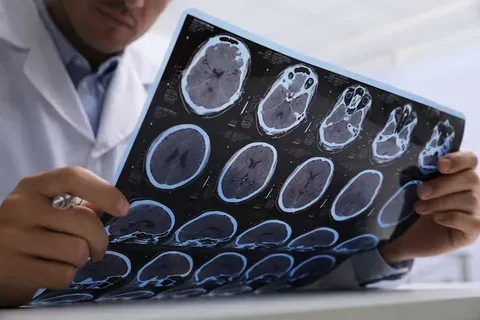
  • Progression: In this stage, the disease worsens steadily, with or without occasional relapses.
  • Mechanism: The inflammation seen in RRMS becomes less pronounced, while neurodegeneration (nerve damage) becomes more dominant.
  • Changes: Remissions become less distinct, and disability accumulates more gradually over time.
  • Management: Treatment goals shift from preventing relapses to slowing the progression of disability.

The Pathophysiology of Demyelination

image 2 21 LIV Hospital

Understanding the Myelin Sheath

To understand MS, it helps to know how nerve cells work. The axon is the long part of a nerve cell that carries signals from the cell body to other cells. Myelin is a fatty layer that covers and protects these axons, much like insulation on an electrical wire.

  • Function: Myelin allows electrical impulses to transmit quickly and efficiently along the nerve cells.
  • The Attack: In MS, T cells (a type of white blood cell) cross the blood-brain barrier and attack the myelin.
  • Inflammation: This attack causes inflammation and destroys the myelin and the cells that produce it (oligodendrocytes).
  • Disruption: When myelin is damaged, the nerve signals slow down, become distorted, or stop altogether.

The Formation of Plaques

When the inflammation goes down, the body tries to fix the damage. Often, this leads to scar tissue forming, called lesions or plaques.

  • Locations: These plaques can form anywhere in the CNS, including the brainstem, cerebellum, and spinal cord.
  • Sclerosis: The accumulation of this scar tissue is what gives the disease its name.
  • Axonal Loss: Over time, the nerve fiber itself may be damaged or destroyed, leading to permanent neurological deficits.

Primary Progressive MS (PPMS)

image 3 23 LIV Hospital

Primary Progressive MS is less common and affects about 10 to 15 percent of people with MS.

  • Onset: It is characterized by worsening neurologic function (accumulation of disability) from the very onset of symptoms, without early relapses or remissions.
  • Demographics: Diagnosed typically at a later age (usually around 40) compared to RRMS, and affects men and women more equally.
  • Lesions: People with PPMS tend to have fewer brain lesions but more spinal cord lesions than those with RRMS.
  • Activity: Sometimes the disease is stable for short periods, but overall, there is a slow decline in function.

Clinically Isolated Syndrome (CIS)

Clinically Isolated Syndrome is the first episode of neurologic symptoms caused by inflammation and demyelination in the central nervous system.

  • Criteria: The episode must last for at least 24 hours.
  • Significance: It is a potential precursor to MS, but not everyone with CIS goes on to develop MS.
  • Risk Evaluation: If MRI scans show brain lesions similar to those seen in MS, there is a high likelihood of a second episode and a future MS diagnosis.
  • Intervention: Early treatment of CIS with disease-modifying therapies may delay the onset of confirmed MS.

Epidemiology and Demographics

Knowing who is at risk for MS helps with early detection and planning care.

  • Geography: MS is more common in areas farther from the equator, suggesting a link to sunlight and Vitamin D.
  • Age: Most commonly diagnosed between the ages of 20 and 50, although it can occur in young children and older adults.
  • Gender: Women are two to three times more likely than men to develop relapsing-remitting MS.
  • Prevalence: More than 2.8 million people worldwide are estimated to have MS, making it the most common non-traumatic disabling disease in young adults.

The Central Nervous System Impact

MS is distinct because it affects the Central Nervous System (CNS) rather than the Peripheral Nervous System.

  • Brain: Lesions can affect cognition, memory, emotion, and balance.
  • Spinal Cord: Damage here disrupts signals to the limbs and internal organs, affecting walking, bladder control, and sexual function.
  • Optic Nerves: Inflammation here (optic neuritis) is often the first symptom, causing pain and vision loss.
  • Complexity: The wide variety of potential lesion sites explains why no two patients have identical symptoms.

Why Choose Liv Hospital

At Liv Hospital, we know that being diagnosed with Multiple Sclerosis changes your life and that you need a true partner in your care. Our Neurology Department focuses on demyelinating disorders and uses advanced technology to support you. We see MS as a complex condition that affects your body and mind in many ways. Our team of neurologists, physical therapists, and psychologists works together to create a care plan that fits your needs, so you get the most advanced and caring support possible.

30 Years of
Excellence

Trusted Worldwide

With patients from across the globe, we bring over three decades of medical

Book a Free Certified Online
Doctor Consultation

Clinics/branches

Was this article helpful?

Was this article helpful?

We're Here to Help.
Get in Touch.

Send us all your questions or requests, and our expert team will assist you.

Doctors

FREQUENTLY ASKED QUESTIONS

Is Multiple Sclerosis fatal?

MS is rarely fatal. Most people with MS live nearly as long as those without the disease. Complications can happen in severe cases, but they can usually be managed.

MS is not directly inherited, but genetics do play a part. If a close family member has MS, your risk is a bit higher, but it is not certain you will get it.

MS is an autoimmune disease that attacks myelin, while ALS is a neurodegenerative disease that attacks the motor neurons. They are different conditions.

There is no cure for MS right now. However, today’s treatments can slow the disease and help manage symptoms very effectively.

MS can affect things like memory and processing speed (sometimes called brain fog), but it usually does not change your overall intelligence or ability to read.


Spine Hospital of Louisiana

Let's Talk About Your Health

BUT WAIT, THERE'S MORE...

Leave your phone number and our medical team will call you back to discuss your healthcare needs and answer all your questions.

Let's Talk About Your Health

How helpful was it?

helpful
helpful
helpful
Your Comparison List (you must select at least 2 packages)