melanoma
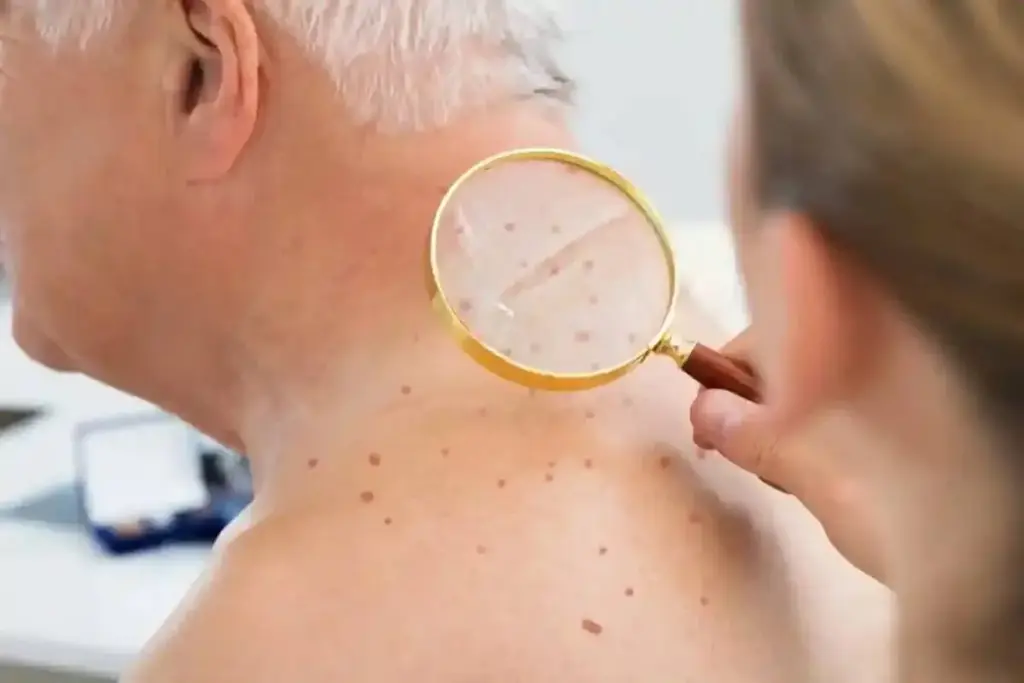
Skin cancer is a significant health concern. Early detection is key for effective treatment. Studies show that spotting signs of cancerous skin lesions can greatly improve survival rates.
It’s important to know the warning signs of skin cancer. A skin lesion could be a sign of cancer. Knowing what cancerous skin lesions look like helps people get medical help fast.
Being able to spot melanoma symptoms and other skin cancers can save lives. Knowing what to look for in a skin lesion can help protect your health.
Key Takeaways
- Early detection of skin cancer improves survival rates.
- Recognizing the signs of potentially cancerous skin lesions is vital.
- Awareness of skin cancer signs leads to timely medical help.
- Knowing what cancerous skin lesions look like helps get medical attention.
- Understanding melanoma symptoms can be lifesaving.
Understanding Skin Lesions
skin lesions
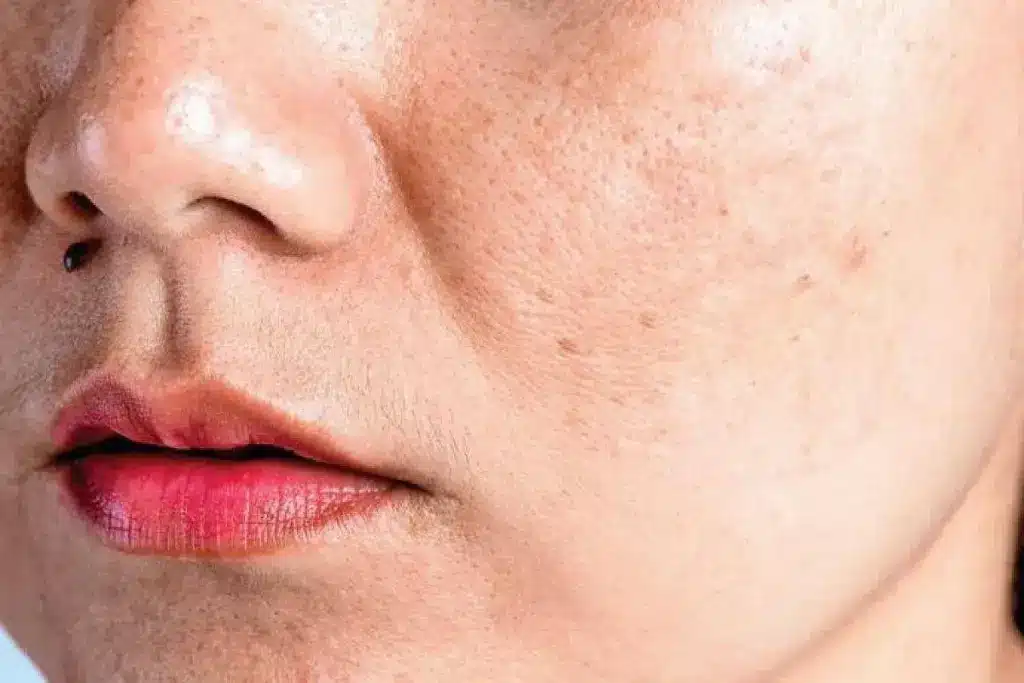
The skin is the body’s largest organ. Lesions on it can be caused by many things, from harmless to dangerous. It’s important to know what skin lesions are and how they look.
Definition and Types of Skin Lesions
Skin lesions are areas of skin that look different from the rest. They can be harmless or dangerous. Harmless ones are called benign, and dangerous ones are called malignant.
There are many types of skin lesions. These include:
- Moles
- Freckles
- Seborrheic keratoses
- Dermatofibromas
- Basal cell carcinoma
- Squamous cell carcinoma
- Melanoma
Normal vs. Abnormal Skin Growths

It’s important to know the difference between normal and abnormal skin growths. Normal growths are usually harmless and look the same all over. They might be moles or freckles.
Abnormal growths, on the other hand, could be a sign of skin cancer. They might look different in shape, color, or size. They might also change over time.
The American Academy of Dermatology says knowing these signs can help find skin cancer early.
“Early detection is key to treating skin cancer effectively. Understanding the signs and symptoms of skin lesions can help individuals seek medical attention when necessary.”
Here’s a table that shows the main differences between harmless and dangerous skin lesions:
|
Characteristics |
Benign Skin Lesions |
Malignant Skin Lesions |
|---|---|---|
|
Appearance |
Uniform color, regular shape |
Multiple colors, irregular shape |
|
Border |
Smooth, well-defined border |
Irregular, notched border |
|
Size |
Typically small |
Can be large, growing over time |
The ABCDE Rule for Identifying Melanoma
Edit
Full screen
Delete
asymmetry in melanoma
The ABCDE rule is a key tool for spotting melanoma, a serious skin cancer. It helps people find moles or lesions that might need a doctor’s check.
Asymmetry
Asymmetry is a big sign of melanoma. If a mole doesn’t look even, it could be a problem. Try drawing a line through the mole to see if both sides match.
Border Irregularity
A mole with a rough or uneven edge might be cancer. Normal moles have smooth edges.
Color Variation
Melanomas often have different colors or uneven color. Watch out for moles that don’t have the same color all over.
Diameter Concerns
Melanomas are usually bigger than normal moles. If a mole is as big as a pencil eraser, it’s worth checking.
|
ABCDE Rule Component |
Description |
Warning Signs |
|---|---|---|
|
Asymmetry |
Mole is not symmetrical |
One half doesn’t match the other |
|
Border Irregularity |
Edges are not smooth |
Notched, ragged, or blurred edges |
|
Color Variation |
Multiple colors present |
Uneven color distribution |
|
Diameter |
Mole is larger than 6mm |
Larger than a pencil eraser |
Using the ABCDE rule can help spot melanomas early. This makes it easier to treat them effectively.
Common Types of Skin Cancer
It’s key to know the different skin cancers to catch them early. Basal cell carcinoma, squamous cell carcinoma, and melanoma are the top ones.
Basal Cell Carcinoma
Basal cell carcinoma (BCC) is the most common skin cancer, making up about 80% of cases. It looks like a small, shiny bump or a pink patch, usually on sun-exposed areas like the face and neck. BCC is rarely fatal but can cause a lot of damage if not treated.
Squamous Cell Carcinoma
Squamous cell carcinoma (SCC) is the second most common skin cancer. It starts in the outer skin layer and looks like a firm, red nodule or a flat sore with a scaly crust. SCC can show up on sun-exposed areas and other parts of the body. SCC is more likely to spread than BCC, so getting it treated quickly is important.
Melanoma: The Most Dangerous Form
Melanoma is the most dangerous skin cancer because it can spread easily. It starts in the cells that make pigment. Melanoma can appear anywhere on the body, even in places not exposed to the sun. Early detection is key because melanoma can be deadly if it spreads. Spotting changes in a mole’s size, shape, or color is vital for treatment.
These three types of skin cancer show why sun protection, regular skin checks, and knowing the warning signs are so important. By understanding basal cell carcinoma, squamous cell carcinoma, and melanoma, we can catch them early and treat them effectively.
Warning Signs of Basal Cell Carcinoma
Edit
Full screen
Delete
Basal cell carcinoma warning signs
Knowing the warning signs of basal cell carcinoma is key for early detection and treatment. This type of skin cancer is the most common. It has specific signs that can be spotted with a closer look.
Physical Appearance and Characteristics
Basal cell carcinoma looks like a shiny bump or a pink patch on the skin. These spots are often painless but can bleed or ooze. Sometimes, they might look like a scar or an open sore that won’t heal.
Common Locations on the Body
Basal cell carcinoma often shows up on sun-exposed areas like the face, ears, neck, and hands. These spots get more UV radiation, raising the risk of skin cancer. Checking these areas regularly can help catch it early.
Knowing the signs and where basal cell carcinoma often appears can help with treatment. If you see any unusual skin changes, see a dermatologist right away.
Warning Signs of Squamous Cell Carcinoma
Edit
Full screen
Delete
Squamous Cell Carcinoma Warning Signs
It’s important to know the warning signs of Squamous Cell Carcinoma for early detection and treatment. This type of skin cancer starts in the squamous cells. These are flat, thin cells on the outer skin layer.
Physical Appearance and Characteristics
SCC can look different, but it often shows up as a firm, red nodule or a flat sore with a scaly crust. These spots can be sore and might bleed. It’s key to watch for any new or changing skin growths.
The look of SCC can change, but it often has these traits:
- A persistent, rough patch on the skin
- A growing lump or bump
- A sore that doesn’t heal
Common Locations on the Body
Squamous Cell Carcinoma often pops up in sun-exposed areas like:
- The face, specially the nose, ears, and lips
- The neck and hands
- The scalp, mainly in people with balding or thinning hair
Knowing these common spots and what SCC looks like can help spot warning signs early. This makes it easier to get medical help and treatment on time.
Melanoma: Recognizing the Deadliest Form of Skin Cancer
Edit
Full screen
Delete
melanoma high-risk areas
Melanoma is a deadly skin cancer that needs to be caught early. It comes from melanocytes, the cells that make our skin color. Knowing the types of melanoma and where it often appears can help a lot.
Types of Melanoma
There are many types of melanoma, each with its own traits. The most common ones are:
- Superficial Spreading Melanoma: This is the most common type. It starts growing in a certain way before it goes deeper.
- Nodular Melanoma: This type grows straight down from the start. It’s dangerous because it can quickly spread deeper.
- Lentigo Maligna Melanoma: This type is more common in older people. It starts from a condition called lentigo maligna.
- Acral Lentiginous Melanoma: This rare type appears on palms, soles, or under nails. It’s not caused by sun exposure.
Each type needs a specific treatment plan. This shows how important it is to get the right diagnosis.
High-Risk Areas on the Body
Melanoma can happen anywhere, but some places are riskier. This is because of sun exposure. The riskiest areas are:
|
Area |
Risk Factor |
Prevalence |
|---|---|---|
|
Back |
Sun exposure, mostly for people with fair skin |
High |
|
Legs |
UV radiation exposure |
Moderate to High |
|
Face |
Cumulative sun exposure |
High |
|
Scalp |
UV exposure, often hidden from self-examination |
Moderate |
Knowing these high-risk areas helps people check their skin better. This can lead to finding melanoma early.
Early detection is key in fighting melanoma. By knowing the types and watching high-risk areas, people can greatly improve their survival chances.
Non-Melanoma Skin Cancers and Their Signs
Edit
Full screen
Delete
non-melanoma skin cancers
Non-melanoma skin cancers include Merkel cell carcinoma and other rare types. Each has its own unique features.
Melanoma is a dangerous skin cancer, but non-melanoma types are more common. Knowing about these cancers helps catch them early and treat them well.
Merkel Cell Carcinoma
Merkel cell carcinoma is a rare and aggressive skin cancer. It starts in Merkel cells, which are in the skin’s top layer. These cells help us feel touch.
Signs and Symptoms: This cancer shows up as a firm, painless bump on sun-exposed areas. It can grow fast and may be red, purple, or the same color as the skin.
Rare Forms of Skin Cancer
There are other rare skin cancers too, like:
- Sebaceous gland carcinoma: A rare cancer of the sebaceous glands, which are linked to hair follicles.
- Dermatofibrosarcoma protuberans (DFSP): A rare tumor in the deep skin layers.
- Angiosarcoma: A rare cancer from the lining of blood vessels.
These cancers are hard to spot because they’re rare and can look different.
|
Type of Skin Cancer |
Common Locations |
Characteristics |
|---|---|---|
|
Merkel Cell Carcinoma |
Sun-exposed areas (face, neck, arms) |
Firm, painless nodule; can be red, purple, or skin-colored |
|
Sebaceous Gland Carcinoma |
Areas with sebaceous glands (eyelids, face) |
Often appears as a firm nodule or eyelid mass |
|
Dermatofibrosarcoma Protuberans (DFSP) |
Trunk, limbs, or head |
Slow-growing, firm plaque or nodule in the skin |
Finding these rare cancers early is key to good treatment. Regular skin checks and knowing the signs can really help.
Precancerous Skin Conditions
It’s important to know about precancerous skin conditions to catch skin cancer early. These conditions show abnormal cell growths. They can turn into cancer if not treated right.
Actinic Keratosis
Actinic keratosis happens when you’re exposed to UV radiation for a long time. It shows up as rough, scaly patches on sun-exposed areas like the face, ears, and hands.
Characteristics and Risks: These patches can be different sizes and colors. Even though they’re not cancerous themselves, they can turn into squamous cell carcinoma if not treated.
Dysplastic Nevi (Atypical Moles)
Dysplastic nevi, or atypical moles, are moles that look different. They can be a sign of a higher risk for melanoma. They often have irregular shapes and colors.
Importance of Monitoring: It’s key to watch these moles closely. Any changes in their look could mean melanoma is developing.
|
Condition |
Characteristics |
Risks |
|---|---|---|
|
Actinic Keratosis |
Rough, scaly patches; often on sun-exposed areas |
Can develop into squamous cell carcinoma |
|
Dysplastic Nevi (Atypical Moles) |
Irregular shapes and colors; can be larger than normal moles |
Increased risk of melanoma |
Spotting and treating these conditions early can lower the chance of getting skin cancer. It’s a good idea to get regular skin checks and talk to a dermatologist if you’ve had these conditions before.
Risk Factors for Developing Skin Cancer
Several factors can increase your chance of getting skin cancer. These include UV radiation and your genes. Knowing these risks helps prevent and catch skin cancer early.
UV Exposure and Sunburn History
UV radiation from the sun or tanning beds is a big risk for skin cancer. Getting sunburned, even as a kid, raises your risk. The Canadian Cancer Society says UV exposure is a key risk for melanoma, the deadliest skin cancer type.
Reducing UV Exposure: Using sunscreen, wearing protective clothes, and staying in the shade can lower your risk of skin cancer.
Genetic Predisposition
Genetics also matter when it comes to skin cancer risk. If your family has a history of skin cancer, you’re at higher risk. Conditions like albinism and xeroderma pigmentosum also raise your risk.
Knowing your family history helps you take steps to prevent skin cancer and get checked regularly.
Other Contributing Factors
Other things can also increase your risk of skin cancer. These include having fair skin, light hair, and light eyes. Also, having many moles or unusual moles, a weak immune system, exposure to chemicals like arsenic, and past radiation therapy are risks.
- Fair skin, light hair, and light eyes
- Multiple or atypical moles
- Weakened immune system
- Exposure to certain chemicals
- Previous radiation therapy
By knowing these risk factors, you can take steps to lower your chance of getting skin cancer.
When to See a Dermatologist
Knowing when to see a dermatologist is key for early skin cancer detection and treatment. Regular visits and being alert to urgent signs are vital for skin health.
Urgent Warning Signs
Some signs mean you should see a dermatologist right away. These include:
- A new mole or lesion that is growing or changing in appearance
- A sore that doesn’t heal within a few weeks
- A spot or lesion that is bleeding, oozing, or crusting
- A mole or lesion that is asymmetrical, has an irregular border, or is multicolored
If you see any of these signs, it’s important to schedule a skin exam quickly.
Regular Skin Check Recommendations
Regular skin checks are key for catching skin cancer early. How often you need them depends on your risk factors. These include sun exposure, family history, and precancerous conditions.
High-risk individuals should get a skin check at least once a year. Those at lower risk might need checks every 2-3 years.
A dermatologist will carefully check your skin for any unusual spots or changes during an exam. They might also use dermoscopy to examine any suspicious areas closely.
The Diagnostic Process for Suspicious Skin Lesions
Checking out suspicious skin lesions is key to finding and treating skin cancer early. It combines different methods to figure out what the lesion is.
Visual Examination Techniques
First, doctors look at the skin lesion. They check its size, shape, and color. They look for signs of cancer like uneven shapes and colors.
Key aspects examined visually include:
- Asymmetry: Lesions that are not symmetrical may be cancerous.
- Border: Irregular, notched, or scalloped borders can be a warning sign.
- Color: Variations in color or an unusual color can indicate cancer.
- Diameter: Lesions larger than 6mm in diameter are more likely to be cancerous.
Dermoscopy and Imaging
Dermoscopy is a tool that lets doctors see more of the skin. It uses a special microscope to look at the skin in detail. This helps doctors find skin cancer early.
Advanced imaging techniques may also be used, including:
- Confocal microscopy: Provides high-resolution images of the skin.
- Sequential digital dermoscopy: Monitors changes in lesions over time.
Biopsy Procedures
If a lesion looks suspicious, a biopsy might be needed. This means taking a piece of tissue from the lesion for a closer look.
Types of biopsy procedures include:
- Shave biopsy: Removes the top layers of the skin.
- Punch biopsy: Removes a deeper sample of skin.
- Excisional biopsy: Removes the entire lesion.
The type of biopsy depends on the size, location, and what the doctor thinks it might be.
Treatment Options for Cancerous Skin Lesions
Treating cancerous skin lesions involves many approaches. These include surgery, non-surgical treatments, and advanced therapies. The right treatment depends on the cancer type, stage, and location. It also depends on the patient’s health.
Surgical Approaches
Surgery is often the first choice for treating skin cancer. There are several surgical methods:
- Excision: This involves removing the cancerous area and some healthy skin around it.
- Mohs Surgery: It’s a detailed method where tissue is removed layer by layer. Each layer is checked under a microscope until no cancer is found.
- Curettage and Electrodessication: This method uses a curette to scrape away the cancerous tissue. Then, an electric current is applied to kill any remaining cancer cells.
Non-Surgical Treatments
For some skin cancers, or when surgery is not preferred, non-surgical treatments work well. These include:
- Cryotherapy: This freezes the cancerous cells, causing them to die.
- Topical Treatments: Creams or gels are applied directly to the skin lesion. They can stimulate the immune system or directly kill cancer cells.
- Photodynamic Therapy: A light-sensitive medication is used with a specific light wavelength to destroy cancer cells.
Advanced Therapies for Melanoma
For melanoma, the deadliest skin cancer, new therapies offer hope. These include:
- Immunotherapy: This boosts the body’s immune system to fight cancer cells more effectively.
- Targeted Therapy: Drugs target specific cancer cell characteristics, like genetic mutations.
Here’s a summary of the treatment options in a tabular form:
|
Treatment Type |
Description |
Common Use |
|---|---|---|
|
Surgical Excision |
Removing the lesion with a margin of healthy skin |
Basal Cell Carcinoma, Squamous Cell Carcinoma |
|
Mohs Surgery |
Layer-by-layer removal and examination of cancerous tissue |
Basal Cell Carcinoma, Squamous Cell Carcinoma |
|
Cryotherapy |
Freezing cancerous cells with liquid nitrogen |
Precancerous lesions, early-stage skin cancers |
|
Immunotherapy |
Boosting the immune system to fight cancer |
Advanced Melanoma |
Preventing Skin Cancer
To lower the risk of skin cancer, it’s key to add sun safety to your daily routine and live a healthy lifestyle. Knowing the dangers of UV rays and taking steps to protect yourself can greatly lower your risk of skin cancer.
Sun Protection Strategies
Protecting yourself from the sun is the best way to fight skin cancer. Use a broad-spectrum sunscreen with SPF 30 or higher, wear protective clothes, and stay in the shade, mainly between 10 AM and 4 PM.
Key Sun Protection Tips:
- Apply sunscreen 15-30 minutes before going outside and reapply every two hours or after swimming or sweating.
- Wear clothes that cover your arms and legs, and a wide-brimmed hat to protect your face and neck.
- Use sunglasses that wrap around the sides of your face to protect your eyes and the skin around them.
Lifestyle Modifications
Changing your lifestyle can also help prevent skin cancer. Stay away from tanning beds, know your family’s skin cancer history, and don’t smoke.
“The risk of skin cancer can be significantly reduced by making informed choices about sun exposure and overall lifestyle.”
Additional Lifestyle Tips:
- Avoid tanning beds and artificial UV radiation sources.
- Be aware of your skin type and family history regarding skin cancer.
- Maintain a healthy diet rich in fruits, vegetables, and omega-3 fatty acids.
By using these sun protection tips and making lifestyle changes, you can lower your risk of skin cancer.
Self-Examination Techniques
Learning how to do self-exams is important for spotting skin cancer risks. Doing regular self-exams can lead to catching skin cancer early. This makes treatment more effective.
Step-by-Step Skin Check Guide
To do a good self-exam, follow these steps:
- Stand in front of a full-length mirror and examine your body from head to toe.
- Use a hand-held mirror to check areas that are hard to see, such as the back of your neck and your scalp.
- Check your skin for any new or changing lesions, paying particular attention to the ABCDE rule (Asymmetry, Border irregularity, Color variation, Diameter, Evolving).
- Document all moles and lesions, noting their size, shape, color, and location.
It’s important to be thorough and check all areas of your body, including often-overlooked areas like the soles of your feet and the palms of your hands.
Documenting Changes
Keeping track of changes in your skin lesions is key for early skin cancer detection. Use a journal or a mobile app to note any changes in size, color, or shape. Consistency is key in self-exams and tracking changes.
“The best way to detect skin cancer early is through a combination of regular self-examinations and professional skin checks.”
Being proactive about your skin health can greatly improve your chances of catching skin cancer early. This makes treatment more effective.
Recent Advances in Skin Cancer Detection
AI, machine learning, and mobile tech are changing how we find and treat skin cancer. These new tools make finding skin cancer faster and more accurate. This leads to better care for patients.
AI and Machine Learning Applications
AI and machine learning are big in dermatology now. AI algorithms can look at skin images and spot cancer early. This helps doctors catch melanomas before they grow.
Machine learning gets smarter over time by learning from lots of images. It finds patterns in skin cancer images. This helps doctors know what to look for.
Mobile Technology for Early Detection
Mobile tech is also key in finding skin cancer early. Mobile apps help users watch their skin for changes. They warn about possible skin cancers.
These apps use AI to check images and give advice. They tell users if they should see a doctor. This helps people get checked sooner.
Using AI, machine learning, and mobile tech is a big step forward. It helps doctors find skin cancer faster. This saves lives and improves care.
Conclusion
Knowing the signs of skin cancer and taking care of your skin can make a big difference. By spotting warning signs early and taking steps to prevent them, you can lower your risk of getting skin cancer.
Early detection is key in fighting skin cancer. Regular self-checks and yearly visits to the dermatologist can catch problems early. Learning about skin cancer and protecting your skin from the sun are important steps to prevent it.
By knowing what to do and doing it, you can manage your skin health. This means knowing the ABCDE rule for melanoma, understanding different skin cancers, and knowing when to see a doctor.
Spreading the word about skin cancer and encouraging early detection can lead to better health. By staying alert and taking action, you can keep your skin healthy and lower your risk of skin cancer.
FAQ
What are the common signs of skin cancer?
Signs of skin cancer include new moles or changes in existing ones. Also, sores that don’t heal and lesions with odd shapes or colors. Basal cell carcinoma looks like a shiny bump. Squamous cell carcinoma is a firm, red nodule.
How can I identify a potentially cancerous skin lesion using the ABCDE rule?
The ABCDE rule helps spot melanomas. It stands for Asymmetry, Border irregularity, Color variation, Diameter larger than a pencil eraser, and Evolving size, shape, or color. If a lesion shows these signs, see a dermatologist.
What are the risk factors for developing skin cancer?
Skin cancer risk factors include UV exposure and sunburns. Fair skin and family history of skin cancer also increase risk. Age, weakened immune system, and certain chemicals play a role too.
What is the difference between basal cell carcinoma and melanoma?
Basal cell carcinoma is common and grows slowly. Melanoma is dangerous and spreads fast. It’s important to know the difference.
How often should I have a skin check?
Get a skin check every year. More often if you have a history of skin cancer or many moles. A dermatologist can give personalized advice.
Can skin cancer be prevented?
Yes, prevent skin cancer by protecting your skin from the sun. Use sunscreen, wear protective clothes, and stay in the shade. Avoid tanning beds and stay out of the sun during peak hours.
What are the treatment options for skin cancer?
Treatments vary based on the cancer type, stage, and location. They include surgery, creams, and immunotherapy for melanoma.
How can AI and machine learning aid in skin cancer detection?
AI and machine learning analyze skin images for cancer. They help find cancer early and improve diagnosis accuracy. Dermatologists use these tools to assess skin lesions.
What is the importance of self-examination in skin cancer detection?
Self-examination is key for early skin cancer detection. Check your skin for new or changing lesions. Document any changes to spot issues early and improve treatment chances.
Are there any precancerous skin conditions I should be aware of?
Yes, watch out for actinic keratosis and dysplastic nevi. These can turn into skin cancer if not treated. It’s important to monitor and treat them.
References
National Center for Biotechnology Information. Evidence-Based Medical Insight. Retrieved from https://pubmed.ncbi.nlm.nih.gov/33596502/