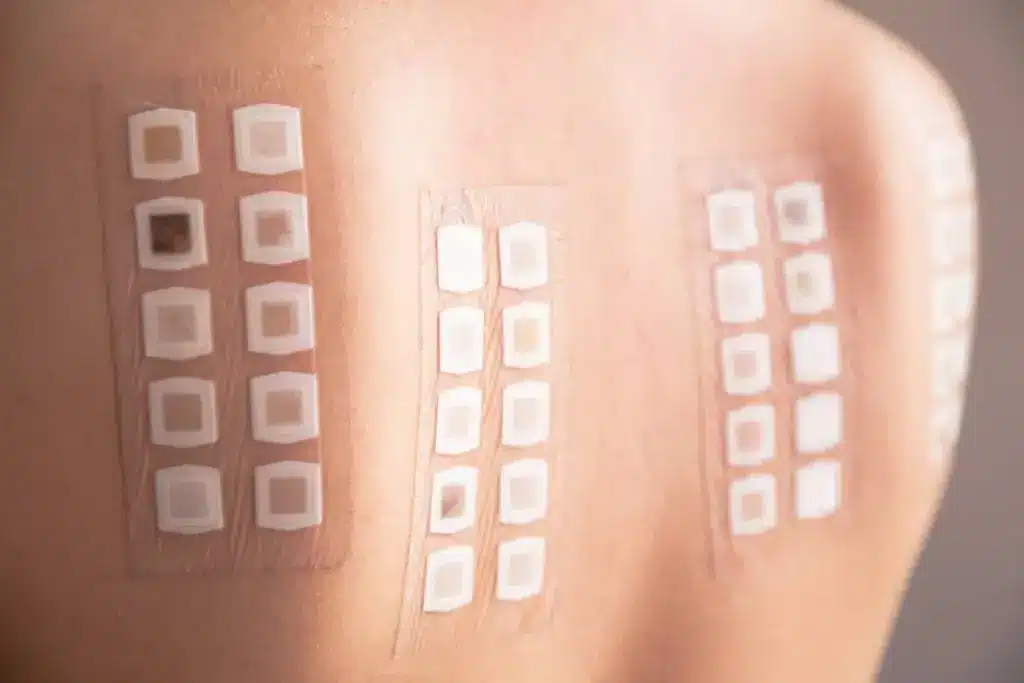
Nearly 20% of Americans have skin sensitivity or allergic reactions to skincare or cosmetics. It’s key to know why a skin sensitivity test is important.Explaining which part of the body is best for a patch test (the upper back) and why this site is chosen for the procedure.
A skin patch test is a simple way to check if a product is safe for your skin. But, the results depend on where you do the test.
Choosing the right spot for a patch test can make a big difference. This article will show you the best ways for patch testing dermatology. It will also teach you how to patch test skincare products right.
Key Takeaways
- Understanding the importance of a skin patch test for skincare and cosmetics.
- Identifying the most suitable body part for accurate patch test results.
- Learning how to conduct a patch test effectively.
- Recognizing the role of patch testing in dermatology.
- Applying the knowledge to ensure safe use of skincare products.
What You Need to Know About Patch Tests

Patch testing has been key in finding out about skin allergies for decades. It has become more precise over time. Now, it helps spot skin allergies and sensitivities well.
Definition and Purpose
Patch testing is a diagnostic procedure. It involves putting small amounts of possible allergens on the skin. This is to see if there are any bad reactions.
The main goal is to find out what causes skin problems. This way, people can stay away from these things in their daily lives.
The True Test patch test is a well-known method. It uses a set of common allergens. Dermatologists like it because it’s reliable and easy to use.
History and Development of Patch Testing
Patch testing started in the early 20th century. Dermatologists were trying to figure out how to diagnose skin allergies back then. The method has changed a lot over the years.
The True Test patch test system was a big step forward. It made diagnosing allergic contact dermatitis easier and more consistent.
Today, patch testing is very important in dermatology. It helps doctors diagnose and treat skin problems. As skincare and product testing keep getting better, patch testing stays a key tool. It makes sure products are safe for different skin types.
Types of Patch Tests Used in Dermatology

It’s key to know about the different patch tests for skin allergies. Patch testing is a vital tool in dermatology. It helps doctors find out what’s causing skin reactions.
True Test Patch Test Systems
The True Test is a common patch test system. It has many allergens linked to contact dermatitis. It’s easy to use and comes with a set of standard allergens.
Customized Allergen Panels
For those with unique allergies, customized allergen panels are a good choice. They’re made based on your job, hobbies, or skin issues. This gives a more precise look at what might be causing problems.
At-Home vs. Clinical Patch Tests
There are patch tests you can do at home and in a doctor’s office. At-home tests are easy and convenient. They let you test for allergens in your own space. But, clinical patch tests done by doctors are more detailed and accurate. They check a wider range of allergens and are interpreted by experts.
Choosing between at-home and clinical tests depends on your needs and skin condition. At-home tests are good for first checks. But, clinical tests are the best for getting a clear diagnosis and treatment plan.
Factors That Influence Patch Test Locations
Choosing the right spot for a patch test is key to getting accurate results. The skin’s sensitivity changes from one body part to another. This means some spots are better for patch testing than others.
Skin Sensitivity Variations Across the Body
The skin’s sensitivity isn’t the same everywhere. Skin thickness, nerve endings, and environmental exposure all play a role. For example:
- The back is often chosen for patch testing because it’s flat and not too sensitive.
- The inner arm is great for at-home tests because it’s easy to get to and sensitive.
- The face and neck are very sensitive and might react differently to allergens.
Accessibility and Visibility Considerations
When picking a spot for a patch test, think about how easy it is to get to and see. The area should be simple to reach and not get in the way of daily tasks. For example:
- The upper back is a top choice for doctor’s office tests because it’s easy to get to and not easily irritated.
- The inner arm, like the inner elbow, is good for both doctor’s office and at-home tests because it’s easy to access.
Impact of Daily Activities on Test Sites
Daily activities can mess with patch test results. Areas that get a lot of friction, moisture, or irritation might not give accurate results. For example:
- The inner wrist is often used for at-home tests, but it can get irritated from watch straps or jewelry.
- Places like the waistline or under the breasts can get wet, which might affect test results.
Knowing these factors helps people pick the best spot for their patch tests. This way, they can get more accurate and reliable results.
The Back: Gold Standard for Clinical Patch Tests
Edit
Full screen
Delete
patch testing on the back
The back is the top choice for clinical patch tests. It’s perfect for patch testing dermatology because of its unique features.
Upper Back Advantages for Allergen Testing
The upper back is great for dermatologist patch tests. Its flat surface makes it easy to apply many patches. This keeps the test areas safe from daily activities.
It also has less skin irritation. This lowers the chance of getting false-positive results. It makes it easier to understand the patch test procedure results.
Another plus is how easy it is to apply and check the patches. Dermatologists can do this accurately. This is key for patch testing for allergies.
Application Techniques Used by Dermatologists
Dermatologists use special ways to put on patch tests on the upper back. They clean the skin first to make sure the patches stick well. Then, they apply the patches in rows to keep track of each allergen.
This careful patch test procedure helps avoid mistakes. It ensures the results are reliable.
They also space the patches right to avoid any mix-ups. This careful planning is vital for correct test results. It helps dermatologists find out what’s causing the reactions.
In short, the upper back is the best spot for patch tests. Knowing why and how it’s done helps patients see how important it is. It’s a key tool for managing allergies and skin issues.
Inner Arm Testing: Popular for At-Home Patch Tests
Edit
Full screen
Delete
patch test on inner arm
The inner arm is a favorite spot for at-home patch tests. It’s easy to reach and has thin skin.
Many people use the inner arm to test new skincare products. They do this to see how their skin reacts without going to a doctor.
Antecubital Fossa (Inner Elbow) Testing
The inner elbow, or antecubital fossa, is a sensitive spot for patch tests.
It’s picked for its thin skin. This makes it good for showing how the skin reacts to new things.
Key considerations for antecubital fossa testing include:
- The area is generally more sensitive than other parts of the arm.
- It’s relatively protected from environmental irritants.
- The skin here can be more prone to reactions due to its thinner nature.
Forearm Testing Procedures
Forearm testing is another common method for at-home patch tests.
This area is good because it’s flat. This makes it easy to apply patch tests.
|
Testing Location |
Skin Sensitivity |
Ease of Access |
|---|---|---|
|
Antecubital Fossa |
High |
Easy |
|
Forearm |
Moderate |
Very Easy |
When doing patch tests on the inner arm, it’s important to follow the right steps. This ensures you get accurate results.
This means getting the skin ready, applying the test right, and watching for reactions. Do this for the time suggested.
Behind the Ear: Ideal for Cosmetics and Fragrances
Edit
Full screen
Delete
patch testing behind the ear
The skin behind the ear is very sensitive. It’s perfect for testing skin care products. This spot is often used for patch testing cosmetics and fragrances because it’s so sensitive.
Sensitivity Profile of Retroauricular Skin
The skin behind the ear is special for testing. Its thin skin and lots of sebaceous glands make it sensitive. This lets us see if a product might cause an allergic reaction.
- This area is more sensitive than other parts of the body. It’s great for finding small reactions.
- The skin here is thin, which helps substances get in easily.
- The sebaceous glands help keep the skin moist. This affects how products work on the skin.
Testing Methods for Perfumes and Earrings
Testing perfumes and earrings behind the ear needs special methods. Perfume testing means putting a small amount on the skin and watching for reactions.
- Put the perfume or earring material on the skin behind the ear with a patch test chamber or filter paper.
- Use hypoallergenic tape to keep the patch in place.
- Watch for signs of irritation or allergic reaction, like redness or swelling, for 48 to 72 hours.
For earrings, you can apply the material directly or use a patch test. This checks if the metal or other parts cause an allergic reaction.
Using the skin behind the ear for patch testing helps people find out if they’re allergic to certain cosmetics and fragrances. It’s a way to avoid bad reactions.
Inner Wrist: Convenient but Potentially Problematic
The inner wrist is easy to use for patch tests, but it has its downsides. It’s chosen often for at-home tests because it’s easy to reach and has thin skin.
Benefits of Wrist Accessibility
The inner wrist is great for patch tests. It’s easy to apply and check on tests without help. The skin here is thin, making it more sensitive to allergens and irritants. This sensitivity helps when testing for mild allergens or irritants.
Also, the inner wrist is less affected by the environment. It’s not exposed to sunlight or extreme temperatures, which can mess with test results. This makes it a good place for testing.
Limitations and False Results Concerns
Despite its benefits, the inner wrist has its drawbacks. One big issue is the risk of false results due to skin irritation. The skin here can get irritated from tight clothes or accessories, causing friction and irritation.
This irritation might be mistaken for a positive test result, leading to wrong conclusions about sensitivity to substances. To avoid this, make sure the skin on your inner wrist is healthy and not irritated before doing a patch test.
|
Location |
Sensitivity |
Accessibility |
False Results Risk |
|---|---|---|---|
|
Inner Wrist |
High |
Easy |
Moderate |
|
Upper Back |
High |
Moderate |
Low |
|
Behind the Ear |
Moderate |
Difficult |
Low |
When looking at patch test results on the inner wrist, consider your skin’s condition and any factors that might have affected the test. Knowing the patch testing process well can help get accurate results.
Facial Adjacent Areas: Jawline and Neck Testing
The jawline and neck are great for testing facial products. They help see how skin reacts without being too obvious. These spots are key for checking if facial skincare works well.
Relevance for Facial Product Testing
Testing on the jawline and neck is smart. These spots are less noticeable, perfect for face product tests. The skin here is often as sensitive as facial skin, showing how you might react to a product.
Key benefits of testing on the jawline and neck include:
- Similarity in skin type to facial skin
- Discreet testing, reducing visibility of test sites
- Ability to assess product compatibility before use on the face
Techniques to Minimize Visible Reactions
To avoid visible signs when testing, follow certain steps. Use a small amount of product and make sure the area is clean and dry. Watch the test site closely for any bad reactions.
Tips for minimizing reactions include:
- Choose a small, inconspicuous area for the patch test
- Apply a minimal amount of product to reduce irritation risk
- Keep the test area clean and dry
By using these methods, you can test facial products on the jawline and neck. This way, you learn about product compatibility without worrying about visible side effects.
Alternative Patch Test Locations
For those with certain skin conditions, there are other places to do patch tests. While the back is the usual spot, other areas can also show how the skin reacts. This helps find out what might cause an allergic reaction.
Inner Thigh Testing Benefits
The inner thigh is a good spot for patch tests, even for those with back issues. The skin here is thin and sensitive, making it great for spotting reactions to allergens or irritants.
Testing the inner thigh can give insights into skin sensitivity and allergies. It’s perfect for checking personal care or hygiene products. This is because it’s where these products are usually used.
Chest and Abdomen Considerations
The chest and abdomen can also work for patch tests, but they come with some issues. The skin here can get irritated easily because of clothes and the environment.
When testing these areas, it’s important to watch out for false positives or irritation from outside factors. Make sure to prepare and monitor the test site carefully to get accurate results.
Ankle and Foot Testing Applications
Testing the ankle and foot is not common but can be useful for certain things. The skin here is thicker than in other spots, which might change how sensitive the test is.
Even with these differences, testing the ankle and foot can be helpful. It’s good for people who get skin reactions from shoes or products on their lower legs and feet.
How to Properly Conduct a Patch Test
Doing a patch test right is key. It starts with getting ready and watching for reactions. You need to follow a clear plan to get good results.
Skin Preparation Steps
Before you start, make sure your skin is ready. This means:
- Cleaning the area with mild soap and water
- Drying it well
- Not using lotions, creams, or oils on the test site
- Not bathing or showering before the test
Getting your skin ready is important. It helps avoid messing up the test.
Application Techniques
How you apply the test matters a lot. Keep these tips in mind:
- Put the test on a hidden spot, like the inner arm or behind the ear.
- Use just a little bit of the product or allergen.
- Make sure the patch sticks well but not too hard.
Remember to always follow the directions for the specific test you’re using.
Monitoring Timeline
Watching the test site is very important. You should:
- Check it after 48 hours
- Look at it again after 72 or 96 hours
- Write down any signs of reaction, like redness or itching
Watching closely helps spot any problems.
By following these steps and keeping a clear record of what you see, you can do a patch test well. This helps you choose the right skincare products.
Interpreting Your Patch Test Results
Understanding patch test results is vital to know if you have an allergic reaction or irritation. It’s about knowing how your skin reacts to different things. And figuring out if it’s an allergy or just irritation.
Positive Reaction Identification
A positive patch test shows as redness, swelling, or blisters. The reaction can be mild or very severe. Knowing what caused the reaction helps avoid it in the future.
Distinguishing Irritation from Allergic Response
Telling irritation from an allergy is key. Irritation is usually mild and stays in one spot. Allergic reactions are stronger and can spread. Knowing the difference is important for a correct diagnosis.
Grading Systems Used by Dermatologists
Dermatologists use grading to measure how severe a reaction is. The International Contact Dermatitis Research Group (ICDRG) scale is one they use. It goes from negative to very positive. Here’s a simple version of that scale:
|
Grade |
Description |
|---|---|
|
– |
Negative |
|
+/- |
Doubtful |
|
+ |
Weak Positive |
|
++ |
Strong Positive |
|
+++ |
Extreme Positive |
Using these grading systems helps doctors give the right advice and treatment for allergies.
Allergic Reactions to Patch Tests
Patch testing is usually safe but can cause allergic reactions in some people. These reactions can be uncomfortable and even lead to serious skin problems. This is a big worry for those getting dermatology patch tests.
Common Symptoms and Management
Signs of an allergic reaction include redness, itching, swelling, and blisters at the test site. Sometimes, the reaction can get very bad, causing widespread skin irritation. To manage this, you should remove the patch, apply topical corticosteroids, and use cold compresses to ease itching and discomfort.
Effective management strategies include:
- Monitoring the test site closely for signs of reaction
- Keeping the test area clean and dry
- Avoiding scratching or rubbing the affected area
The following table summarizes the common symptoms and management strategies for allergic reactions to patch tests:
|
Symptom |
Management Strategy |
|---|---|
|
Redness and Itching |
Topical corticosteroids, cold compresses |
|
Swelling |
Elevation of the affected area, topical corticosteroids |
|
Blistering |
Avoiding further irritation, topical antibiotics if necessary |
When to Seek Medical Attention
If the allergic reaction is severe, widespread, or comes with other symptoms like fever or trouble breathing, get medical help right away. A doctor can guide you on the right treatment and help avoid long-term skin damage.
Signs that require immediate medical attention include:
- Increasing severity of symptoms
- Spread of the reaction beyond the test site
- Difficulty breathing or swallowing
Knowing the risks and taking the right precautions can help avoid allergic reactions to patch tests. This ensures a safe testing process for everyone.
Patch Test Accuracy by Body Location
The accuracy of patch tests changes based on where on the body they are done. This is because different parts of the body have different skin types and are exposed to different things.
It’s important to know these differences to understand patch test results. Studies have found that some body parts are better for patch testing than others.
Comparative Sensitivity Rates
The back, and more precisely the upper back, is the best place for patch testing. This is because it is very sensitive (Source). Other areas, like the inner wrist, might not give as good results because of how thick the skin is and how much it’s exposed to the environment.
A study looked at how sensitive different body parts are and found:
- The upper back is 80% sensitive.
- The inner arm is 65% sensitive.
- The inner wrist is only 40% sensitive.
This shows why picking the right spot for patch testing is key to getting accurate results.
Factors Affecting Reliability
Many things can make patch test results less reliable. These include how sensitive the skin is, how thick it is, and what it’s exposed to. For example, the inner wrist has thinner skin and is more likely to react, leading to false positives.
“Choosing the right spot for patch testing is vital for accurate diagnosis and treatment. Dermatologists need to think about skin sensitivity and daily exposure to get reliable results.”
By knowing these factors and picking the right spot, doctors can make patch tests more accurate. This helps them give better treatment plans to patients.
When to Consult a Dermatologist for Professional Patch Testing
If you’re dealing with skin reactions or allergies, knowing when to see a dermatologist is key. They use patch testing to find out what’s causing your skin issues. This helps you manage your skin health better.
Indications for Clinical Assessment
There are times when you really need to see a dermatologist for patch testing. This includes ongoing skin problems, unclear causes, and needing a precise diagnosis. They can figure out your skin condition and suggest the best patch testing method.
- Unexplained skin rashes or irritation
- Allergic reactions to unknown substances
- Failure of over-the-counter treatments
- Suspected contact dermatitis
The Dermatological Patch Testing Process
The patch testing process has several steps. First, the skin is prepared. Then, patches with possible allergens are applied. After that, the dermatologist checks the reactions over time.
- Initial consultation and skin preparation
- Application of patch tests with various allergens
- Follow-up visits to assess reactions
- Interpretation of results and diagnosis
|
Patch Testing Aspect |
At-Home Testing |
Professional Dermatological Testing |
|---|---|---|
|
Accuracy |
Limited by user error and limited allergen selection |
High accuracy with complete allergen panels |
|
Expertise |
No professional guidance |
Done by skilled dermatologists |
|
Customization |
Limited to available kits |
Customized for your skin concerns |
Seeing a dermatologist for patch testing is a big step in handling skin allergies and conditions. They can give you a correct diagnosis and a treatment plan that works.
Conclusion
Choosing the right spot for a patch test is key for getting accurate results. Different body parts have different levels of skin sensitivity. This can change how a skin patch test turns out.
Think about skin sensitivity, how easy it is to reach, and daily activities when picking a spot for a patch testing. The back, inner arm, and behind the ear are common choices. Each has its own pros and cons.
To get reliable results, apply the test correctly and watch the area closely. Knowing how to read patch test results is important. It helps find out what might cause an allergic reaction or irritation. This makes a skin sensitivity test a useful tool for doctors.
FAQ
What is a patch test, and why is it important?
A patch test helps find out if a substance causes skin inflammation. It’s key for finding allergens and making sure skincare products are safe.
What are the different types of patch tests used in dermatology?
There are many patch tests, like True Test Patch Test Systems and at-home tests. Each has its own benefits and drawbacks. The right test depends on the skin condition.
Which body part is best for a patch test?
The upper back is the best for patch tests because it’s flat and rarely irritated. But, the inner arm, behind the ear, and inner wrist can also work, depending on the test.
How do I perform a patch test on my inner arm?
To test your inner arm, clean it with soap and water. Then, apply a small amount of the product and cover it with a bandage. Leave it on for 24-48 hours and watch for irritation.
What are the signs of irritation or allergic reaction during a patch test?
Look out for redness, itching, swelling, blistering, or burning. If you see these signs, take off the patch and clean the area with soap and water.
How do I interpret my patch test results?
Check for signs like redness, itching, or swelling. Compare the test area to the skin around it. If you’re unsure, talk to a dermatologist.
Can I use multiple products for a patch test at the same time?
It’s best to test one product at a time. Testing many at once can confuse the results and lead to mistakes.
How long does it take to get the results of a patch test?
Results usually show in 24-48 hours. But, some reactions might take longer. Keep an eye on the test site for a few days.
What should I do if I experience an allergic reaction to a patch test?
If you react, remove the patch and wash the area with soap and water. Use a corticosteroid cream to reduce inflammation. If it’s severe, see a doctor.
Can I perform a patch test on sensitive skin?
Yes, but be careful. Start with a small amount and increase if there’s no reaction. It’s wise to get advice from a dermatologist for sensitive skin.
Are at-home patch tests as accurate as clinical patch tests?
At-home tests might not be as precise as clinical ones. But, they can give useful info about allergens and skin sensitivity.
When should I consult a dermatologist for professional patch testing?
See a dermatologist for persistent or severe reactions, or if you’re not sure about testing or results. They can offer expert advice and help find allergens.
References
National Center for Biotechnology Information. Evidence-Based Medical Insight. Retrieved from https://pubmed.ncbi.nlm.nih.gov/26276501/