
At Liv Hospital, we know how important it is to spot the hidden signs of iron deficiency that can harm your vision. Your eyes can show subtle signs of low iron levels, often referred to as iron deficiency symptoms eyes. Catching these early is key to keeping your vision safe.
Studies show that iron deficiency anemia can cause eye problems like pale conjunctiva, changes in the retina, and blurry vision. We’ll explore the 7 main signs to watch for so you can better understand iron deficiency symptoms eyes and take proactive steps to support your eye health.
Key Takeaways
- Pale eyelids can be a sign of underlying iron deficiency.
- Blurry vision may be related to low iron levels.
- Dark circles under the eyes can be a symptom of iron deficiency.
- Retinal changes can occur due to iron deficiency anemia.
- Burning sensations in the eyes can be associated with low iron.
Understanding the Connection Between Iron Deficiency and Eye Health
Keeping iron levels up is key for our health, including our eyes. Iron helps make hemoglobin, a protein in red blood cells. This protein carries oxygen to our body’s parts, like our eyes.
How Iron Affects Ocular Function
Iron is vital for our eyes to work right. It keeps the retina and other eye parts healthy. Low iron can cause blurry vision or eye pain.
Our eyes need oxygen to work well. Iron deficiency means less oxygen gets to our eyes. This can hurt our vision, comfort, and overall eye health.
The Role of Hemoglobin in Eye Tissue Oxygenation
Hemoglobin carries oxygen to our eye tissues. Low iron means less hemoglobin, and our eyes get less oxygen. This can cause eye problems.
Some important facts about hemoglobin and eye health are:
- Good hemoglobin levels are key for clear vision.
- Low hemoglobin can cause dark circles under the eyes or pale eyelids.
- Severe iron deficiency can lead to serious eye issues.
Knowing how iron affects our eyes helps us spot signs early. This way, we can keep our vision healthy.
Iron Deficiency Symptoms in Eyes: The Underlying Mechanisms

Low iron levels can cause eye problems because the eyes don’t get enough oxygen. Iron is key for making hemoglobin, which carries oxygen to the body’s tissues, including the eyes.
Reduced Oxygen Supply to Ocular Tissues
The eyes need oxygen to work right. Iron deficiency means less hemoglobin, leading to less oxygen for the eyes. This can make you feel tired, see blurry, and have eye pain.
Ocular tissues affected by reduced oxygen supply include:
- The retina, which turns light into signals for the brain.
- The conjunctiva, a membrane covering the white part of the eyes and inside of the eyelids.
- The cornea, the clear outer layer at the front of the eye.
How Anemia Affects Eye Appearance and Function
Anemia from iron deficiency can change how the eyes look and work. One clear sign is pale eyelids and conjunctiva, a common anemia indicator.
| Eye-Related Symptoms | Description |
| Pale Eyelids and Conjunctiva | A sign of anemia due to reduced hemoglobin. |
| Blurry Vision | Resulting from inadequate oxygen supply to the retina. |
| Eye Discomfort | Can be caused by dryness or irritation due to anemia. |
Knowing how iron deficiency anemia affects the eyes is key for diagnosis and treatment. We’ll look at more symptoms and their effects next.
Sign #1: Dark Circles Under the Eyes
Dark circles under the eyes can be a sign of low iron levels. They can make you look tired or unhealthy. Iron deficiency is a common cause of these dark circles.
Why Iron Deficiency Causes Periorbital Darkening
Iron is key for making hemoglobin, which carries oxygen in red blood cells. Low iron can make the skin pale. It also makes blood vessels under the eyes more visible, causing dark circles.
Key factors contributing to periorbital darkening in iron deficiency include:
- Reduced hemoglobin levels affecting oxygen delivery to the skin
- Poor circulation and decreased oxygen supply
- Increased visibility of blood vessels under the thin skin around the eyes
Distinguishing Iron-Related Dark Circles from Other Causes
Dark circles can also be caused by genetics, allergies, lack of sleep, and aging. To know if they’re due to iron deficiency, look for other signs like fatigue and pale skin.
A simple anaemia eye test can check for anemia. Pull down the lower eyelid to see the conjunctiva’s color. A pale conjunctiva might mean anemia. But, a blood test is needed for a sure diagnosis.
| Cause | Characteristics |
| Iron Deficiency | Pale skin, fatigue, weakness, pale conjunctiva |
| Allergies | Itchy eyes, sneezing, nasal congestion |
| Lack of Sleep | Fatigue, difficulty concentrating, irritability |
Knowing why you have dark circles is important for treatment. If you think they might be from iron deficiency, see a doctor for a diagnosis and treatment plan.
“The appearance of dark circles under the eyes can be an early warning sign of an underlying health issue such as iron deficiency anemia.”
Sign #2: Pale Eyelids and Conjunctiva
Iron deficiency anemia can show in different ways, like changes in eyelids and conjunctiva. This happens when our body doesn’t have enough iron for hemoglobin. Hemoglobin is a protein in red blood cells that carries oxygen.
The eyes are very sensitive to changes in oxygen. So, they can show early signs of iron deficiency.
How to Perform the Low Iron Eyelid Check
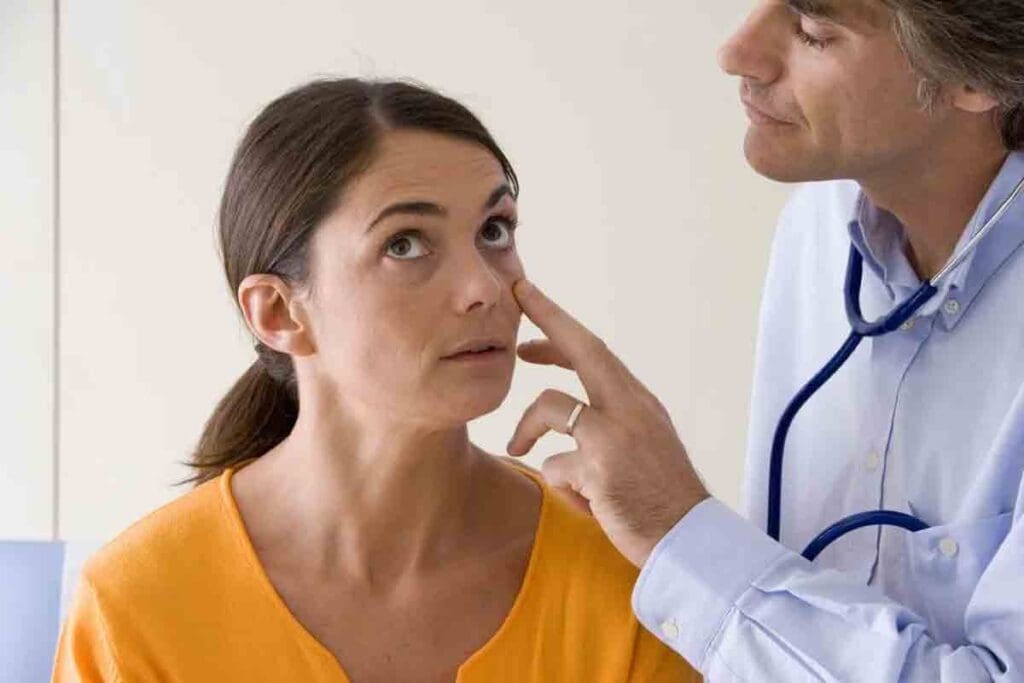
Checking for pale eyelids is a simple way to spot iron deficiency. To do this, gently pull down the lower eyelid. This exposes the conjunctiva, the membrane covering the white part of the eye and the inside of the eyelid.
In a well-lit area, look at the color of the conjunctiva. A healthy one is a rich red color. If it looks pale or almost white, it might mean low iron levels.
Clinical Significance of Pale Conjunctival Tissue
Pale conjunctival tissue can mean more than just iron deficiency. It can also point to other health problems. Anemia, for example, is a lack of enough healthy red blood cells to carry oxygen.
The paleness comes from less hemoglobin in the blood. Seeing pale conjunctiva means you should get checked further. This might include blood tests for iron deficiency anemia.
Remember, pale eyelids and conjunctiva don’t only mean iron deficiency. Other things can cause paleness too. A doctor’s check-up is needed for a sure diagnosis. If you’re worried about your iron levels or have other anemia symptoms, see a healthcare professional.
Sign #3: Burning Sensations and Eye Discomfort
Iron deficiency can cause unexpected symptoms like burning eyes. This can make daily life hard. We’ll look at how iron affects eye irritation and when to see a doctor.
The Connection Between Iron Levels and Eye Irritation
Iron is key for healthy eyes. Low iron can cause eye problems, like burning and discomfort. It affects the cornea and conjunctiva, leading to irritation.
Key factors linking iron deficiency to eye irritation include:
- Reduced oxygen supply to ocular tissues due to low hemoglobin levels.
- Increased inflammation and oxidative stress.
- Impaired tear production and quality.
When to Seek Medical Attention for Eye Discomfort
Don’t worry about mild eye irritation. But, if burning or discomfort lasts, see a doctor. It’s important to tell if it’s just irritation or something more serious like iron deficiency anemia.
If you experience any of the following, consider seeking medical attention:
- Persistent eye discomfort or burning sensations.
- Changes in vision, including blurred vision.
- Other signs of anemia, such as fatigue, pale skin, or shortness of breath.
Seeing a doctor is key to finding out why your eyes hurt. They can check for iron deficiency and anemia. Then, they can help fix the problem.
Sign #4: Blurry Vision and Visual Disturbances
Blurry vision and visual disturbances can hint at iron deficiency. Iron is key for healthy vision. Its lack can cause eye problems. We’ll look at how low iron affects vision and the difference between short-term and lasting vision changes.
How Low Iron Affects Visual Clarity
Iron helps make hemoglobin, a protein in red blood cells. It carries oxygen to the body, including the eyes. Low iron means the eyes might not get enough oxygen, leading to blurry vision and other eye issues.
Studies show iron deficiency can harm the retina and other eye tissues. This can cause vision problems. For example, a study on the effects of low iron on the eyes shows iron’s role in eye health.
Temporary vs. Persistent Vision Changes
It’s important to tell the difference between short-term and lasting vision changes from iron deficiency. Temporary vision changes might be fixed with treatment. But persistent vision changes could mean a bigger problem, like long-term eye damage.
Knowing if vision changes are temporary or lasting is key. If you have lasting blurry vision or eye problems, see a doctor. They can check for other issues and help you get better.
Sign #5: Retinal Complications
Iron deficiency anemia can harm the retina, a key part of the eye. This can lead to anemic retinopathy. We’ll look at how iron levels affect the retina.
Anemic Retinopathy: Causes and Manifestations
Anemic retinopathy happens when the retina doesn’t get enough oxygen. This is because of iron deficiency anemia. It can cause:
- Retinal hemorrhages
- Retinal edema
- Changes in retinal vascular appearance
These issues can hurt your vision. Early detection is key to avoid serious problems.
Long-term Risks of Untreated Iron Deficiency on Retinal Health
Untreated iron deficiency anemia can harm the retina a lot. It can cause:
- Permanent vision loss
- More chances of getting other eye diseases
- Long-term eye pain
Early treatment of iron deficiency anemia is vital. It helps keep the retina healthy. People with iron deficiency anemia should get regular eye exams.
Knowing how iron deficiency anemia affects the retina is important. It helps us protect our eye health. Eye health is a big part of our overall well-being.
Sign #6: Increased Risk of Dry Eye Syndrome
Iron deficiency can harm our eye health, making dry eye syndrome more likely. Dry eye happens when our eyes don’t make enough tears. This causes discomfort and vision issues. We’ll look at how iron deficiency leads to this problem and how to handle its symptoms.
How Iron Deficiency Compromises Tear Production
Tear production involves many parts of the eye, like the lacrimal gland. Iron is key to keeping this gland healthy and ensuring tears are made. Low iron can hurt the gland’s work, making less tear and raising dry eye risk.
Iron deficiency also causes eye inflammation and stress. This makes dry eye symptoms worse. It’s important to fix iron levels to protect eye health and tear production.
Managing Dry Eye Symptoms While Treating Anemia
Dealing with dry eye in iron deficiency cases needs a two-step plan. First, treat the iron deficiency with supplements and diet changes. This can boost tear production over time. Second, use artificial tears and avoid eye irritants to ease dry eye discomfort.
Good eye care, like not rubbing eyes and taking screen breaks, also helps. Getting advice from an eye doctor is key for managing dry eye and iron deficiency together.
Sign #7: Susceptibility to Eye Infections
Anemia, or iron deficiency, can harm our eyes in many ways. It makes us more likely to get eye infections. Our body’s fight against infections is weaker when we have anemia.
The Link Between Anemia and Weakened Ocular Immunity
Iron is key for a strong immune system. Low iron means our body can’t make enough white blood cells. This makes us more likely to get infections, including eye infections. Ocular immunity is our eyes’ defense against germs, and anemia weakens this defense.
There are several reasons why anemia and eye infections are linked:
- Less tear production is important for eye health and preventing infections.
- Immune cells in the eyes don’t work as well.
- More oxidative stress can harm eye tissues.
Preventive Measures for Protecting Eye Health
Even with anemia, we can protect our eyes from infections. Here are some ways to do it:
| Preventive Measure | Description | Benefit |
| Dietary Changes | Eating more iron-rich foods or taking supplements. | Helps improve iron levels and fight anemia. |
| Good Hygiene Practices | Washing hands often, before touching the eyes. | Less chance of getting germs in the eyes. |
| Regular Eye Check-ups | Seeing an eye doctor regularly. | Finds eye problems early. |
Keeping our eyes healthy needs a balanced diet, good hygiene, and eye doctor visits. These steps help lower the risk of eye infections, even with anemia.
Knowing how anemia affects our eyes helps us protect them. It’s important to treat iron deficiency to keep our vision and eye health good.
Diagnosis and Treatment: Restoring Eye Health Through Iron Balance
Understanding iron’s role is key to improving eye health. Iron deficiency can cause eye problems. It’s important to find and fix the cause.
Professional Eye Tests for Anemia Detection
Eye tests can show if you have anemia. For example, looking at the color of the conjunctiva can tell about hemoglobin levels. An eye doctor can do these tests during a full eye check-up.
If you see blurry or have eye pain, get your eyes checked.
| Eye Test | Indicator for Anemia |
| Conjunctival examination | Pale conjunctiva |
| Retinal examination | Retinal hemorrhages or abnormalities |
Iron Supplementation and Dietary Approaches
Fixing iron deficiency needs supplements and diet changes. Iron pills can help, but talk to a doctor first.
“Dietary iron intake is key for healthy iron levels. Foods like red meat, spinach, and fortified cereals can help symptoms.”
Eating foods high in iron is also important. Vitamin C helps your body absorb iron better. So, eating foods with vitamin C, like citrus fruits, with iron-rich foods is good.
When to Consult an Ophthalmologist vs. Hematologist
Ophthalmologists and hematologists are both important for iron deficiency. But they focus on different things. Ophthalmologists deal with eye problems, while hematologists handle blood issues.
See an ophthalmologist first if you have eye problems that might be from iron deficiency. They can check your eyes and send you to a hematologist if needed for iron level checks.
Conclusion
It’s important to know the signs of iron deficiency in the eyes to keep our vision healthy. Iron is key for eye health, and not having enough can cause eye problems. By understanding this, we can prevent vision issues.
Iron is very important for our eyes. Signs like dark circles, pale eyelids, and blurry vision can mean we need more iron. Keeping our iron levels up helps our eyes stay healthy.
We should take a balanced approach to eye care. This includes eating foods rich in iron and, if needed, taking supplements. This way, we can keep our eyes healthy and our vision clear for years to come.
FAQ
Can low iron cause vision problems?
Yes, low iron can lead to vision issues. These include blurry vision, double vision, and eye strain. Iron deficiency can cause anemia, affecting the eyes and causing vision problems.
How to check for anemia in the eyes?
Check for anemia by looking at the inside of your lower eyelid. If it’s pale or washed out, you might have anemia. Also, look for pale conjunctiva, the membrane covering the white part of your eyes.
Does iron deficiency affect vision?
Yes, iron deficiency can impact your vision. Iron is key for making hemoglobin, which carries oxygen to your eyes. Without enough iron, your eyes might not get the oxygen they need, causing vision issues.
Can iron deficiency cause blurry vision?
Yes, iron deficiency can lead to blurry vision. Low iron levels can cause anemia, which may result in blurry vision, double vision, and other vision problems.
What are the signs of anemia in the eyes?
Signs of anemia in the eyes include pale eyelids and pale conjunctiva. You might also see dark circles under your eyes, blurry vision, and eye strain. In severe cases, anemia can lead to retinal complications and an increased risk of eye infections.
How does iron deficiency cause periorbital darkening?
Iron deficiency can cause dark circles under your eyes. This is because the reduced oxygen supply to the skin and tissues around your eyes affects the color.
Can iron supplementation improve eye health?
Yes, iron supplements can improve eye health. They address iron deficiency and anemia. Iron supplements help restore hemoglobin levels, improve oxygen delivery to the eyes, and alleviate vision problems.
When to consult an ophthalmologist vs. hematologist for iron deficiency?
If you have vision problems or eye symptoms due to iron deficiency, see an ophthalmologist first. For issues related to anemia, a hematologist might be better. But both specialists can work together for your care.
Are there any dietary approaches to managing iron deficiency and eye health?
Yes, diet can help manage iron deficiency and eye health. Eating iron-rich foods like red meat, spinach, and fortified cereals can help. Vitamin C can also improve iron absorption.
Can low iron cause dry eye syndrome?
Yes, low iron can contribute to dry eye syndrome. Iron deficiency can reduce tear production, causing dry, irritated eyes.
How to manage dry eye symptoms while treating anemia?
To manage dry eye symptoms while treating anemia, use artificial tears and avoid dry environments. Take breaks when working on digital devices. Treating anemia with iron supplements can also help alleviate dry eye symptoms.
Reference
- Medical News Today on anemia and eyes:
https://www.medicalnewstoday.com/articles/eye-anemia-symptoms