AtLiv Hospital, we understand the importance of Chiari malformation for patients and their families. This neurological disorder happens when brain tissue moves into the spinal canal. It’s seen as a congenital condition but can also be acquired.
Studies have found genetic links to Chiari malformation, like mutations in CHD3 and CHD8 genes. Knowing the genetic causes helps us give better diagnoses and treatments. We aim to offer the best care for those with this condition.
Key Takeaways
- Chiari malformation is a complex neurological disorder with both congenital and acquired forms.
- Genetic mutations, such as those in CHD3 and CHD8 genes, have been linked to Chiari malformation.
- Understanding the genetic aspects of Chiari malformation is essential for accurate diagnosis and treatment.
- Liv Hospital is dedicated to providing expert care and support for patients with Chiari malformation.
- Research into the genetic roots of Chiari malformation is ongoing, with new findings continually emerging.
What Is Chiari Malformation? A Comprehensive Overview

Chiari malformation happens when the cerebellar tonsils move into the spinal canal. This causes many neurological symptoms. It’s a brain structure problem that can be split into different types based on how severe it is.
Definition and Classification of Chiari Malformation Types
There are four main types of Chiari malformation: Type I, Type II, Type III, and Type IV. Type I is the most common. It means the cerebellar tonsils move into the spinal canal. Type II, or Arnold-Chiari malformation, is more serious and often comes with spina bifida.
Type III is rare and means the cerebellum herniates into a cervical spina bifida. Type IV has an incomplete or missing cerebellum. Knowing the type helps doctors figure out the best treatment and what to expect.
Anatomical Characteristics and Brain Structure Abnormalities
Chiari malformation affects the cerebellum and the craniocervical junction. When the cerebellar tonsils move into the foramen magnum, it blocks cerebrospinal fluid flow. This can cause high pressure in the brain and other problems.
It can also lead to syringomyelia (a fluid-filled cavity in the spinal cord) and hydrocephalus (fluid buildup in the brain). Knowing these details is key to diagnosing and treating Chiari malformation.
Common Symptoms and Clinical Presentations
Symptoms of Chiari malformation vary by person and type. Common ones include headaches, neck pain, dizziness, and numbness or tingling in the hands and feet. Some people might also have trouble swallowing, vocal cord paralysis, or sleep apnea.
Some people might not show symptoms at all, while others might have severe problems. It’s important to get a correct diagnosis and understand the symptoms to plan the right treatment.
The Prevalence of Chiari Malformation in the Population
Chiari malformation, mainly Type 1, is a focus in medical studies. Knowing how common it is helps in planning healthcare and spreading awareness. This is important for both doctors and the public.
How Common Is Chiari Malformation Type 1?
Chiari malformation Type 1 is not very common. Research shows it affects 0.1 to 0.5 percent of people. But, this range shows how hard it is to know exactly how many have it.
Many people with Chiari Type 1 don’t show symptoms. This makes it hard to figure out how widespread it really is. Many cases might not be found.
Demographic Distribution and Risk Factors
Studies show Chiari Type 1 is more common in women than men. It’s also linked to syringomyelia, a condition with fluid-filled cavities in the spinal cord.
Let’s look at some data:
| Demographic Characteristic | Prevalence |
|---|---|
| Female | Higher prevalence |
| Male | Lower prevalence compared to females |
| Age Group | Variable, often diagnosed in young adulthood |
| Associated Conditions | Syringomyelia, Ehlers-Danlos Syndrome |
Challenges in Accurate Prevalence Estimation
Figuring out how common Chiari malformation is is tough. Many cases don’t show symptoms and are only found by chance during other tests.
Also, how doctors diagnose it can change. This leads to different numbers in studies. This makes it hard to know the real number of cases.
We need to keep these challenges in mind when looking at data. And when planning how to handle Chiari malformation in healthcare.
Is Chiari Malformation Hereditary? Examining the Evidence
Chiari malformation might be linked to genetics, which is a big deal for families. Looking into the evidence, it seems genetics play a role in Chiari malformation.
Familial Clustering of Chiari Cases
Familial clustering is a sign of a hereditary condition. Research shows Chiari malformation can run in families. This means it might be passed down through genes.
Studies found many families with Chiari malformation. This is strong evidence that genetics might be involved.
Twin Studies and Concordance Rates
Twin studies help us understand Chiari malformation’s genetics. They compare identical and fraternal twins to see if genetics matter. These studies found a strong link between genetics and Chiari malformation in identical twins.
This shows genetics play a big role in Chiari malformation. It’s important for families with a history of the condition.
The 12 Percent Statistic: Relatives with Chiari
About 12 percent of Chiari I malformation patients have a relative with the condition. This number shows a clear genetic link. It means families with Chiari malformation are at higher risk.
- Chiari malformation in relatives suggests a genetic link.
- Studies on families and twins help us understand Chiari malformation’s genetics.
- The 12 percent statistic is key evidence for Chiari malformation’s hereditary nature.
As we learn more about Chiari malformation’s genetics, it’s clear it’s complex. It involves both genes and environment. Knowing this helps us find better ways to diagnose and treat it.
Genetic Foundations of Chiari Malformation
Recent studies have uncovered the genetic roots of Chiari malformation. They show a complex mix of genetic factors that play a role in its development. It’s clear now that Chiari malformation is more than just a structural issue. It also has a strong genetic side.
Chromosomal Abnormalities and Chiari Malformation
Chromosomal Abnormalities Associated with Chiari
Research has found several chromosomal issues linked to Chiari malformation. These problems can mess with the brain and spinal cord’s structure and function. This can cause the symptoms we see in Chiari.
- Duplications or deletions of genetic material
- Translocations involving chromosomes
- Mosaicism, where a mixture of normal and abnormal cells exists
These chromosomal problems can mess up normal development. This can lead to the malformation we see in Chiari.
Chromodomain Genes: CHD3 and CHD8 Mutations
Genes like CHD3 and CHD8, which code for chromodomain proteins, are linked to Chiari malformation. Mutations in these genes can mess with brain development. This can cause the brain and brainstem problems seen in Chiari.
CHD3 and CHD8 mutations have been found in Chiari patients. This suggests a genetic pathway in the condition’s development.
Other Genetic Variants Linked to Chiari Development
Other genetic variants are also tied to Chiari malformation. These include genes related to connective tissue disorders. These disorders often go hand in hand with Chiari.
- Genes related to Ehlers-Danlos Syndrome
- Variants affecting the extracellular matrix
- Other genes influencing neurological development
Learning about these genetic connections helps us understand Chiari malformation better. It can also help guide treatment options.
Inheritance Patterns of Chiari Malformation
Chiari malformation’s inheritance is complex, involving genetics and environment. It doesn’t follow simple patterns like some genetic disorders do. This makes it harder to understand and predict.
Complex Non-Mendelian Inheritance
Chiari malformation doesn’t come from one gene mutation. Instead, it’s caused by many genetic variants and environmental factors. Recent studies have found several genes that play a role in it. This shows how complex its genetics are.
Multifactorial Inheritance Models
Multifactorial models explain conditions like Chiari malformation. They say the condition is shaped by genetics and environment. Knowing this helps us understand the risk in families.
Genetic Penetrance and Expressivity in Chiari
Genetic penetrance is how often a genotype leads to a phenotype. In Chiari, penetrance varies. This means not everyone with a genetic risk will get the condition.
Expressivity is how much a condition shows in a person. Chiari can vary a lot in how it shows up. Some people have severe symptoms, while others don’t show any.
The complex inheritance of Chiari malformation highlights the need for detailed genetic counseling. Understanding genetics and environment helps healthcare providers. They can then better manage the risk of passing it on and help families.
Research Findings on Chiari Malformation Genetics
Recent studies have greatly improved our understanding of Chiari malformation genetics. We now know more about how genetics play a role in this condition. We will look at key research, focusing on specific studies and the latest discoveries.
Population-Specific Genetic Studies
Studies on specific populations have given us important insights. By looking at groups with similar genetics, scientists can find genetic links to Chiari malformation. For example, research on European populations has found several genetic spots linked to the condition.
These studies show that some genetic markers are more common in people with Chiari malformation. Genes related to the shape of the skull and fluid flow in the brain are linked to a higher risk. The main findings include:
- Discovery of new genetic variants linked to Chiari malformation
- Confirmation of genetic connections already suspected
- Understanding the genetic diversity of the condition
Turkish Family Studies and Their Significance
Studies on Turkish families have shed light on Chiari malformation genetics. They have found patterns of inheritance and specific genetic mutations. This shows that Chiari malformation can sometimes be passed down in families.
This research is important for genetic counseling. It helps healthcare providers give better advice to families with Chiari malformation. They can assess risks and guide family members more accurately.
Recent Advances in Genetic Research
The study of Chiari malformation genetics is moving fast, with new findings all the time. New technologies have allowed scientists to find new genetic variants.
Recent breakthroughs include:
- Discovering genes that control skull development
- Finding genetic paths that affect brain fluid flow
- Creating new genetic tests for Chiari malformation
These advances help us understand Chiari malformation better. They also open doors to new treatments and diagnostic tools.
Co-occurring Conditions and Their Genetic Links
Chiari malformation often comes with other disorders linked by genetics. We’ll look at these conditions and their genetic ties.
Ehlers-Danlos Syndrome and Chiari Malformation
Ehlers-Danlos syndrome (EDS) affects connective tissue, supporting organs and joints. It’s often found with Chiari malformation, suggesting a common genetic cause. People with Chiari malformation are more likely to have EDS, and vice versa.
The connection between EDS and Chiari malformation lies in genes for collagen and connective tissue proteins. Mutations in these genes cause EDS’s symptoms and Chiari malformation’s anatomical issues.
Syringomyelia and Its Relationship to Chiari
Syringomyelia is a condition with a fluid-filled cavity in the spinal cord. It often happens with Chiari malformation, sharing a common cause. Syringomyelia can make Chiari malformation symptoms worse, adding pain, weakness, and sensory loss.
The genetic tie between syringomyelia and Chiari malformation is complex. Research points to genetic variants affecting the central nervous system’s development. These variants may lead to both conditions.
Other Connective Tissue Disorders
Other connective tissue disorders are also linked to Chiari malformation. Marfan syndrome and osteogenesis imperfecta are examples. They share genetic mutations affecting connective tissue proteins.
- Marfan syndrome is known for tall stature, joint hypermobility, and heart issues.
- Osteogenesis imperfecta causes brittle bones and frequent fractures.
- Both are linked to Chiari malformation, showing a common genetic pathway.
Exploring the genetic ties between these conditions helps us understand Chiari malformation better. More research is needed to uncover the complex genetic interactions.
How Rare Is Chiari Malformation Type 1?
Chiari Malformation Type 1 is a rare condition. It affects a small part of the population. Studies show it occurs in 0.1 to 0.5 percent of people. But, this number can change based on how it’s diagnosed and who is studied.
Comparing Prevalence to Other Neurological Conditions
Chiari Malformation Type 1 is less common than some other conditions. For example, multiple sclerosis affects 85 per 100,000 people in the U.S. But, Chiari Malformation Type 1 is found in 1 to 5 per 1,000. This shows it’s rare but not as rare as some other conditions.
Prevalence comparisons:
- Multiple sclerosis: 85 per 100,000
- Chiari Malformation Type 1: 1 to 5 per 1,000
- Epilepsy: 7 per 1,000
Asymptomatic Cases and Incidental Findings
Many people with Chiari Malformation Type 1 don’t show symptoms. They might find out they have it by chance during tests for other things. It’s believed that a lot of cases are like this, which can make it hard to know how common it really is.
Asymptomatic cases make it hard to know how common Chiari Malformation Type 1 is. This is because studies often only look at people who have symptoms.
Geographic Variations in Prevalence
Where you live can affect if you have Chiari Malformation Type 1. This might be because of genetics or how doctors diagnose it. Some places might have more cases, but we need more research to be sure.
Diagnostic Approaches for Hereditary Chiari Malformation
Advanced diagnostic techniques like neuroimaging and genetic testing are key in finding hereditary Chiari malformation. These tools help doctors accurately diagnose and manage the condition.
Neuroimaging Techniques and Their Role
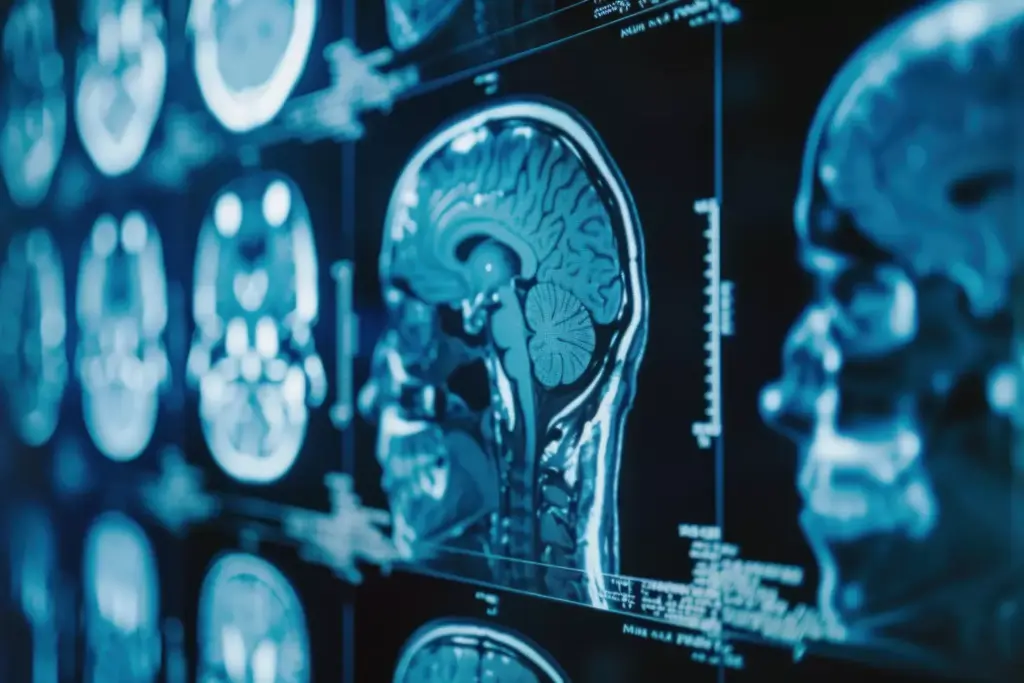
Neuroimaging, mainly Magnetic Resonance Imaging (MRI), is the main tool for diagnosing Chiari malformation. MRI gives detailed images of the brain and spinal cord. It helps measure the cerebellar tonsils’ position and check for any complications.
We use MRI to see how severe the malformation is and if there are syringomyelia or other issues. This info is key for choosing the right treatment.
Genetic Testing Options for Chiari Patients
Genetic testing can find mutations linked to Chiari malformation, which is important in families with a history of it. This testing can show if the malformation is part of a bigger genetic syndrome.
We suggest genetic testing for those with a family history of Chiari or who show signs of a genetic disorder. The results help in making treatment plans and guide family planning.
Family Screening Recommendations
Family screening is vital in managing hereditary Chiari malformation. We advise that relatives of those affected get neuroimaging and genetic testing. This helps find those at risk.
| Diagnostic Approach | Description | Benefits |
|---|---|---|
| Neuroimaging (MRI) | Detailed imaging of the brain and spinal cord | Accurate diagnosis, assessment of complications |
| Genetic Testing | Identification of genetic mutations associated with Chiari | Informs treatment, family planning |
| Family Screening | Neuroimaging and genetic testing for relatives | Early identification of at-risk individuals |
Treatment Considerations for Genetic Chiari Cases
When treating Chiari malformation with a genetic link, many factors are important. The condition’s complexity and genetic roots need a detailed management plan.
Chiari malformation is more than a physical issue. It also has a genetic side that affects treatment results. Knowing the genetic cause is key to creating effective treatment plans.
Surgical Interventions for Hereditary Chiari
Surgery is often used to treat Chiari malformation, even more so when genetics play a role. The surgery aims to ease pressure on the brain and spinal cord. This helps reduce symptoms and prevents more problems.
Surgical options may include:
- Posterior fossa decompression
- Dura mater expansion
- Removal of the cerebellar tonsils
These surgeries can greatly improve life quality for those with genetic Chiari malformation.
Non-surgical Management Approaches
Not every patient with genetic Chiari needs surgery. For those with mild symptoms or no symptoms at all, non-surgical methods are used. This involves watching symptoms closely and managing them.
Non-surgical strategies may include:
- Regular neurological check-ups
- Pain management medications
- Physical therapy to improve mobility and strength
These methods help manage symptoms and improve overall health.
Personalized Treatment Based on Genetic Profiles
Personalized medicine is a new hope for treating genetic Chiari malformation. By looking at a patient’s genetic makeup, doctors can create treatments that target specific genetic issues.
Personalized treatment strategies may involve:
- Genetic testing to identify specific mutations
- Targeted therapies based on genetic findings
- Regular monitoring for early detection of possible complications
This approach could change how we treat genetic Chiari cases. It offers more effective and focused treatments.
Future Directions in Chiari Malformation Genetic Research
We are making great strides in understanding Chiari malformation’s genetic roots. New research methods and a better grasp of genetics and environment are leading the way. This shift is opening up new paths for treatments.
Emerging Gene Therapies and Their Promise
Gene therapy is a bright spot in Chiari malformation treatment. It aims to fix genetic issues at the source. Emerging gene editing technologies, like CRISPR/Cas9, are key to this effort.
Gene therapy could change how we treat Chiari malformation. It might make treatments more precise and cut down on surgery needs. Researchers are working hard to find the best genes to target and how to deliver these therapies safely.
Precision Medicine Approaches for Chiari
Precision medicine is changing how we diagnose and treat Chiari malformation. It uses a person’s genetic makeup to create personalized plans. This could lead to better results and fewer complications.
Precision medicine approaches combine genetic data with clinical information. For Chiari malformation, this means genetic tests to find specific mutations. Then, treatments are tailored to address these issues.
Ongoing Clinical Trials and Research Initiatives
Many clinical trials and research projects are underway to better understand Chiari malformation. These studies are key to turning genetic research into real-world treatments. They help improve care for those affected.
- Investigations into the genetic basis of Chiari malformation
- Clinical trials of novel gene therapies
- Studies on the application of precision medicine in Chiari malformation management
As research advances, we expect big leaps in diagnosing and treating Chiari malformation. By leading in genetic research, we aim to offer top-notch care for those with this condition.
Conclusion: Understanding the Genetic Landscape of Chiari Malformation
We’ve looked into the complex genetic world of Chiari malformation. This condition is shaped by many genetic and environmental factors. Studies show it has a complex inheritance pattern, with different chromosomal issues and genetic changes.
Chiari malformation often runs in families, with many relatives affected. Knowing the genetic side of Chiari malformation is key to finding better treatments. It helps doctors and researchers create more effective plans for patients.
As we learn more about Chiari malformation’s genetics, we’re getting closer to tailored treatments. Ongoing research is essential for improving how we diagnose and treat this condition. It will shape the future of medical care for those affected.
Is Chiari malformation a genetic condition?
Chiari malformation has a mix of causes, including genetics. It’s not always passed down through families. But, there’s evidence that genetics play a role, mainly in families with the condition.
How common is Chiari malformation Type 1?
Chiari malformation Type 1 is rare. It’s hard to know how common it is because some people don’t show symptoms. It’s thought to affect about 1 in 1000 to 1 in 5000 people.
Can Chiari malformation be inherited?
Yes, Chiari malformation can be passed down through families. It follows a complex pattern that involves genes and environment.
What are the genetic factors associated with Chiari malformation?
Chiari malformation is linked to certain genes and chromosomal issues. For example, mutations in CHD3 and CHD8 genes are involved. These genetic changes can lead to the condition.
Is there a link between Chiari malformation and other genetic conditions?
Yes, Chiari malformation often goes hand in hand with other genetic conditions. Conditions like Ehlers-Danlos syndrome and syringomyelia are common. This suggests a complex genetic connection.
How is hereditary Chiari malformation diagnosed?
Diagnosing hereditary Chiari malformation uses MRI and genetic tests. Family screenings help find people at risk.
What are the treatment options for genetic Chiari malformation?
Treatments for genetic Chiari malformation vary. They can be surgical or non-surgical. The choice depends on the severity and the person’s genetic makeup.
Are there any ongoing research initiatives on Chiari malformation genetics?
Yes, research is ongoing to understand Chiari malformation’s genetics. Studies focus on gene therapies and precision medicine. Clinical trials aim to improve treatment options.
How rare is Chiari malformation compared to other neurological conditions?
Chiari malformation is rare compared to other neurological issues. But, it’s likely underreported due to hidden cases and chance findings.
Can genetic testing predict the risk of developing Chiari malformation?
Genetic testing can spot people at risk of Chiari malformation, mainly in families. But, predicting it is tricky due to its complex genetics and multiple factors.
References
1.Bobby Jones Chiari & Syringomyelia Foundation. (n.d.). Genetics of Chiari I malformation. Retrieved from https://bobbyjonescsf.org/genetics-of-chiari-i-malformation
2.National Organization for Rare Disorders. (n.d.). Chiari malformations. Retrieved from https://rarediseases.org/rare-diseases/chiari-malformations/
3.Avşar, T., et al. (2020). Genome-wide identification of Chiari malformation type I associated genes. Retrieved from https://pmc.ncbi.nlm.nih.gov/articles/PMC7759189/