At Liv Hospital, we know how key hemoglobin is for our health. It’s a vital protein in red blood cells. It helps carry oxygen to our body’s tissues and organs.
Learning about hemoglobin shows us why it’s so important. Knowing its role helps us spot and treat health issues. Understanding the answer to “is hemoglobin a protein” helps explain its function in carrying oxygen. Low hemoglobin levels can cause fatigue, weakness, and shortness of breath. On the other hand, high hemoglobin levels can raise the risk of blood clots and other problems.
Hemoglobin is more than just a protein; it’s a vital part of our blood. It affects our overall health. By understanding hemoglobin, we can see why keeping its levels healthy is so important.
Key Takeaways
- Hemoglobin is a vital protein in red blood cells responsible for oxygen delivery.
- Understanding hemoglobin levels is key to diagnosing and managing health conditions.
- Abnormal hemoglobin levels can cause various health issues.
- Keeping healthy hemoglobin levels is vital for our well-being.
- Hemoglobin plays a critical role in delivering oxygen to the body’s tissues and organs.
The Fundamental Nature of Hemoglobin in Blood
Hemoglobin is a protein in red blood cells that carries oxygen to all parts of the body. It’s made of iron, which lets it grab oxygen from the air and carry it to tissues. This is how it helps keep the body’s cells working right.
What Hemoglobin Stands For: Defining Hgb and Hb
Hemoglobin is often called Hgb or Hb. Both names point to the same protein. “Hgb” is more direct, while “Hb” is shorter and used more in medicine. Knowing what these letters mean is key to understanding medical tests and diagnoses.
The Location and Production of Hemoglobin in Red Blood Cells
Hemoglobin is made in the bone marrow, inside red blood cells. It’s created during a process called erythropoiesis. As red blood cells grow, they fill up with hemoglobin. This makes them ready to carry oxygen to the body’s tissues.
Why Hemoglobin Is Essential for Human Survival
Hemoglobin is vital for carrying oxygen from the lungs to the body’s tissues. It also takes carbon dioxide from tissues back to the lungs. Without enough hemoglobin, tissues can’t get the oxygen they need. This can cause damage and even be life-threatening.
Hemoglobin’s importance is clear when it’s not working right. Problems with hemoglobin can lead to anemia or other serious conditions. These issues show how important hemoglobin is for keeping the body healthy and balanced.
Is Hemoglobin a Protein? Exploring Its Molecular Structure
To grasp hemoglobin’s role, we must look at its molecular makeup. It is a protein, and its complex structure is key to its function.
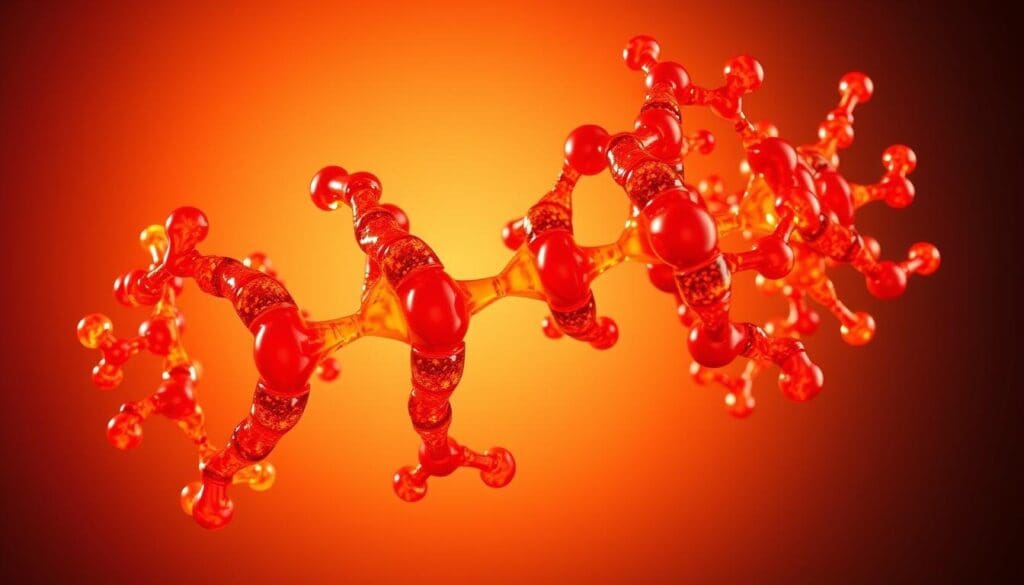
Hemoglobin is made of four polypeptide chains: two alpha and two beta. These chains have specific amino acid sequences. They are vital to hemoglobin’s structure and how it works.
The Protein Components: Globin Chains Explained
The globin chains form the protein structure of hemoglobin. Each chain has a unique amino acid sequence. This determines its shape and function. The alpha and beta chains are different, enabling hemoglobin to bind oxygen.
This unique arrangement lets hemoglobin change shape when it binds oxygen. This change helps transport oxygen all over the body.
The Iron-Containing Heme Group and Oxygen Binding
Each globin chain has an iron-containing heme group. This group is key for oxygen binding. The iron in the heme group can bind to oxygen. This process is reversible, letting hemoglobin pick up oxygen in the lungs and release it to tissues.
How Hemoglobin’s Structure Enables Its Function
Hemoglobin’s structure is closely tied to its function. The way the globin chains and heme groups are arranged lets hemoglobin bind to oxygen in the lungs. It then releases oxygen to the body’s tissues. This process is vital for delivering oxygen and keeping the body healthy.
In summary, hemoglobin’s molecular structure is essential for oxygen transport. Understanding this structure helps us see why hemoglobin is so important for our health.
5 Critical Functions of Hemoglobin in the Human Body
Hemoglobin is key to our health, doing many important jobs. It’s a protein in red blood cells that helps transport gases and keep pH levels right.
Oxygen Transport from Lungs to Body Tissues
Hemoglobin’s main job is to carry oxygen from the lungs to our body’s tissues. It picks up oxygen in the lungs and carries it to different parts of the body. This is vital for our tissues and organs to work well.
For example, having a hemoglobin level of 13.8 g/dL or more is often seen as necessary for good oxygen delivery.
Carbon Dioxide Transport from Tissues to Lungs
After delivering oxygen, hemoglobin carries carbon dioxide back to the lungs. This is important for removing waste and keeping the acid-base balance right. People with high hemoglobin levels, like 17.1 g/dL, can carry more carbon dioxide. But, this can also lead to health issues.
Acid-Base Balance and pH Regulation
Hemoglobin also helps keep the body’s acid-base balance right. It acts as a buffer, controlling pH levels by binding to or releasing hydrogen ions. This is key for keeping our body’s processes in balance.
For instance, a hemoglobin level of 15.1 g/dL is usually normal for many adults. It supports the body’s ability to buffer.
Nitric Oxide Metabolism and Blood Pressure Regulation
Also, hemoglobin is involved in nitric oxide metabolism, which affects blood pressure and blood vessel tone. It can bind to nitric oxide, changing its availability. This impacts blood vessel diameter and blood pressure.
Understanding how hgb 13.8 relates to nitric oxide can help us understand vascular health and blood pressure regulation.
In summary, hemoglobin’s roles in oxygen and carbon dioxide transport, acid-base balance, and nitric oxide metabolism are vital for our health. Abnormal levels can have serious health effects. So, it’s important to diagnose and manage them properly.
Understanding Hemoglobin Values: What the Numbers Mean
Knowing your hemoglobin values is key to checking your health. Hemoglobin helps carry oxygen to your body’s tissues and organs. We’ll look at normal hemoglobin ranges, explain medical abbreviations, and talk about what affects your hemoglobin levels.
Normal Hemoglobin Ranges: From 13.8 to 17.1 g/dL in Men
For adult men, a normal hemoglobin level is 13.8 to 17.1 grams per deciliter (g/dL). This range might vary a bit between labs but stays close. If your hemoglobin is in this range, your body can carry enough oxygen.
Normal Hemoglobin Ranges: From 12.1 to 15.1 g/dL in Women
For adult women, the normal range is 12.1 to 15.1 g/dL. This range also varies slightly between labs. Keeping your hemoglobin in this range is important, even more so during pregnancy when you need more oxygen.
Medical Abbreviations Explained: g/L, g/dL, Hgb, and Hb
When you see lab results, you might see abbreviations like g/L and g/dL. These are units of measurement, with g/dL being more common in the U.S. Hgb and Hb both mean hemoglobin, with “Hgb” focusing on the measurement.
Factors That Influence Your Hemoglobin Levels
Many things can change your hemoglobin levels. These include age, sex, altitude, smoking status, and certain medical conditions. For example, people at high altitudes might have more hemoglobin to handle lower oxygen levels. Smokers might also have higher hemoglobin levels as their blood’s oxygen-carrying ability is reduced by carbon monoxide.
It’s important to understand these factors to correctly interpret your hemoglobin levels. If your levels are not in the normal range, talk to a healthcare professional to find out why and what to do next.
Abnormal Hemoglobin Levels and Their Health Implications
Abnormal hemoglobin levels can have serious health effects. It’s important to know why and what happens. Hemoglobin is key in red blood cells, carrying oxygen to our bodies. If its levels are off, health problems can arise.
Low Hemoglobin: Causes and Consequences of Anemia
Anemia happens when we don’t have enough red blood cells or hemoglobin in them. This can cause tiredness, weakness, and breathlessness. Iron, vitamin deficiencies, chronic diseases, and blood loss are common causes. Knowing the cause helps in treating it.
Some signs of anemia include:
- Pale skin
- Fatigue
- Weakness
- Shortness of breath
- Dizziness
High Hemoglobin: Understanding Polycythemia and Its Risks
High hemoglobin levels, or polycythemia, can raise the risk of blood clots and heart problems. This can be due to a genetic mutation or chronic low oxygen levels. Symptoms include headaches, dizziness, and itching, often after a hot shower.
Complications of polycythemia include:
- Blood clots
- Stroke
- Heart attack
Genetic Hemoglobin Disorders: Sickle Cell, Thalassemia
Genetic disorders like sickle cell disease and thalassemia can cause big health problems. Sickle cell disease changes red blood cells’ shape. Thalassemia affects hemoglobin production, causing anemia and other issues.
Conclusion: The Vital Importance of Monitoring Hemoglobin for Overall Health
Checking hemoglobin levels is key to keeping us healthy and avoiding health problems. Many anemias are found early through routine tests, showing how important regular check-ups are.
Knowing about hemoglobin helps us see why it’s so important to keep an eye on it. This knowledge lets us take care of our health better and act fast when needed.
We stress the need to watch hemoglobin levels as part of good healthcare. Regular tests and knowing about hemoglobin’s role in health can greatly improve our well-being and life quality.
FAQ
What is hemoglobin, and why is it an important protein?
Hemoglobin is a protein found in red blood cells. It’s key for delivering oxygen to our body’s tissues and organs. Without it, our body wouldn’t get the oxygen it needs to survive.
What does Hgb stand for in medical terms?
Hgb is short for hemoglobin. It’s often used the same way as Hb. Both terms refer to the protein in red blood cells that carries oxygen.
What are normal hemoglobin ranges for men and women?
Hemoglobin levels differ between men and women. Men usually have levels between 13.8 to 17.1 g/dL. Women’s levels range from 12.1 to 15.1 g/dL.
What does g/L mean in the context of hemoglobin measurements?
g/L stands for grams per liter. It’s a way to measure how much hemoglobin is in your blood.
Why is understanding hemoglobin levels important for health?
Knowing your hemoglobin levels is key because abnormal levels can signal health problems. For example, anemia or polycythemia. Checking these levels helps doctors diagnose and treat these conditions.
What are the consequences of having low hemoglobin levels?
Low hemoglobin can cause anemia. Symptoms include feeling tired, weak, and short of breath. Finding and treating the cause of anemia is vital.
What does it mean to have high hemoglobin levels?
High hemoglobin levels might mean you have polycythemia. This is when your body makes too many red blood cells. It can raise your risk of blood clots and heart problems.
How does hemoglobin’s structure enable its function?
Hemoglobin’s special structure lets it grab onto oxygen. It has globin chains and an iron group in its heme. This setup is essential for carrying oxygen to our tissues.
What are some genetic hemoglobin disorders?
Genetic disorders like sickle cell disease and thalassemia affect hemoglobin. They change how hemoglobin is made or works. This can lead to serious health issues.
References
- Ahmed, M. H. (2020). Hemoglobin: Structure, function, and allostery. International Journal of Molecular Sciences, 21(20), 7615. https://www.ncbi.nlm.nih.gov/pmc/articles/PMC7370311/
- Marengo-Rowe, A. J. (2006). Structure-function relations of human hemoglobins. Critical Reviews in Biochemistry and Molecular Biology, 41(5), 461-505. https://www.ncbi.nlm.nih.gov/pmc/articles/PMC1484532/