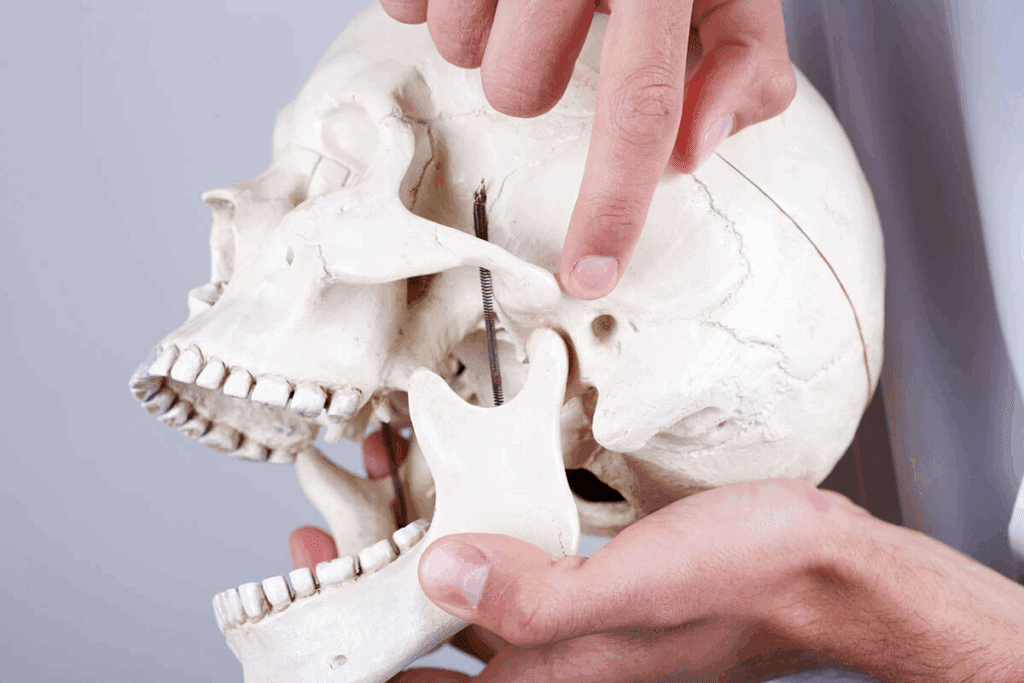
The mandible, or lower jawbone, is key to our facial skeleton. It’s the biggest and strongest bone in this area. It helps us eat, speak, and smile.
We use our mandible every day, often without thinking about it. It’s the only bone in our skull that moves freely. It works with the temporomandibular joints and muscles to help us do complex actions.
This is your ultimate guide to the jawline bone (the mandible). Learn its key anatomy, functions, and common problems.
Knowing how the mandible works is important for keeping our mouth healthy. It helps us spot problems early.
Key Takeaways
- The mandible is the medical term for the lower jawbone.
- It is the largest and strongest bone in the facial skeleton.
- The mandible is the only movable bone in the human skull.
- It works with the temporomandibular joints to enable various functions.
- Understanding the mandible’s anatomy is key for oral health.
The Mandible: Definition and Basic Anatomy
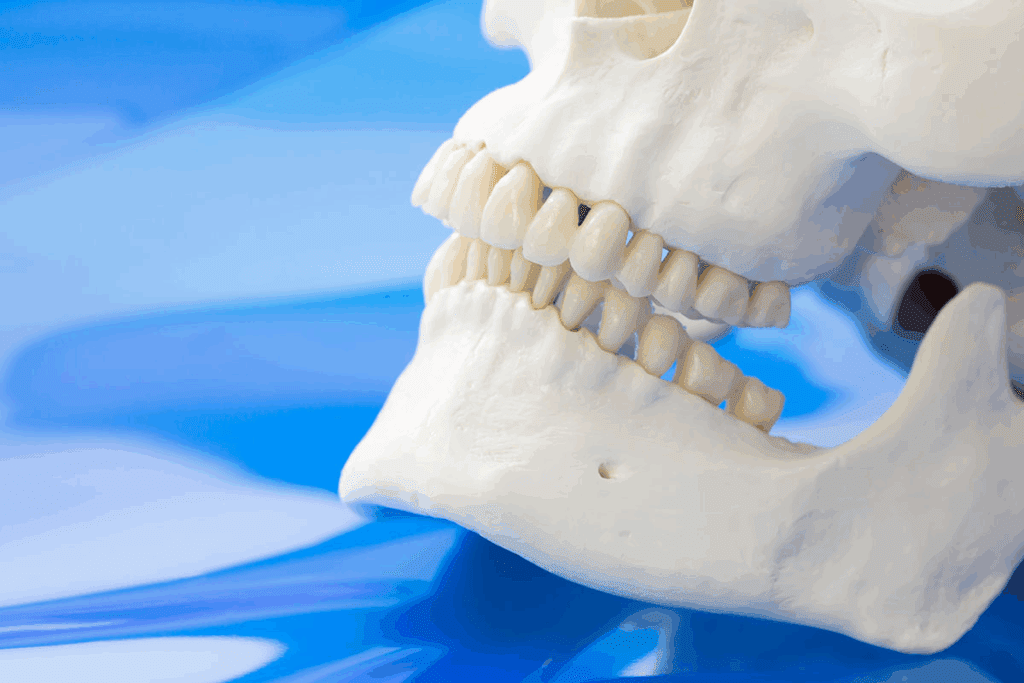
The mandible, or lower jawbone, is key to our skull. It’s located at the bottom of our face. It forms the lower jaw and is vital for our facial structure.
Medical Definition of the Mandible
The mandible is the bone that holds the lower teeth in place. It’s a vital component of the facial skeleton. It attaches muscles for chewing, speaking, and facial expressions. The mandible has parts like the body and the rami.
Position in the Facial Skeleton
The mandible sits at the bottom of the facial skeleton. It connects with the temporal bone at the TMJ. This connection lets us open and close our mouths for eating and speaking. Its position and structure are key for our face’s look.
To understand the mandible’s role, let’s look at its key features and functions:
| Feature | Description | Function |
|---|---|---|
| Body of the Mandible | The horizontal part of the mandible that holds the lower teeth. | Supports the lower teeth and aids in mastication. |
| Rami of the Mandible | The vertical parts of the mandible that articulate with the temporal bone. | Facilitates the opening and closing of the mouth through the TMJ. |
| Angle of the Mandible | The area where the body and ramus meet. | Provides attachment points for muscles involved in mastication. |
Knowing about the mandible’s definition and basic anatomy is important. It helps us understand its role in our facial structure and function. By recognizing its importance, we can better handle issues related to the mandible. This improves our oral and facial health.
The Unique Role of the Jawline Bone in the Skull
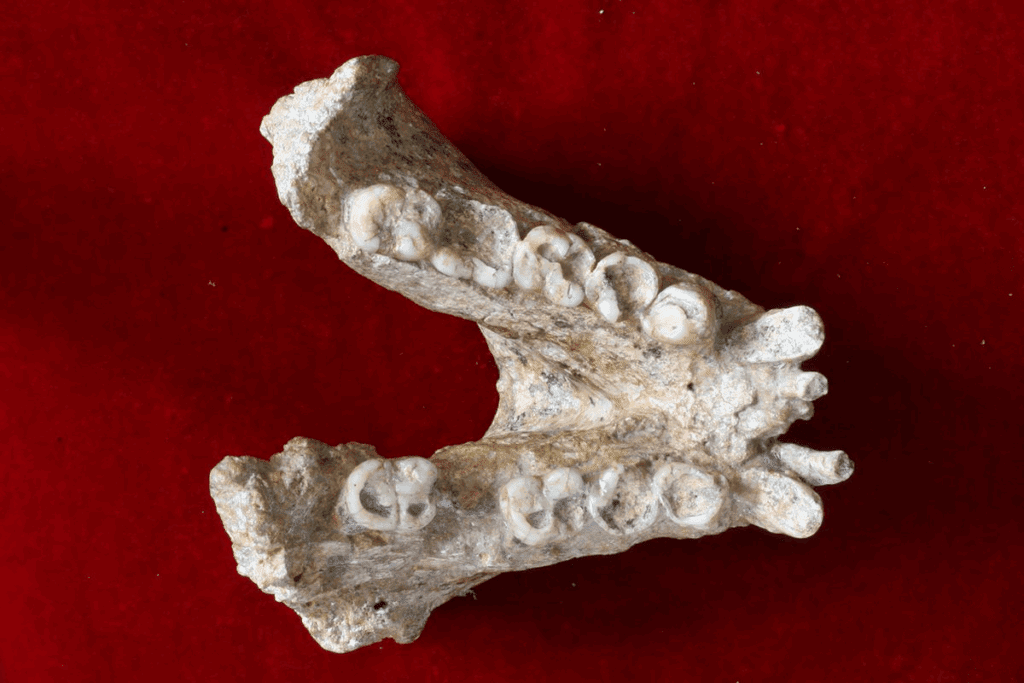
The mandible, or lower jawbone, is key to our facial structure. It’s the only bone in the skull that moves. This lets us chew, speak, and show emotions through facial expressions.
The Only Freely Movable Bone
The mandible can move freely, unlike other skull bones. It connects with the temporal bones through the temporomandibular joints (TMJ). This lets us open and close our mouths and move them for eating and talking.
As the only freely movable bone in the skull, it relies on muscles, ligaments, and joints. This is vital for eating and talking.
Temporomandibular Joint Function
The TMJ connects the mandible to the skull’s temporal bones. It works with soft tissues like ligaments and muscles. This joint lets us move our jaws for eating and talking.
“The TMJ is a synovial joint that contains a articular disc, which facilitates smooth movement between the mandible and the temporal bone.”
Knowing how the TMJ works helps us treat jaw pain and disorders. It’s important for diagnosing and treating these issues.
| TMJ Component | Function |
|---|---|
| Articular Disc | Facilitates smooth movement between the mandible and temporal bone |
| Ligaments | Provides stability to the TMJ |
| Muscles | Controls the movement of the mandible |
In conclusion, the mandible’s role is unique. It’s the only bone that moves, thanks to the TMJ. This is key for chewing, speaking, and showing emotions. Understanding this is important for appreciating how we function.
Structural Components of the Mandible
Let’s dive into the mandible’s anatomy. The mandible, or lower jawbone, is key for many facial functions. It helps with chewing, speaking, and showing emotions.
The Horseshoe-Shaped Body
The mandible’s body is shaped like a horseshoe. It forms the chin and the jawline. This shape helps spread out forces when we chew. It also helps attach muscles for chewing and facial expressions.
The Vertical Rami
The vertical rami stick up from the body. They are the mandible’s back parts. These rami are vital for jaw movement and TMJ function.
The Angle of the Mandible
The angle of the mandible is where the body and ramus meet. It’s important for muscle attachment and force distribution during chewing. The angle varies among people, based on age and dental health.
The mandible’s parts work together for its functions. Its design allows for many movements. It keeps the facial skeleton strong.
Functional Anatomy of the Lower Jaw
The mandible, or lower jawbone, is a key part of our face. It plays a big role in eating, talking, and showing emotions. Knowing how it works helps us understand its importance.
Alveolar Border and Tooth Sockets
The alveolar border of the mandible is where the tooth sockets are. These sockets hold the lower teeth in place. The alveolar process, a thickened bone ridge, makes up the alveolar border.
This area changes as we grow, adapting to our teeth. It’s vital for keeping teeth aligned and stable.
Muscle Attachments
Many muscles connect to the mandible, allowing it to move and function. These include:
- The masseter muscle, which helps lift the mandible when we chew.
- The temporalis muscle, involved in closing the jaw.
- The medial pterygoid muscle, which helps rotate the mandible during chewing.
- The lateral pterygoid muscle, important for opening the jaw and moving the mandible forward.
- The digastric muscle, which helps lower the mandible.
These muscle attachments are essential for the jaw’s complex movements.
Nerve and Blood Supply
The mandible gets its nerve supply mainly from the inferior alveolar nerve. This nerve sends signals to the lower teeth and surrounding areas.
The blood supply comes from the inferior alveolar artery, a branch of the maxillary artery. Both nerve and blood supply are key for the mandible’s health and function.
Development of the Mandible
From the sixth week of being inside the womb, the mandible starts to form. This happens through a process called intramembranous ossification. It’s a complex way of making bone tissue from cells without a cartilage template.
Intramembranous Ossification Process
The process of intramembranous ossification is key for the mandible’s development. It starts with mesenchymal cells coming together. These cells then turn into osteoblasts.
Osteoblasts are important because they make the bone matrix. This matrix then mineralizes to become bone.
The mandible develops in a special way. It forms without a cartilage precursor. This is different from bones that develop through endochondral ossification.
Fetal Development Timeline
The mandible’s growth is closely linked to fetal development. Important milestones include:
- The sixth week: Start of intramembranous ossification.
- The eighth week: Appearance of mandibular ossification centers.
- Third to fourth month: Continued growth and development.
This timeline is key for understanding how the mandible grows during fetal development.
Mandibular Symphysis Fusion
The mandibular symphysis is where the two halves of the mandible join. This joining usually happens in the first year of life, between 4-12 months.
| Age | Developmental Stage |
|---|---|
| 0-4 months | Unfused symphysis |
| 4-12 months | Symphysis fusion |
The mandible’s development is a complex and regulated process. It involves intramembranous ossification and fusion at the symphysis. Understanding this is vital for seeing the mandible’s role in the facial structure.
The Mandible’s Role in Essential Functions
The mandible is key to many important functions in our bodies. It helps us eat, speak, and even show emotions through our faces.
Mastication (Chewing)
Mastication, or chewing, is a major job of the mandible. Its design lets us move it to chew food into smaller bits. This is vital for digestion and getting nutrients.
The temporomandibular joint (TMJ) helps the mandible move well. This makes chewing effective.
When we chew, the mandible works with the maxilla and teeth. The muscles like the masseter and temporalis help too. Good chewing is key for our mouth and digestion.
Speech Production
The mandible is also vital for speaking. Its movement helps us make different sounds. It’s needed for clear speech.
When we talk, the mandible works with our lips, tongue, and vocal cords. This lets us make many sounds. The mandible’s role in speech shows its importance in talking.
Facial Expressions and Aesthetics
The mandible also affects our looks and how we express ourselves. Its shape changes how our lower face looks. A strong mandible can make our face look better and younger.
The mandible helps our facial muscles move. This lets us show a range of emotions. The mandible’s role in looks shows its value in both function and beauty.
Common Conditions Affecting the Mandible
Many conditions can affect the mandible, from fractures to TMJ disorders. These issues can really change someone’s life. It’s key to know what causes them, their symptoms, and how to treat them.
Fractures and Trauma
Mandible fractures are common, often from injuries or fights. The mandible’s location makes it easy to break. Symptoms include pain, swelling, and jaw trouble.
We use X-rays and CT scans to check how bad the fracture is. Treatment can be simple or surgery, depending on the fracture.
Temporomandibular Joint Disorders
TMJ disorders affect the jaw joint, causing pain and jaw trouble. They can come from injuries, arthritis, or grinding teeth.
- Pain or tenderness in the jaw
- Clicking or grating sounds when opening or closing the mouth
- Limited mobility or locking of the jaw
- Headaches or earaches
We treat TMJ disorders with various methods. This includes mouth guards, physical therapy, or surgery for severe cases.
Developmental Abnormalities
Genetic or fetal issues can cause mandible abnormalities. Conditions like micrognathia or mandibular prognathism can affect teeth alignment and facial look.
We use advanced imaging and orthodontic checks to diagnose and treat these issues. Treatment might include orthodontics, surgery, or both.
Dental-Related Issues
The mandible is linked to dental health. Problems like tooth loss or gum disease can harm it. Regular dental visits are key to keeping the mandible healthy.
“The health of the mandible is intricately linked with overall dental health. Regular dental care and prompt attention to any issues are essential for maintaining a healthy jawbone and ensuring optimal oral function.”
We stress the need for preventive dental care and quick action on dental problems that could harm the mandible.
Diagnostic and Treatment Approaches
Managing mandible disorders needs a mix of methods. This includes advanced imaging and both surgery and non-surgery. We’ll dive into these strategies.
Imaging Techniques for Mandibular Assessment
Getting a correct diagnosis is key for good treatment plans. Many imaging methods help check mandible issues, such as:
- Panoramic radiography
- Computed Tomography (CT) scans
- Cone Beam Computed Tomography (CBCT)
- Magnetic Resonance Imaging (MRI)
Each method has its own benefits for looking at mandible anatomy and problems.
Surgical Interventions
Surgery is needed for complex mandible issues like fractures, tumors, or growth problems. Common surgeries include:
- Open reduction and internal fixation (ORIF) for fractures
- Reconstructive surgery using bone grafts
- Tumor resection and reconstruction
These surgeries need careful planning and doing to fix function and look.
Non-Surgical Management
Not every mandible issue needs surgery. Non-surgical options include:
- Physical therapy for TMJ disorders
- Orthodontic treatment for bad bites
- Medicine for pain and swelling
| Treatment Approach | Indications | Benefits |
|---|---|---|
| Surgical | Complex fractures, tumors, severe developmental issues | Restores function, improves aesthetics |
| Non-Surgical | TMJ disorders, malocclusions, pain management | Less invasive, quicker recovery |
By using these methods together, we can give full care to patients with mandible issues. This improves their health and life quality.
Conclusion
We’ve looked into the mandible, a key part of our face. It’s important for many things like eating, talking, and showing emotions. The mandible, or jawbone, shapes our lower face and helps us do these essential tasks.
The bone of jaw, or mandible, is special because it moves freely. It connects to the skull at the temporomandibular joint. Knowing about the mandible helps us see its role in our health and looks.
To sum up, the mandible is a vital part of our face. It does many important jobs, making it a key part of our body. The mental bone, a part of the mandible, shows how complex it is.
Understanding the mandible helps us see how our body works together. It shows the beauty and complexity of human anatomy.
FAQ
What is the medical name for the jawbone?
The medical term for the jawbone is the mandible. It’s the lower jawbone and is key to our facial structure.
What is the significance of the mandible in the facial skeleton?
The mandible is important because it’s the lower jaw. It’s the only bone in the skull that moves. This lets us chew, speak, and show emotions.
How does the mandible articulate with other bones?
The mandible connects with the temporal bone at the temporomandibular joints. This connection lets us open and close our mouths.
What is unique about the mandible compared to other bones in the skull?
The mandible stands out because it’s the only bone in the skull that moves freely. This allows for a wide range of motions.
What are the main structural components of the mandible?
The mandible’s main parts are its body, rami, and the angle where they meet. These parts help attach muscles and support the teeth.
What is the function of the temporomandibular joints?
The temporomandibular joints help the mandible move. This movement is key for chewing, speaking, and yawning.
How does the mandible support the teeth?
The mandible supports the teeth through its alveolar border. This border has sockets for the lower teeth.
What are some common conditions that can affect the mandible?
Common issues with the mandible include fractures and temporomandibular joint disorders. Other problems include developmental abnormalities and dental issues.
How are conditions related to the mandible diagnosed?
Doctors use X-rays, CT scans, and MRI to diagnose mandible-related conditions. They also do clinical exams.
What are the treatment options for mandible-related conditions?
Treatments for mandible issues include surgery, like repairing fractures or replacing joints. Non-surgical options include physical therapy and medication.
What is the developmental process of the mandible?
The mandible develops through a process called intramembranous ossification. It starts early in fetal development and continues into early childhood. It eventually fuses at the symphysis.
References
National Center for Biotechnology Information. Mandible Anatomy: Structure, Function, and Significance. Retrieved from https://www.ncbi.nlm.nih.gov/books/NBK532292[4



 Departments
 Related Videos
 Our Doctors
 News
News