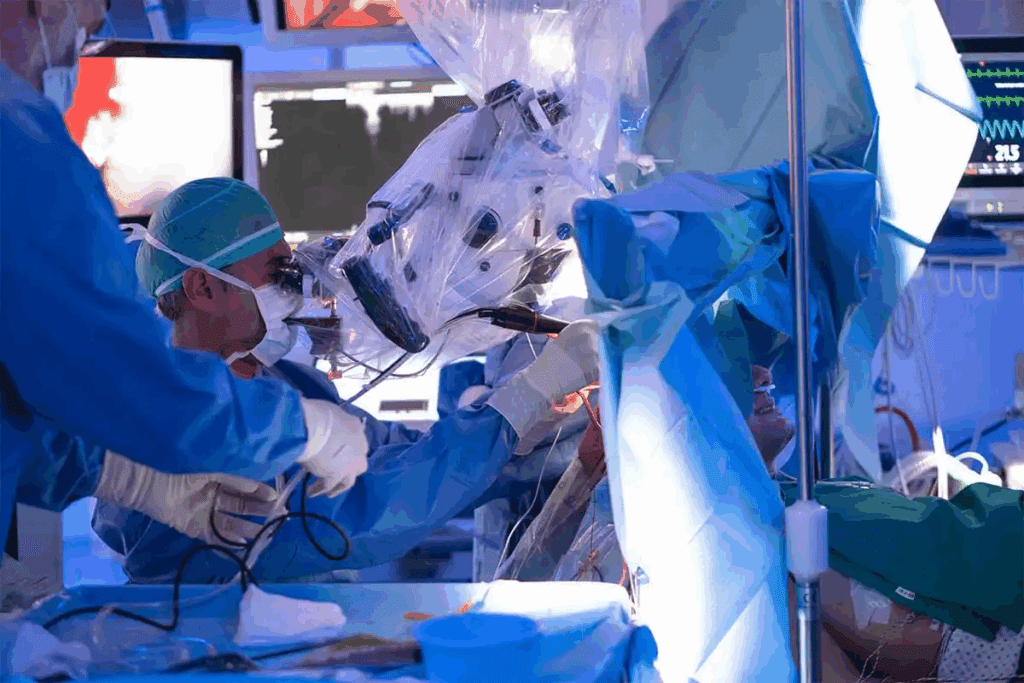
Awake brain surgery, also known as awake craniotomy, is a complex procedure. It requires precision and careful planning. This surgery is used to remove brain tumors or lesions while the patient is awake. This allows surgeons to monitor brain function in real-time.
Knowing how long awake brain surgery takes is important for patients. The surgery’s length can vary a lot. This depends on the case’s complexity and the patient’s health.
At our institution, we are dedicated to delivering top-notch healthcare. We support international patients undergoing brain surgery fully. Our team of experts will help you through every step, from preparation to recovery. We ensure you are well-informed and cared for.
Key Takeaways
- Awake brain surgery is a complex procedure that requires careful planning.
- The duration of the surgery varies based on the complexity of the case.
- Patients remain awake during the procedure to allow for real-time brain function monitoring.
- Our institution provides extensive support for international patients.
- The surgical team will guide patients through every stage of the process.
What is Awake Brain Surgery (Craniotomy)?
Awake craniotomy is a new way to do brain surgery. The patient stays awake during the surgery. This lets us watch how the brain works in real time.
We can then treat different brain problems with more care. This way, we make sure we don’t hurt important parts of the brain.
Definition and Medical Purpose
Awake brain surgery, or awake craniotomy, is a surgery where the patient is awake. The goal is to take out bad brain tissue while keeping the good tissue safe. This way, we can make sure the brain works right after surgery.
Being awake helps us do the surgery better. Patients can tell us right away if we’re doing something wrong. This helps us do a better job.
Types of Conditions Treated with Awake Craniotomy
We use awake craniotomy for many brain problems. These include brain tumors, blood vessel issues, and some movement disorders. Being able to see how the brain works helps us remove tumors safely.
| Condition | Description | Treatment Approach |
| Brain Tumors | Abnormal cell growths in the brain | Surgical removal with brain mapping |
| Vascular Lesions | Abnormalities in blood vessels | Microsurgical techniques with intraoperative monitoring |
| Movement Disorders | Conditions like Parkinson’s disease | Deep brain stimulation with awake testing |
By doing awake craniotomy, we can make patients better and avoid problems. The feedback from patients is key. It helps us keep the brain working right.
The Complete Craniotomy Process Timeline
The journey through a craniotomy involves many steps. Each step is key to the surgery’s success and the patient’s recovery. Knowing this timeline helps patients and their families get ready for the procedure and the care that follows.
Pre-surgical Preparation Phase
Before a craniotomy, patients go through a detailed preparation phase. This includes:
- Imaging Studies: MRI and CT scans to see the brain’s details.
- Neurological Assessments: Tests to check brain function and find risks.
- Discussions with the Neurosurgical Team: Talks about the surgery, risks, and what to expect.
These steps are vital. They make sure the patient is ready for surgery. They also help the neurosurgical team plan the procedure well.
Post-surgical Monitoring Requirements
After surgery, patients are watched closely in the ICU. The monitoring needs include:
- Close Observation: Watching vital signs and brain function all the time.
- Pain Management: Keeping pain under control after surgery.
- Complication Prevention: Steps to stop infections and other problems.
Knowing these phases helps patients understand their hospital stay and recovery. It makes the craniotomy recovery smoother.
Duration of the Actual Surgical Procedure
Awake brain surgery, also known as awake craniotomy, varies in length. It depends on several factors. These include the surgery’s complexity, the patient’s health, and the techniques used.
Average Time Frames for Awake Brain Surgery
Awake craniotomy procedures usually last 4 to 8 hours. This includes preparation, surgery, and initial recovery. The team’s experience and technology used can affect the time.
Breakdown of Average Surgery Time:
| Procedure Phase | Average Time |
| Preparation | 1-2 hours |
| Surgery | 2-4 hours |
| Initial Recovery | 1-2 hours |
Factors Affecting Surgery Duration
Several factors can influence awake brain surgery’s duration. These include:
- Tumor size and location: Larger tumors or those in critical areas may require more time to remove safely.
- Patient’s neurological status: Patients with certain neurological conditions may require more intraoperative testing, extending the surgery time.
- Surgical team’s experience: More experienced teams can often complete the procedure more efficiently.
- Intraoperative findings: Unexpected findings during surgery can necessitate adjustments, potentially lengthening the procedure.
Understanding these factors can help patients and their families prepare for the surgery. It helps them know what to expect during the process.
Step-by-Step Phases of Awake Craniotomy
Understanding the awake craniotomy process is key. It involves several important steps. Each step needs careful planning and teamwork from the neurosurgical team.
Initial Anesthesia and Positioning
The first step is giving initial anesthesia to make the patient comfortable. We then position the patient in a way that helps with the surgery. This keeps them safe and comfortable.
The anesthesia team is very important here. They must find the right balance of anesthesia. This lets the patient stay comfortable but also awake when needed.
Awakening and Neurological Testing
After getting ready, we wake the patient up for neurological testing. This is a key part. It helps us see how the brain works and what to avoid during surgery.
We do tests to check how the patient’s brain responds. This helps us map the brain’s functions accurately.
Tumor Removal and Brain Mapping
The next step is removing the tumor and doing brain mapping. We use what we learned from the tests to remove the tumor safely. We make sure to avoid important brain areas.
To show how it works, here’s a quick overview of the main steps and what they aim to do:
| Phase | Objective | Key Activities |
| Initial Anesthesia and Positioning | Ensure patient comfort and safety | Administer anesthesia, position patient |
| Awakening and Neurological Testing | Assess brain function | Conduct neurological tests, map brain function |
| Tumor Removal and Brain Mapping | Remove tumor while preserving critical brain areas | Remove tumor, use brain mapping to guide surgery |
Patient Experience During Awake Brain Surgery
During an awake craniotomy, patients stay awake and can talk to the team. This lets us watch how the brain works in real time. It helps keep the patient safe and makes sure the surgery goes well.
What Patients Feel and Remember
Patients often wonder what they’ll feel during awake brain surgery. Knowing what to expect can help them feel less scared. Most patients say they feel okay during the surgery, maybe a little uncomfortable from the head frame or the surgery site.
Sensations During Surgery: Some patients might feel pressure or vibrations, but it’s not usually painful. We use local anesthesia to block pain in the surgery area, so patients don’t feel it.
Communication with the Neurosurgical Team
Talking well between the patient and the neurosurgical team is very important during an awake craniotomy. We keep the lines of communication open to make sure the patient is comfortable and safe.
Key Aspects of Communication:
- Pre-surgical briefing to explain the procedure and what to expect.
- Continuous monitoring of the patient’s neurological functions.
- Patient feedback during the surgery to assess their condition and adjust the procedure as needed.
| Aspect of Communication | Importance | Method |
| Pre-surgical Briefing | High | Detailed explanation by the neurosurgical team |
| Continuous Monitoring | Critical | Real-time neurological assessment |
| Patient Feedback | Essential | Regular checks on patient’s condition and sensations |
By keeping communication clear and ongoing, we make sure the patient is comfortable. And we make sure the surgery is a success.
Patient Selection Criteria for Awake Craniotomy
Choosing patients for awake craniotomy is a detailed process. We look at medical, psychological, and cognitive factors. This helps us decide if a patient is right for this complex surgery.
Medical Eligibility Factors
Several factors decide if a patient can have an awake craniotomy. Tumor location and size are key. Tumors near important brain areas often need this surgery for safe removal.
Previous medical history is also important. This includes conditions like epilepsy or past brain surgeries. We check the patient’s overall health and if they can handle the surgery.
We review MRI or CT scans to understand the tumor. This helps us decide if awake craniotomy is possible. It also guides our surgical plan.
Psychological and Cognitive Requirements
Psychological and cognitive checks are vital. Cognitive function is tested to see if the patient can follow instructions. Psychological stability is also key, as the surgery can be stressful.
Our team works with psychologists to check mental readiness. We assess if the patient can stay calm and cooperate during surgery. This is essential for success.
By looking at both medical and mental readiness, we find the best candidates. This ensures the best results for awake craniotomy.
Post-operative Recovery Timeline After Craniotomy
Knowing how to recover after awake brain surgery is key for patients and their families. The recovery time after a craniotomy varies a lot. It depends on many factors.
Immediate Recovery Period (24-48 Hours)
The first few days are very important. Patients usually stay in a place like an ICU or a step-down unit. Here, doctors watch their vital signs, brain function, and look for any problems.
Key aspects of immediate recovery include:
- Continuous monitoring of neurological function
- Management of pain and discomfort
- Observation for signs of swelling or bleeding
- Administration of medications to prevent seizures and reduce brain swelling
Hospital Stay Duration
How long a patient stays in the hospital can change a lot. It depends on the patient’s health, the surgery’s complexity, and if there are any complications. Usually, patients stay for 3 to 7 days.
| Factor | Average Duration | Variability |
| Hospital Stay | 3-7 days | 1-14 days |
| ICU Stay | 1-2 days | 0-5 days |
| Full Recovery | 6-12 weeks | Several months |
Long-term Recovery Expectations
Recovering from a craniotomy takes time. It involves getting back to normal activities slowly. Patients might feel tired, have brain changes, and feel emotionally different.
It’s vital to have follow-up care and rehabilitation. Our team helps patients and their families a lot. We support them all through the recovery.
Factors That Can Extend Craniotomy Duration
Awake craniotomy procedures can take longer due to several important factors. “The complexity of the surgical procedure, coupled with the patient’s unique response, plays a critical role in determining the overall duration,” say neurosurgical experts.
Tumor Complexity and Location
The complexity and location of the tumor are key factors. Tumors in sensitive or hard-to-reach brain areas need more precise and time-consuming techniques. Tumors with complex vascular structures or those deeply embedded in brain tissue make surgery more complicated, requiring extra time for careful removal.
Intraoperative Findings and Complications
Unexpected findings or complications during surgery can also extend the procedure. Intraoperative imaging and monitoring might show issues like tumor spread or unexpected bleeding. These need immediate attention and changes to the surgical plan.
Patient Response During Awake Phase
The patient’s response during the awake phase is also critical. Patients who feel anxious, uncomfortable, or experience neurological changes may need extra care. Effective communication between the patient and the surgical team is key to managing these responses and ensuring success.
As neurosurgeons, we stress the importance of understanding these factors. It helps manage expectations and improve surgical outcomes. By recognizing the challenges and complexities of craniotomy procedures, we can better meet each patient’s unique needs.
Modern Technological Advancements in Craniotomy
Craniotomy procedures have become more precise and safe thanks to modern technology. These innovations have greatly improved neurosurgery, including awake craniotomy surgeries.
Advanced technologies have changed how craniotomies are done. Two main areas where technology has made a big difference are intraoperative imaging and mapping, and surgical navigation systems.
Intraoperative Imaging and Mapping
Intraoperative imaging and mapping have changed how surgeons understand the brain during surgery. Techniques like functional MRI (fMRI), diffusion tensor imaging (DTI), and intraoperative ultrasound give real-time data. This helps surgeons make better decisions during the surgery.
Key benefits of intraoperative imaging and mapping include:
- Enhanced precision in tumor localization
- Improved preservation of critical brain structures
- Real-time feedback during the surgery
Surgical Navigation Systems and Their Impact on Duration
Surgical navigation systems, also known as neuronavigation systems, are key in modern craniotomy procedures. These systems use advanced imaging data to create a 3D map of the brain. This allows surgeons to plan and execute the surgery more accurately.
The impact of surgical navigation systems on craniotomy surgery duration is significant:
- They can potentially reduce surgery time by providing clear anatomical references.
- They help in minimizing complications, which can extend the surgery duration.
- They enable surgeons to make adjustments in real-time, optimizing the surgical approach.
By using these technological advancements, we can greatly improve the safety and success of craniotomy procedures. This leads to better outcomes for patients.
Success Rates and Outcomes of Awake Brain Surgery
Awake brain surgery has seen big improvements thanks to new neurosurgical methods. This surgery is now a top choice for treating tough brain problems. It helps patients live better lives after surgery.
Neurological Function Preservation Statistics
Research shows awake brain surgery boosts chances of keeping brain function. Neurological function preservation rates are very high. Studies say a big number of patients keep their important brain functions after surgery.
For example, awake craniotomy lets doctors remove tumors more carefully. They can avoid harming nearby important brain areas. This is thanks to intraoperative brain mapping and constant monitoring during surgery.
Quality of Life After Awake Craniotomy
The quality of life after awake craniotomy is a big deal for patients. People who have this surgery often have fewer brain problems after. This means they can do daily tasks and stay independent better.
Our team focuses on full care after surgery to help patients get back to normal. The good results of awake brain surgery come from the surgery itself and the care patients get. This care is from a team of experts throughout their treatment.
Risks and Complications Related to Surgery Duration
It’s important for patients and doctors to know about the risks of awake brain surgery. The surgery’s length can affect how risky it is.
Awake craniotomy is good for some brain issues but has its own challenges. Longer surgeries can make these issues worse. We’ll look at the main concerns, like anesthesia problems, surgical issues, and the mind effects of long surgeries.
Anesthesia-Related Concerns
Managing anesthesia in awake craniotomy is tricky. It’s about keeping the patient comfortable but awake enough. Longer surgeries raise the chance of anesthesia problems, such as:
- Respiratory depression: Long sedation can slow breathing, needing help.
- Local anesthesia toxicity: Rare but possible, needing more anesthetic for longer times.
Surgical Complications
Awake craniotomy can face several surgical issues, some tied to surgery length. These include:
- Infection risk: Longer surgery time can raise infection chances.
- Bleeding complications: Longer surgeries might increase bleeding risks.
- Neurological injury: Longer surgery times raise the risk of brain damage.
Psychological Effects of Extended Awake Procedures
The mind effects of long awake surgery are big. Patients might feel:
- Anxiety and stress: Being aware of everything can make anxiety worse.
- Fatigue: Long periods of staying calm and cooperative can be very tiring.
It’s key for the surgical team to watch the patient’s mental state closely. They should help as needed to lessen these effects.
Alternatives to Awake Craniotomy Procedures
There are many ways to treat brain conditions, not just awake craniotomy. We look at each patient to find the best treatment. This includes the newest in neurosurgery and oncology.
Traditional (Asleep) Craniotomy Approaches
Traditional craniotomy uses general anesthesia. It’s used for conditions that awake craniotomy can’t handle. Or when a more traditional method is needed.
Advantages of Traditional Craniotomy:
- Patient comfort during the procedure
- Suitable for complex or deep-seated brain conditions
- Allows for a more controlled environment for the surgical team
A study in the Journal of Neurosurgery shows it’s a good option. It has a high success rate in removing tumors and doing brain surgeries.
| Surgical Approach | Patient State | Typical Use Cases |
| Awake Craniotomy | Patient is awake during part of the surgery | Tumors near critical brain areas, epilepsy surgery |
| Traditional Craniotomy | Patient is under general anesthesia | Complex or deep-seated brain conditions, multiple lesions |
Conclusion
Awake brain surgery, or craniotomy, is a complex procedure. It needs careful planning and precise execution. We’ve explained the stages of awake craniotomy, from preparation to recovery.
Our team is dedicated to delivering top-notch healthcare. We support international patients undergoing this significant neurosurgery, including brain tumor surgery.
Understanding awake brain surgery helps patients prepare for their journey. We aim to provide personalized support. This ensures patients get the best care during their treatment.
At our institution, we focus on patient care and safety. We use the latest advancements in neurosurgery for the best outcomes. If you or a loved one is considering awake craniotomy, we’re here to help every step of the way.
FAQ
What is awake brain surgery?
Awake brain surgery, also known as awake craniotomy, is a procedure where the patient stays awake. This lets our neurosurgical team watch brain function in real-time.
What are the benefits of awake craniotomy?
Awake craniotomy lets us watch brain function in real-time. This helps us avoid harming important areas and get better results.
Awake brain surgery can last from 4 to 8 hours. This depends on how complex the case is and other factors.
What conditions are treated with awake craniotomy?
We use awake craniotomy to treat many brain conditions. These include tumors, epilepsy, vascular lesions, and some movement disorders.
Will I be asleep during any part of the surgery?
Yes, you will be under general anesthesia or sedation at first. Later, you will be woken up for neurological tests.
What can I expect during the recovery period after craniotomy?
Recovery involves close monitoring in the ICU. You will then stay in the hospital for a while. The recovery period is long and can be challenging.
Are there any risks or complications associated with awake craniotomy?
Like any surgery, awake craniotomy has risks. These include problems with anesthesia, surgical issues, and the psychological effects of being awake for a long time.
How do modern technological advancements impact craniotomy procedures?
New imaging, mapping, and navigation systems have made awake craniotomy safer and more precise. This might affect how long the surgery takes.
What are the success rates and outcomes of awake brain surgery?
Awake brain surgery is very successful. It often removes tumors and keeps neurological function intact. This greatly improves patients’ quality of life.
Are there alternatives to awake craniotomy?
Yes, there are other ways to treat brain conditions. These include traditional craniotomy and non-surgical options. We choose the best treatment for each patient.
How do you determine if I’m a suitable candidate for awake craniotomy?
We carefully check each patient. We look at medical factors, psychological, and cognitive needs to decide if awake craniotomy is right for you.
Reference
National Center for Biotechnology Information. Evidence-Based Medical Insight. Retrieved from https://www.ncbi.nlm.nih.gov/pmc/articles/PMC5481555/