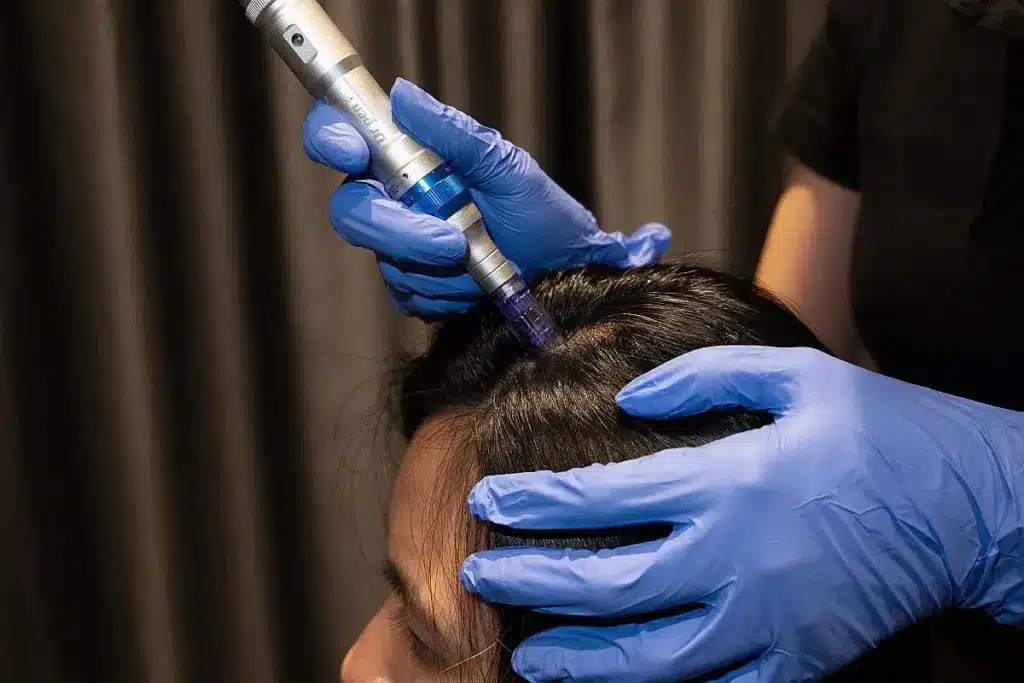
Did you know that nearly 50% of women and 80% of men experience some form of hair loss in their lifetime? Microneedling is a promising treatment for hair growth. It creates micro-injuries in the scalp to start the body’s healing process. This helps stimulate scalp stimulation.
The Skin Retreat is a top place for skincare treatments. They offer microneedling to help with hair growth. This innovative method can help people deal with hair loss and get a fuller head of hair.
Explaining how does microneedling work for hair growth (stimulates blood flow and stem cells) using a derma roller for hair growth.
Key Takeaways
- Microneedling is a minimally invasive treatment for hair loss.
- It stimulates the scalp to promote hair growth.
- The Skin Retreat offers microneedling services for hair growth.
- Microneedling can be an effective hair loss treatment.
- Scalp stimulation is key to promoting hair growth.
Understanding Microneedling and Derma Rollers
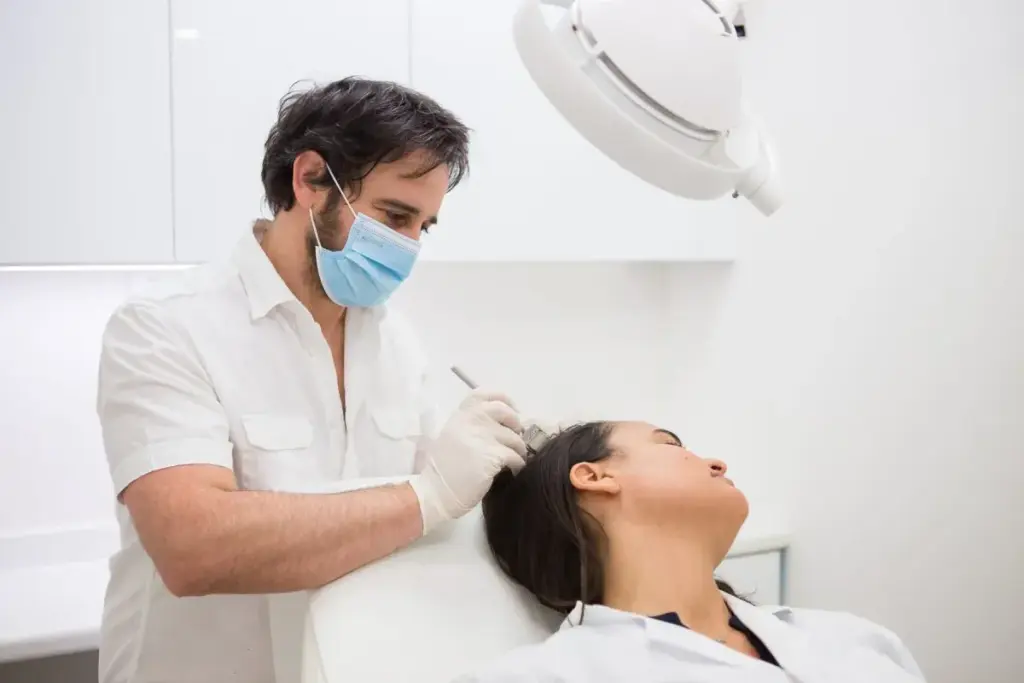
Effortless Beauty is a top Skin Care Studio known for microneedling. They use it for skin and hair treatments. Their work shows great results in making hair grow.
What is a Derma Roller?
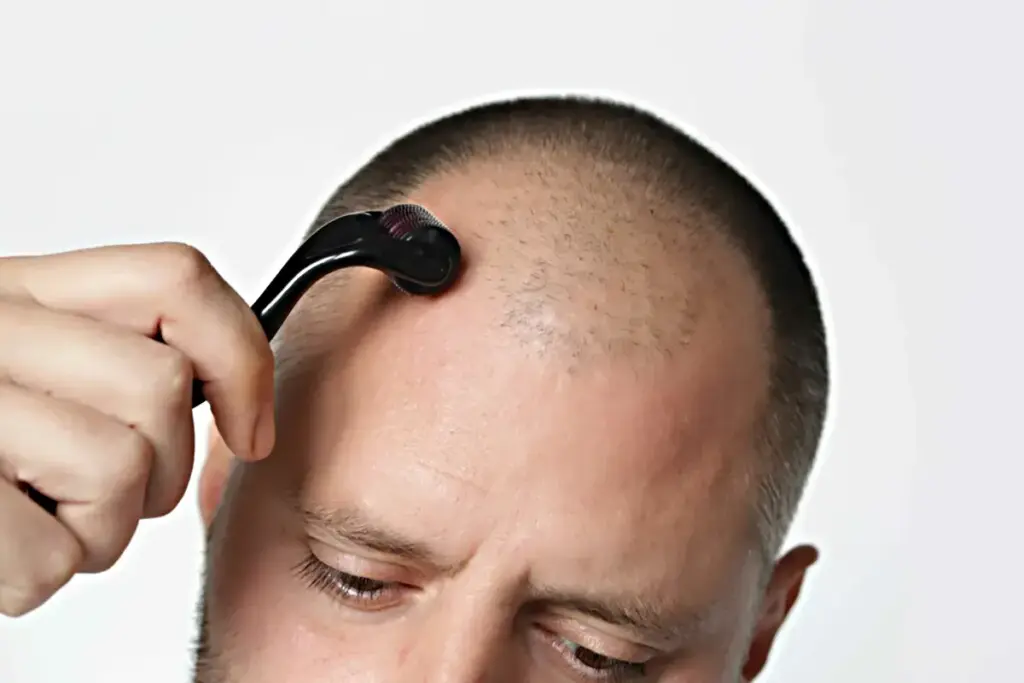
A derma roller, or microneedling roller, is a handheld tool with tiny needles. It rolls over your skin, making small injuries. These injuries start your body’s healing, boosting collagen and possibly growing hair.
The needles vary in length, from 0.2mm to 2.5mm. The length you choose depends on what you’re treating and where.
The Science Behind Microneedling
Microneedling is about making controlled skin injuries. When the derma roller makes these injuries, it releases growth factors. These factors help make more collagen and rejuvenate the skin. For hair, it might wake up dormant follicles, making hair thicker and healthier.
“Microneedling has been shown to increase the expression of genes involved in hair growth,” showing its promise against hair loss.
History and Development of Microneedling Therapy
Microneedling started in the early 20th century for skin care. Over time, it’s gotten better with new needle designs and materials. Now, it’s used for many things, including hair restoration.
Using derma rollers for hair growth is a newer idea. It uses microneedling to wake up hair follicles. As research goes on, microneedling’s benefits for hair loss are becoming clearer.
The Connection Between Hair Loss and Scalp Health
Understanding how hair loss and scalp health are connected is key to finding good balding remedies. Hair loss, or alopecia, can be caused by many factors. These factors often relate to the scalp’s condition.
Common Causes of Hair Loss
Hair loss can come from genetics, hormonal changes, medical conditions, and certain hairstyles. Androgenetic alopecia, or male/female pattern baldness, is a common cause.
Other causes include autoimmune diseases like alopecia areata, where the immune system attacks hair follicles. Also, telogen effluvium is caused by stress or hormonal changes, leading to excessive hair shedding.
How Scalp Condition Affects Hair Growth
The scalp’s health is vital for hair growth. A healthy scalp nourishes hair follicles. But, an unhealthy scalp can lead to hair loss.
Scalp inflammation, infections, and poor blood circulation can harm hair growth. For example, psoriasis or seborrheic dermatitis can cause inflammation, disrupting hair growth. Keeping the scalp clean and healthy is essential for hair growth.
Identifying Different Types of Hair Loss
Knowing the type of hair loss is important for the right treatment. Common types include androgenetic alopecia, alopecia areata, and telogen effluvium. Each type needs a different treatment approach.
|
Type of Hair Loss |
Causes |
Characteristics |
|---|---|---|
|
Androgenetic Alopecia |
Genetics, Hormonal Changes |
Gradual thinning, typically starting at temples or crown |
|
Alopecia Areata |
Autoimmune Disease |
Patchy hair loss, can occur anywhere on body |
|
Telogen Effluvium |
Stress, Hormonal Changes |
Excessive hair shedding, usually after stressful event |
Beyond Beauty Salon focuses on inner beauty and confidence. They offer services that help promote healthy hair. They diagnose hair loss causes and provide personalized treatments for scalp health and hair growth.
Derma Roller for Hair Growth: How It Works
Derma rollers use the body’s healing powers to boost hair growth. They are non-invasive and work by rolling tiny needles over the scalp. This creates micro-injuries that start a healing process.
The Biological Mechanism of Action
Derma rollers work by starting the scalp’s healing process. The tiny needles make small injuries. This leads to the release of growth factors that help hair grow.
Key biological responses include:
- Increased blood flow to the scalp
- Release of growth factors such as VEGF (Vascular Endothelial Growth Factor)
- Activation of dormant hair follicles
Collagen Induction and Hair Follicle Stimulation
Derma rollers also boost collagen production. Collagen is key for healthy skin and hair. More collagen means stronger hair follicles and thicker hair.
Using a derma roller can also make hair denser and reduce shedding. This is great for those with thinning or balding hair.
Enhanced Product Absorption Through Microchannels
Another big plus of derma rollers is better product absorption. The needles create channels for hair growth products to reach deeper into the scalp. This makes treatments more effective.
|
Product |
Absorption Without Derma Roller |
Absorption With Derma Roller |
|---|---|---|
|
Minoxidil |
20% |
Up to 50% |
|
Essential Oils |
10% |
Up to 30% |
|
PRP (Platelet-rich Plasma) |
30% |
Up to 60% |
Using derma rollers with other hair treatments can improve results. Services like those at The Beauty Spot show how important scalp health is for hair growth.
Scientific Evidence Supporting Microneedling for Hair Loss
Microneedling is a promising treatment for hair loss, backed by scientific evidence. It’s a minimally invasive procedure that uses tiny needles to create micro-injuries in the scalp. This stimulates hair growth through various biological mechanisms.
Clinical Studies and Research Findings
Several clinical studies have looked into microneedling for hair loss. A study in the Journal of Cutaneous and Aesthetic Surgery found it improved hair count and thickness in patients with androgenetic alopecia.
Another study by the Department of Dermatology at a prestigious medical university showed microneedling, combined with topical minoxidil, led to better hair regrowth than minoxidil alone.
Comparison with Other Hair Loss Treatments
Microneedling stands out because it’s non-pharmacological and has minimal side effects. Unlike oral medications or topical treatments, it doesn’t cause systemic effects or skin irritation. It’s generally well-tolerated.
|
Treatment |
Mechanism |
Side Effects |
|---|---|---|
|
Microneedling |
Stimulates collagen and hair growth through micro-injuries |
Mild redness, temporary discomfort |
|
Minoxidil |
Widens hair follicles, prolongs growth phase |
Scalp irritation, unwanted hair growth |
|
Finasteride |
Inhibits dihydrotestosterone (DHT) production |
Sexual dysfunction, breast tenderness |
Expert Opinions from Dermatologists
Dermatologists, like those at Complexions Dermatology, recommend microneedling for hair loss. Dr. [Last Name], a board-certified dermatologist, says, “Microneedling is a valuable addition to our arsenal against hair loss, providing a safe and effective way to stimulate hair regrowth.”
Experts stress the importance of a personalized approach, combining microneedling with other treatments for the best results. As research evolves, microneedling’s role in hair restoration is expected to grow, bringing new hope to those experiencing hair loss.
Types of Derma Rollers for Different Hair Loss Conditions
Derma rollers are made for different hair loss problems and scalp issues. They let people pick the right one for their needs. This could be for male pattern baldness, female hair thinning, or other scalp problems.
Needle Size Variations and Their Purposes
The size of the needles on a derma roller matters a lot for hair growth. They range from 0.2mm to 2.5mm. For growing hair, sizes between 0.5mm and 1.5mm are best.
- 0.5mm needles: Good for light hair loss and gentle stimulation.
- 1.0mm needles: Best for moderate hair loss, a good balance.
- 1.5mm needles: For serious hair loss, deeper but be careful.
Material Quality and Construction Differences
The material and how it’s made affect a derma roller’s life and how well it works. Top derma rollers are made from stainless steel or titanium. This keeps them from rusting and keeps them clean.
When picking a derma roller, think about these:
- It should be safe for your skin and last long.
- It should have needles that are evenly spaced and stay in place well.
- A comfy handle makes using it easier.
Specialized Rollers for Specific Scalp Conditions
Some derma rollers are made for certain scalp issues, like being too sensitive or scarring alopecia. Salon K and Shape’D have special treatments for different scalp needs. It’s key to choose the right one for your scalp.
Special rollers might have:
- Needles that can be adjusted for different scalp needs.
- Softer coatings for sensitive scalps.
- Custom plans for different hair loss types.
Step-by-Step Guide: How to Use a Derma Roller for Hair Growth
To get the best results from a derma roller, knowing how to use it is key. It’s not just about rolling it on your scalp. You need to prepare, use the right technique, and take care of your scalp after.
Preparation and Sanitization
Start by washing your scalp and hair well to remove dirt. Then, soak the derma roller in a mix of water and white vinegar for 5-10 minutes. Rinse it with warm water and let it dry.
Sanitizing is vital to avoid infections and keep your scalp clean. G Services Natural Haircare stresses the need for cleanliness when using derma rollers.
Proper Rolling Technique for the Scalp
Section your hair to expose your scalp. Hold the roller at a 45-degree angle and roll it in different directions. Use gentle pressure, feeling a slight sensation but not pain.
Consistency is key for derma rolling. Regular use with the right technique can improve hair growth over time.
Post-Treatment Care and Product Application
After rolling, your scalp is ready for hair growth products. Apply a nourishing serum or treatment. Massage it into your scalp to help it absorb better.
Recommended Treatment Frequency
The treatment frequency depends on your hair loss and the roller’s needle size. Start with once a week and increase to 2-3 times as your scalp gets used to it.
|
Needle Size |
Recommended Frequency |
Scalp Condition |
|---|---|---|
|
0.2-0.5 mm |
2-3 times a week |
Mild hair thinning |
|
0.5-1.0 mm |
1-2 times a week |
Moderate hair loss |
|
1.0-2.0 mm |
Once a week or less |
Significant hair loss or alopecia |
Watch how your scalp reacts to derma rolling and adjust your frequency. If you see any bad effects, cut back or talk to a dermatologist.
Combining Derma Rolling with Other Hair Growth Treatments
Derma rolling works better when paired with other hair growth treatments. This method is becoming more popular for those wanting to improve their hair growth.
Minoxidil and Microneedling Synergy
Derma rolling and minoxidil are often used together. The microneedling opens up the scalp, helping minoxidil work better. Research shows this combo can be more effective than minoxidil alone.
Essential Oils and Natural Serums
Some people also use derma rolling with essential oils and natural serums. These products are thought to help hair grow and improve scalp health. Using them with derma rolling might make them more effective.
Prescription Medications and Derma Rolling
For serious hair loss, adding derma rolling to prescription meds like finasteride might help. The exact hows are being studied, but it seems to work well together.
Places like Ly Lash & Beauty Bar show how mixing treatments can lead to better results. Tailoring treatments to fit individual needs can be very effective.
When mixing derma rolling with other treatments, it’s key to follow the right steps. This helps get the best results and avoids side effects. Always talk to a doctor before starting any new treatment.
Realistic Expectations: Derma Roller Before and After Results
Getting realistic results from derma roller treatment means looking at real data and personal stories. Many people have seen big improvements in their hair growth after using derma rollers regularly.
Timeline for Visible Improvements
How long it takes to see hair growth improvements can differ a lot. Most people start to notice changes in 6-12 weeks of using derma rollers.
Key milestones in the timeline include:
- 6-12 weeks: Initial results become noticeable, with some users reporting a decrease in shedding.
- 3-6 months: More pronounced hair growth is observed, with an increase in hair thickness.
- 6-12 months: Significant improvements in hair density and coverage are often reported.
Documented Success Stories
Many people have shared their positive experiences with derma rollers. For example, a study in a dermatology journal showed that microneedling helped patients with androgenetic alopecia grow more hair.
“I’ve been using a derma roller for six months now, and I’ve seen a significant reduction in hair loss. My hair looks thicker and healthier.”
A satisfied derma roller user
|
Duration of Use |
Reported Improvements |
|---|---|
|
6-12 weeks |
Initial results, reduced shedding |
|
3-6 months |
Pronounced hair growth, increased thickness |
|
6-12 months |
Significant improvements in hair density and coverage |
Factors Affecting Individual Results
Even though derma rollers can help with hair growth, results can vary. This is because of different factors.
Key factors influencing outcomes include:
- The severity of hair loss
- Consistency of derma roller use
- Combination with other hair growth treatments
- Overall scalp health
Understanding these factors and setting realistic goals can help users get the most out of their derma roller treatment.
Potential Side Effects and Safety Considerations
Microneedling is popular for hair growth, but it’s important to know the risks. It’s a treatment that comes with its own set of side effects. These need to be evaluated to ensure it’s safe and effective.
Common Side Effects and How to Minimize Them
Most people who try microneedling for hair growth face little side effects. But, it’s good to know what might happen. Common side effects include:
- Temporary redness and irritation
- Mild swelling
- Slight bleeding or bruising
To lessen these side effects, it’s key to take good care before and after treatment. Keep the area clean, avoid harsh products, and stick to the recommended schedule.
When to Avoid Microneedling
There are times when microneedling isn’t a good idea. These include:
|
Condition |
Reason to Avoid Microneedling |
|---|---|
|
Active acne or skin infections |
Microneedling can spread infection or irritate active acne. |
|
Pregnancy and breastfeeding |
The effects of microneedling on the fetus or baby are not well-studied. |
|
History of keloid or hypertrophic scarring |
Microneedling can potentially cause further scarring. |
Signs That Indicate You Should Stop Treatment
It’s important to watch how your body reacts to microneedling. Look out for signs that mean you should stop. These include:
- Persistent or severe redness and irritation
- Infection signs such as increased redness, swelling, or pus
- Unusual hair loss or shedding after treatment
If you notice any of these symptoms, talk to a healthcare professional or dermatologist. They can guide you.
Knowing the side effects and taking precautions can help you safely use microneedling for hair growth. Always talk to a professional about your situation. They can help decide the best action for you.
Derma Rolling for Different Hair Types and Conditions
Derma rolling is becoming more popular for treating hair loss. It’s seen as a flexible option for various hair types and conditions. This makes it appealing to those looking to stop hair loss.
Salons like G Services Natural Haircare offer derma rolling for different hair needs. They adjust the treatment to fit each person’s hair loss situation. This shows how adaptable derma rolling can be.
Microneedling for Male Pattern Baldness
Male pattern baldness, or androgenetic alopecia, causes hair thinning and loss. It mainly affects the crown and temples. Derma rolling can help by boosting blood flow and making more collagen.
Research shows that derma rolling, when used with minoxidil, can help men grow more hair. The small injuries from derma rolling start a healing process. This can make hair thicker and healthier.
Addressing Female Hair Thinning
Female hair thinning can be caused by hormones, stress, or genetics. Derma rolling can strengthen hair follicles and improve scalp health. This leads to denser hair.
At salons like G Services Natural Haircare, derma rolling is tailored for women with thinning hair. These services are designed for each person’s scalp and hair type.
Treating Alopecia Areata with Derma Rolling
Alopecia areata is an autoimmune condition that causes patchy hair loss. Derma rolling is being studied as a way to help hair grow back in these spots.
Derma rolling works by making small injuries on the scalp. This might help stimulate hair growth. But, it’s important to talk to a doctor before starting treatment, because of the autoimmune nature of the condition.
Derma Rolling for Ethnic Hair Types
Ethnic hair types need special care because of their varied textures and curls. Derma rolling can be adjusted for these hair types. This includes changing needle length and treatment technique to fit different scalp sensitivities and hair textures.
Salons like G Services Natural Haircare offer derma rolling that’s gentle on ethnic hair. They make sure the treatment is effective and safe for the scalp.
|
Hair Type/Condition |
Derma Rolling Adaptation |
Potential Benefits |
|---|---|---|
|
Male Pattern Baldness |
Adjusted needle size, increased treatment frequency |
Enhanced hair regrowth, thicker hair |
|
Female Hair Thinning |
Customized treatment based on scalp condition |
Denser hair, improved scalp health |
|
Alopecia Areata |
Targeted treatment on affected areas |
Potential hair regrowth in patchy areas |
|
Ethnic Hair Types |
Adjusted needle length, sensitive technique |
Stimulated hair growth, accommodates diverse hair textures |
Maintaining Your Derma Roller for Optimal Results
Keeping your derma roller clean and well-maintained is key. It helps your roller last longer and work better for hair growth.
Cleaning and Disinfection Protocols
Wash your derma roller after each use to stop bacteria buildup. Start by rinsing it under warm water to get rid of dirt. Then, soak it in warm water with mild soap for 5-10 minutes.
Use a soft-bristled brush to clean all the needles gently. This ensures they’re spotless.
Next, soak the roller in 70% isopropyl alcohol for 5-10 minutes. This kills any bacteria or viruses. After, rinse it with clean water and let it air dry on a towel.
|
Cleaning Step |
Purpose |
Recommended Method |
|---|---|---|
|
Rinsing |
Remove debris |
Warm running water |
|
Soaking |
Loosen dirt and bacteria |
Warm water and mild soap |
|
Disinfection |
Kill bacteria and viruses |
70% isopropyl alcohol |
When to Replace Your Derma Roller
A good derma roller can last 6-12 months with regular use. Check it often for damage like bent needles.
If you see damage or it’s not working as well, it’s time for a new one. Replacing it regularly keeps your microneedling sessions effective.
Storage Best Practices
Storing your derma roller right is as important as cleaning it. Put it in a protective case after cleaning. Store the case in a cool, dry place, out of sunlight.
Also, keep it where kids and pets can’t get to it. This prevents damage or accidental ingestion.
By following these tips, your derma roller will stay in top shape. It will keep helping your hair grow well.
Conclusion: Is a Derma Roller Right for Your Hair Growth Journey?
Deciding if a derma roller is right for you depends on a few things. These include the reason for your hair loss, the health of your scalp, and your overall health.
Beauty salons and skincare experts can offer personalized advice. They help figure out if a derma roller fits into your hair loss treatment plan. They consider your unique situation to ensure the best results.
A derma roller can help stimulate hair growth if used correctly. It’s important to have realistic expectations. Remember, results can vary from person to person.
Learning about how a derma roller works, its benefits, and possible side effects helps you make a smart choice. This knowledge is key to deciding if it’s right for your hair growth journey.
FAQ
What is microneedling and how does it work for hair growth?
Microneedling is a treatment that uses tiny needles to make micro-injuries in the scalp. This stimulates collagen production and promotes hair growth. It boosts blood flow, reduces inflammation, and helps hair growth products work better.
How often should I use a derma roller for hair growth?
You should use a derma roller once or twice a week. Using it too much can cause irritation and make it less effective.
What are the benefits of combining derma rolling with other hair growth treatments?
Using derma rolling with treatments like minoxidil, essential oils, or medications can make them work better. This can help your hair grow faster.
Can derma rolling be used for different hair types and conditions?
Yes, derma rolling can help with many hair types and conditions. This includes male pattern baldness, female hair thinning, and alopecia areata. But, it’s best to talk to a professional to find the right approach for you.
How do I maintain my derma roller for optimal results?
Keep your derma roller clean and disinfected after each use. Store it in a dry place. Replace it every 3-6 months or as the manufacturer suggests.
What are the possible side effects of microneedling, and how can I minimize them?
Side effects might include redness, itching, and dryness. To avoid these, use the derma roller correctly and don’t overuse it.
Can I use a derma roller if I have a scalp condition or sensitive skin?
If you have a scalp condition or sensitive skin, talk to a professional before using a derma roller. They can guide you on safe use and the best treatment.
How long does it take to see results from derma rolling?
Seeing results from derma rolling can take 3-6 months. Consistency is key to getting the best results.
Is derma rolling suitable for everyone, regardless of hair loss severity?
Derma rolling can help with different levels of hair loss. But, it’s important to have realistic expectations and consult a professional for the best approach.
Can I use a derma roller with other hair growth products, like minoxidil or finasteride?
Yes, you can use a derma roller with other hair growth products. Just make sure to follow the instructions and talk to a professional for safe and effective use.