
Knowing the anatomy of the abdomen is key for doctors to find and treat problems. The abdominal area is split into different parts using imaginary lines. This helps doctors pinpoint where the issue is and link symptoms to organ involvement.Learn the essential left lower quadrant organs (descending colon, sigmoid colon). Understand the anatomy and clinical importance clearly.
We will look at how the abdomen is split into nine areas. These divisions help doctors diagnose and care for patients. The abdominopelvic cavity is divided into four quadrants and nine areas. This makes it easier to create treatment plans.
Key Takeaways
- Understanding abdominal anatomy is fundamental to clinical diagnosis and patient care.
- The abdomen is divided into four quadrants and nine regions using imaginary anatomical planes.
- Precise localization of pathology and correlation of symptoms with organ involvement is critical for effective treatment.
- The division into quadrants and regions helps in localizing pain and identifying possible diagnoses.
- Healthcare providers can precisely locate organs and pathology using anatomical planes.
Understanding Abdominal Anatomy: The Basics
The abdominal cavity is a complex space filled with vital organs. It is divided into quadrants and regions for clinical use. This division helps doctors pinpoint pain and symptoms, leading to better diagnoses and treatments.
Clinical Importance of Abdominal Division
Dividing the abdomen into quadrants is key for medical diagnosis. Knowing where pain or discomfort is helps doctors find the cause and plan treatments. The quadrants are formed by the sagittal and umbilical planes, creating four areas: right upper, left upper, right lower, and left lower.
Clinical Application: The quadrant system links symptoms to specific organs. For example, pain in the right lower quadrant often points to appendicitis.
Anatomical Planes and Landmarks
Anatomical planes and landmarks are vital for grasping abdominal anatomy. The median sagittal plane splits the body into left and right halves. The transverse plane through the umbilicus (navel) separates the upper and lower quadrants. These planes and landmarks guide doctors in finding organs and structures in the abdominal cavity.
Using these references is essential for imaging and surgery. It helps doctors clearly talk about the location of abdominal structures and any issues.
The Four-Quadrant System of the Abdomen
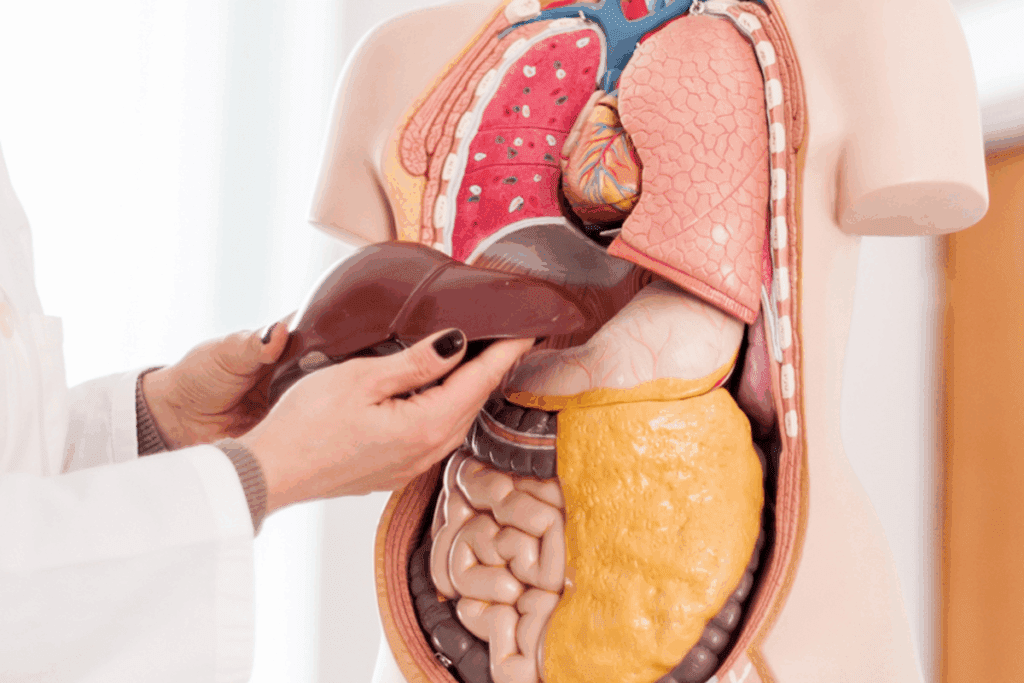
The abdomen is split into four parts by a vertical and a horizontal line. This makes the right upper quadrant (RUQ), left upper quadrant (LUQ), right lower quadrant (RLQ), and left lower quadrant (LLQ). Each part has its own organs and is linked to certain health issues.
Vertical and Horizontal Planes
A vertical line and a horizontal line through the belly button create the four-quadrant system. The vertical line goes from the top of the chest to the pubic bone, splitting the abdomen in half. The horizontal line goes through the belly button, dividing it into upper and lower parts.
Clinical Applications of the Four-Quadrant System
The four-quadrant system is key in medical practice. It helps doctors pinpoint where pain is coming from. This makes it easier to figure out what might be wrong and how to treat it. For example, pain in the right lower quadrant often means appendicitis, while right upper quadrant pain might be from the gallbladder.
“Accurate localization of abdominal pain is critical for diagnosis and treatment.”
Clinical Guidelines
Common Symptoms and Their Quadrant Association
Each quadrant is linked to different symptoms and health issues. The right upper quadrant, with the liver and gallbladder, is where you might feel pain from hepatitis or cholecystitis. The left lower quadrant, with parts of the colon and female organs, could be where you feel pain from diverticulitis or ovarian problems.
- Right Upper Quadrant: Liver, gallbladder, and related conditions like hepatitis or cholecystitis.
- Left Upper Quadrant: Stomach, spleen, and related conditions such as gastritis or splenic rupture.
- Right Lower Quadrant: Appendix, right ovary, and associated conditions like appendicitis or ovarian cysts.
- Left Lower Quadrant: Sigmoid colon, left ovary, and related conditions such as diverticulitis or ovarian torsion.
The Nine-Region System of the Abdomen
Dividing the abdomen into nine regions helps pinpoint organs and problems more accurately. This method is key in medical settings where knowing anatomy well is essential.
Vertical Midclavicular Lines
The nine-region system uses two vertical lines from the clavicle’s midpoint. These vertical midclavicular lines mark the sides of the nine regions. They offer a clear way to divide the abdomen.
These lines help doctors describe where pain or problems are in the abdomen. This makes talking about and finding the cause of pain more precise.
Horizontal Transpyloric and Transtubercular Planes
The system also includes two horizontal planes: the transpyloric plane and the transtubercular plane. The transpyloric plane is at the stomach’s pylorus level. The transtubercular plane is at the iliac tubercles level.
These planes split the abdomen into nine clear regions. Each region has its own set of organs and structures. This helps doctors pinpoint where problems are more accurately.
Region | Organs and Structures |
Right Hypochondriac | Liver, Gallbladder |
Epigastric | Stomach, Pancreas |
Left Hypochondriac | Spleen, Left Kidney |
Advantages Over the Four-Quadrant System
The nine-region system beats the four-quadrant system in many ways. It gives a finer view of the abdomen’s anatomy. This helps doctors pinpoint problems and share findings more clearly.
“The nine-region system enhances the precision of clinical assessments, allowing for more accurate diagnoses and targeted treatments.”
Clinical Anatomy Journal
This system shines in tricky cases where exact location is key. Using the nine-region system, healthcare teams can give better care. They do this by making more precise diagnoses and treatments.
Right Upper Quadrant (RUQ): Organs and Structures
The right upper quadrant (RUQ) of the abdomen is filled with important organs. These organs are key to digestion and metabolism. Knowing what’s in this area helps doctors diagnose and treat many abdominal problems.
Liver and Gallbladder
The liver is the biggest organ in the RUQ. It cleans the blood, helps break down food, and makes bile. The gallbladder is under the liver. It holds bile until it’s needed in the small intestine to digest fats.
The liver and gallbladder can get sick. For example, gallstones in the gallbladder can cause a lot of pain. Sometimes, surgery is needed to fix it.
Duodenum and Parts of the Pancreas
The duodenum is the first part of the small intestine in the RUQ. It gets bile from the gallbladder and pancreatic juice from the pancreas. This helps with digestion.
The head of the pancreas is also in the RUQ. The pancreas makes digestive enzymes and insulin. Insulin helps control blood sugar levels.
Common Clinical Conditions in the RUQ
Many health issues can affect the RUQ. Liver disease like hepatitis and cirrhosis can harm the liver. Pancreatitis, or inflammation of the pancreas, is very painful and needs quick medical help.
Doctors use physical exams, imaging like ultrasound or CT scans, and lab tests to find problems in the RUQ. This helps them understand what’s wrong and how to treat it.
Left Upper Quadrant (LUQ): Organs and Structures
The left upper quadrant of the abdomen is filled with important organs and structures. These are key to keeping us healthy. This area is special because it houses vital organs that can get sick.
Stomach and Spleen
The stomach, a major part of our digestive system, is in the LUQ. It helps break down our food. The spleen, also in this area, cleans our blood and stores red blood cells. Both organs can face health problems.
Common issues affecting these organs include:
- Gastritis and gastric ulcers in the stomach
- Splenic rupture or infarction due to trauma or disease
Left Kidney and Adrenal Gland
The left kidney filters waste and excess fluids from our blood. The adrenal gland makes important hormones. Both are vital for keeping us balanced and handling stress.
Potential clinical conditions affecting these organs include:
- Kidney stones or pyelonephritis in the kidney
- Adrenal tumors or hyperaldosteronism affecting the adrenal gland
Common Clinical Conditions in the LUQ
Problems in the LUQ can cause pain or discomfort in the upper left abdomen. This pain might spread to the back. Doctors need to know the anatomy and possible diseases of the organs in this area to diagnose correctly.
Some common clinical conditions associated with the LUQ include:
- Gastric ulcers and gastritis
- Splenic injuries or diseases
- Kidney stones or infections
- Pancreatitis or pancreatic tumors
It’s vital for healthcare professionals to understand the LUQ’s anatomy and its health issues. This knowledge helps them give the right diagnosis and treatment.
Right Lower Quadrant (RLQ): Organs and Structures
The RLQ is one of the nine areas of the abdomen. It’s important because it has the appendix and other key structures. These organs need careful attention from doctors.
Cecum and Appendix
The cecum is a pouch-like part in the RLQ. It’s where the large intestine starts. The appendix, a small finger-like part, is attached to it. Problems with the appendix can lead to appendicitis, a serious condition.
Key Features of the Cecum and Appendix:
Structure | Function | Common Conditions |
Cecum | Beginning of the large intestine | Cecal volvulus, tumors |
Appendix | Unknown, possibly immunological | Appendicitis, appendiceal tumors |
Right Ovary and Fallopian Tube
In females, the RLQ has the right ovary and fallopian tube. These are key parts of the reproductive system. The ovary makes eggs, and the fallopian tube helps move the egg to the uterus.
Common Clinical Conditions in the RLQ
Conditions like appendicitis, ovarian cysts, and ectopic pregnancies can affect the RLQ. It’s important to diagnose these correctly to treat them well.
Common Conditions and Their Symptoms:
- Appendicitis: Abdominal pain, nausea, fever
- Ovarian Cysts: Pelvic pain, bloating, irregular menstrual cycles
- Ectopic Pregnancy: Abdominal pain, vaginal bleeding, dizziness
Doctors need to know about the RLQ’s anatomy and possible problems. This knowledge helps them give the right care. Understanding the structures and their issues is key to treating patients fully.
Left Lower Quadrant Organs: Detailed Anatomy
The LLQ is home to important parts like the colon and female reproductive organs. It’s a complex area with vital organs and structures. Knowing its anatomy is key for diagnosing and treating health issues.
Descending and Sigmoid Colon
The descending colon runs down the left side of the abdomen. It then turns into the sigmoid colon, an S-shaped part that meets the rectum. These parts are vital for digestion and are key in diagnosing lower abdominal pain.
These areas can get sick, like diverticulitis, which is inflammation in the colon’s wall. It often hits the sigmoid colon.
Left Ovary and Fallopian Tube
In females, the left ovary and fallopian tube are in the LLQ. The ovary makes eggs and hormones, and the fallopian tube helps the egg reach the uterus. These are key parts of the female reproductive system.
Issues like ovarian cysts, ectopic pregnancy, and pelvic inflammatory disease can be serious. They need quick diagnosis and treatment.
Small Intestine Portions
The LLQ also has parts of the small intestine, like the jejunum and ileum. These parts help absorb nutrients from food.
Problems like Crohn’s disease or intestinal obstruction can cause pain, nausea, and bowel changes in the LLQ.
Common Clinical Conditions in the LLQ
Many health issues can affect the LLQ. Diverticulitis, ovarian cysts, and pelvic inflammatory disease are common. They can cause serious symptoms and need medical help.
Healthcare providers must understand the LLQ’s anatomy to diagnose and treat these conditions. A detailed clinical assessment is vital for finding the cause of LLQ symptoms.
The Nine Regions of the Abdomen in Detail
The nine-region system of the abdomen helps doctors diagnose better. It divides the belly into nine parts, each with its own organs. Knowing these areas is key for doctors to treat belly problems well.
Epigastric Region
The epigastric region is in the upper middle belly. It has the stomach, parts of the pancreas, and the liver. Problems here include gastritis, peptic ulcers, and issues with the pancreas.
Right and Left Hypochondriac Regions
The right and left hypochondriac regions are under the rib cage. The right side has the liver and gallbladder. The left side has the spleen, parts of the stomach, and the left kidney. Issues here include liver diseases, gallstones, and spleen injuries.
Umbilical Region
The umbilical region is around the navel. It has parts of the small intestine. Problems here include umbilical hernias and intestinal blockages. Knowing this area’s anatomy is important for diagnosing and treating these issues.
Right and Left Lumbar Regions
The right and left lumbar regions are between the navel and the hips. They have parts of the kidneys, intestines, and other structures. Issues here include kidney stones, pyelonephritis, and intestinal problems.
To better understand the distribution of organs across the nine regions, let’s examine the following table:
Region | Organs and Structures | Common Clinical Conditions |
Epigastric | Stomach, pancreas, liver | Gastritis, peptic ulcers, pancreatic disorders |
Right Hypochondriac | Liver, gallbladder | Liver diseases, gallstones |
Left Hypochondriac | Spleen, stomach, left kidney | Splenic injuries, kidney diseases |
Umbilical | Small intestine (jejunum, ileum) | Umbilical hernias, intestinal obstruction |
Right Lumbar | Right kidney, intestines | Kidney stones, pyelonephritis |
Left Lumbar | Left kidney, intestines | Kidney stones, pyelonephritis |
Clinical Assessment Using Abdominal Quadrants and Regions
Understanding abdominal quadrants and regions is key to assessing abdominal pain. These areas help us pinpoint the source of pain or discomfort. This knowledge is vital for making accurate diagnoses and caring for patients.
Physical Examination Techniques
Physical exams are a big part of assessing abdominal pain. We use methods like palpation and percussion to check for tenderness. These steps help us pinpoint where the pain is coming from.
Palpation involves gently pressing on the abdomen to check for tenderness. Percussion is tapping on the abdomen to check the structures underneath. Together with a patient’s medical history, these methods help us find the cause of pain.
Correlating Pain Location with Potencial Diagnoses
Linking pain location to possible diagnoses is a key step. Each organ is in a specific area, and pain there can point to certain issues. For instance, pain in the right lower quadrant often means appendicitis. Pain in the left upper quadrant might suggest splenic problems.
Pain Location | Potential Diagnoses |
Right Upper Quadrant | Gallbladder disease, Hepatitis |
Left Upper Quadrant | Splenic rupture, Gastritis |
Right Lower Quadrant | Appendicitis, Ovarian torsion |
Left Lower Quadrant | Diverticulitis, Ectopic pregnancy |
Imaging Studies and Anatomical References
Imaging like ultrasound and CT scans is vital for a detailed look at the abdomen. These images help confirm diagnoses and plan treatments. Knowing the anatomy and using these images is essential for accurate assessments.
By using physical exams, linking pain to possible causes, and imaging, we can accurately assess abdominal pain. Understanding the abdomen’s anatomy is critical for top-notch patient care.
Anatomical Variations and Special Considerations
Different patients have unique body shapes that need special care. Knowing these differences helps doctors make accurate diagnoses and treatments.
Pediatric Abdominal Anatomy
Kids have different body parts compared to adults. Their organs are bigger and closer together, making them more prone to injury. Their abdominal walls are also thinner, giving less protection.
Children’s organs, like the liver and spleen, are bigger compared to their body size. This, along with less muscle, raises the risk of organ damage from injuries.
Pregnancy and Abdominal Organ Displacement
Pregnancy changes a woman’s body, moving organs around. As the uterus grows, it can push organs out of place. This can affect how they work and cause health issues.
For example, moved intestines can change bowel habits. Stomach compression can cause stomach problems. Knowing these changes is key to managing pregnancy-related health issues.
Aging and Changes in Abdominal Structure
As we age, our bodies change, including our abdomen. Muscle loss and fat gain can affect organ support. Fat also builds up in the belly area.
Age-Related Change | Clinical Implication |
Decreased muscle mass and tone | Reduced support and protection of abdominal organs |
Changes in fat distribution | Increased abdominal fat, potentially leading to metabolic syndrome |
Reduced organ function | Increased risk of organ failure and disease |
It’s important for doctors to understand these age-related changes. This helps them diagnose and treat abdominal issues in older adults better.
Conclusion
Knowing about abdominal anatomy is key for doctors to make accurate diagnoses and care for patients. The way we divide the abdomen into quadrants and regions helps doctors find where pain is and what might be wrong.
We’ve looked at how to divide the abdomen, like into four quadrants or nine regions. We’ve also seen what organs and structures are in each area. This knowledge helps doctors better diagnose and treat stomach problems, leading to better care for patients.
The role of abdominal anatomy in medicine is huge. Doctors need to know the quadrants and regions well to diagnose and treat right. As medical science and technology grow, knowing about abdominal anatomy will keep being very important for doctors.
FAQ
What are the 9 quadrants of the abdomen?
The 9 quadrants of the abdomen are made by dividing the abdominal cavity. This is done using 2 vertical midclavicular lines and 2 horizontal planes. It gives a detailed look at abdominal anatomy.
What is the clinical importance of dividing the abdomen into quadrants and regions?
Dividing the abdomen helps doctors find where pain is. It helps them make accurate diagnoses and plan treatments.
How is the four-quadrant system used in clinical practice?
The four-quadrant system divides the abdomen into 4 sections. It uses a vertical and a horizontal line through the umbilicus. This helps doctors locate pain and find possible diagnoses.
What are the advantages of the nine-region system over the four-quadrant system?
The nine-region system gives a more detailed look at abdominal anatomy. It divides the cavity more precisely. This makes clinical assessments more accurate.
What organs are located in the right upper quadrant (RUQ) of the abdomen?
The RUQ has vital organs like the liver, gallbladder, and parts of the pancreas and duodenum.
What are common clinical conditions associated with the left upper quadrant (LUQ)?
LUQ is often linked to gastric ulcers, splenic injuries, and kidney stones.
What is the significance of the right lower quadrant (RLQ) in clinical diagnosis?
The RLQ is important because it contains the appendix. Understanding this is key for diagnosing and treating appendicitis.
How do anatomical variations affect clinical practice?
Anatomical variations, like in kids, pregnant women, and older adults, are important in clinical practice. Knowing these variations helps doctors provide the right care.
What is the role of imaging studies in clinical assessment of abdominal pain?
Imaging studies are key in clinical assessment. They help confirm diagnoses and guide treatments by showing detailed images of the abdominal cavity.
How do healthcare providers correlate pain location with possible diagnoses?
Doctors use physical exams and imaging studies to link pain to possible diagnoses. This leads to accurate diagnoses and effective treatments.
What are the regions of the abdominal cavity?
The abdominal cavity has regions like the epigastric, hypochondriac, umbilical, and lumbar. Knowing these is essential for accurate diagnosis and treatment.
How is the abdomen divided into regions?
The abdomen is divided using anatomical planes and landmarks. This includes vertical midclavicular lines and horizontal planes to create the 9-region system.
Reference
National Center for Biotechnology Information. Evidence-Based Medical Guidance. Retrieved from https://www.ncbi.nlm.nih.gov/books/NBK553104/