
Seeing a lump or sore on your lip can be scary. But knowing the facts about lip cancer can help. It lets you make better choices.
Explaining the significance of a persistent Lip cancer lump and discussing survival rates.
Lip cancer can be serious if ignored. But, thanks to modern medicine, most people can be cured. About 90 percent of patients live for five years after treatment.
Spotting early signs of lip cancer and getting medical help fast is key. We’ll look at the early signs and treatment options. This will help you understand this serious but treatable disease.
Key Takeaways
- Lip cancer is a type of oral cancer that can be fatal if left untreated.
- Early detection significantly improves survival rates.
- Modern medicine offers a high cure rate for lip cancer.
- Understanding early signs is critical for quick medical care.
- Survival rates are about 90 percent with the right treatment.
Understanding Lip Cancer: Types and Prevalence

It’s key to know about lip cancer to catch it early and treat it right. We start by learning about its types and how common it is. Lip cancer is a type of oral cancer that hits the lips.
What is Lip Cancer?
Lip cancer happens when cells on the lip grow out of control. Most cases start as squamous cell carcinoma in the outer skin layer of the lip. This cancer can really hurt your life, affecting your health and how you feel about yourself because of the lips’ visibility.
Squamous Cell Carcinoma: The Most Common Type
Squamous cell carcinoma is the top lip cancer type, coming from squamous cells. It can grow and spread if not caught soon. Risks include UV radiation, tobacco, and drinking a lot of alcohol.
Prevalence and Risk Factors
Lip cancer hits men more than women, and it gets worse with age, after 50. Tobacco use, heavy alcohol consumption, and UV radiation exposure are big risks. Knowing these helps prevent and catch it early.
By knowing about lip cancer types and how common they are, we see why early detection matters. This knowledge helps people take steps to lower their risk and get better results.
Identifying Lip Cancer Lumps and Early Warning Signs
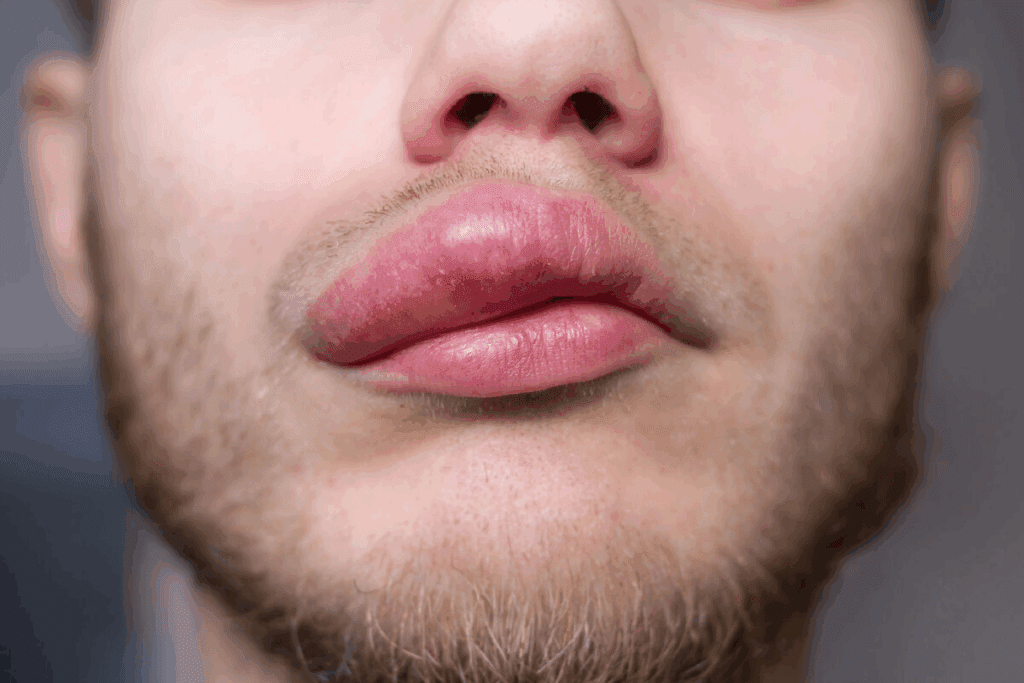
Spotting lip cancer early is key to better treatment and survival. We’ll look at the signs of lip cancer lumps, non-healing sores, and other early signs. These can help catch the disease early and start treatment sooner.
Characteristics of Lip Cancer Lumps
Lip cancer often shows up as a lump or thickening on the lip, usually on the lower lip. At first, these lumps might not hurt. But as the disease grows, they can become painful. A persistent lump that doesn’t heal in two weeks is a big warning sign. Watch out for any new or changing growths on your lips.
Non-healing Sores and Ulcers
A non-healing sore or ulcer is a major sign of lip cancer. These sores can bleed easily and may crust over, only to come back. If a sore on your lip lasts more than two weeks, get medical help. Don’t ignore non-healing sores.
“The presence of a non-healing sore or ulcer on the lip is a critical indicator that warrants further investigation.”
Other Early Signs: White Spots, Bleeding, and Pain
Other early signs of lip cancer include white or red patches on the lips, unexplained bleeding, and pain. White spots or leukoplakia on the lips can be precancerous. Any unusual changes need a doctor’s check-up. Bleeding from the lips without a clear reason is also a symptom to watch.
- White or red patches on the lips
- Unexplained bleeding from the lips
- Localized pain or numbness on the lips
- Swelling or thickening of the lip
Knowing these early signs can greatly improve your chances of catching lip cancer early. If you see any of these symptoms, see a doctor right away.
The Progression of Untreated Lip Cancer
Untreated lip cancer is a serious threat. It can spread to other parts of the mouth and face. This can lead to severe complications. It’s important to catch it early and treat it.
Local Spread and Tissue Invasion
Lip cancer starts by growing in the surrounding tissues. This can damage the lip’s structure and function. If not treated, it can spread deeper, affecting the jawbone and face.
Key characteristics of local spread include:
- Increased thickness or swelling of the lip
- Development of non-healing sores or ulcers
- Bleeding or pain in the affected area
Regional Lymph Node Involvement
Lip cancer can spread to lymph nodes in the neck as it progresses. This is a critical step, showing the cancer is getting more aggressive.
The presence of cancer in lymph nodes significantly worsens the prognosis. Watch for swelling or tenderness in these nodes. Their involvement may require more intense treatment.
Distant Metastasis and Complications
In later stages, lip cancer can spread to distant areas like the lungs, liver, or bones. This makes treatment harder and survival chances lower.
Untreated lip cancer can lead to:
- Severe disfigurement due to local tissue invasion
- Impaired speech and eating abilities
- Systemic illness due to distant metastasis
Early detection and treatment are key to avoiding these complications. Regular self-exams and doctor visits are vital to catch lip cancer early.
Is Lip Cancer Fatal? Understanding the Mortality Risk
Understanding the risk of dying from lip cancer involves looking at several important factors. Lip cancer can be deadly if not treated, but it grows slowly. This makes it easier to catch and treat early.
Factors Affecting Mortality
Many things can affect how likely someone is to die from lip cancer. The stage of the cancer when it’s found, the person’s overall health, and the cancer’s type are all important. Catching it early can greatly improve chances of survival, with survival rates over 90% for early-stage cases.
The person’s health also matters a lot. Those with weak immune systems or other serious health issues might face more risks. The cancer’s size, where it is, and if it has spread are also key in predicting how well someone will do.
Timeline of Disease Progression
Lip cancer grows slowly, giving doctors a chance to treat it. If not treated, it can spread and grow. This makes early detection and treatment very important.
Knowing how fast lip cancer can grow helps set realistic goals and make treatment plans. The five-year survival rate for lip cancer is 88-92 percent. This shows a good chance of recovery for many patients.
Comparing Lip Cancer Mortality to Other Cancers
Lip cancer has a better outlook than many other cancers. It’s often caught early because it’s easy to see. Studies show lip cancer’s death rate is lower than many other cancers.
| Cancer Type | 5-Year Survival Rate |
|---|---|
| Lip Cancer | 88-92% |
| Oral Cancer | 65-70% |
| Thyroid Cancer | 97-98% |
The table shows lip cancer’s survival rate is high compared to some cancers. This highlights the importance of catching it early. Early detection can greatly improve chances of beating lip cancer.
“Early detection is key to surviving lip cancer. With a survival rate of 88-92 percent, it’s clear that timely intervention can significantly improve outcomes.”
Lip Cancer Survival Rates by Stage
Lip cancer survival rates change a lot based on when it’s found. Knowing these rates helps patients and doctors make better choices about treatment.
Early Stage Survival: Beyond 90% Success Rate
When lip cancer is caught early, the survival rate is very high. Studies show that the 5-year survival rate for early-stage lip cancer can be over 90%. This is because the cancer is usually just in one place and can be treated well with surgery or radiation.
Advanced Stage Survival: Understanding the 38-39% Rate
But, if lip cancer is found later, the survival rate goes down a lot. For advanced-stage lip cancer, the 5-year survival rate is about 38-39%. This drop is because the cancer has spread, making treatment harder.
Advanced cases often need more aggressive treatments, like big surgeries, chemo, and radiation.
Overall 5-Year Survival Rate: 88-92%
The overall 5-year survival rate for lip cancer, including all stages, is between 88% and 92%. This shows that most people with lip cancer can live at least 5 years after being diagnosed. Awareness and early detection are key to improving these rates.
Survival rates can change based on many things. These include the patient’s health, where the cancer is on the lip, and how well the treatment works.
“The prognosis for lip cancer patients largely depends on the stage at which the disease is diagnosed,” says Medical Expert, a leading oncologist.
So, regular check-ups and self-exams are very important for catching problems early.
- Lip cancer survival rates are stage-dependent.
- Early-stage survival rates can exceed 90%.
- Advanced-stage survival rates are around 38-39%.
- The overall 5-year survival rate is between 88-92%.
Diagnosing Lip Cancer: From Screening to Confirmation
Getting a correct diagnosis for lip cancer is very important. It involves a physical check, a biopsy, and imaging tests. “Early detection is key to effective treatment,” say doctors all over the world.
Initial Physical Examination
The first step is a detailed check of the lip and mouth. Doctors look for signs like lumps, sores, or ulcers that won’t heal. They also check the patient’s overall health to find any risk factors.
This initial check is very important. It helps doctors spot problems early and plan the next steps. A study in a top medical journal shows that this check can really help find cancer early.
Biopsy Procedures
If doctors find something suspicious, they do a biopsy to check for cancer cells. There are a few ways to do this:
- Incisional biopsy: Taking a sample of the tissue.
- Excisional biopsy: Taking out the whole area that looks suspicious.
A biopsy is the main way to know if you have lip cancer. It tells doctors if the growth is cancerous.
Imaging Studies and Staging Process
After confirming lip cancer, doctors use imaging tests to see how far it has spread. These tests include:
- CT scans: To check if cancer has spread to lymph nodes or other places.
- MRI scans: To see how deep the tumor is.
- PET scans: To find if cancer has spread to other parts of the body.
These tests help doctors figure out how serious the cancer is. This information helps decide the best treatment. A top oncologist says, “Knowing the stage is key to a good treatment plan.”
By using physical checks, biopsies, and imaging tests, doctors can accurately diagnose and stage lip cancer. This ensures patients get the right care.
Treatment Options for Early Stage Lip Cancer
Early-stage lip cancer is treatable, thanks to many effective options. Early diagnosis means patients have choices that can greatly improve their chances. We’ll look at the main treatments: surgery, radiation, and Mohs micrographic surgery.
Surgical Approaches
Surgery is a common and effective treatment for early-stage lip cancer. Surgery aims to remove the cancerous tissue while preserving as much of the lip’s function and appearance as possible. The surgery’s extent depends on the tumor’s size and location.
Several surgical techniques are used, including:
- Excision: Removing the tumor along with a margin of healthy tissue.
- Reconstruction: Repairing the lip after tumor removal to maintain its functionality and aesthetics.
Radiation Therapy
Radiation therapy is another effective treatment for early-stage lip cancer. It involves using high-energy rays to kill cancer cells. This method is useful for tumors that are sensitive to radiation or when surgery might significantly impact the patient’s appearance or function.
| Treatment Modality | Advantages | Disadvantages |
|---|---|---|
| Surgical Approaches | High success rate, immediate removal of tumor | Potential for scarring, functional impact |
| Radiation Therapy | Preserves organ function, effective for sensitive tumors | Potential for side effects, requires multiple sessions |
Mohs Micrographic Surgery
Mohs micrographic surgery is a precise technique. It removes the tumor layer by layer, examining each layer under a microscope until no cancer cells are detected. This method offers a high cure rate and is useful for tumors in cosmetically sensitive areas or those with complex boundaries.
Choosing the right treatment option can lead to a high success rate and lower recurrence risk for patients with early-stage lip cancer.
Advanced Lip Cancer Treatment Modalities
Advanced lip cancer needs more than just basic treatments. As the disease gets worse, treatments get more complex. A team of experts works together to fight the cancer and keep the patient’s quality of life good.
Extensive Surgery and Reconstruction
Extensive surgery is often needed for advanced lip cancer. This surgery removes the tumor and affected tissues. Then, the lip is rebuilt to look and work like before.
We use the latest surgical methods, like microvascular reconstruction. Our goal is to get rid of the cancer completely. We also aim to keep the patient’s looks and ability to speak and eat as good as possible.
Combined Chemoradiation
When surgery isn’t enough or possible, combined chemoradiation is key. This treatment uses both chemotherapy and radiation therapy together. It helps shrink tumors, making them easier to remove surgically or controlling the disease without surgery.
We customize the chemoradiation plan for each patient. We consider the cancer’s stage, the patient’s health, and possible side effects. This approach makes the treatment more effective and less harsh on the patient’s life.
Targeted and Immunotherapy Options
New treatments like targeted therapy and immunotherapy are now available for advanced lip cancer. Targeted therapy uses drugs that attack cancer cells directly, sparing normal cells. Immunotherapy boosts the body’s immune system to fight cancer cells better.
These new treatments offer hope for patients with advanced lip cancer. They can be used alongside or instead of traditional treatments. We decide if these therapies are right for each patient and how they fit into their treatment plan.
By using these advanced treatments together, we can create a care plan that meets each patient’s needs. This approach improves outcomes and enhances the patient’s quality of life.
Superior Labial Frenulum Cancer and Other Oral Locations
It’s important to know about lip cancer in different parts of the mouth. This includes the superior labial frenulum. Each area has its own challenges and needs for treatment.
Anatomical Challenges and Detection
The mouth’s anatomy makes it hard to find lip cancer early. The superior labial frenulum is a small part of the upper lip. It’s not a common place for cancer, making it tricky to spot.
“The mouth’s complex shape can cause delays in finding cancer,” says Medical Expert. She specializes in head and neck cancers.
Treatment Approaches for Different Lip Locations
Treatment for lip cancer depends on where the cancer is and how big it is. For cancers in the superior labial frenulum or other areas, treatments might include surgery or radiation. Sometimes, both are used together.
- Surgery might remove the tumor and some healthy tissue to get rid of all cancer cells.
- Radiation therapy can be used alone for small cancers or with surgery for bigger ones.
Outcome Variations by Location
The chances of beating lip cancer can change based on where it is. Cancers in easy-to-reach spots, like the outer lip, are often caught sooner. This means better chances of recovery. But cancers in harder-to-reach spots, like the superior labial frenulum, might be found later. This can make treatment harder.
Spotting cancer early and using the right treatment is key for better results, no matter where the cancer is.
Why Early Detection of Lip Cancer Matters
Early detection of lip cancer is very important. It greatly affects how well treatment works. Finding lip cancer early means better treatment chances, leading to higher survival rates and a better life.
Window of Opportunity for Treatment
Early detection gives us a key chance to treat cancer. At this stage, the cancer is usually small and easy to treat. We can often fix early lip cancer with less invasive methods, lowering risks and improving results.
Timely intervention is essential. It lets doctors pick the best treatments, possibly avoiding harsher options needed for later stages.
Impact on Treatment Options and Outcomes
Early detection greatly changes treatment choices and results. Lip cancer caught early is more likely to be cured, boosting survival rates. Early-stage lip cancer often needs less treatment, keeping more of the patient’s natural look and function.
People with early-stage lip cancer live longer than those diagnosed later. The 5-year survival rate for lip cancer can reach 88-92% if caught early.
Self-Examination Techniques
Self-examination is key in catching lip cancer early. It’s important to know what your lips and the area around them look and feel like normally. Regular checks can spot changes or oddities early.
- Look for any new lumps, sores, or ulcers on the lips that do not heal.
- Check for white or red patches on the lips.
- Be aware of any bleeding or pain in the lip area.
- Notice any changes in the shape or feel of the lips.
By being proactive and doing regular self-exams, people can greatly increase their chances of finding lip cancer early. This is when it’s most treatable.
Living With and After Lip Cancer
Living with lip cancer is more than just treatment. It’s about tackling physical, emotional, and social impacts. We must look at all aspects of life before, during, and after treatment.
Physical Rehabilitation and Cosmetic Considerations
After treatment, patients need physical rehab. This helps with looks and function. Key points include:
- Reconstruction Options: There are many surgical ways to fix the lip, from simple to complex.
- Speech and Swallowing Therapy: Therapy helps patients speak and swallow like before.
- Cosmetic Concerns: Fixing how a patient looks is key for their self-esteem.
Psychological Impact and Support Resources
The mind is also affected by lip cancer. Patients may feel anxious, depressed, and stressed. It’s vital to offer psychological support:
- Counseling and Therapy: Professional help is essential for emotional healing.
- Support Groups: Being part of a group helps patients feel understood.
- Family and Friends: Their emotional support is priceless.
Some might also need cognitive-behavioral therapy (CBT) to manage their mental health.
Long-term Monitoring and Follow-up Care
Watching for cancer return is key. Follow-up care includes:
- Regular Check-ups: Regular visits to doctors to watch for signs of cancer coming back.
- Imaging Studies: Tests to check the treated area for any problems.
- Dental Care: Dental health is important, as treatments can affect teeth and gums.
By focusing on long-term care, we can help lip cancer survivors live better lives.
Conclusion: Taking Action Against Lip Cancer
Learning about lip cancer’s risks, symptoms, and treatments helps us fight it. We can lower our risk by avoiding harmful habits. This means staying out of the sun, not smoking, and keeping our mouths clean.
It’s also important to catch lip cancer early. Look out for sores, white spots, or lumps on your lips. If you see these, get medical help right away. This way, doctors can treat it before it gets worse.
Prevention, early detection, and quick treatment are key to beating lip cancer. Knowing the risks and acting early can greatly improve your chances of getting better. We’re dedicated to providing top-notch care and support for those with lip cancer.
FAQ
Can lip cancer be fatal if left untreated?
Yes, lip cancer can be fatal if not treated. But, it’s highly treatable if caught early.
What are the early signs of lip cancer?
Look out for lumps, sores, white spots, bleeding, and pain on the lips. Catching these signs early is key.
What is the most common type of lip cancer?
Squamous cell carcinoma is the most common type of lip cancer.
What are the risk factors for developing lip cancer?
Risk factors include tobacco use, alcohol, and UV exposure.
How is lip cancer diagnosed?
It’s diagnosed through physical exams, biopsies, and imaging studies.
What are the treatment options for early-stage lip cancer?
Early-stage lip cancer can be treated with surgery, radiation, or Mohs surgery.
What is the survival rate for lip cancer?
The 5-year survival rate is 88-92%. Early-stage survival is over 90%, while advanced stages have a 38-39% rate.
Can lip cancer be treated if it has spread to other parts of the body?
Yes, advanced lip cancer can be treated with surgery, chemoradiation, and new treatments like targeted therapy and immunotherapy.
How can I detect lip cancer early?
Check for unusual lumps, sores, or changes in the lips through self-examination.
What are the challenges in treating lip cancer in different oral locations?
Treating lip cancer in different areas is challenging due to anatomical complexities. Treatments are tailored to each location.
What support resources are available for individuals living with and after lip cancer?
Support includes physical rehab, psychological support, and long-term monitoring to help manage life after diagnosis.
Is lip cancer common?
Lip cancer is rare compared to other cancers. Its prevalence varies by location and demographics.
Can lip cancer be prevented?
While prevention isn’t always possible, reducing risk factors like tobacco, alcohol, and UV exposure can lower the risk.
References
World Health Organization. Lip Cancer: Early Signs, Survival, and Treatment Options. Retrieved from https://www.who.int/publications/i/item/9789241548953